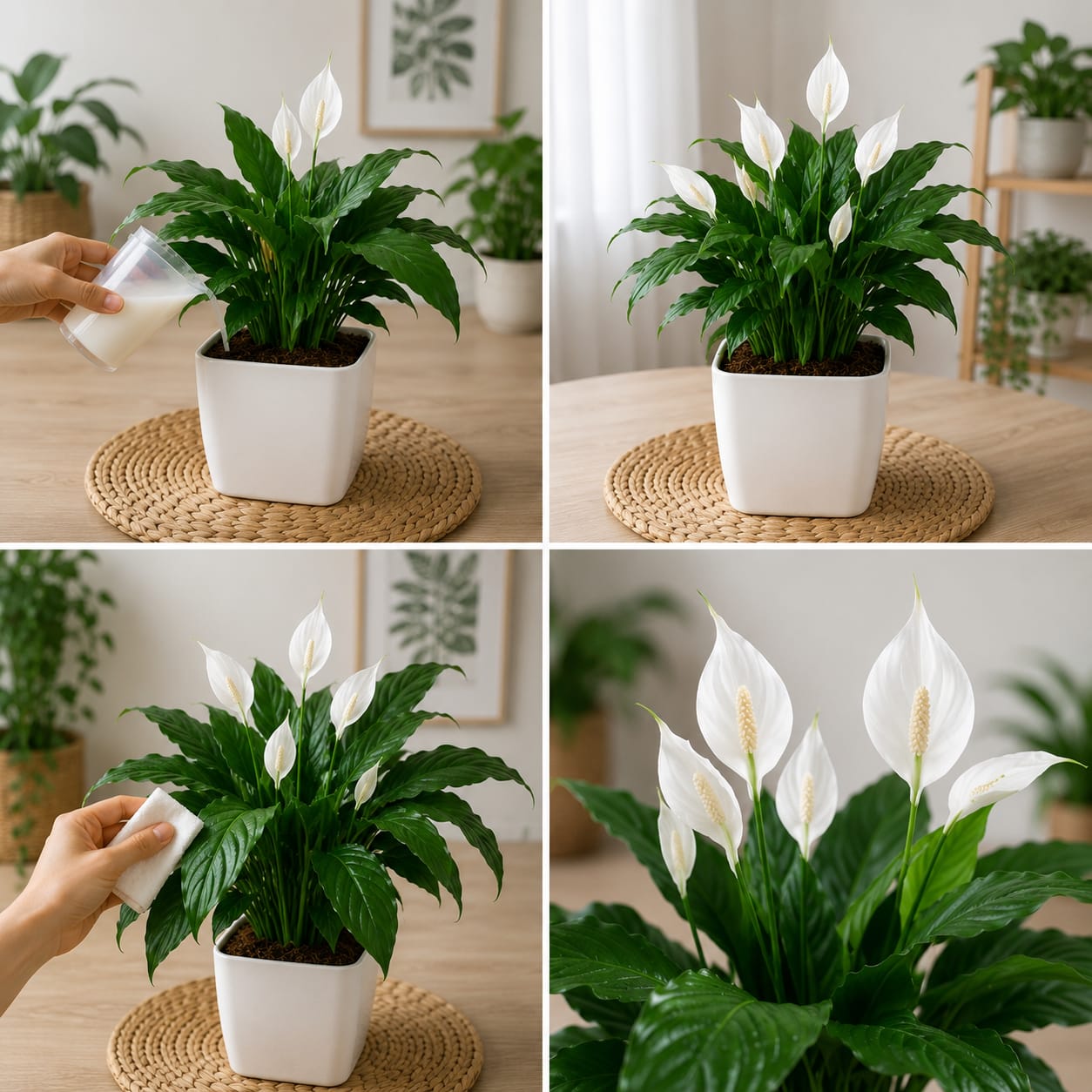
Common Mistakes With Homemade Plant Tonics
The biggest mistake is using homemade mixtures too often. Natural does not always mean safe for every plant. Peace lily roots are sensitive, and organic liquids can spoil in soil if they are too strong. This can lead to odor, mold, and small flies.
Another mistake is pouring liquid directly into the center crown. The crown should stay relatively dry. Always water the soil around the plant, not the tight center where stems meet.
Some people also use milk, sugar water, strong vinegar mixtures, or salty kitchen water. These are risky for indoor plants. Milk can sour, sugar can attract insects, vinegar can damage roots if not extremely diluted, and salt can build up in the soil. For peace lilies, simple and mild is better.
How to Encourage More White Blooms
To encourage flowers, start with light. Move the peace lily to a bright indirect spot and keep it there consistently. Then check the roots. If the pot is overcrowded and the soil dries extremely fast, repot into a slightly larger container. If the soil smells bad or stays wet too long, refresh the potting mix.
Next, create a steady care rhythm. Water when the top soil begins to dry. Feed lightly during the growing season. Clean leaves so they can absorb more light. Remove old blooms when they fade. A faded peace lily flower often turns green or brown; cutting it off allows the plant to redirect energy.
Temperature also matters. Peace lilies prefer warm indoor conditions. Cold drafts from windows or air conditioners can slow growth. Keep the plant away from sudden temperature changes.
Decor Styling: How to Make a Peace Lily Look More Elegant
A peace lily already has a refined shape, so the right styling can make it look like a designer plant. A white ceramic pot is a classic choice because it highlights the white blooms and deep green leaves. For a modern interior, use a square white planter, matte black stand, or warm beige pot.
Place the plant on a small stool, plant stand, or side table to give it height. Peace lilies look especially elegant when the leaves fall slightly over the edges of the pot. Raising the plant also helps it become a focal point in the room.
For a clean luxury look, avoid clutter around the pot. Let the plant breathe visually. A peace lily next to a neutral wall, linen curtain, wooden floor, or black accent table can look very expensive with almost no effort.
Best Rooms for Peace Lily Decor
In the living room, place a peace lily near a bright window but away from direct sun. It pairs beautifully with cream sofas, wooden furniture, black metal tables, and soft neutral rugs. The white flowers create a calm, hotel-like feeling.
In the bedroom, a smaller peace lily can soften the corner of a dresser or nightstand. Keep it where it receives enough light during the day. A bedroom peace lily looks best in a simple pot with a clean saucer so the display stays peaceful and uncluttered.
In the bathroom, peace lilies can enjoy humidity if there is natural light. A bathroom with no window is not suitable for long-term growth. In a bright bathroom, the plant can look spa-like, especially in a white or stone-textured planter.
In an entryway, a large peace lily can make the home feel welcoming. Use a raised stand and a decorative pot to make the plant look intentional, not random. The glossy foliage brings freshness even to simple spaces.
How to Fix Yellow Leaves
Yellow leaves are common on peace lilies. One or two older yellow leaves are normal, but many yellow leaves at once usually mean a care issue. The most common causes are overwatering, poor drainage, old soil, direct sun, or stress after moving the plant.
Start by checking the soil. If it is wet and heavy, let it dry slightly before watering again. Make sure the pot drains. If the roots smell bad or look mushy, repot the plant and remove rotten roots with clean scissors.
If the soil is dry and the leaves are yellow with crispy edges, the plant may be underwatered or exposed to dry air. Water deeply and improve humidity by grouping plants together or placing the pot near a pebble tray without letting the roots sit in water.
How to Fix Brown Tips
Brown tips can happen from inconsistent watering, low humidity, fertilizer burn, or minerals in tap water. Trim the brown tips with clean scissors, following the natural shape of the leaf. This improves appearance, but you also need to fix the cause.
Use filtered water or let tap water sit overnight if your water is very harsh. Avoid overfertilizing. Keep the soil evenly moist, not soaked. Increase humidity gently if the room is very dry.
Brown tips do not always mean the plant is dying. Peace lilies are expressive plants, and even healthy ones may get a few imperfect leaves. The goal is not perfection; it is steady, fresh growth.
Monthly Peace Lily Care Routine
Once a month, take five minutes to inspect the plant. Check the soil, clean the leaves, remove old flowers, and rotate the pot so all sides receive light. This simple routine keeps the plant balanced and attractive.
Every four to six weeks during spring and summer, you may use the gentle 1 cup diluted rice-water tonic if the plant is actively growing and the soil is ready for watering. Do not use it on a stressed, soggy, or recently repotted plant. Give a newly repotted peace lily a few weeks to settle before adding anything extra.
Every few months, flush the soil with plain water. This means watering thoroughly and letting extra water drain away. Flushing helps remove buildup from fertilizer or minerals. It is especially useful if you use any homemade plant tonic.
Signs the Trick Is Working
The first sign of improvement is usually firmer leaves. The plant may stand more upright and look less tired. New leaves may appear smoother and brighter. Over time, if light and feeding are correct, the plant may produce more white blooms.
Do not judge the result after one day. Peace lilies respond quickly to water, but real growth takes time. Give the plant several weeks. Healthy roots create healthy leaves, and healthy leaves create enough energy for flowers.
If the plant becomes droopy, smells sour, or develops fungus gnats after using the tonic, stop immediately. Let the soil dry slightly, improve air circulation, and return to plain water. The best plant care is always flexible.
Final Thoughts
The 1 cup peace lily trick can be a lovely part of an indoor plant routine when it is used gently and wisely. A mild diluted rice-water style tonic may help refresh the soil and support cleaner growth, but it works best with the basics: bright indirect light, good drainage, careful watering, clean leaves, and occasional light feeding.
For the most elegant display, treat the peace lily as both a living plant and a decor piece. Keep the pot clean, remove damaged leaves, choose a beautiful container, and place it where the white blooms can stand out. With steady care, the peace lily becomes more than a houseplant. It becomes a soft, fresh, refined accent that makes the whole room feel calmer and more expensive.
Use the trick lightly, watch the plant closely, and let the roots guide the routine. When the roots are comfortable, the leaves shine, the flowers return, and the entire plant looks naturally luxurious.