Large-leaf philodendrons are the kind of houseplants that instantly make a room feel greener, fresher, and more expensive-looking. Their oversized glossy leaves, upright stems, and tropical shape can turn a plain corner into a calm indoor garden. But when the leaves start looking pale, smaller than usual, tired, or less shiny, the problem often begins below the soil: the roots need better care.
One simple plant-care trick many indoor gardeners like to use is a gentle amber root tonic poured lightly around the base of the plant after checking the roots and refreshing the soil. The idea is not to force the plant to grow overnight, but to support cleaner root conditions, better moisture balance, and stronger new leaf development over time.
This method works best for large tropical foliage plants such as philodendrons, especially when the plant has been sitting in the same pot for a long time, the soil has become compacted, or the leaves are losing their rich green shine. With the right approach, this small routine can help the plant look fuller, healthier, and more decorative indoors.
The Trick: A Light Root Refresh Before Feeding
The most important part of this trick is not the liquid itself. The real secret is the combination of root inspection, fresh airy soil, and a very gentle tonic applied only after the plant is stable. Many people pour homemade mixtures onto tired plants without checking the roots first, but that can make problems worse if the soil is already too wet or the roots are damaged.
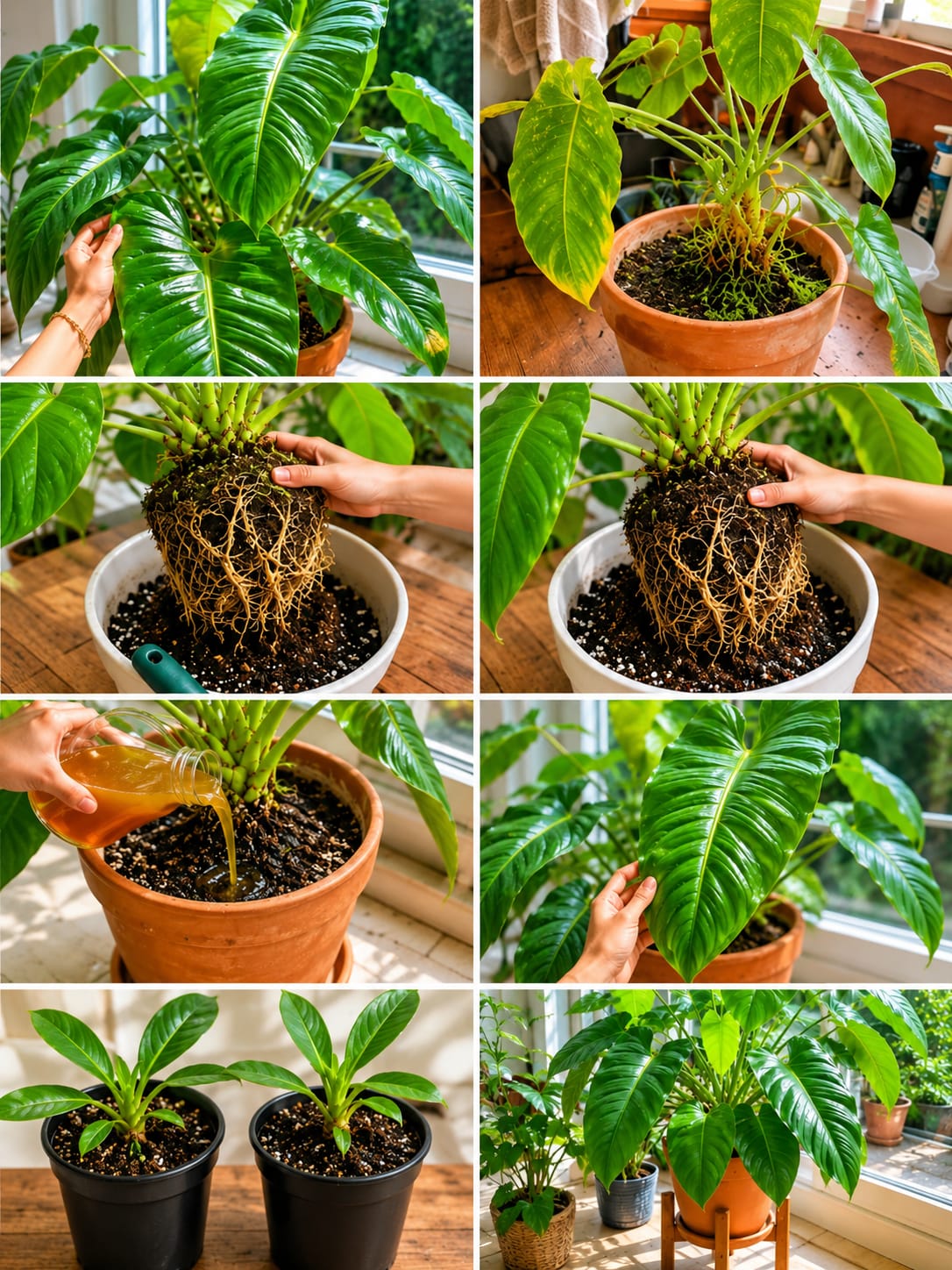
For a large philodendron, the best routine begins by carefully lifting the plant from its pot, checking the root ball, removing old compacted soil, and repotting into a fresh breathable mix. Once the plant is settled, a small amount of mild amber root tonic can be poured around the soil near the root zone.
This gives the plant a cleaner start and helps the leaves regain a fresher look gradually.
Why Large Philodendron Leaves Lose Their Shine
Philodendron leaves often look dull when the roots are stressed. Even if the top of the plant looks dramatic and beautiful, the roots may be sitting in soil that is too dense, too wet, or low in oxygen. When roots cannot breathe properly, the leaves may become pale, soft, yellow, or smaller than expected.
Common causes include:
- Old soil that has become compacted
- Poor drainage inside the pot
- Water staying around the roots too long
- Too little indirect light
- A pot that is too small for the root system
- Irregular watering
- Weak root growth after stress
Refreshing the root area helps the plant use water and nutrients more efficiently. This is why a root-focused routine can make the leaves look cleaner and more vibrant over time.
How to Make a Gentle Amber Root Tonic
A safe homemade tonic should be mild. Large tropical plants do not need strong kitchen mixtures, heavy fertilizers, or anything acidic in large amounts. The goal is to create a light support drink, not a harsh treatment.
Simple gentle tonic idea:
- 1 liter of room-temperature water
- 1 teaspoon of compost tea, worm casting tea, or very diluted organic plant feed
- Optional: a few drops of seaweed-based plant tonic if available
Mix well and use only a small amount around the soil. The liquid should be weak, almost like tinted water. A strong mixture can burn sensitive roots, especially after repotting.
If you prefer not to use any homemade tonic, plain room-temperature water after repotting is also completely fine. The biggest improvement often comes from fresh soil, correct drainage, and balanced watering.
Step-by-Step Root Refresh Routine
1. Water lightly the day before
If the soil is extremely dry, water lightly one day before removing the plant. This makes the root ball easier to handle and reduces stress. Do not soak it heavily.
2. Remove the plant carefully
Hold the base of the plant gently and slide it out of the pot. Avoid pulling from the leaves. Large philodendron leaves can tear or bend if handled roughly.
3. Check the roots
Healthy roots are usually firm and pale cream, tan, or light brown. Rotten roots are dark, mushy, and may smell bad. Trim only damaged roots with clean scissors.
4. Loosen old compacted soil
Gently remove some of the old soil from around the root ball. You do not need to wash all the roots. Just open the root area enough so fresh mix can surround it.
5. Prepare an airy soil mix
Large philodendrons love a chunky, breathable mix. A good mix may include indoor potting soil, orchid bark, perlite, coco chips, and a small amount of compost or worm castings.
6. Repot into a stable container
Choose a pot with drainage holes. The pot should be slightly larger than the root ball, but not huge. Too much extra soil can stay wet for too long.
7. Pour the gentle tonic lightly
After repotting, pour a small amount of the mild amber tonic around the soil near the base. Do not flood the pot. Let extra liquid drain fully.
8. Keep the plant in bright indirect light
Place the plant near a bright window but away from harsh direct sun. Give it a calm recovery period.
Best Soil Mix for Bigger Glossy Leaves
Large-leaf philodendrons need soil that feels rich but never heavy. The roots need oxygen, especially in indoor pots where airflow is limited.
A good mix:
- 40% quality indoor potting mix
- 25% orchid bark
- 20% perlite or pumice
- 10% coco chips
- 5% worm castings or compost
This type of mix holds enough moisture while still draining well. It also helps prevent the root ball from becoming dense and soggy.
How Often to Use the Root Tonic
Use this kind of tonic sparingly. Once after repotting is enough for many plants. During the growing season, you can repeat a very diluted version once every 4 to 6 weeks if the plant is actively growing.
Do not use it every week. Overfeeding can cause yellow leaf tips, salt buildup, weak roots, and stressed soil. Philodendrons prefer steady, gentle care.
Continue to Page 2
Continue to page 2 for more details about this article and the key points many readers miss on the first page.