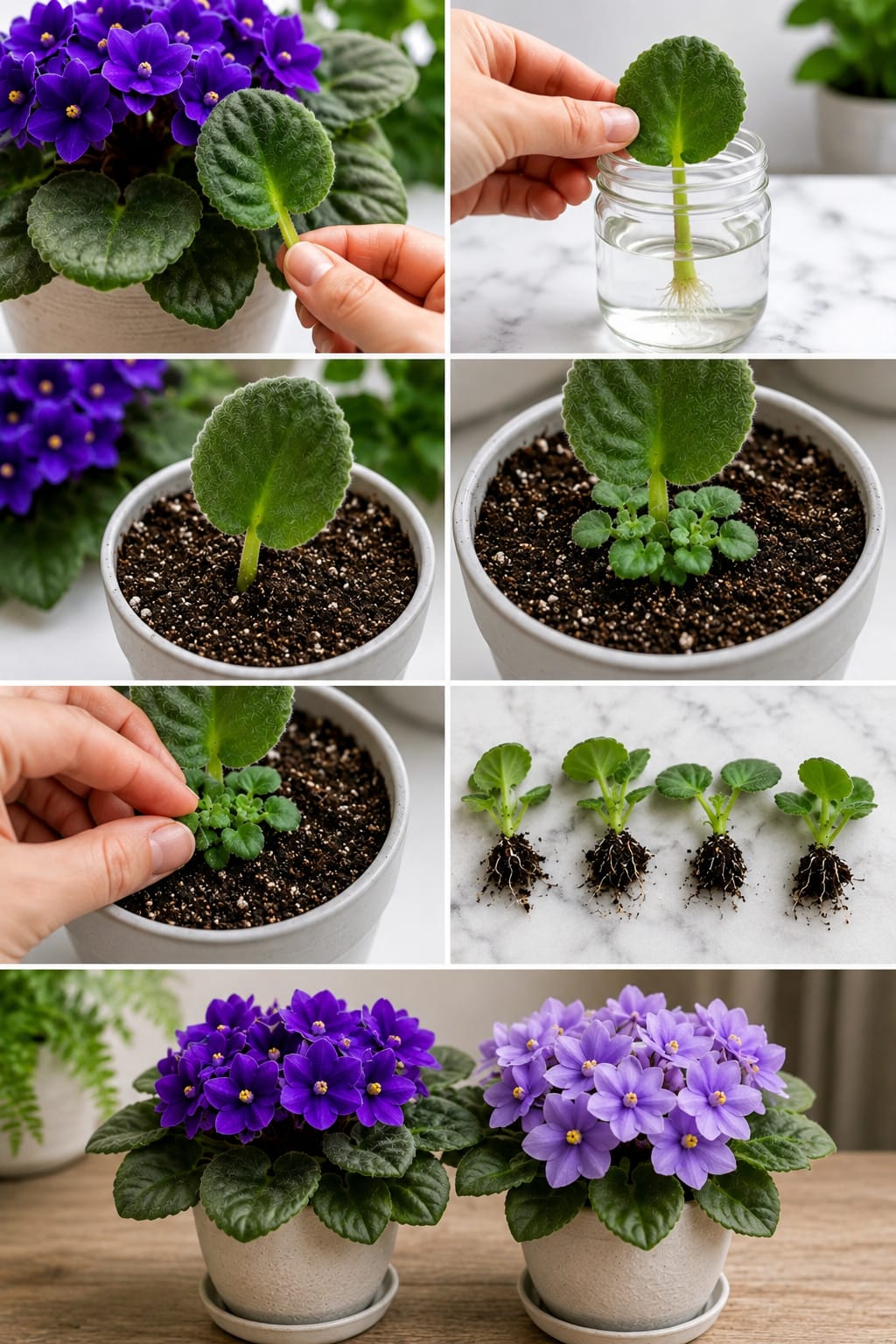
African violets are among the most charming flowering houseplants you can grow indoors. Their soft, velvety leaves and clusters of purple, pink, blue, or white blooms make them look delicate, but they are surprisingly easy to multiply when you know one simple trick: growing new plants from a single healthy leaf.
This method is perfect for plant lovers who want fuller windowsills, more flowering pots, or a beautiful indoor display without buying new plants every time. With one mature African violet leaf, a small jar of water or a light potting mix, and a little patience, you can create several baby plants from the base of one leaf stem.
The real secret is choosing the right leaf, keeping the stem clean, giving it gentle humidity, and waiting until the tiny plantlets are strong enough to separate. When done correctly, this simple leaf trick can turn one African violet into many beautiful blooming plants for shelves, windowsills, coffee tables, and cozy indoor corners.
Why African Violets Are Perfect for Leaf Propagation
African violets grow naturally from a central crown, but their leaves also have the ability to produce new baby plants from the base of the leaf stem. This is why they are one of the most popular houseplants for beginners who want to learn propagation.
Unlike some plants that need long vines, thick stems, or special root nodes, African violets can start new growth from a single healthy leaf cutting. After the leaf stem forms roots, tiny green plantlets slowly appear around the base. These baby plants can later be separated and placed into their own pots.
This makes African violet propagation both practical and beautiful. You can save a favorite variety, share plants with friends, refresh an older plant, or create a matching set of small flowering pots for home decor.
The Best Leaf to Choose
The success of this trick begins with the leaf. Choose a mature, healthy leaf from the middle row of the plant. Avoid the oldest leaves near the bottom because they may be tired and slow to root. Also avoid the tiny young leaves in the center because they are still developing.
A good propagation leaf should be firm, green, velvety, and free from yellowing, brown spots, tears, or mushy areas. The stem should feel strong, not soft. A clean, strong leaf has more stored energy to support root growth and baby plant development.
Best leaf signs:
- Firm texture
- Healthy green color
- No rot or damage
- Medium size
- Strong leaf stem
- No pests under the leaf
One strong leaf is better than several weak ones. Quality matters more than quantity.
How to Take the Leaf Cutting
Use clean scissors, a small knife, or your fingers to remove the leaf with part of its stem attached. Try to keep the stem around 2 to 4 cm long. If the stem is too long, it can take more energy to support. If it is too short, it may be harder to plant securely.
Make a clean diagonal cut at the bottom of the stem. This gives the cutting a fresh surface and helps it sit well in water or soil. A clean cut also reduces damage and lowers the chance of rotting.
After cutting, let the stem rest for a few minutes before placing it into water or soil. This short pause allows the cut to settle slightly.
Method 1: Rooting African Violet Leaves in Water
Water propagation is popular because it lets you watch the roots grow. It is also a nice option for beginners because the progress is visible.
Steps:
- Fill a small clean jar with room-temperature water.
- Place the leaf stem into the water.
- Keep the leaf blade above the water line.
- Set the jar in bright indirect light.
- Change the water every few days.
- Wait for roots to form.
Only the stem should touch the water. If the leaf itself stays wet, it can rot. You can use plastic wrap with a small hole, a narrow jar, or a small support to hold the leaf upright.
Roots usually begin to appear after a few weeks. Once the roots are around 2 to 3 cm long, the cutting can be moved into a light potting mix. Do not wait until the roots become very long and tangled because water roots can be delicate when transferred.
Method 2: Rooting African Violet Leaves Directly in Soil
Soil propagation is often the strongest method because the cutting grows roots directly in the medium where it will continue developing. It may feel slower because you cannot see the roots, but it often produces sturdy plantlets.
Steps:
- Prepare a small pot with drainage holes.
- Use a light African violet mix or a blend of peat, perlite, and vermiculite.
- Moisten the mix lightly before planting.
- Insert the leaf stem about 1 to 2 cm deep.
- Firm the mix gently around the stem.
- Place the pot in bright indirect light.
- Keep the soil slightly moist, never soggy.
The leaf should sit at a slight angle rather than standing completely straight. This helps baby plantlets emerge more easily near the soil surface.
The Best Soil Mix for African Violet Leaf Cuttings
African violets love light, airy soil. Heavy garden soil is not suitable because it holds too much water and can suffocate new roots. The mix should hold a little moisture while still allowing air to move around the roots.
Good mix options:
- African violet potting mix
- Peat-based mix with extra perlite
- Coco coir with perlite
- Light seed-starting mix with added aeration
If the mix feels dense or muddy, add more perlite. A fluffy mix gives the new roots a better chance to spread.
How Much Light the Leaf Cutting Needs
Bright indirect light is ideal. African violet leaves need enough light to support new growth, but direct hot sun can burn the leaf or dry the cutting too quickly.
A north or east-facing windowsill often works well. If the light is too strong, use a sheer curtain. If your home is dark, a small grow light can help. Keep the light gentle and consistent.
Healthy light encourages firm leaves, compact baby growth, and better future blooming.
Humidity Helps the Baby Plants Form
African violet cuttings appreciate mild humidity while they are rooting. You can create a simple mini greenhouse by placing a clear plastic bag over the pot. Make sure the plastic does not press tightly against the leaf.
Open the cover every few days for fresh air. Too much sealed humidity can cause mold, especially if the soil is overly wet. The goal is gentle moisture, not a wet enclosed environment.
When Baby African Violets Appear
After several weeks, small green leaves should begin appearing at the base of the original leaf. These are the baby African violets. At first, they may look tiny and delicate. Do not rush to separate them.
Let the plantlets grow until they have several leaves of their own. The stronger they are before separation, the easier they adapt to individual pots.
Wait until plantlets have:
- Several small leaves
- Visible individual crowns
- A firm root base
- Enough size to handle gently
This stage can take patience, but it is where the magic happens. One leaf may create several babies.
How to Separate the Baby Plants
When the baby violets are large enough, remove the original cutting from the pot carefully. Gently loosen the soil around the roots. You should see small plantlets attached near the base.
Separate them with clean fingers or a clean small blade. Try to give each baby plant a few roots. If some are too tiny, leave them together a little longer.
Plant each baby violet into a small pot. Do not use a large pot at this stage. African violets grow and bloom better when slightly snug in their containers.
Best Pot Size for Young African Violets
Small pots are best. A young African violet does not need a deep container. Too much extra soil stays wet and can lead to root problems.
For baby plants, use tiny pots around 5 to 7 cm wide. As they grow, move them gradually into slightly larger pots. Mature African violets often do well in pots that are about one-third the width of the leaf spread.
A neat pot size also makes the plant look fuller and more balanced as a decor piece.
Watering Young African Violets
African violets like evenly moist soil, but they dislike soggy roots. Water when the top layer begins to feel slightly dry. Use room-temperature water because cold water can shock the roots and may mark the leaves if splashed.
Try not to wet the fuzzy leaves. Water at soil level or use bottom watering. With bottom watering, place the pot in a shallow tray of water for a short time, then remove it and let it drain.
Never let the pot sit in water for long periods.
How to Encourage Future Blooms
Once the baby African violets are established, they need the right balance of light, moisture, and nutrients to flower. Bright indirect light is the biggest factor. If the plant grows leaves but never blooms, it may need more light.
Use a gentle African violet fertilizer during active growth, but avoid overfeeding. Too much fertilizer can burn roots or create lots of leaves with fewer flowers.
Bloom support tips:
- Give bright indirect light
- Keep soil lightly moist
- Use small pots
- Remove old flowers
- Feed lightly during growth
- Keep leaves clean and dry
With steady care, young plants can mature into charming flowering displays.
Continue to Page 2
Continue to page 2 for more details about this article and the key points many readers miss on the first page.