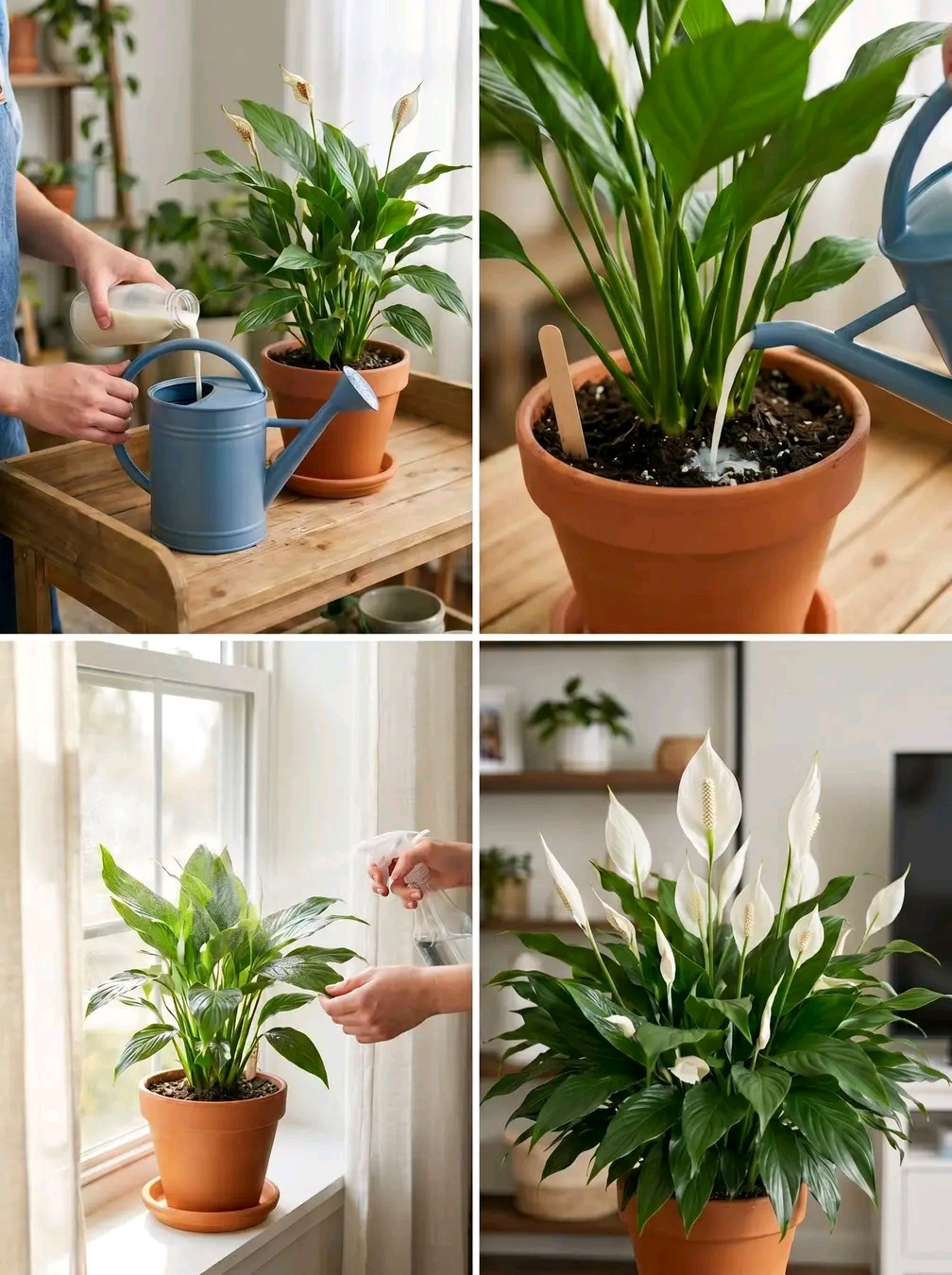
How to Rescue an Overwatered Peace Lily
- Stop watering.
- Remove the plant from the pot.
- Check the roots.
- Trim black, mushy, or rotten roots.
- Remove old wet soil.
- Repot in fresh airy soil.
- Use a pot with drainage.
- Place in bright indirect light.
- Wait before watering again.
Do not use milk water during recovery. Use plain careful watering until the plant stabilizes.
Feeding Peace Lilies Correctly
Peace lilies are not heavy feeders, but they do appreciate light feeding during active growth. Use a balanced houseplant fertilizer diluted to half strength once every 6 to 8 weeks in spring and summer.
Do not fertilize heavily. Too much fertilizer can burn roots and cause brown leaf tips.
Milk Water vs Fertilizer
Milk water is not a complete fertilizer. It may contain small amounts of calcium and minerals, but it does not provide balanced nutrition. A proper houseplant fertilizer is more reliable for feeding.
Milk water should be used only as a rare natural supplement, not as the main feeding plan.
How to Prevent Fungus Gnats
Fungus gnats love damp organic soil. Milk residue can make the problem worse if used too often.
- Let the top inch of soil dry slightly between waterings.
- Do not leave milk mixture sitting in the saucer.
- Do not use milk water too often.
- Remove dead leaves from the soil.
- Improve airflow.
- Use yellow sticky traps if gnats appear.
How to Prevent Mold
Mold can appear when soil is too wet, airflow is poor, or organic material sits on the surface. If mold appears after using milk water, stop using it.
- Remove the moldy top layer of soil.
- Let the soil dry slightly.
- Improve airflow.
- Water less often.
- Use plain water only.
- Repot if the smell continues.
Indoor Styling With Peace Lilies
Peace lilies are beautiful decor plants because they look soft, elegant, and fresh. Their white flowers match many interior styles.
- Use a terracotta pot for warm natural decor.
- Use a white ceramic pot for a clean modern look.
- Place on a wooden plant stand near a bright window.
- Style beside a reading chair for a calm corner.
- Place in a bright bathroom for a spa-like feel.
- Group with ferns, pothos, and snake plants.
- Use a woven basket cover for boho style.
- Place on an entry table with filtered light.
Best Rooms for Peace Lilies
- Living room
- Bedroom
- Home office
- Bright bathroom
- Dining room
- Entryway with indirect light
- Kitchen corner away from heat
- Plant shelf near a window
The best room is one with bright indirect light, stable warmth, and no cold drafts.
Outdoor Styling in Warm Weather
Peace lilies can spend time outdoors during warm months, but only in shade or filtered light. Direct sun can burn the leaves quickly. A covered patio, shaded porch, or balcony can work well.
Bring the plant indoors before temperatures drop. Peace lilies are tropical plants and do not like cold nights.
Seasonal Peace Lily Care
Spring
Spring is a good time to refresh soil, repot if needed, and begin light feeding. A tiny amount of diluted milk water may be used if the plant is healthy.
Summer
Water more often if the plant dries quickly. Keep it away from harsh sun and maintain humidity.
Fall
Reduce feeding as growth slows. Keep the plant near bright indirect light.
Winter
Water less often and avoid milk water unless the plant is actively growing in a warm bright room.
Weekly Peace Lily Care Routine
- Check soil moisture.
- Remove yellow or dead leaves.
- Empty the saucer after watering.
- Wipe dusty leaves if needed.
- Check for gnats or mold.
- Rotate the pot for even growth.
- Keep away from drafts.
Monthly Peace Lily Care Routine
- Clean all leaves with a damp cloth.
- Inspect roots if the plant looks weak.
- Check if the pot drains well.
- Flush soil with plain water if buildup is likely.
- Feed lightly during active growth.
- Use milk water only rarely.
- Remove spent flowers.
Common Mistakes to Avoid
- Using full-strength milk
- Using milk water too often
- Pouring it into soggy soil
- Leaving milk residue on leaves
- Using sweetened or flavored milk
- Ignoring sour soil smell
- Using a pot without drainage
- Overwatering after feeding
- Expecting instant blooms
- Using milk water on a sick plant
Safe Milk Water Routine Summary
- Use plain milk only.
- Dilute heavily with clean water.
- Apply only when soil is ready for watering.
- Pour around the soil, not into the plant crown.
- Let the pot drain fully.
- Empty the saucer.
- Use only once every 6 to 8 weeks during active growth.
- Stop if mold, gnats, or sour smell appears.
Frequently Asked Questions
Is milk good for peace lilies?
Milk can be used only in a very diluted form and only rarely. Full-strength milk is not recommended because it can spoil and harm the soil.
Can milk water make peace lilies bloom?
Not by itself. Blooms depend more on bright indirect light, healthy roots, proper watering, and balanced feeding.
How often should I use milk water?
Use it no more than once every 6 to 8 weeks during spring or summer.
Can I spray milk on peace lily leaves?
It is safer to wipe leaves with a very diluted mixture, then wipe again with plain water to remove residue.
Why does my peace lily have yellow leaves?
Yellow leaves often come from overwatering, poor drainage, low light, or natural aging.
Why is my peace lily not flowering?
The most common reason is not enough bright indirect light. Move it closer to a bright window with filtered light.
Final Thoughts
The peace lily milk water trick can be used as a gentle occasional plant-care idea, but it must be handled carefully. Milk should always be diluted heavily, used rarely, and applied only when the plant is healthy and the soil is not wet. Full-strength milk can spoil, attract gnats, create mold, and damage roots.
The real secret to a beautiful peace lily is balanced care. Give it bright indirect light, evenly moist soil, a pot with drainage, moderate humidity, clean leaves, and light feeding during active growth. Remove old blooms, watch for yellow leaves, and avoid overwatering.
With the right routine, your peace lily can grow glossy green leaves and elegant white flowers that brighten your home. Use diluted milk water only as a small extra step, and let healthy roots, good light, and steady care do the real work.