Repotting Peace Lily After Soil Problems
If the soil has become compacted, sour, salty, or moldy, repotting may be the best solution. Choose a pot only one size larger if needed. Peace lilies do not need huge pots.
Remove old soil gently. Check roots. Trim rotten roots. Replant in a fresh airy mix with perlite and coco coir. Water lightly and place in bright indirect light.
Recovery may take a few weeks.
How to Divide a Peace Lily
A mature peace lily can be divided when it becomes crowded. Remove the plant from the pot and gently separate clumps with roots attached. Each division should have several leaves and healthy roots.
Plant each division in its own pot with fresh mix. Water gently and keep in bright indirect light.
Dividing is a good way to refresh an old peace lily and create new plants for other rooms.
Indoor Decor Ideas With Peace Lily
Peace lilies are elegant and versatile. Their dark leaves and white blooms match many interior styles, from modern minimal spaces to cozy cottage rooms.
- Use a terracotta pot for a warm natural look.
- Use a white ceramic pot for a clean modern style.
- Place it on a wooden plant stand.
- Style it beside books and candles.
- Use it in a bathroom with natural light.
- Place it in a woven basket cover.
- Group it with pothos, ferns, and calathea.
- Use it as a calm bedroom plant.
The plant’s white blooms look especially beautiful against neutral decor, wood, stone, and soft fabrics.
Best Rooms for Peace Lily
- Living room with filtered light
- Bedroom with bright indirect light
- Bathroom with a window
- Home office
- Dining room corner
- Sunroom with filtered light
- Kitchen away from heat
Choose a place that is bright but not harsh, warm but not dry, and easy to access for watering.
Weekly Peace Lily Care Routine
- Check soil moisture with your finger.
- Water only when the top inch begins to dry.
- Empty the saucer after watering.
- Wipe dusty leaves.
- Remove yellow or dead leaves.
- Check for pests.
- Rotate the pot for even growth.
- Keep away from direct hot sun.
Monthly Peace Lily Care Routine
- Inspect roots if the plant is struggling.
- Feed lightly during active growth.
- Check for mineral buildup on soil.
- Flush soil if needed.
- Trim old blooms.
- Refresh the top layer of soil if compacted.
- Use safe white powder only rarely if needed.
Common Mistakes to Avoid
- Using table salt as a plant trick
- Sprinkling too much powder
- Pouring powder into the crown
- Watering too often
- Using a pot without drainage
- Keeping the plant in deep shade
- Placing it in harsh direct sun
- Overfertilizing
- Ignoring brown tips
- Letting the plant sit in water
Simple Safe White Powder Routine
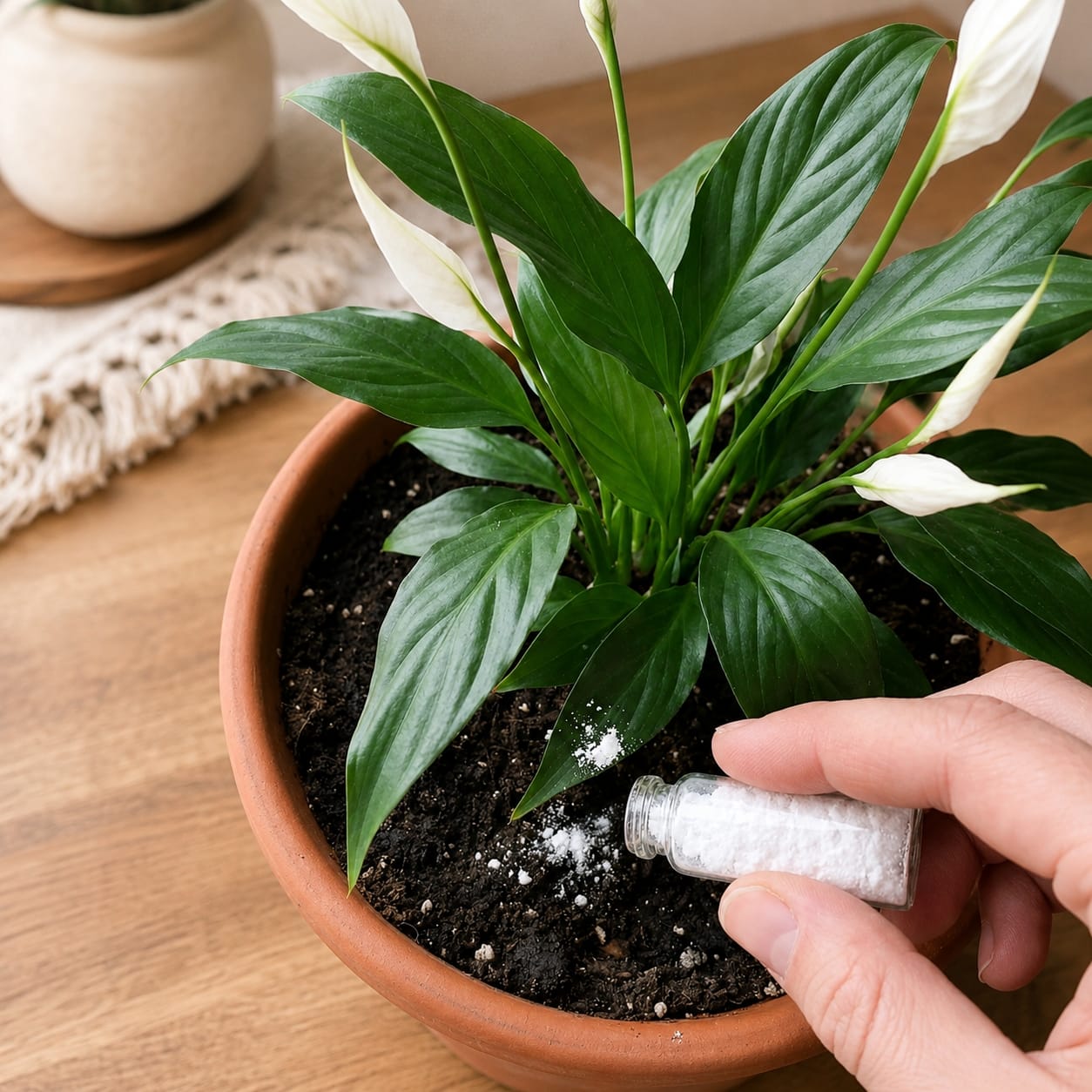
For a beginner-friendly version, use crushed eggshell powder rather than risky powders.
- Clean and dry eggshells.
- Crush them into fine powder.
- Sprinkle a small pinch on the soil.
- Keep it away from the crown.
- Mix lightly into the top layer.
- Water normally when the soil is ready.
- Repeat only after a few months.
This routine is gentle, slow, and safer than using unknown white powders.
Final Thoughts
The peace lily white powder trick can be helpful only when the powder is plant-safe and used lightly. Crushed eggshell powder, a tiny amount of gypsum, or diluted Epsom salt can support plant care in specific situations, but table salt should never be used. The wrong white powder can damage roots and cause serious leaf problems.
The real secret to a beautiful peace lily is not one trick. It is balanced care. Give the plant bright indirect light, clean water, a pot with drainage, airy soil, moderate humidity, and light feeding. Keep the leaves clean, avoid mineral buildup, and watch how the plant responds.
Use white powder only as a small support, not as a cure. When the basics are right, your peace lily can reward you with glossy leaves, strong roots, and elegant white blooms that brighten your indoor space for years.