Can You Use Banana Peel Slurry?
Banana peel mixtures are popular online, but they can become sticky, smelly, and attractive to fungus gnats if used directly in indoor pots. Snake plants especially do not like wet organic sludge around their roots.
If you want to use banana peels, compost them first. Finished compost or worm castings are safer than fresh fruit paste.
For this image, worm castings are the cleaner choice.
Can You Use Coffee Grounds?
Coffee grounds are not ideal for snake plant rescue. They can compact, hold moisture, and mold when used directly in pots. A stressed snake plant needs airy soil, not dense wet grounds.
Used coffee grounds are better added to compost in small amounts, not poured directly around snake plant roots.
Do not use coffee sludge as the brown mixture.
Can You Use Molasses?
No. Molasses is sugary and can attract ants, fungus gnats, and mold. It is sometimes used in outdoor compost teas, but it is not a good indoor snake plant rescue ingredient.
Snake plants do not need sweet liquid. They need oxygen, dry soil, and gentle feeding.
Avoid sticky sugar-based tricks.
Can You Use Mud or Garden Soil?
No. Mud or heavy garden soil can suffocate snake plant roots. It may also contain pests, weed seeds, or pathogens.
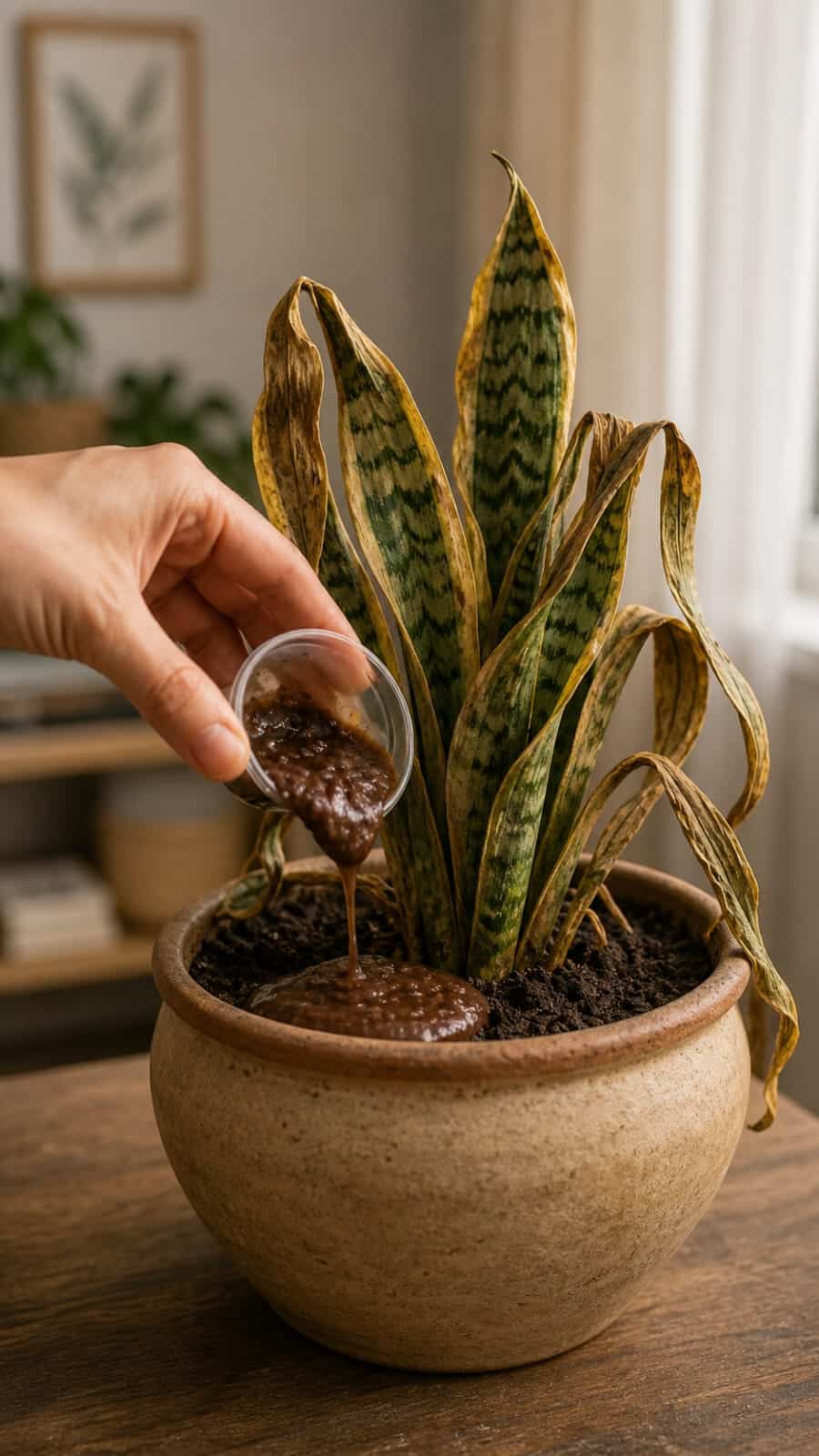
The brown mixture should not be literal mud. It should be a diluted worm casting tonic made from clean plant-safe castings.
Heavy soil is often part of the problem, not the solution.
Can You Use Fertilizer Instead?
You can use a diluted succulent fertilizer on a healthy snake plant during active growth, but avoid fertilizing a badly stressed plant right away. Fertilizer can burn weak roots.
Worm casting slurry is gentler, but even that should be used sparingly.
When a plant is in crisis, fix the roots and soil first. Feed later.
Why the Old Leaves Will Not Fully Recover
Brown and crispy parts of snake plant leaves will not turn green again. Yellowed, damaged leaf tissue usually stays damaged. The goal is to stop the decline and encourage new healthy growth from the base.
After the plant stabilizes, new leaves may emerge stronger. The old leaves can be trimmed or removed once new growth appears.
Recovery is about future leaves, not perfecting damaged ones.
How to Trim Damaged Snake Plant Leaves
Use clean, sharp scissors. If only the tip is brown, trim the tip into a natural point. If the whole leaf is dead, cut it at the soil line.
If a leaf is partly green but ugly, you can leave it temporarily so the plant can still use it for energy. Remove it later when new growth appears.
Do not remove too much at once from a weak plant.
Should You Repot After Using the Slurry?
If the soil is already loose, dry, and well-draining, you may not need to repot. But if the soil is compacted, wet, sour-smelling, or heavy, repotting is more important than the slurry.
A good rule: if the plant keeps declining after one careful treatment, inspect the roots and refresh the soil.
The best rescue happens below the surface.
Best Pot for Snake Plant Recovery
Use a pot with drainage holes. Terracotta is excellent because it dries faster. Ceramic pots can work if they drain well. Avoid oversized pots because extra soil holds extra moisture.
Snake plants prefer snug pots. A pot that is too large can keep the roots wet for too long.
The pot in the image looks decorative, but drainage is the most important detail.
Best Soil for Snake Plant Recovery
A snake plant rescue soil should be gritty and airy. A good mix can include cactus soil, perlite, pumice, coarse sand, and small bark pieces.
Avoid dense peat-heavy mixes that stay wet for many days. Avoid garden soil. Avoid compost-heavy soil for a weak plant.
You can add a small amount of worm castings to the mix, but keep it light.
How Much Worm Castings Can You Mix Into Soil?
For snake plants, use worm castings sparingly. Mix one part worm castings into eight to ten parts succulent mix. That is enough to add mild organic support without making the soil too rich or heavy.
Too much compost or castings can hold moisture, which is risky for snake plants.
Less is better for succulent-style plants.
Signs the Trick Is Working
Do not expect instant transformation. Snake plants recover slowly. Signs of improvement include:
- The plant stops yellowing quickly
- Leaf bases remain firm
- No rotten smell appears
- The soil dries normally between waterings
- New shoots eventually appear
- Existing green leaves feel firmer
New growth may take weeks or months. Patience is part of the rescue.
Signs the Plant Is Still in Trouble
If the plant continues to decline, look for these warning signs:
- Mushy leaf bases
- Bad smell from the soil
- Black roots
- Wet soil that does not dry
- Leaves collapsing at the base
- Soft rhizomes
- Fungus gnats around the pot
These signs mean you should stop using tonics and inspect the roots immediately.
Can You Propagate the Healthy Parts?
Yes. If some leaves are still firm, you can take cuttings. Cut a healthy section, let it callus for a few days, then place it in dry succulent mix. Water lightly after several days.
You can also save firm rhizome sections. Rhizomes are often more reliable than leaf cuttings because they already contain growth points.
If the main plant is too damaged, propagation may be the best rescue.
How to Propagate a Snake Plant Leaf
- Choose a firm leaf section.
- Cut with clean scissors.
- Mark the bottom end so it is not planted upside down.
- Let the cut end dry and callus for two to five days.
- Place the bottom end into dry cactus mix.
- Wait several days before watering lightly.
- Keep in bright indirect light.
Snake plant propagation is slow, but it can save a variety when the original plant is failing.
How to Prevent the Problem From Returning
Once the plant recovers, keep the care simple:
- Use a pot with drainage
- Use gritty succulent soil
- Water only when dry
- Give bright indirect light
- Avoid cold drafts
- Do not overfeed
- Do not pour thick organic mixtures into the pot
- Inspect roots if yellowing returns
Snake plants thrive when you resist the urge to over-care for them.
Why the Image Works as a Plant Trick
The image is dramatic because the plant looks weak and the brown mixture looks rich and powerful. It creates curiosity immediately. People want to know what the mixture is and whether it can save the plant.
The safest answer is worm casting slurry, used thinly and carefully. It fits the brown color, feels natural, and makes sense as a gentle soil refresh.
The important part is to explain the safe version: dilute, apply lightly, and never use on wet soil.
How to Recreate This Trick for Content
To create a similar plant-care image or tutorial, use:
- A stressed but still living snake plant
- A ceramic or terracotta pot
- A small clear cup
- A thin brown worm casting slurry
- A wooden table
- Soft window light
- Blurred houseplants in the background
- A slow pour near the outer soil area
Make sure the mixture is not too thick. A thin brown tonic looks realistic and is much safer for real plants.
Quick Worm Casting Slurry Rescue Routine
- Remove fully dead snake plant leaves.
- Check the base for firmness.
- Inspect roots if the plant smells bad or feels mushy.
- Repot into gritty succulent soil if the old soil is heavy.
- Mix one tablespoon worm castings with one cup water.
- Stir and strain if needed.
- Use only a few tablespoons on dry or nearly dry soil.
- Keep the liquid away from the plant crown.
- Let the pot drain completely.
- Wait until the soil dries before watering again.
Common Mistakes to Avoid
- Using thick mud instead of diluted slurry
- Pouring the mixture onto wet soil
- Using coffee grounds or banana paste directly
- Overwatering after the treatment
- Ignoring root rot
- Using a pot without drainage
- Keeping the plant in low light
- Expecting brown leaves to turn green again
- Using too much worm castings
- Repeating the trick every few days
Short Caption for This Trick
“A tired snake plant does not need thick mud. It needs dry, airy roots. Mix one tablespoon of worm castings with one cup of water, strain it, and pour only a few tablespoons around dry soil. This gentle brown tonic refreshes the root zone without shocking the plant.”
Frequently Asked Questions
What is the brown mixture for snake plants?
The safest version is a diluted worm casting slurry. It is made by mixing worm castings with water into a thin brown tonic.
Can worm casting slurry save a dying snake plant?
It can help if the plant still has firm roots and good drainage. It cannot save completely rotten or dead tissue.
How thick should the mixture be?
It should be thin and pourable, like weak brown tea. If it looks like mud or pudding, dilute it more.
Can I use this on wet soil?
No. Use it only when the soil is dry or almost dry. Snake plants can rot in wet soil.
How often should I use worm casting slurry?
Use it once every six to eight weeks during active growth, or less often if the plant is slow-growing.
Can I use coffee grounds instead?
No. Coffee grounds can compact and hold moisture. They are not ideal for snake plant rescue.
Can I use banana peel paste?
It is not recommended for indoor snake plants. Banana paste can attract pests and keep soil too wet.
Will yellow leaves turn green again?
No. Damaged yellow or brown leaves usually stay damaged. The goal is to stop decline and encourage new growth.
Should I repot before using the slurry?
If the soil is heavy, wet, compacted, or smelly, yes. Repotting into gritty soil is more important than any tonic.
What is the best soil for snake plants?
A fast-draining succulent mix with perlite, pumice, coarse sand, or bark is best.
Final Thoughts
The brown pour in the image can become a useful snake plant rescue trick when it is done safely. The best version is a diluted worm casting slurry, not mud, not coffee sludge, not banana paste, and not a heavy compost mixture.
Snake plants are strong, but they are sensitive to soggy roots. A struggling snake plant needs dry-down time, drainage, airy soil, and bright indirect light. The worm casting slurry is only a gentle support step after those basics are correct.
Use a small amount. Keep it thin. Apply it only to dry or nearly dry soil. Let the pot drain completely. Then leave the plant alone until the soil dries again.
The old damaged leaves may not recover, but if the base is firm and the roots are alive, the plant can still produce fresh new growth. With patience, a tired snake plant can start over from the roots and become strong again.