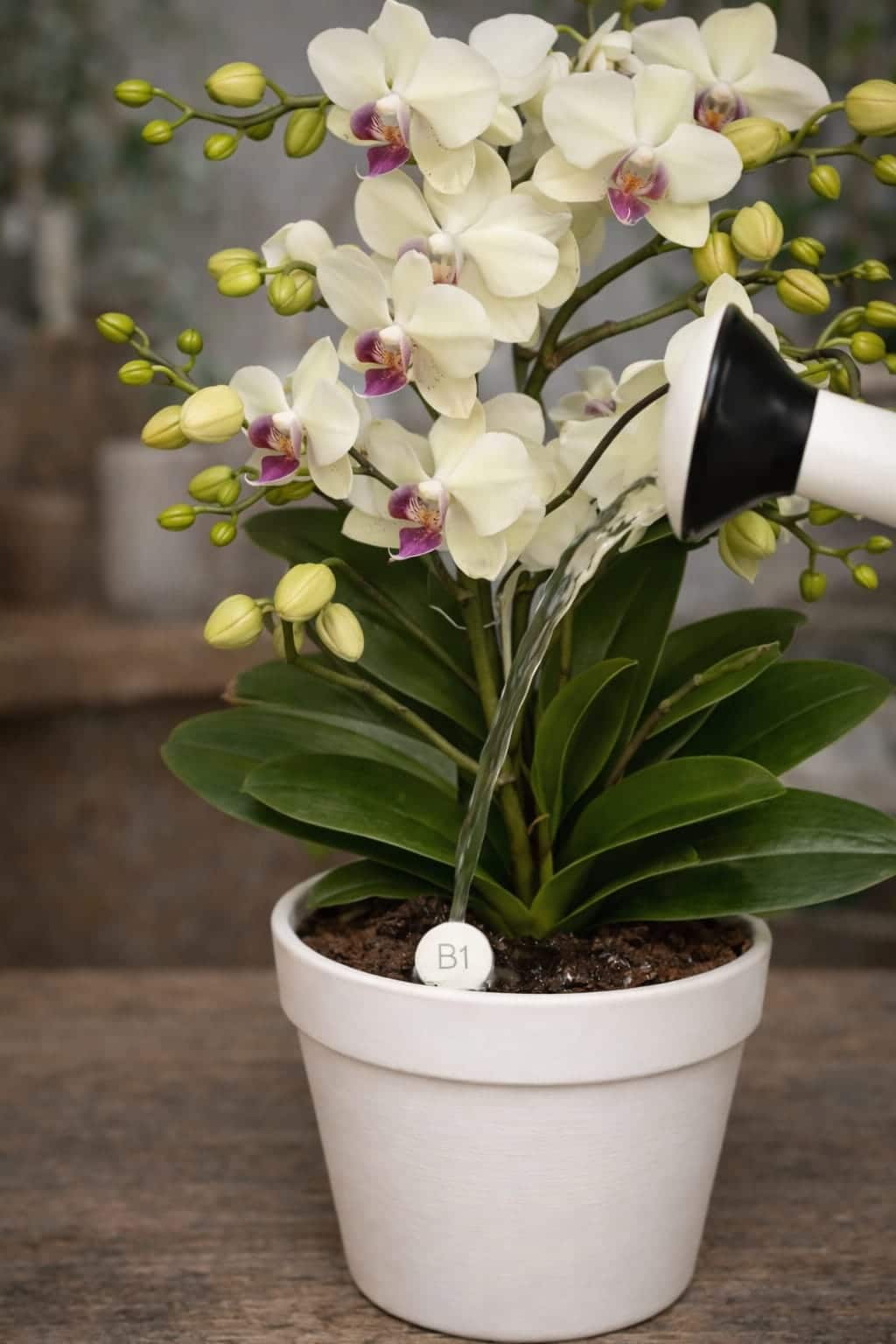
Why Some Orchids Seem to Bloom “Year‑Round”
People often say a trick made their orchid bloom for years without stopping. Usually, what really happened is that the orchid was already healthy and entered a strong care cycle.
A plant that has:
· strong roots (firm, active green tips)
· enough light (bright indirect)
· balanced watering (dry between)
· fresh medium (repotted recently)
· low stress (stable temperatures, good airflow)
can bloom longer and rebloom more reliably. A Phalaenopsis orchid, under ideal conditions, can produce a flower spike that lasts 2–3 months, rest for a few months, then spike again.
That does not mean the liquid caused everything by itself. It means the plant finally had what it needed. The liquid was a small helper, not the hero.
Signs Your Orchid Roots Are Improving
If your orchid is responding well to your care routine (with or without a supportive liquid), you may notice:
· new green root tips emerging from the base or through the bark
· silvery roots that plump up nicely after watering (not flat or wrinkled)
· firmer leaves that stand upright (not limp or droopy)
· fresh leaf growth (new leaves emerging from the center)
· stronger flower spikes later on (thicker, taller)
· buds holding longer without dropping
These are the real signs that the routine is working. Not overnight magic — just steady, visible improvement over weeks and months.
What to Avoid (Common Mistakes That Harm Roots)
If you want more roots and better blooms, avoid these common mistakes.
Pouring Thick, Sugary, or Heavy Homemade Mixtures
Milk, honey water (too concentrated), banana water (ferments quickly), or cooking water with salt can damage the root environment. Stick to mild, diluted options.
Watering Too Often
This is one of the biggest reasons orchids weaken. Constantly wet bark suffocates roots. Let the bark approach dryness before watering again.
Keeping Old Bark Too Long
Even a healthy plant struggles in broken‑down medium. Bark decomposes over 1–2 years. Repot when it looks dark, compacted, or smells musty.
Letting Water Sit in the Crown
Water trapped in the center of the leaves causes crown rot, which is almost always fatal. Always water the bark, not the leaves. If water gets in the crown, dry it with a tissue.
Chasing Every Viral Trick
Too many treatments (different liquids, powders, sprays) create stress instead of growth. Stick to one gentle routine and observe.
Ignoring the Roots
The most common mistake is treating the leaves or flowers while ignoring what is happening in the pot. Healthy roots = healthy orchid.
A Complete Orchid Root Care Routine (Weekly & Seasonal)
Here is a simple, proven routine that focuses on root health and leads to longer blooms.
Weekly (During Growing Season)
· Check bark moisture. Water if nearly dry.
· Inspect roots through clear pot or drainage holes.
· Remove any dead or yellow leaves.
· Wipe leaves with a damp cloth to remove dust.
Every 2 Weeks (Spring & Summer)
· Feed with diluted orchid fertilizer (quarter strength) after watering.
· Alternate with plain water.
Monthly
· Flush the pot with plain water to remove salt buildup.
· Check for pests (mealybugs, scale, spider mites).
Seasonal
Spring & Summer (Active growth)
· Bright indirect light.
· Water every 7–10 days (when bark is nearly dry).
· Fertilize every 2 weeks.
· Temperatures 65–80°F.
Fall & Winter (Rest period)
· Still bright light, but days are shorter — consider a grow light.
· Water less often (every 10–14 days).
· Stop fertilizing or reduce to once a month.
· Cooler nights (55–65°F) can trigger spikes for Phalaenopsis.
Annually
· Repot with fresh orchid bark.
· Trim dead roots.
· Choose a pot only 1–2 inches larger.
Frequently Asked Questions (Orchid Roots and Blooms)
How long does it take for orchid roots to multiply?
After improving care, you may see new root tips in 4–8 weeks. Full root recovery takes several months. Patience is essential.
Can I use hydrogen peroxide on orchid roots?
Diluted hydrogen peroxide (3% mixed with equal parts water) can be used to disinfect roots after trimming rot. Spray lightly, let it fizz, then rinse. Do not soak. This is an advanced step; for most cases, trimming and fresh bark are enough.
What is the best liquid for root growth?
A diluted seaweed or kelp extract is often cited as a gentle root stimulant. Use according to label (usually 1 tsp per gallon) once a month. It is not a miracle cure but can support healthy roots.
Why are my orchid roots turning black?
Black roots usually indicate rot from overwatering or old, broken‑down bark. Unpot, trim black roots, and repot in fresh bark.
Can I use Epsom salt for orchid root growth?
Epsom salt provides magnesium. It can help if your orchid has a magnesium deficiency (yellowing between leaf veins). Use 1 teaspoon per gallon of water once a month. It is not a general root booster.
How do I know if my orchid is getting enough light for root growth?
Leaves should be medium green. Dark green leaves mean too little light; reddish or yellow leaves mean too much direct sun. Adjust accordingly.
Will pouring rice water make my orchid bloom?
Rice water is a mild tonic, not a bloom trigger. Blooming requires light, temperature changes (for some orchids), and healthy roots. Rice water may support overall health, but it will not force flowers.
What is the single most important factor for orchid root health?
Fresh, airy bark and proper watering (let it dry between waterings) are more important than any liquid. Without those, nothing else works.
The Better Way to Think About Orchid Care
Instead of asking, “What can I pour under it?” ask these questions:
· Are the roots healthy? (Firm, green or silvery, active tips)
· Is the light good enough? (Bright indirect, 10–12 hours)
· Does the bark drain well? (Fresh, airy, not compacted)
· Am I watering properly? (Thoroughly, then let dry)
· Is the feeding gentle and consistent? (Diluted, only during growth)
Those questions lead to the kind of orchid care that actually works. No chasing viral liquids. No hoping for miracles. Just smart, steady habits.
Final Thoughts
So, can you pour something under your orchid and help the roots grow better?
Yes — but only if it is gentle, appropriate, and part of a good overall routine.
The real reason orchid roots multiply “like crazy” is not because of one miracle liquid. It is because the plant has:
· healthy airflow around the roots (fresh bark, good drainage)
· bright indirect light (energy for growth)
· balanced moisture (water thoroughly, then let dry)
· fresh medium (repot every 1–2 years)
· light support when needed (diluted fertilizer or mild tonic)
That is what creates stronger roots, healthier leaves, and blooms that return again and again.
Because with orchids, the best results rarely come from shortcuts. They come from giving the roots exactly what they have been waiting for.
So next time you see a video promising a single pour that changes everything, look closer. Check the roots. Feel the bark. Assess the light. Then decide if that liquid is actually needed — or if what your orchid really needs is better basics.
Pour wisely. And watch your orchid thrive.
Have you tried a homemade liquid on your orchid roots? Share your experience in the comments below. And if you found this guide helpful, save it for later or send it to a friend who wants stronger roots and longer blooms.