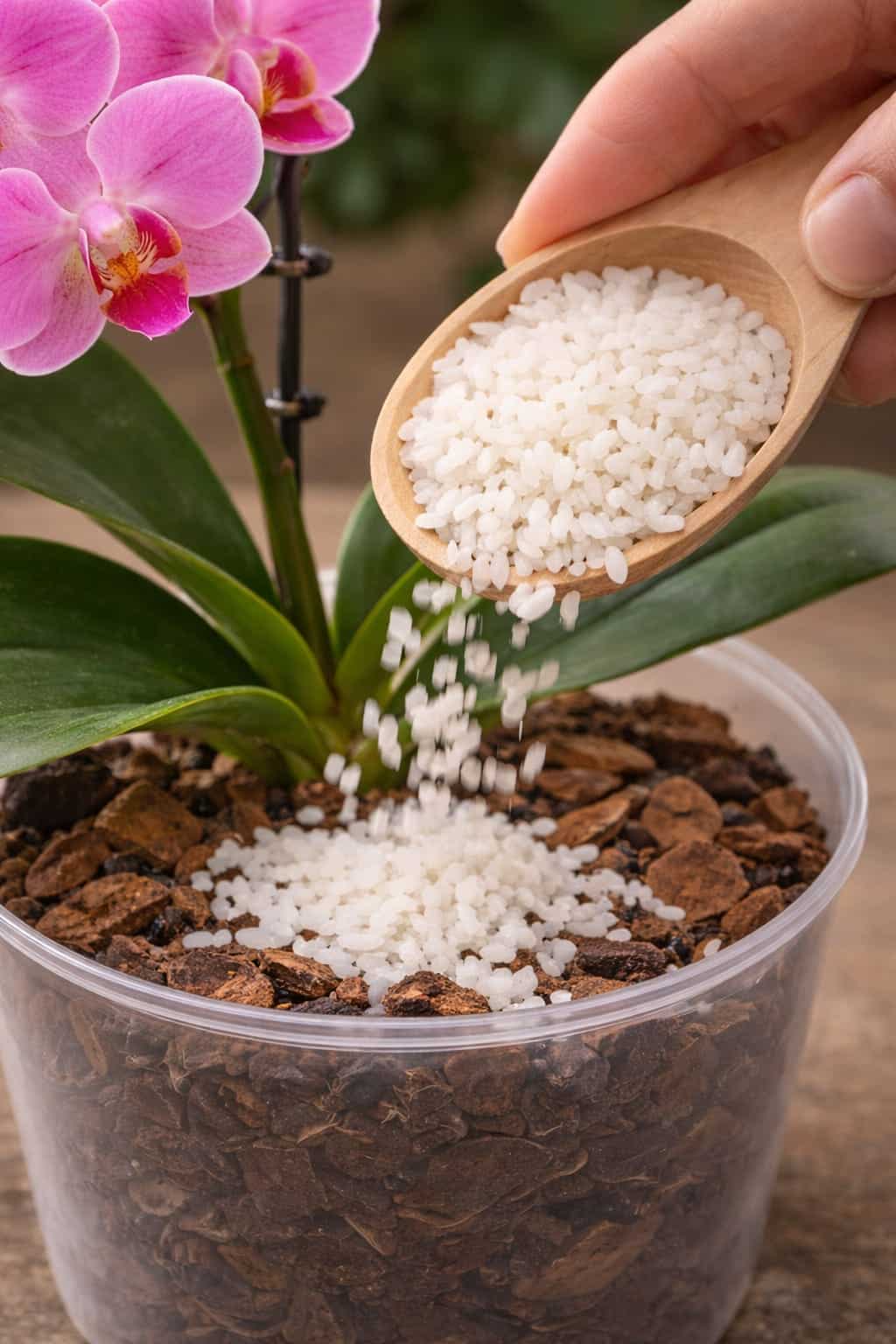
Orchid owners are always searching for simple, natural ways to keep their plants healthy and blooming. One of the most popular home tricks is rice water. You have probably seen videos showing cloudy rice water being poured into orchid pots with claims that it boosts roots, strengthens leaves, and encourages more flowers.
It sounds easy, inexpensive, and harmless.
But does it actually work?
The honest answer is: sometimes a little, but only when used correctly. Rice water is not a miracle fertilizer, and it will not fix weak roots, poor light, or bad watering habits. Still, when diluted and used carefully, it can act as a mild homemade tonic for orchids.
In this guide, you will learn exactly what rice water is, how to make it safely, when it helps, when it does nothing, and — most importantly — how to use it without harming your orchid.
What Is Rice Water?
Rice water is simply the cloudy water left behind after rinsing or soaking uncooked rice. That cloudy look comes from starch and small amounts of minerals released from the rice. For generations, gardeners in many cultures have used rice water on plants, believing it provides a gentle, natural boost.
Some plant lovers use it because they believe it offers:
· Trace minerals – Small amounts of potassium, phosphorus, magnesium, and zinc.
· Small amounts of nutrients – Nitrogen in very low concentrations.
· Light organic matter – Starches that can feed beneficial soil microbes.
· A mild natural boost for plant vigor – Without harsh chemicals.
This is why it has become so popular in home gardening, especially for orchids, which are often seen as delicate and in need of gentle care.
Can Rice Water Help Orchids?
Yes, it can help a little in some situations.
Used properly, diluted rice water may support:
· Slightly healthier‑looking roots – Some growers report more active root tips.
· Greener leaves – The trace minerals may support chlorophyll production.
· Better overall vigor – A very mild nutrient top‑up.
· A gentle boost during active growth – Spring and summer.
But the effect is usually mild, not dramatic. A healthy orchid may respond nicely to it. A struggling orchid with root rot, compacted bark, or poor light will not suddenly recover just because rice water was added.
Think of rice water as a light supplement — like a vitamin drink for a healthy person. It will not cure an illness, but it might support well‑being when everything else is already good.
Why People Think It Works So Well
Sometimes rice water seems to “work wonders” because the grower also improves other parts of the care routine at the same time.
For example, when someone starts using rice water, they often also begin to:
· check the roots more often (and notice problems earlier)
· water more carefully (because they are paying attention)
· place the orchid in better light (moving it to a windowsill)
· refresh the bark (because they are repotting anyway)
· pay closer attention to the plant overall
That full improvement is what usually creates the visible difference — not the rice water alone.
In controlled settings, the benefits of rice water are subtle. But in a home environment where care improves across the board, the plant looks better. The rice water gets the credit, but the real hero is better overall care.
The Biggest Mistake: Putting Raw Rice in the Pot
This is important.
Some videos show actual rice grains being poured into orchid bark. That is not a good orchid care method.
Raw rice in the pot can:
· rot over time, creating sour smells
· attract pests like fungus gnats, ants, and roaches
· encourage mold growth on the bark surface
· create bad smells as the rice ferments
· interfere with airflow around the roots, which orchids desperately need
Orchid roots need an airy, clean environment. Raw rice works against that. It also provides no benefit that diluted rice water does not already offer — and it comes with significant risks.
So if you want to try this method, use diluted rice water only, not raw rice.
How to Make Rice Water for Orchids (Safe, Simple Method)
A safe, simple version is easy. You do not need to ferment the rice water or let it sit for days. Fresh, diluted rice water is the safest option.
Method 1: Rinse Water (Quickest)
- Place ½ cup of uncooked, plain white or brown rice in a fine‑mesh strainer.
- Rinse the rice with cool water, gently swirling.
- Collect the cloudy white water in a bowl.
- Dilute this rinse water with an equal amount of fresh, clean water (1 part rice water to 1 part fresh water).
- Use immediately or within 24 hours.
Method 2: Soaked Rice Water (Slightly More Concentrated)
- Place ½ cup of rice in a bowl with 2 cups of water.
- Let it soak for 30 minutes, stirring occasionally.
- Strain out the rice (you can cook and eat it as usual).
- Dilute the soaking water with an equal amount of fresh water.
- Use within 24 hours.
Important Rules:
· Do not add salt, oil, or seasonings – Only plain rice and water.
· Do not use cooked rice water – It is too starchy and can spoil.
· Do not ferment the water – Fermented rice water is too strong and acidic for orchids.
· Do not store rice water for more than 24 hours – It ferments and grows bacteria.
· Always dilute – Undiluted rice water can leave a starchy residue on bark.
A weak, diluted solution is better than a strong one.
How to Use It Properly
If you want to use rice water on orchids, keep the method gentle.
Best Way to Apply:
· Pour the diluted rice water through the orchid bark or moss medium, just as you would with plain water.
· Let it drain fully from the pot — never leave the orchid sitting in rice water.
· Use it only occasionally (see frequency below).
· Do not replace every normal watering with rice water. Alternate with plain water.
What to Avoid:
· Do not pour rice water into the crown (center of leaves) — this causes crown rot.
· Do not use rice water on a newly repotted orchid (wait 4–6 weeks).
· Do not use rice water if the bark is already soggy — let it dry first.
How Often Should You Use Rice Water?
Moderation is the key. Orchids do not need constant feeding, even with mild supplements.
A Simple Approach:
· During active growth (spring and summer): Once every 2–3 weeks.
· During rest (fall and winter): Once a month or not at all.
· Do not use it with every watering – that can lead to residue buildup.
Too much rice water can leave organic residue in the pot and make the bark break down faster. It can also attract fungus gnats if the surface stays damp.
When Rice Water May Be Most Helpful
Rice water makes the most sense when:
· the orchid is already basically healthy (firm leaves, active roots)
· the bark is airy and drains well (not old and compacted)
· the roots are alive and active (green tips visible)
· the plant is in bright indirect light (east window or south with sheer curtain)
· you want a mild homemade supplement, not a cure for a sick plant
In that situation, it may give the plant a small supportive boost. Some growers report slightly greener leaves and more vigorous root growth after using diluted rice water consistently for a few months.
When It Will Not Help Much
Rice water will not solve bigger orchid problems like:
· Root rot – Mushy, black roots need trimming and fresh bark, not rice water.
· Soggy, broken‑down bark – Old bark needs replacement, not a tonic.
· Crown rot – This is fatal; rice water will not help.
· Very low light – No amount of rice water will create energy without light.
· Severely damaged roots – The orchid cannot absorb nutrients without roots.
· Poor drainage – A pot without holes is a death sentence.
If the plant is weak because the roots are failing, the real solution is root care, fresh bark, and better watering. Rice water is a supplement, not a rescue treatment.
Continue to Page 2
Continue to page 2 for more details about this article and the key points many readers miss on the first page.