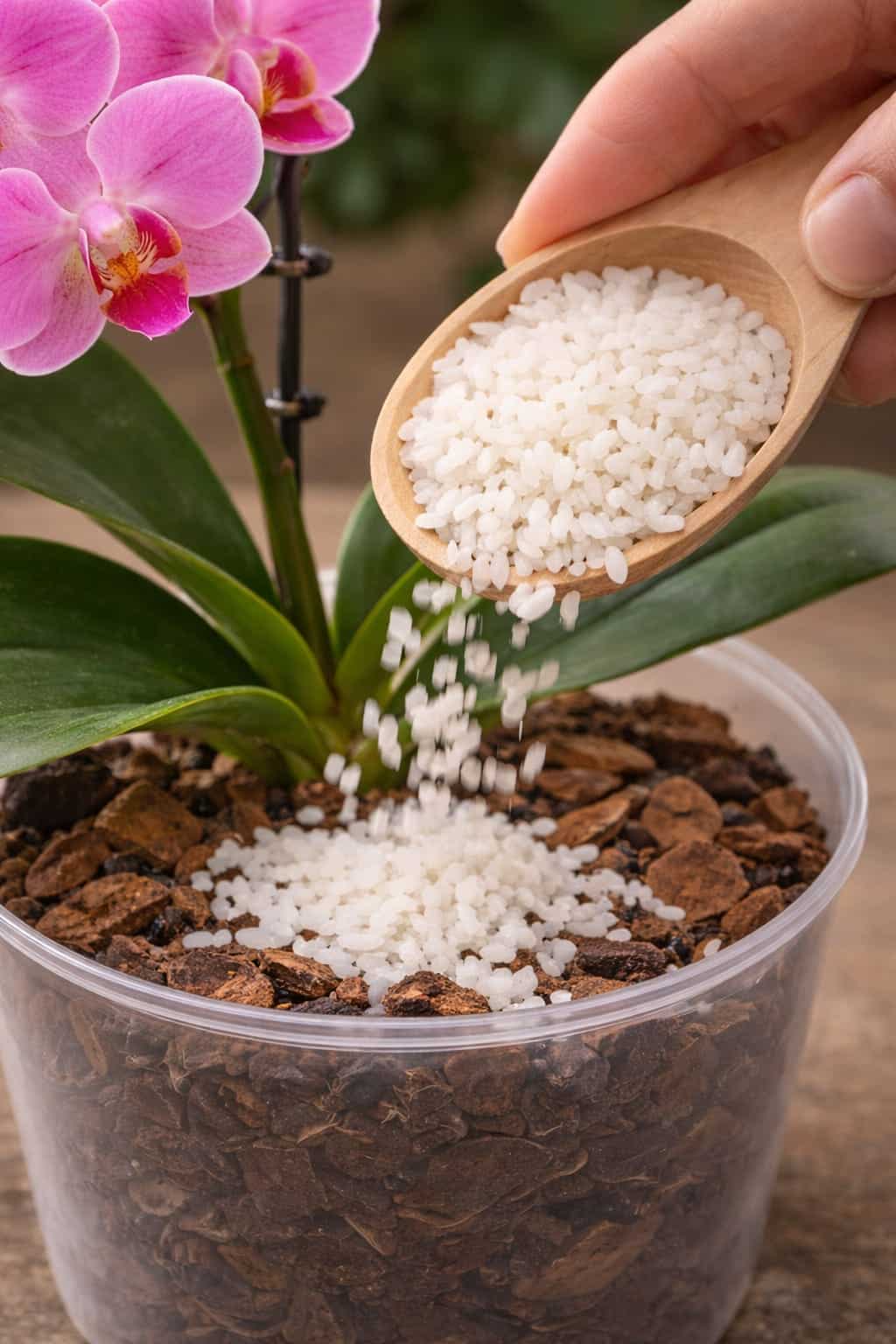
Better Basics Still Matter Most
If you want orchids to grow well, these still matter far more than rice water.
Bright Indirect Light
Orchids need enough light to stay strong and eventually bloom. An east window is ideal. A south window with a sheer curtain also works. Without light, no supplement will help.
Healthy Roots
Firm, active roots are the foundation of everything. Check them regularly. Trim rot. Repot when bark breaks down.
Airy Bark or Medium
Old, broken‑down bark can suffocate roots and hold too much water. Repot every 1–2 years with fresh orchid bark (fir or pine). Add perlite or charcoal for extra drainage.
Careful Watering
Water thoroughly, then let the medium drain and approach dryness before watering again. For bark‑grown orchids, this is usually every 7–10 days. Never let the pot sit in water.
Light Feeding
A proper orchid fertilizer used gently is still more reliable than random homemade tricks. Use a balanced fertilizer (20‑20‑20) diluted to quarter strength every other week during spring and summer.
Rice water can be an occasional addition to this routine, not a replacement for any of these basics.
Signs Your Orchid Is Responding Well
If your orchid likes the routine (with or without rice water), you may notice:
· firmer, more turgid leaves (not wrinkled or limp)
· greener root tips (bright green and growing)
· steadier growth (new leaves or roots every few weeks)
· better leaf color (medium green, not dark or pale)
· stronger overall appearance
These are the kinds of changes rice water may support when the rest of the care is already good. If you see these signs, your orchid is happy. Keep doing what you are doing.
Common Mistakes to Avoid
If you want to try rice water, avoid these errors.
Using Raw Rice in the Pot
As explained, raw rice rots, attracts pests, and blocks airflow. Never do this.
Using Thick or Fermented Rice Water
Letting rice water sit for days or weeks creates a fermented, sour liquid that can harm orchid roots. Always use fresh, diluted rice water within 24 hours.
Pouring It into Soggy Bark
If the bark is already wet, adding rice water will only increase moisture and risk rot. Wait until the bark is nearly dry.
Using It Every Watering
Too much rice water leaves starchy residue, which can break down bark faster and attract fungus gnats. Alternate with plain water.
Expecting It to Replace Fertilizer
Rice water is very low in nutrients compared to a balanced orchid fertilizer. It is a mild supplement, not a complete feed.
Ignoring the Roots
If your orchid has root rot, rice water will make things worse. Fix the roots first.
Rice Water vs. Commercial Orchid Fertilizer
Feature Rice Water Commercial Orchid Fertilizer
Nutrient concentration Very low Balanced, measurable
Consistency Varies by rice type Standardized
Risk of overuse Low if diluted Moderate if overused
Cost Free (from cooking) $5–15 per bottle
Effect on orchids Mild, supportive Strong, growth‑promoting
Best for Healthy plants as a tonic Active growth and blooming
Rice water is not a substitute for fertilizer. It is an occasional, gentle addition. For orchids that need real nutrition, use a proper orchid fertilizer.
Frequently Asked Questions (Rice Water for Orchids)
Can I use rice water on all types of orchids?
Yes, with caution. Phalaenopsis, Dendrobiums, Cattleyas, and other epiphytic orchids can tolerate diluted rice water. Avoid using it on orchids in sphagnum moss, which holds moisture longer and may develop mold.
How do I know if I am using too much rice water?
Signs of overuse include: white mold on the bark surface, a sour smell from the pot, fungus gnats, or leaves turning yellow. If you see these, stop using rice water and flush the pot with plain water.
Can I use brown rice water instead of white?
Yes. Brown rice water contains slightly more nutrients because the bran layer remains. Dilute it the same way. It may be cloudier — that is fine.
Will rice water make my orchid bloom?
Not directly. Blooming requires proper light, temperature changes (for some orchids), and a healthy root system. Rice water may support overall health, which can lead to better blooming over time, but it is not a bloom trigger.
Can I store rice water in the refrigerator?
You can store it for up to 24 hours in the refrigerator. After that, it begins to ferment and should be discarded. Fresh is always best.
Is rice water safe for orchid seedlings?
Very diluted rice water (1 part rice water to 2 parts fresh water) can be used sparingly on established seedlings. For very young seedlings in high‑humidity environments, plain water is safer to prevent mold.
What about using pasta water?
No. Pasta water often contains salt, which is harmful to orchids. Only use unsalted rice water.
Can I combine rice water with other homemade tonics?
It is best to use one supplement at a time. Combining banana water, rice water, and eggshell water can create imbalances and increase the risk of rot. Stick to one mild tonic at a time.
A Simple Rice Water Routine (If You Choose to Use It)
Here is a safe, low‑risk routine for using rice water on a healthy orchid.
Frequency: Once every 2–3 weeks during spring and summer. Once a month or less in fall and winter.
Preparation: Make fresh, diluted rice water (1:1 with plain water) on the day you plan to use it.
Application: Water your orchid with plain water first (to moisten the bark). Wait 10 minutes. Then pour a small amount of diluted rice water through the pot — about ¼ cup for a standard 4‑inch pot. Let it drain completely.
Aftercare: Return the orchid to its normal spot. Do not water again until the bark is nearly dry.
Observation: Monitor for any negative signs (mold, smell, pests). If none appear, continue. If you see issues, stop rice water and flush the pot.
Final Thoughts
So, does rice water for orchids actually work?
Yes — a little, when used correctly.
It can be a gentle natural method that supports a healthy orchid, but it is not a miracle treatment. The biggest mistake is thinking rice water alone will fix weak orchids or force more blooms.
The real secret is still the same:
· healthy roots (firm, active, free from rot)
· bright indirect light (energy for growth)
· airy medium (fresh bark, not compacted)
· careful watering (dry between waterings)
· gentle support (occasional rice water or proper fertilizer)
Rice water can be a small part of that routine. It is inexpensive, easy to make, and unlikely to harm if used sparingly.
But the reason orchids truly thrive is not because of one trendy trick. It is because their roots, light, and care are finally working together.
So go ahead — try diluted rice water on a healthy orchid if you like. Just remember to keep it mild, occasional, and never a substitute for the basics. And never, ever pour raw rice into your orchid pot.
Your orchid will thank you with firm leaves, active roots, and — with patience — beautiful blooms.
Have you tried rice water on your orchids? Share your experience in the comments below. And if you found this guide helpful, save it for later or send it to a fellow orchid lover who is wondering whether to pour that cloudy water into their pot.