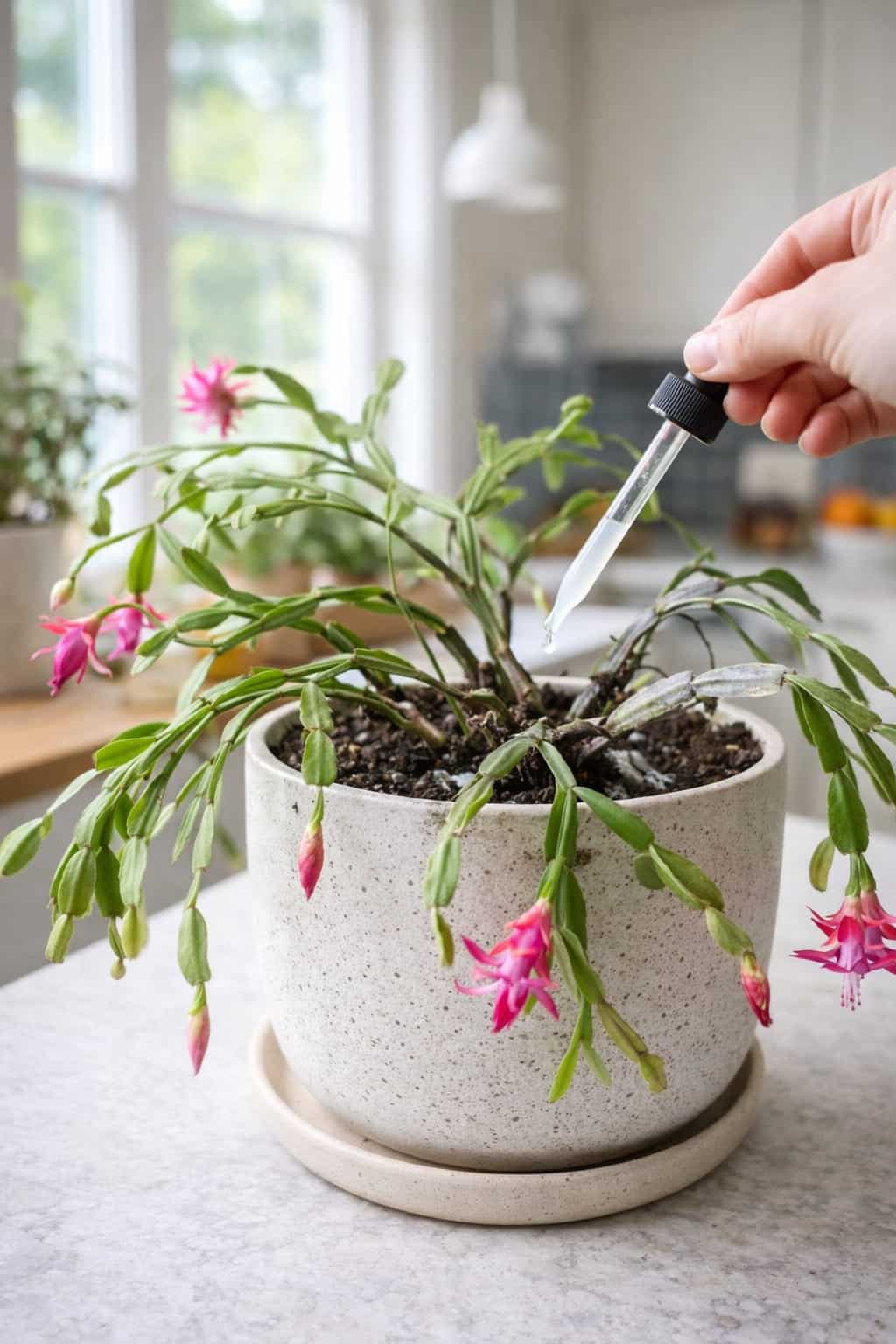
Is your Christmas cactus refusing to bloom? Learn the simple tricks – longer nights, cooler temperatures, careful watering, and stability. Get vibrant holiday blooms right on time.
Let’s be honest: a Christmas cactus (Schlumbergera) in full bloom can completely change the feeling of a room. Those bright pink, red, white, or coral flowers make the whole plant look festive, elegant, and full of life. But if you have ever grown one, you already know the frustrating part:
👉 Sometimes it grows plenty of green stems… and still refuses to bloom when you want it to.
That is why so many plant lovers go looking for “simple tricks” to make their Christmas cactus flower right on time. The good news is that this plant does not need anything complicated. In fact, the biggest secret is not a miracle ingredient at all.
It is timing.
Once you understand what this plant needs before bloom season, getting flowers becomes much easier.
In this complete guide, I’ll share the simple, proven tricks to make your Christmas cactus bloom right on time – from darkness and temperature to watering, light, and stability. No hype, just practical, season‑tested advice.
Why Christmas Cactus Does Not Bloom on Schedule
A Christmas cactus is not like a regular leafy houseplant. It follows signals from its environment. If those signals are missing, the plant may stay healthy and green without producing many blooms.
The Most Common Reasons It Fails to Flower
Reason Effect
Too much warmth No cool nights – no bud trigger.
Too much evening light Interrupts the dark period.
Irregular watering Stress, bud drop.
Constant disturbance Moving the plant during budding.
No cool resting period Missing seasonal cue.
Weak growing conditions Not enough energy for flowers.
In other words, a Christmas cactus blooms when it feels that the season is changing. If your home conditions stay the same all the time, the plant may never get the message.
The Biggest Trick: Give It a Rest Before Bloom Time
This is the most important step.
If you want your Christmas cactus to bloom on time, it needs a short pre‑bloom period where conditions become a little cooler and a little drier. This tells the plant to stop focusing only on growth and start preparing buds.
What to Do (6–8 Weeks Before Desired Bloom Time)
· Move it to a slightly cooler place.
· Reduce watering a bit.
· Stop heavy feeding.
· Give it long periods of darkness at night.
That is the real trigger.
Darkness Matters More Than Most People Think
One of the easiest tricks is also one of the most overlooked.
Christmas cactus needs long, uninterrupted nights to set buds. If it stays near lamps, TVs, or bright room lighting late into the evening, blooming can be delayed or reduced.
How to Create the Right Darkness
· Give it 12–14 hours of darkness each night.
· Do this consistently for 6–8 weeks.
· Cover the plant with a box or move it to a dark closet if needed.
· Even a small amount of light (hallway lamp, streetlight) can disrupt the process.
That one change can make a huge difference.
Cooler Temperatures Help Bud Formation
This plant usually responds better when nights are cooler before blooming starts.
It does not need freezing temperatures, but it does like a mild drop in warmth compared to normal indoor comfort.
Ideal Temperature Range
Time Temperature Effect
Daytime 65–75°F (18–24°C) Normal growth
Nighttime (for 6–8 weeks) 50–55°F (10–13°C) Triggers bud formation
Below 50°F Cold damage – avoid
A cooler room, enclosed porch, or bright area away from heat vents can help the plant shift into bloom mode.
Warm nights often lead to weak bud formation, fewer flowers, and slower blooming. Cooler nights encourage the opposite.
Water Less Before Blooming, Then Balance It Again
Many people make one of two mistakes:
· Keeping the plant too wet.
· Letting it become bone dry for too long.
Watering Guidelines for Blooming
Phase Watering
Spring & Summer (growth) Keep soil evenly moist. Water when top inch feels dry.
Early Autumn (bud induction – 6–8 weeks before desired bloom) Slightly reduce watering. Let the top inch dry out more.
After buds appear Keep soil lightly moist – never let it dry completely.
During bloom Water normally, avoid wetting flowers.
After blooming (rest period) Reduce water for 4–6 weeks.
A good rhythm is: let the top layer dry slightly, water gently and evenly, and never leave roots sitting in stagnant water. The plant likes balance more than extremes.
Continue to Page 2
Continue to page 2 for more details about this article and the key points many readers miss on the first page.