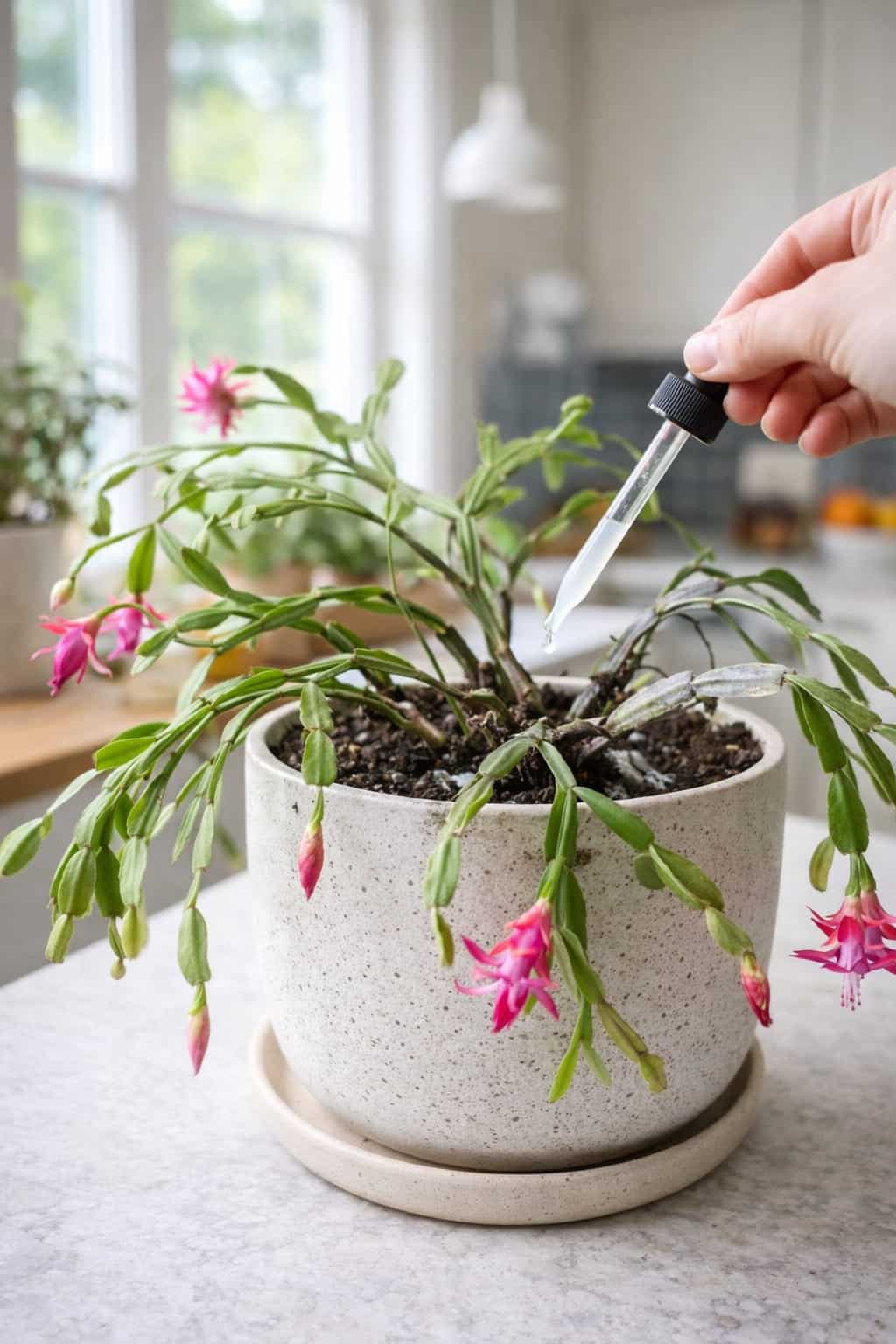
Bright, Indirect Light Is Still Essential
A Christmas cactus may survive in a dim corner, but it will not perform at its best there. If you want plenty of blooms, place it in bright indirect light during the day.
Light Level Guide
Light Level Bloom Potential
Low light (north window, dark corner) Very low – few or no blooms.
Medium light (few feet from east/west window) Occasional blooms.
Bright indirect (right by east/west window) Best – abundant blooms.
Direct afternoon sun Leaf scorch – avoid.
Good light helps the plant:
· Build energy.
· Support stronger stems.
· Form more buds.
· Hold blooms longer.
Too much harsh direct sun can stress it, but too little light is just as unhelpful.
Do Not Move It Too Much Once Buds Appear
This is one of the simplest tricks of all:
👉 Leave it alone once it starts budding.
Christmas cactus can be sensitive when buds are forming. If you keep moving it, rotating it, or changing its environment too often, it may respond by dropping buds.
What to Do Once You See Small Buds
· Keep it in the same place.
· Keep the care routine steady.
· Avoid sudden changes in light, heat, or watering.
Consistency is what keeps those buds moving toward full flowers.
Light Feeding Can Help During the Growing Season
If your plant looks weak or thin, it may not have enough strength to bloom well. A light balanced fertilizer during the active growing season can help build stronger stems before the bloom cycle begins.
Fertilizer Schedule
Time Action
Spring & Summer (active growth) Feed every 4–6 weeks with a balanced liquid fertilizer (e.g., 20-20-10) at half strength.
Early Autumn (before bud induction) Stop feeding.
During bud formation & blooming Do not fertilize.
After blooming (rest) No fertilizer for 4–6 weeks.
Healthy growth first leads to better blooming later.
A Simple “Extra Trick” People Like to Try
Some gardeners use mild homemade plant tonics, such as diluted rice water or gentle natural feeds, during the growing season. These may give the plant a small boost if the soil is tired and the roots are healthy.
But this is important:
👉 These are optional extras, not the real secret.
The real secret is still:
· Darkness – long, uninterrupted nights.
· Cooler nights – temperature drop.
· Steady light – bright indirect during the day.
· Careful watering – not too much, not too little.
· Less disturbance – don’t move the plant.
That is what makes the biggest difference.
Common Mistakes That Stop Blooming
If your Christmas cactus is not blooming on time, check for these:
Mistake Why It’s Harmful
Too much indoor light at night Interrupts dark period, no buds.
Constantly warm temperatures No cool trigger.
Overwatering Root rot, bud drop.
Very low light during the day No energy for flowers.
Moving the plant too often Stress, bud drop.
Feeding heavily during bloom prep Pushes leaf growth, not flowers.
No rest period before flowering Plant never shifts to bloom mode.
These small mistakes can delay the whole process.
Signs Your Plant Is Getting Ready to Bloom
If your Christmas cactus is responding well, you may notice:
· Tiny pointed buds forming at stem tips.
· Stronger upright growth before arching.
· Richer color in the segments.
· More active branching.
· Swelling buds over time.
At that stage, patience becomes important. Once buds appear, the goal is to keep conditions stable.
Bloom Timeline – When to Start for Holiday Blooms
Desired Bloom Time Start Dark/Cool Treatment
Thanksgiving Mid‑September
Christmas Early October
Easter Late January
Mother’s Day Mid‑March
Count back 6–8 weeks from your target bloom date. Start the dark/cool treatment at that time.
Printable Christmas Cactus Bloom Checklist
☐ In spring/summer: bright indirect light, water when top inch dry, feed every 4–6 weeks.
☐ In early autumn (6–8 weeks before desired bloom): start dark treatment – 12–14 hours of complete darkness each night.
☐ Also provide cooler nights (50–55°F / 10–13°C) for 6–8 weeks.
☐ Reduce watering slightly – let top inch dry out more.
☐ Stop fertilizing.
☐ After 4–6 weeks, small buds appear – stop dark treatment.
☐ Once buds appear, keep soil lightly moist, return to normal room temp.
☐ Do not move the plant once buds form.
☐ After blooming, rest the plant (reduce water, no fertilizer) for 4–6 weeks.
☐ Prune lightly after rest to encourage branching.
Frequently Asked Questions (FAQs)
Q: How long does it take for Christmas cactus buds to appear?
A: After starting the dark/cool treatment, buds usually appear in 4–6 weeks.
Q: Can I make my Christmas cactus bloom at a different time (like Easter)?
A: Yes – count back 8–10 weeks from your desired bloom date. Start the dark/cool treatment at that time.
Q: Why are my Christmas cactus buds falling off before opening?
A: Bud drop is usually caused by environmental stress – moving the plant, temperature swings, drafts, overwatering, or underwatering. Keep conditions stable.
Q: Should I fertilize my Christmas cactus while it’s blooming?
A: No – stop fertilizing when buds appear. Resume after blooming.
Q: How long do Christmas cactus flowers last?
A: Each flower lasts 5–7 days, but because buds open sequentially, the overall bloom period can last 4–6 weeks.
Q: Can I put my Christmas cactus outside in summer?
A: Yes – place it in a shady spot (no direct sun). Bring inside before temperatures drop below 50°F. Outdoor light and humidity can boost growth.
Q: Is the Christmas cactus toxic to pets?
A: No – it’s non‑toxic to cats and dogs according to the ASPCA. However, ingestion may cause mild stomach upset.
Final Thoughts – Timing Is Everything
If you want your Christmas cactus to bloom right on time, you do not need complicated tricks.
The best approach is simple:
· Give it bright indirect light during the day.
· Provide cooler nights before bloom season (50–55°F / 10–13°C).
· Give it longer darkness – 12–14 hours of uninterrupted night for 6–8 weeks.
· Reduce watering slightly before bud formation, then keep it balanced.
· Avoid moving it once buds appear.
· Be patient – buds take weeks to develop.
That is the formula.
And once you get the timing right, this plant can surprise you with one of the most beautiful indoor flower displays of the season.
Because the real trick is not forcing blooms.
👉 It is giving your Christmas cactus the exact signals it has been waiting for.
Now it’s your turn! Have you tried these tricks on your Christmas cactus? What worked – or didn’t? Drop a comment below – I’d love to hear your experience.
And if you found this guide helpful, share it with a friend who loves Christmas cacti. Pin it for later, and subscribe to our newsletter for more seasonal plant care tips.
Stay dark, stay cool, and enjoy those holiday blooms. 🌵🌸✨