Secret 4: Keep the Pot Slightly Snug
Snake plants often produce pups when they feel slightly snug in their pots. A very large pot can delay visible growth because the plant may focus on expanding roots instead of sending up shoots.
This does not mean the plant should be severely root-bound forever. But a slightly snug pot can encourage a fuller look.
If you repot a snake plant into a pot that is much too large, the soil may also stay wet too long. That creates another problem.
When repotting, choose a pot only one size larger than the current pot.
A stable root environment encourages new growth.
Secret 5: Use Fast-Draining Soil
Snake plants need soil that drains quickly. Heavy soil holds too much moisture and can suffocate roots.
A good snake plant mix should be airy and gritty.
You can use:
Cactus mix
Succulent mix
Potting soil mixed with perlite
Potting soil mixed with sand and bark
A well-draining houseplant blend
A simple mix is:
50% cactus or succulent mix
25% perlite
25% regular potting soil
This gives the roots structure, drainage, and enough support.
When soil drains well, the plant is less likely to suffer from overwatering, and healthy roots are more likely to produce pups.
Secret 6: Keep the Plant Warm
Snake plants grow best in warm indoor temperatures. Cold conditions slow growth and can stop pup production.
If your plant is near a cold window, drafty balcony door, or air conditioner, it may stay alive but grow very slowly.
Keep snake plants away from:
Cold drafts
Freezing windows
Air conditioning vents
Cold balcony nights
Sudden temperature changes
Warm, stable conditions help the plant stay active.
If you want babies, warmth matters.
Secret 7: Do Not Repot Too Often
Some plant owners repot every time they think a plant is not growing. But frequent repotting can stress snake plants and delay new shoots.
After repotting, the plant may focus on adjusting and growing roots before producing pups. This can take time.
Repot only when needed.
Signs your snake plant may need repotting include:
Roots pushing out of drainage holes
The pot is cracking or bulging
Water runs through too quickly
The plant is extremely crowded
The soil has become poor or compacted
If the plant is healthy and only slightly snug, leave it alone. It may reward you with pups.
Secret 8: Feed Lightly During Growing Season
Snake plants do not need heavy feeding, but light fertilizer during spring and summer can support growth.
Use a balanced houseplant fertilizer or a cactus fertilizer diluted to half strength. Apply once a month during active growth.
Avoid fertilizing in winter if the plant is not actively growing.
Too much fertilizer can damage roots or create salt buildup. The goal is gentle support, not forcing growth.
A healthy, lightly fed snake plant in bright light is more likely to produce babies.
Secret 9: Be Patient With New Shoots
Snake plant pups do not always appear quickly. Sometimes the plant spends weeks or months building strength underground before anything shows above the soil.
This can make it seem like nothing is happening.
But if the plant is in good conditions, it may be preparing to send up new shoots. Once a pup appears, it can grow surprisingly fast.
The key is not to disturb the soil constantly. Do not dig around looking for babies. This can damage young shoots before they emerge.
Give the plant time.
Secret 10: Watch the Base of the Plant
If your snake plant is preparing to make babies, you may notice small bumps or pointed shoots emerging from the soil near the main leaves.
These new shoots may look like tiny green spears at first. They can appear close to the mother plant or near the edge of the pot.
Once you see one, avoid overwatering or disturbing it. Let it grow naturally.
A baby snake plant starts small, but it can eventually become a strong new cluster of leaves.
How the Cinnamon Method Fits Into This Routine
The gentle cinnamon method works best as a small part of this bigger care system.
Use it as a light soil-surface routine while focusing on the main growth triggers:
Better light
Less frequent watering
Good drainage
Warmth
Slightly snug pot
Fast-draining soil
The cinnamon method may make the routine feel more complete and intentional, but the plant still needs the right environment to produce pups.
This is why some people see better results than others. The method looks the same on video, but the growing conditions behind the camera may be very different.
Why This Method Became Viral
The cinnamon method became popular because it has everything a viral plant trick needs.
It is visual.
It is simple.
It uses a familiar ingredient.
It promises a result people want.
It feels natural.
It is easy to explain in a short video.
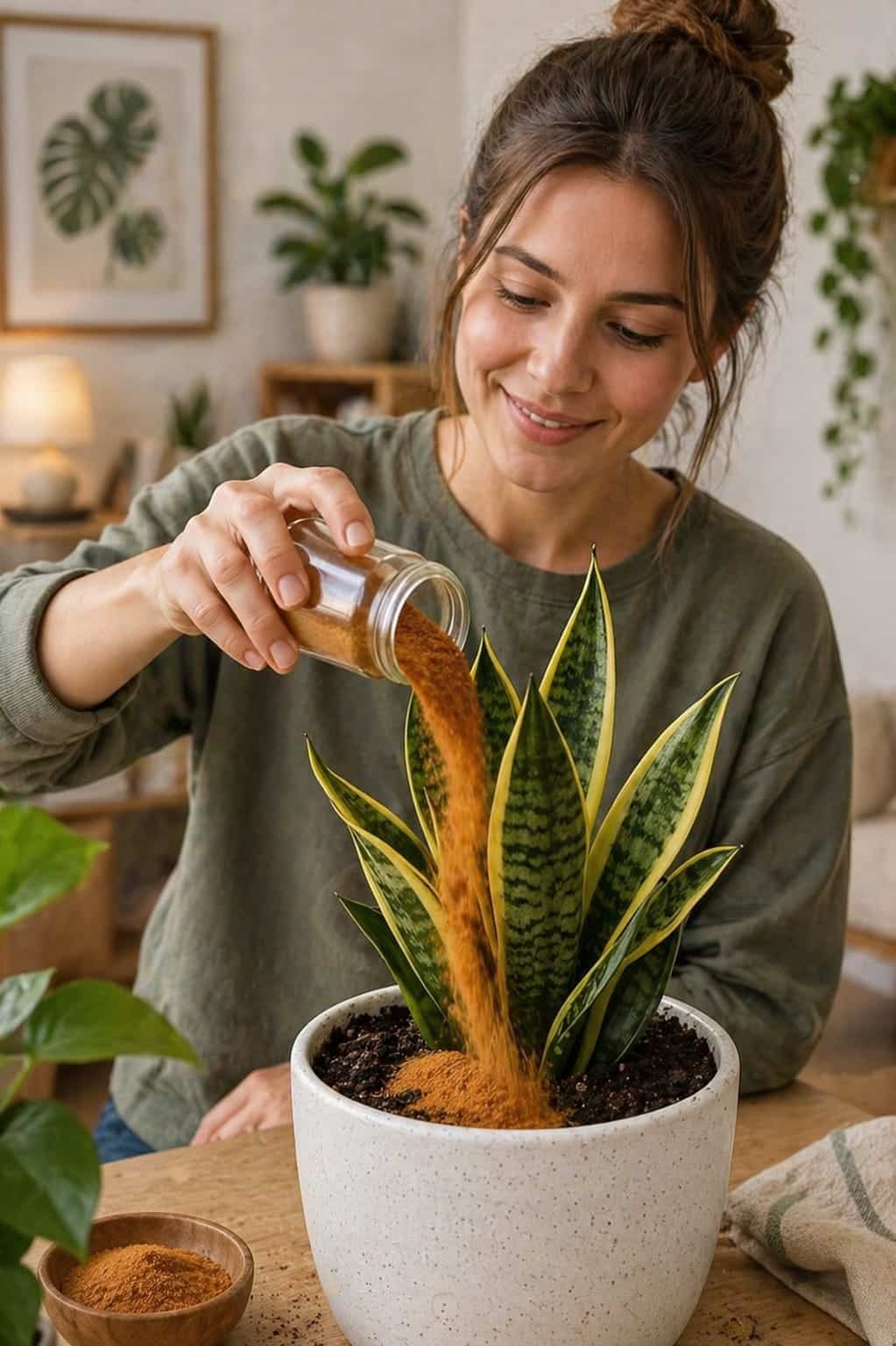
A person pouring cinnamon around a snake plant immediately creates curiosity. Viewers want to know why it is being used and what happens next.
The caption “Snake plant not making babies?” is powerful because it speaks directly to a common frustration. Many people own snake plants that never seem to multiply. A simple trick that promises babies naturally gets attention.
The Aesthetic Appeal of Snake Plants
Snake plants are not only grown for plant collections. They are also used heavily in home decor.
Their upright leaves create strong vertical lines, which makes them perfect for modern interiors. They look beautiful in ceramic pots, stone planters, woven baskets, metal stands, and minimalist containers.
A fuller snake plant looks especially attractive because it has more volume and structure. When pups fill the pot, the plant looks more expensive and established.
Snake plants work well in:
Living rooms
Bedrooms
Entryways
Office corners
Balconies
Bathrooms with light
Hallways
Minimalist shelves
This is why people are so eager to encourage babies. A fuller snake plant can instantly improve the look of a room.
The Difference Between Survival and Growth
One of the biggest misunderstandings about snake plants is the difference between survival and growth.
A snake plant can survive in poor conditions for a long time. It may stay green and upright, but that does not mean it is thriving.
Thriving means:
New leaves appear
Pups emerge
Leaves stay firm
Color looks strong
Roots are healthy
The plant slowly expands
If your snake plant has not changed in months, it may be surviving rather than actively growing.
To move it from survival to growth, improve light, soil, drainage, and watering. The cinnamon method can be part of the ritual, but the environment is what truly pushes the plant forward.
Best Placement for a Snake Plant That Needs Babies
Placement can make a big difference.
If your snake plant is sitting in a dark hallway or corner far from windows, move it closer to natural light.
Best placements include:
Near a bright window
Near a balcony door
In a sunny room with filtered light
On a plant stand near indirect light
Beside a desk with bright daylight
Avoid placing it in harsh direct sun immediately if it has been in low light for a long time. Move it gradually so the leaves adjust.
Better placement often leads to stronger growth within the growing season.
What to Do If Your Snake Plant Has Not Grown in a Year
If your snake plant has not grown at all in a year, check these points:
Is it getting enough light?
Is the soil too wet?
Is the pot too large?
Does the pot have drainage?
Is the room too cold?
Has the soil become compacted?
Are the roots healthy?
Most slow-growth problems come from one of these issues.
Start by moving the plant to brighter indirect light. Then adjust watering. If the soil is heavy or the pot has no drainage, fix that next.
Once the basics improve, the plant has a much better chance of producing pups.
Should You Separate Snake Plant Babies?
When a pup appears, you do not need to separate it immediately. In fact, leaving babies attached helps create a fuller plant.
If your goal is a giant showpiece, let the babies grow in the same pot. Over time, the plant will become denser and more dramatic.
Separate pups only if:
The pot is overcrowded
You want new plants
The pup has its own roots
The mother plant is too crowded
You are repotting anyway
To create a fuller look, leave several pups in place.
How to Make a Snake Plant Look More Expensive
A snake plant can look much more expensive with the right styling and care.
Use a simple decorative pot.
Keep leaves clean and dust-free.
Remove damaged leaves.
Let pups fill the pot.
Place it in bright indirect light.
Use a plant stand for height.
Pair it with neutral decor.
Avoid overcrowding the area around it.
A full snake plant in a clean pot can look like a high-end interior design piece.
Common Mistakes That Stop Snake Plant Babies
Avoid these mistakes if you want pups:
Keeping the plant in low light
Watering too often
Using a pot without drainage
Repotting into a huge pot
Using heavy soil
Keeping the plant cold
Overfertilizing
Moving it constantly
Digging in the soil to check for pups
Expecting instant results
Snake plants reward stability. Give them the right conditions and time.
Snake Plant Baby Growth Checklist
Use this checklist if your snake plant is not making babies:
Bright indirect light
Dry soil between waterings
Drainage holes
Fast-draining soil
Slightly snug pot
Warm room
Light feeding in spring and summer
No frequent repotting
Clean leaves
Patience
If most of these are in place, your snake plant has a much better chance of producing new shoots.
Cinnamon Method Care Table
| Step | What to Do | Why It Matters |
|---|---|---|
| Check soil | Make sure top soil is slightly dry | Avoid adding powder to soggy soil |
| Use small amount | Apply only a light sprinkle | Prevents buildup |
| Avoid leaf base | Do not pile powder against leaves | Keeps base clean |
| Place in light | Use bright indirect light | Supports growth energy |
| Water carefully | Let soil dry before watering again | Prevents root stress |
| Stay consistent | Repeat only occasionally | Keeps routine gentle |
Frequently Asked Questions
Why is my snake plant not making babies?
Your snake plant may not be getting enough bright light, or it may be in soil that stays too wet. Other reasons include a pot that is too large, poor drainage, cold temperatures, or slow natural growth.
What are snake plant babies called?
They are commonly called pups, offsets, or baby shoots. They grow from the underground rhizome system and push up through the soil.
Can cinnamon help a snake plant make babies?
Many plant lovers use a gentle cinnamon method as part of a natural care routine. It is usually applied lightly around the soil surface while also improving light, watering, and drainage.
How do I use cinnamon on a snake plant?
Use a small amount and sprinkle it lightly around the soil surface. Avoid piling it directly against the leaves. Keep the routine gentle and occasional.
How often should I use cinnamon on my snake plant?
It is usually used occasionally, not daily or weekly. A light touch is better than heavy application.
Does cinnamon replace fertilizer?
No. Cinnamon is not used as a regular fertilizer. If your plant needs nutrients, use a diluted houseplant or cactus fertilizer during the growing season.
What is the best way to encourage snake plant pups?
Give the plant bright indirect light, fast-draining soil, a pot with drainage, warm conditions, and careful watering. A slightly snug pot can also help.
Do snake plants like small pots?
Snake plants often do well in slightly snug pots. However, if the plant is extremely crowded or the pot is cracking, it may need repotting.
Should I repot my snake plant to make it produce babies?
Not always. Repotting too often can delay growth. Only repot if the plant is very crowded, the soil is poor, or the roots are pushing strongly out of the pot.
How long does it take for snake plant pups to appear?
It can take weeks or months, depending on light, temperature, root health, and the plant’s maturity. Snake plants are naturally slow growers.
Can a snake plant make babies in low light?
It can happen, but it is less likely. Bright indirect light gives the plant more energy to produce new growth.
Should I remove snake plant babies?
If you want a fuller plant, leave the babies in the pot. If you want to propagate, wait until the pup has roots before separating it.
Why is my snake plant alive but not growing?
It may be surviving in low light or imperfect conditions. To encourage growth, improve light, soil, warmth, and watering habits.
Can too much water stop snake plant pups?
Yes. Overwatering stresses the roots and can prevent healthy growth. Let the soil dry out between waterings.
What kind of soil is best for snake plants?
A fast-draining cactus or succulent mix is ideal. You can also mix potting soil with perlite to improve drainage.
Final Thoughts
A snake plant that is not making babies can feel frustrating, especially when the plant looks healthy but refuses to grow. You may wait for months and see no new shoots, no pups, and no change in the pot. But with the right routine, a slow snake plant can often become active again.
The gentle cinnamon method has become popular because it is simple, natural-looking, and easy to try. A light sprinkle around the soil surface feels like a small plant care secret, and it fits perfectly with the kind of easy indoor gardening routines people love.
But the real magic happens when this method is combined with proper snake plant care.
If you want your snake plant to produce babies, focus on the conditions that encourage growth. Give it bright indirect light. Let the soil dry between waterings. Use a pot with drainage. Keep the soil fast-draining. Avoid oversized pots. Keep the plant warm and stable. Feed lightly during the growing season. Most importantly, be patient.
Snake plants do not always grow quickly, but when they finally begin producing pups, the transformation is worth the wait.
A single upright plant can slowly turn into a full, dramatic cluster of leaves. New shoots can push through the soil and fill empty spaces. Over time, your snake plant can become bigger, bolder, and more beautiful.
The cinnamon method may be the simple step that gets your attention, but the full routine is what helps your plant become a true showpiece.
If your snake plant is not making babies, do not give up on it. Give it better light, better soil, better watering habits, and a little gentle care. With time, those quiet roots may surprise you by sending up the new shoots you have been waiting for.