Why Terracotta Pots Work Well
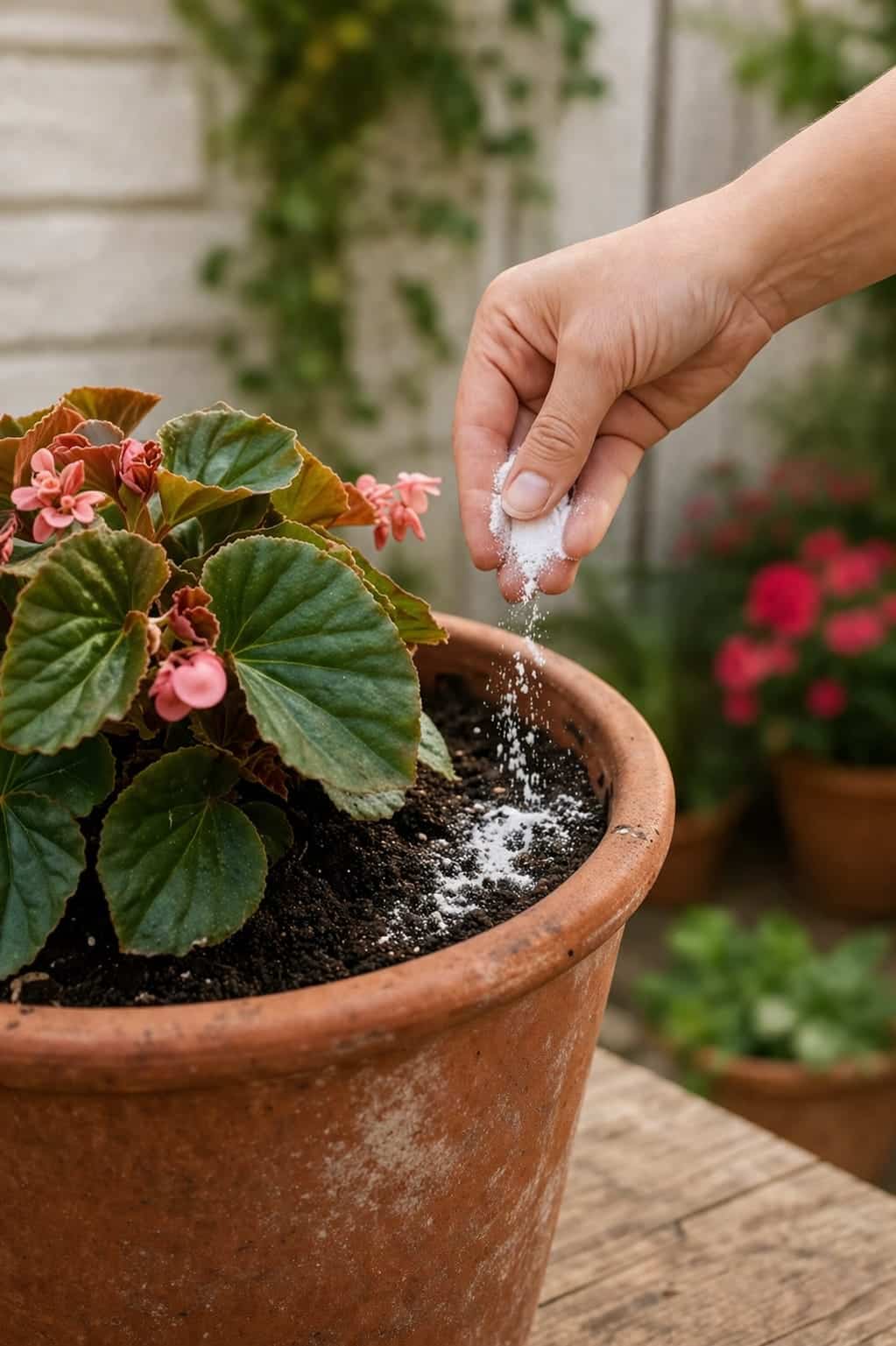
The image shows a begonia in a terracotta pot. Terracotta is helpful because it breathes and allows moisture to evaporate through the pot walls. This can reduce the risk of soggy soil.
However, terracotta also dries faster, especially outdoors or in warm rooms. That means you need to check moisture more often.
For begonias, terracotta can be excellent if you water consistently and do not let the plant dry out completely for too long.
How to Water Begonias Correctly
Water begonias when the top inch of soil feels slightly dry. Use room-temperature water and pour at the base of the plant. Let excess water drain away.
Do not leave the pot sitting in water. Do not keep the soil constantly soggy. Do not let the plant wilt repeatedly from dryness.
Begonias like steady moisture, not extremes.
Why Begonia Leaves Turn Brown
Begonia leaves can turn brown from too much direct sun, underwatering, low humidity, overwatering, fertilizer burn, or disease. Brown crispy edges often suggest dryness or sun stress. Soft brown patches may suggest too much moisture or fungal issues.
If your begonia leaves are browning, do not automatically add eggshell powder. First check light, watering, and airflow.
The powder is a support trick, not a cure for every leaf problem.
Why Begonia Leaves Turn Yellow
Yellow leaves often mean watering stress. Too much water is a common cause, especially in pots without drainage. Low light can also cause yellowing. Old lower leaves may naturally yellow and drop as the plant grows.
If many leaves are yellowing, check the roots and soil. If the soil smells sour or stays wet for days, the plant may need repotting.
Do not keep sprinkling powders on a plant with wet, unhealthy soil.
Why Begonia Flowers Drop
Begonia flowers can drop when the plant is stressed. Common reasons include heat, dryness, sudden movement, low light, overwatering, or lack of nutrients.
To reduce flower drop, keep care steady. Avoid moving the plant from shade to harsh sun suddenly. Water consistently. Deadhead old flowers. Feed lightly during active growth.
Eggshell powder may support long-term strength, but flower drop is usually caused by care conditions.
Can You Use Eggshell Water Instead?
Some gardeners soak eggshells in water and use the liquid on plants. You can do this, but it is usually very mild because eggshells do not dissolve quickly in plain water.
For a simple visible trick like the image, fine eggshell powder is better. It is easy to sprinkle, easy to store, and easy to explain.
Use it lightly and let it break down slowly in the soil.
Can You Use Baking Soda on Begonias?
Do not use baking soda as a soil sprinkle for begonias. Baking soda can change soil conditions and may stress roots if overused. It is sometimes discussed in relation to fungal issues, but it is not the right choice for this soil-support trick.
The white powder in this routine should be eggshell powder, not baking soda.
Begonias prefer gentle, balanced care.
Can You Use Epsom Salt Instead?
Epsom salt is another white plant-care ingredient, but it serves a different purpose. It contains magnesium sulfate and should be used only when appropriate and very diluted. It is not the same as eggshell powder.
For this image, eggshell powder is the better match because it can be sprinkled dry around the soil in a terracotta pot and presented as a gentle bloom-support amendment.
Do not mix many powders at once. Choose one simple trick.
Can You Use Diatomaceous Earth?
Diatomaceous earth is used for pest control, not as a bloom-support powder. If your begonia has crawling pests or fungus gnats, food-grade diatomaceous earth may be used carefully on dry soil. But if the goal is general plant support and blooming, eggshell powder is a better story.
Use the right powder for the right problem. Eggshell powder supports soil slowly. Diatomaceous earth helps with pests when dry.
Can Eggshell Powder Attract Pests?
Clean, dry, finely ground eggshell powder is unlikely to attract pests when used lightly. Dirty eggshells with egg residue can attract insects or smell bad.
That is why rinsing and drying are important. Never crumble fresh, wet, egg-coated shells directly into a pot.
Preparation turns the kitchen scrap into a safer plant amendment.
Can You Use This Trick Indoors?
Yes, but use less indoors. Indoor pots have less airflow and less natural soil activity than outdoor garden beds. Powders break down more slowly indoors, and overuse can create buildup.
For indoor begonias, use a small pinch to half a teaspoon depending on pot size. Mix it into the top layer and water lightly only when needed.
Less is safer and cleaner.
Can You Use This Trick Outdoors?
Yes. Outdoor potted begonias can receive a light eggshell powder sprinkle every few months. Outdoor conditions often have more airflow and natural moisture changes, so amendments may blend into the soil more easily.
Still, avoid heavy piles. Too much powder in one place is unnecessary.
A thin, even sprinkle is enough.
Can You Use This Trick on Other Flowering Plants?
Eggshell powder can be used lightly around many flowering container plants. It is often used for geraniums, begonias, peace lilies, anthuriums, hibiscus, and garden flowers.
Use caution with plants that prefer very acidic soil. Eggshell powder can slowly influence soil conditions, so it is not ideal to overuse around acid-loving plants.
For most container flowers, a small amount every few months is gentle enough.
Can You Use This Trick on Seedlings?
Use caution with seedlings. Young plants have delicate roots and usually do not need extra amendments right away. Start with a good seed-starting mix and plain water.
Once the begonia plant is established and growing in a regular potting mix, you can use a tiny amount of eggshell powder if desired.
For baby plants, simple care is best.
Can You Use This Trick on Begonia Cuttings?
Fresh begonia cuttings need clean, light conditions to root. Do not add eggshell powder directly around fresh cuttings. Wait until they have rooted and started growing.
Once the new plant is established, a very light sprinkle can be used as part of normal care.
Cuttings are more sensitive than mature plants, so keep their routine simple.
How to Keep Begonias Blooming Longer
To keep begonias blooming, remove faded flowers regularly. This encourages the plant to keep producing new buds. Keep the plant in bright filtered light and avoid letting it dry out completely.
Feed lightly during active growth with a balanced fertilizer. Avoid too much nitrogen because it can encourage leaves at the expense of flowers.
Eggshell powder can be added occasionally, but the steady routine is what keeps blooms coming.
How to Deadhead Begonias
Deadheading is simple. Pinch off faded flowers with your fingers or use clean scissors. Remove the flower stem if it has finished blooming. Be gentle because begonia stems can be soft and watery.
Deadheading keeps the plant tidy and reduces wasted energy.
A begonia that is cleaned regularly often looks fresher and flowers more consistently.
How to Prune a Begonia for Fullness
If your begonia becomes leggy, pinch back long stems just above a leaf node. This encourages branching and a fuller shape. Do not remove too much at once if the plant is stressed.
Pruning is best done during active growth. After pruning, give the plant bright indirect light so new shoots come in strong.
A little shaping can make a begonia look much fuller in a pot.
Signs Your Begonia Likes the Routine
A happy begonia will produce firm leaves, fresh new growth, and steady flowers. The leaves should not be constantly yellowing or wilting. The soil should dry slightly between waterings but not become bone dry for long periods.
After using eggshell powder, do not expect instant change. Watch the plant over several weeks. If it keeps growing and blooming normally, the routine is gentle enough.
Natural amendments work slowly.
Signs You Used Too Much Powder
If you use too much eggshell powder, you may notice a white crusty layer on the soil, slow drainage, or soil that looks dusty and compacted on top. While eggshell powder is gentle, overuse is still unnecessary.
If the surface looks overloaded, scrape away the excess and return to plain watering. Do not add more for several months.
In container gardening, small amounts are usually better than big dramatic applications.
What If the Soil Has White Crust Already?
White crust on the pot or soil may be mineral buildup from water or fertilizer, not eggshell powder. Terracotta pots often show white marks because minerals move through the clay as water evaporates.
If the soil surface has crust, gently remove the top layer and replace it with fresh potting mix. Water thoroughly when needed and let the pot drain.
Do not confuse mineral buildup with a helpful powder trick. Too much buildup can stress plants.
Why the Image Works So Well
This image works because the trick is easy to understand. A healthy begonia, a terracotta pot, a hand sprinkling white powder, and a soft garden background all create a clear story. It feels natural, affordable, and simple.
The pink flowers make the plant look rewarding, while the white powder makes the viewer curious. It suggests that one tiny kitchen ingredient can support a beautiful blooming plant.
For plant content, this is a strong visual because it combines beauty with action.
How to Recreate This Trick for Plant Photos
To create a similar image or tutorial, use:
- A healthy blooming begonia
- A terracotta pot
- Dark loose potting soil
- Fine eggshell powder
- A hand sprinkling gently
- Soft outdoor or window light
- A blurred garden background
- A wooden table or natural surface
Keep the powder amount small and realistic. A light sprinkle looks better and is safer for the plant.
Quick Eggshell Powder Begonia Trick
- Rinse eggshells well.
- Dry them completely.
- Grind them into a fine white powder.
- Remove faded flowers and damaged begonia leaves.
- Check that the soil is not soggy.
- Sprinkle a small pinch to one teaspoon over the soil.
- Keep the powder away from the stems and leaves.
- Gently mix it into the top layer of soil.
- Water lightly only when the plant needs it.
- Repeat every two to three months at most.
Common Mistakes to Avoid
- Using dirty eggshells
- Leaving large shell pieces in the pot
- Adding too much powder
- Sprinkling powder directly on the leaves
- Using salt instead of eggshell powder
- Using sugar or flour
- Adding powder to soggy soil
- Expecting instant flowers overnight
- Ignoring poor light
- Forgetting to deadhead old blooms
Short Caption for This Trick
“Don’t throw away clean eggshells. Dry them, grind them into a fine white powder, and sprinkle a tiny amount around your begonia soil every few months. It is a gentle calcium-rich trick for stronger growth, healthier leaves, and a happier blooming plant.”
Frequently Asked Questions
Is eggshell powder good for begonias?
Eggshell powder can be used lightly as a slow soil amendment. It may support plant structure over time, but it should not replace proper fertilizer or good care.
How much eggshell powder should I use?
Use a small pinch for a small pot and up to one teaspoon for a medium pot. Do not create a thick white layer.
How often should I sprinkle eggshell powder?
Once every two to three months is enough. Eggshell powder breaks down slowly, so frequent use is unnecessary.
Can eggshell powder make begonias bloom?
It will not force blooms by itself. Begonias bloom best with bright filtered light, correct watering, deadheading, and balanced feeding.
Can I put eggshell pieces directly in the pot?
It is better to grind them into a fine powder. Large pieces break down slowly and can look messy.
Should I wash eggshells first?
Yes. Always rinse and dry eggshells before using them around plants. Dirty shells can smell or attract pests.
Can I use baking soda instead?
No. Baking soda is not recommended for this begonia soil trick. Use clean eggshell powder instead.
Can I use salt?
No. Salt can damage plant roots and should never be sprinkled into begonia soil.
Why are my begonia leaves turning yellow?
Yellow leaves are often caused by overwatering, poor drainage, low light, or old growth. Check the soil and roots before adding any amendment.
What is the best way to keep begonias blooming?
Give them bright filtered light, water when the top soil begins to dry, deadhead faded flowers, use well-draining soil, and feed lightly during active growth.
Final Thoughts
The white powder trick in the image is a beautiful and simple way to support potted begonias, as long as you use the right ingredient. The safest version is clean, dry, finely ground eggshell powder sprinkled lightly over the soil.
This trick is gentle, slow, and natural. It will not create instant blooms overnight, but it can become part of a healthy begonia routine. The real keys are bright filtered light, balanced watering, good drainage, deadheading, and regular observation.
Do not use random white powders. Do not use salt, sugar, flour, or baking soda. Do not overload the soil. A tiny sprinkle is enough.
So the next time your begonia is growing in a terracotta pot and beginning to bloom, save a few clean eggshells, grind them fine, and give the soil a soft dusting. With steady care and a gentle touch, your begonia can stay full, green, and covered with charming flowers for a long time.