Can You Use Salt?
No. Do not use table salt on houseplant soil. Salt can damage roots, create toxic buildup, and make the plant decline faster.
Snake plants are tough, but they are not immune to salt damage. Salt is not a pest-control trick for indoor plants.
Keep salt away from your pots.
Can You Use Flour or Cornstarch?
No. Flour and cornstarch can clump, mold, smell, and attract pests. They are not plant-safe pest-control powders.
Indoor soil is not a place for starchy kitchen powders. They can make the problem worse instead of better.
Use the correct powder or skip the trick entirely.
When to Repot an Infested Snake Plant
If mealybugs are only on the leaves and crown, you may be able to treat the plant without repotting. But if the infestation is heavy, the soil smells bad, the pot is crowded, or pests keep coming back from the base, repotting may help.
Remove the plant from the pot and inspect the roots and rhizomes. Shake away old soil. Rinse or wipe the rhizomes if pests are hiding there. Trim rotten or dead roots.
Repot into fresh, dry, fast-draining soil. Use a clean pot or wash the old pot thoroughly before reusing it.
Best Soil for Snake Plants After Pest Treatment
Snake plants need a fast-draining mix. Heavy potting soil can stay wet too long, especially in large decorative pots. Wet soil weakens roots and can make pest recovery harder.
A good snake plant mix can include:
- Cactus or succulent soil
- Perlite
- Pumice
- Coarse sand
- Small bark pieces
The mix should dry between waterings and never become muddy. Healthy roots help the plant resist stress better.
Why Watering Matters During Pest Recovery
When a snake plant is fighting pests, you may be tempted to water more, feed more, and add more tricks. Resist that urge. Snake plants recover best with calm, dry, steady care.
Overwatering can create root rot, and root rot can weaken the plant more than the pests. Let the soil dry well before watering again.
If you have applied diatomaceous earth, remember that it works best dry. Water only when truly needed.
Should You Fertilize During a Mealybug Infestation?
Do not fertilize while the plant is actively infested or stressed. Fertilizer pushes growth, but a pest-weakened plant needs recovery first.
Clean the pests, stabilize the plant, improve light, and wait. Once the plant is pest-free and producing healthy growth, you can feed lightly during the growing season.
Snake plants do not need heavy fertilizer anyway. A diluted feeding a few times a year is usually enough.
How to Clean Snake Plant Leaves
Dusty leaves can hide pests and reduce the plant’s ability to use light. Wipe the leaves with a damp cloth. Support each leaf with one hand while wiping with the other so you do not bend or crack it.
For mealybugs, use cotton swabs with rubbing alcohol on the pest clusters. After treatment, you can wipe the area gently with plain water to remove residue.
Clean leaves also make it easier to spot new pests early.
How to Prevent Mealybugs From Returning
Prevention is mostly about inspection and plant hygiene. Quarantine new plants for a few weeks before placing them near your collection. Check leaf joints and soil surfaces regularly.
Avoid overcrowding plants so leaves are not constantly touching. Improve airflow in the plant area. Remove dead leaves from the soil surface. Keep pots clean.
Mealybugs are easier to stop when you catch them early.
How Long Does It Take to Control Mealybugs?
Light infestations may improve after one or two cleanings, but you should keep watching for at least three to four weeks. Mealybugs can reappear from hidden eggs or protected clusters.
Heavy infestations can take longer and may require repeated treatment. Be patient and consistent.
The goal is not just to make the visible white fuzz disappear today. The goal is to stop the pest cycle.
Signs the Treatment Is Working
You will know the routine is working when new white clusters stop appearing. The plant base looks cleaner, the leaves remain firm, and there is no sticky residue or spreading pest activity.
Snake plants grow slowly, so do not expect instant new leaves. A stable plant with no new pests is already a success.
Later, you may see fresh upright growth or new pups from the soil.
Signs You Need a Stronger Treatment
If the white fuzz keeps returning quickly, the infestation may be deeper than it looks. You may need to repot, remove badly infested leaves, or use a labeled houseplant-safe pest treatment.
Consider stronger action if you see:
- Mealybugs deep in every leaf base
- Sticky honeydew on leaves or furniture
- Ants around the plant
- Yellowing or weakening leaves
- Pests spreading to nearby plants
- Infestation returning after several cleanings
Do not wait until the plant is fully weakened. Act early.
Can This Trick Help Fungus Gnats Too?
Food-grade diatomaceous earth can help with fungus gnats on the soil surface when it stays dry. Fungus gnats are usually a sign that the soil is staying too wet.
For snake plants, fungus gnats are a warning that you may be watering too often or using soil that holds too much moisture. Let the soil dry and improve drainage.
The powder can help, but drying the soil is the bigger fix.
Can This Trick Help Scale Insects?
Scale insects are different from mealybugs. They look like small brown or tan bumps stuck to stems or leaves. Diatomaceous earth on the soil surface will not do much for scale attached to leaves.
For scale, manual removal and plant-safe treatments are more important. Wipe or scrape gently, then treat according to the pest level.
Always identify the pest before choosing the trick.
Can This Trick Help Spider Mites?
Spider mites usually live on leaves and create fine webbing. They prefer dry conditions and are not usually controlled by soil powder alone.
If your snake plant has spider mites, wipe the leaves, rinse the plant carefully if possible, and use an appropriate treatment. Diatomaceous earth on soil may not reach them.
Again, the right treatment depends on the pest.
How Much Powder Should You Use?
For a medium pot, start with one to two teaspoons spread thinly across the soil surface. For a large pot, use enough to create a light dusting, not a thick layer.
Do not pour a mountain of powder in one spot like a pile of sugar. That can clump and become messy when watered.
Use less than you think. You can always refresh lightly later if needed.
How to Apply Without Making a Mess
Diatomaceous earth is dusty. Use a small spoon, shaker bottle, or soft paintbrush. Apply slowly and close to the soil surface. Avoid fans or open windows while sprinkling because air movement can blow the dust around.
After applying, wipe the pot rim and table. Wash your hands. Keep the plant somewhere it will not be bumped by pets or children.
A neat application is safer and more effective.
Should You Put Powder on the Leaves?
For snake plants, it is better to focus on the soil surface and lower base areas. You can dust tiny hidden crevices carefully if pests are crawling there, but avoid coating the entire leaf surface.
Snake plant leaves look best when clean and glossy. A heavy powder coating can block light, look unattractive, and be difficult to remove.
Clean the leaves manually and use the powder mainly as a dry surface support.
What If the Base Is Covered in Fuzzy Bugs?
If the base is heavily covered, do not rely only on powder. First remove the visible pests with alcohol-dipped cotton swabs. Work slowly between the leaves. Then let the area dry.
After manual cleaning, apply a light dusting of diatomaceous earth to the dry soil surface. Repeat inspections every few days.
If pests are deep inside the crown, you may need to remove some leaves or divide the plant to clean it properly.
How to Divide a Badly Infested Snake Plant
If the infestation is severe, dividing the plant may save the healthy sections. Remove the plant from the pot. Separate firm healthy rhizomes from badly infested or rotten parts. Clean each section carefully.
Discard sections that are mushy, black, or too heavily damaged. Keep only firm pieces with healthy leaves and roots.
Repot the healthy divisions into fresh dry mix and keep them isolated while you monitor for returning pests.
Why the Plant in the Image Can Still Recover
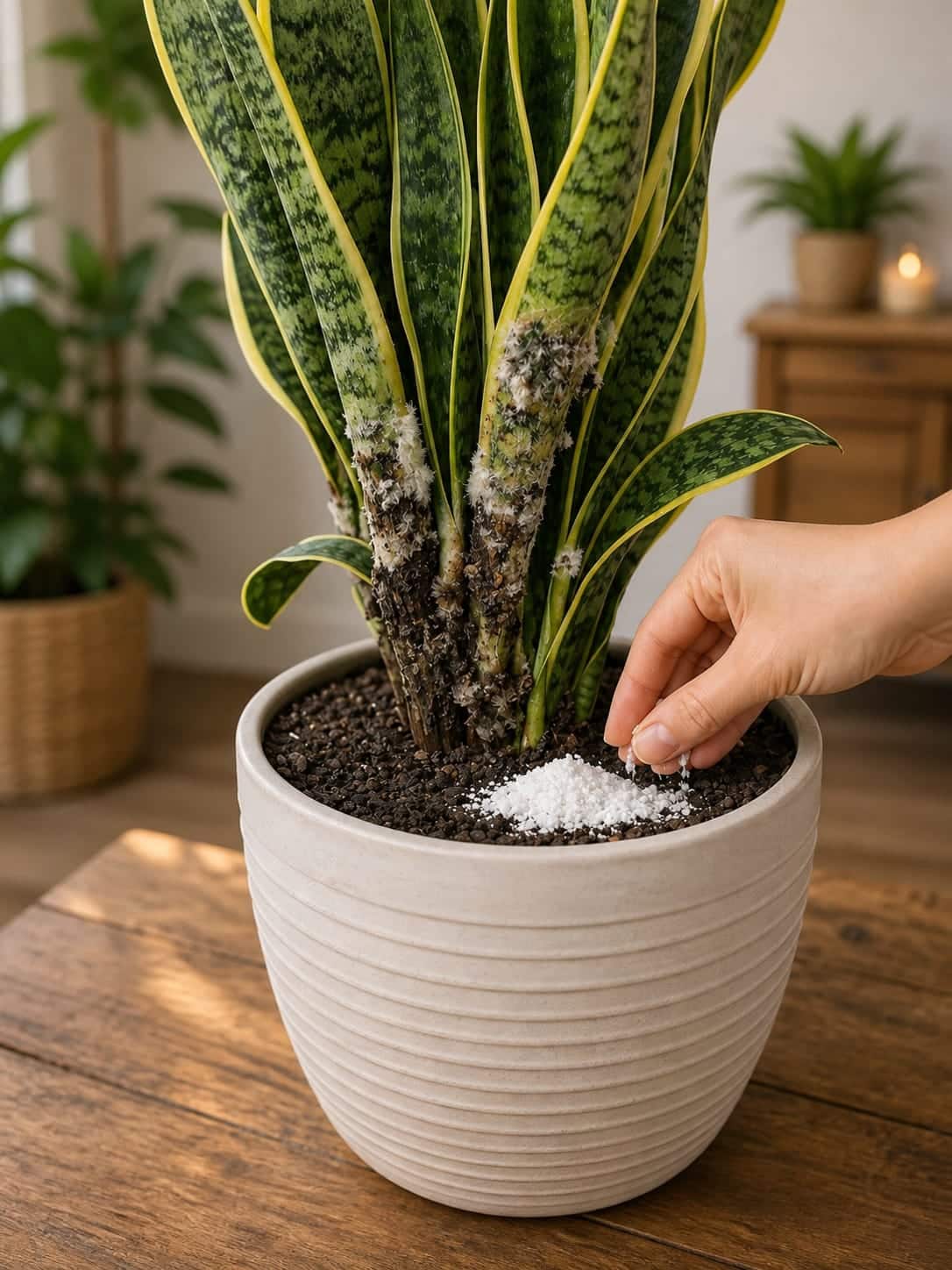
The snake plant in the image has visible pest clusters, but many leaves still look upright, firm, and green. That is a good sign. A plant with strong leaves and a living crown can often recover if pests are controlled early.
The goal is to stop the infestation before it weakens the plant further. With cleaning, isolation, dry soil management, and a light powder barrier, the plant has a much better chance.
Recovery means no new pests, steady leaves, and eventually fresh growth.
Quick White Powder Pest Rescue Routine
- Move the snake plant away from other plants.
- Inspect the leaf bases and soil surface.
- Remove visible mealybugs with alcohol-dipped cotton swabs.
- Trim badly damaged or heavily infested leaves.
- Let the top of the soil dry.
- Sprinkle a thin layer of food-grade diatomaceous earth on the dry soil.
- Keep the crown open and airy.
- Avoid watering for several days if possible.
- Repeat inspection weekly until pests are gone.
- Check nearby plants for spread.
Common Mistakes to Avoid
- Using pool-grade diatomaceous earth
- Breathing in the dust while applying
- Using baking soda, salt, flour, or sugar instead
- Applying powder to wet soil
- Leaving thick piles against the plant crown
- Watering immediately after applying
- Ignoring hidden mealybugs between leaves
- Failing to isolate the plant
- Not checking nearby houseplants
- Expecting one treatment to solve a heavy infestation
Caption for This Trick
“White fuzzy bugs on your snake plant? Isolate it, wipe the pests with alcohol, then dust the dry soil lightly with food-grade diatomaceous earth. Keep the crown clean, avoid overwatering, and repeat checks until the pests stop coming back.”
Frequently Asked Questions
What is the white powder for snake plant pests?
The safest version is food-grade diatomaceous earth. It can be lightly dusted on dry soil as part of a pest-control routine.
Are the white fuzzy patches mealybugs?
They may be. White cottony clusters around leaf bases are a common sign of mealybugs. Inspect closely and treat quickly.
Can diatomaceous earth kill mealybugs?
It can help when pests contact the dry powder, but it may not eliminate hidden mealybugs by itself. Manual cleaning is still important.
Can I use baking soda instead?
No. Baking soda is not recommended for this trick. Use food-grade diatomaceous earth, not random white powders.
Should the soil be wet or dry?
Dry. Diatomaceous earth works best when dry. Apply it after the soil surface has dried.
Can I water after applying it?
Wait if possible. Water makes the powder less effective as a dry barrier. Water only when the snake plant truly needs it.
Should I put the powder on the leaves?
Focus on the dry soil surface and lower base area. Do not coat the entire plant. Clean leaves manually instead.
Do I need to isolate the plant?
Yes. Mealybugs can spread to nearby plants, so isolation is one of the first steps.
What if the pests keep coming back?
Repeat manual cleaning, check hidden leaf bases, consider repotting, and use a labeled houseplant-safe pest treatment if needed.
Is diatomaceous earth safe indoors?
Food-grade diatomaceous earth is commonly used by gardeners, but avoid inhaling the dust. Apply gently and keep it away from children and pets during application.
Final Thoughts
The white powder trick in the image is a strong visual reminder that snake plant pests should be handled quickly. When fuzzy white clusters appear around the base of the leaves, the plant may be dealing with mealybugs. Ignoring them can allow the infestation to spread and weaken the plant.
The best version of this trick is a light dusting of food-grade diatomaceous earth on dry soil, combined with manual pest removal. Do not use random white powders. Do not apply thick piles. Do not water immediately after dusting. And most importantly, do not skip isolation and cleaning.
A snake plant can recover from pests if the leaves are still firm and the crown is alive. Clean the visible bugs, keep the soil dry and airy, use the powder lightly, and monitor the plant for several weeks. With patience and repeated care, the white fuzz can disappear, the plant can stabilize, and your snake plant can return to its strong upright look again.