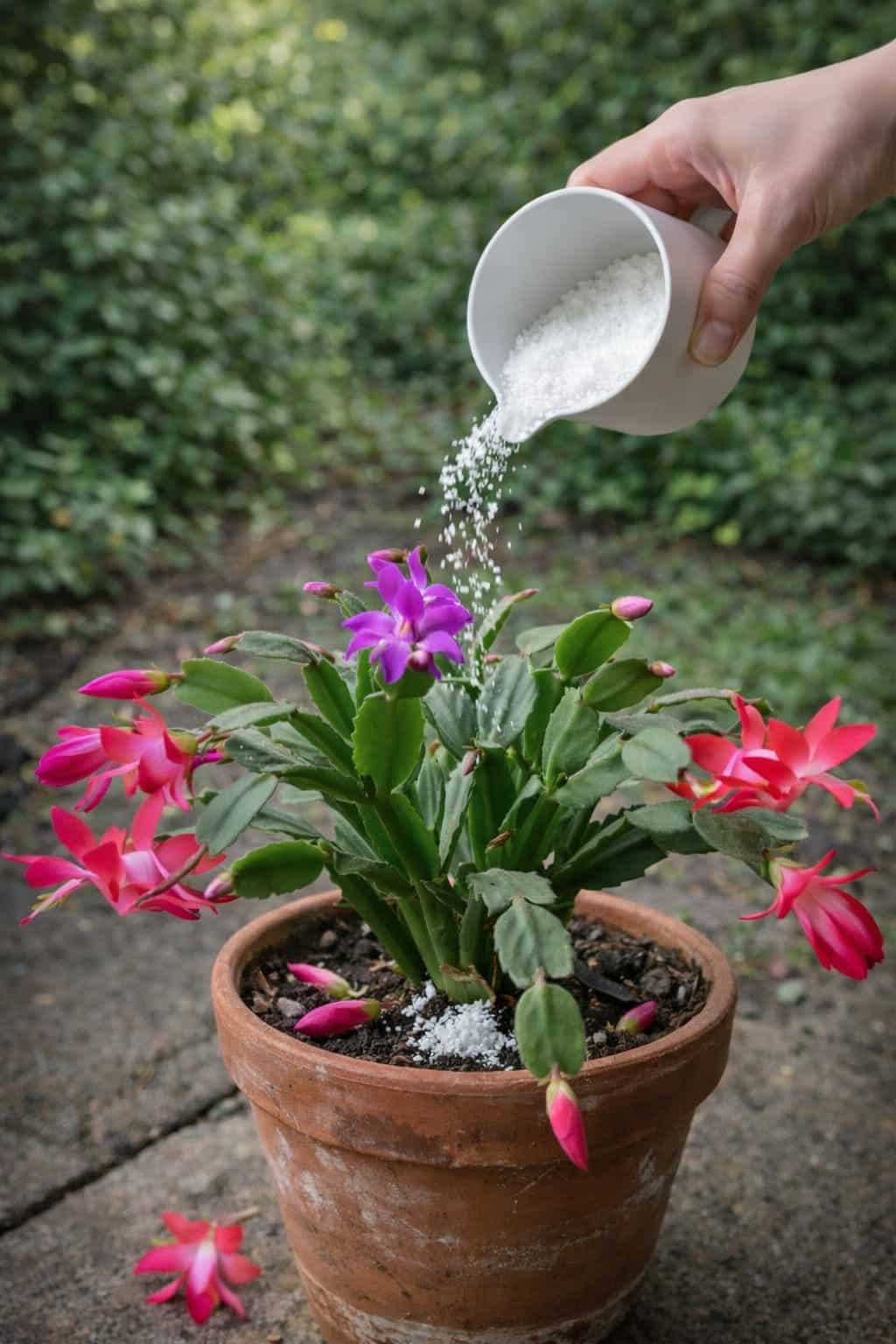
A blooming Christmas cactus is one of the most beautiful indoor plants you can have. Its vibrant pink, red, white, or purple flowers instantly brighten any space, especially during the colder months when most other plants are resting. So when you see someone sprinkling a white powder onto the soil in a viral video — with captions like “instant blooms” or “the secret to more flowers” — it feels like a simple, powerful trick.
It looks quick. It looks easy. And the plant in the video is already covered in gorgeous blossoms, so it must work, right?
Not exactly. In this guide, we will uncover what that white powder usually is, whether it can help or harm your Christmas cactus, and — most importantly — the proven, science‑backed steps that actually trigger those stunning winter blooms. By the end, you will know exactly how to care for your Schlumbergera so it rewards you with years of colorful, long‑lasting flowers.
Why This Trick Gets So Much Attention
The idea of sprinkling a powder onto soil to boost blooming is appealing for several reasons:
· It looks quick and easy – No mixing, no measuring, no complicated steps.
· It feels like a hidden gardening secret – A little‑known “hack” that only experts know.
· The plant in the image is already healthy and blooming – This creates the impression that the powder is responsible for all that beauty.
Social media amplifies this effect. A 15‑second video shows a hand sprinkling white powder, followed by a cut to a lush, flowering Christmas cactus. There is no explanation of the weeks of proper care that came before, no mention of temperature and light cycles, and no disclosure of what the powder actually is. Viewers are left assuming the powder is the magic ingredient.
But in reality, things are not that simple. A blooming Christmas cactus is the result of consistent, seasonal care — not a last‑minute sprinkle.
What That White Powder Usually Is (And What It Does)
In viral plant videos, the white powder could be any number of substances. Without a clear label or explanation, it is impossible to know. However, common possibilities include:
- Crushed Eggshells
Eggshells are primarily calcium carbonate. They can slowly add calcium to the soil, which is beneficial for cell wall structure. However, they break down very slowly and will not cause immediate blooming. Sprinkling crushed eggshells is a long‑term soil amendment, not a bloom booster.
- Baking Soda (Sodium Bicarbonate)
Baking soda is sometimes used in gardens as a mild fungicide or to raise soil pH. However, Christmas cacti prefer slightly acidic to neutral soil (pH 5.5–6.5). Adding baking soda can raise pH too much, leading to nutrient lockout and stressed roots. It is not a fertilizer and will not induce blooming.
- Sugar
Sugar is occasionally suggested as a plant “energy source.” In reality, sugar does not feed plants; it feeds soil bacteria and fungi, which can lead to mold, fungus gnats, and root rot. Sugar has no place in Christmas cactus care.
- Fertilizer Granules (Slow‑Release or Water‑Soluble)
This is the most plausible beneficial powder. A balanced, slow‑release fertilizer (like 10‑10‑10 or a bloom‑booster formula) can provide nutrients over time. However, fertilizing at the wrong time (during bud formation or blooming) can actually cause bud drop. And a single sprinkle will not produce instant flowers.
- Epsom Salt (Magnesium Sulfate)
Epsom salt is sometimes used to correct magnesium deficiency. While magnesium is important for chlorophyll production, it is not a bloom trigger. Overuse can lead to salt buildup in the soil.
👉 The key takeaway: Not all powders are safe, and even the helpful ones work slowly and require correct timing. A random sprinkle is not a shortcut to blooms.
The Truth: Not All Powders Help Plants (Some Can Harm)
Your Christmas cactus (Schlumbergera x buckleyi) is an epiphytic cactus native to the tropical rainforests of Brazil. It is not a desert cactus. It prefers consistent moisture, high humidity, and filtered light. It is also sensitive to soil imbalances, over‑fertilizing, and chemical buildup.
Potential Harm from Common Powders:
· Sugar → Attracts pests (ants, fungus gnats) and encourages mold growth. It can also cause a crust on the soil surface that blocks water.
· Baking soda → Raises soil pH, which can prevent the plant from absorbing iron and other micronutrients. Leaves may turn yellow (chlorosis).
· Too much fertilizer powder → Salt buildup burns roots, causing brown leaf tips and bud drop.
· Unidentified mystery powder → Could contain chemicals harmful to the plant.
Christmas cacti are not heavy feeders. They thrive on balanced, gentle care — not random additives.
When Powder Can Be Helpful (Specific Situations)
There are a few specific situations where a white powder can be beneficial for a Christmas cactus, but only when used correctly and for the right purpose.
- Crushed Eggshells for Long‑Term Calcium
If your potting mix is old or you use distilled water (which lacks minerals), a light sprinkle of finely crushed eggshells can slowly add calcium. Work it into the top inch of soil. This is a slow, long‑term benefit — not an instant bloom booster.
- Epsom Salt for Magnesium Deficiency
If your Christmas cactus shows signs of magnesium deficiency (yellowing between the leaf veins on older segments), a diluted Epsom salt solution (1 teaspoon per gallon of water) applied once a month can help. This is not a general bloom booster.
- Slow‑Release Fertilizer in Spring
A balanced slow‑release fertilizer (like Osmocote) sprinkled on the soil in early spring can provide nutrients for the growing season. This supports overall health, which may lead to better blooming in the fall. Do not apply during bud formation or blooming.
In all these cases, the powder is a support tool, not a magic cure. It works best when combined with proper light, temperature, watering, and seasonal care.
What Actually Makes a Christmas Cactus Bloom (No Powder Required)
If you want more flowers, focus on what truly matters. These are the proven, non‑negotiable factors that trigger blooming in Christmas cacti.
- Light (Bright Indirect Light)
During the growing season (spring and summer), place your Christmas cactus in bright indirect light. An east window or a south/west window with a sheer curtain is ideal. Good light builds energy for future blooms.
- Darkness Cycle (The #1 Bloom Trigger)
Christmas cacti are short‑day plants. They need long, uninterrupted nights to set buds. Starting in late September or early October, give your plant 12–14 hours of complete darkness every night for 6–8 weeks. Even a few minutes of light from a lamp or TV can reset the cycle.
How to do it:
· Move the plant to a dark closet each evening, or cover it with an opaque box or bag.
· Return it to bright indirect light during the day.
· Be consistent. Do not skip nights.
- Cooler Nights
In addition to darkness, cooler night temperatures (50–65°F / 10–18°C) strongly encourage bud formation. If possible, move your cactus to a cool room or near a cool window during the fall. Avoid freezing.
- Watering Routine
· During the blooming prep period (fall): Reduce watering slightly. Let the soil dry out a bit more than usual, but do not let the plant wilt.
· Once buds appear: Keep the soil lightly moist. Do not let it dry completely or become soggy.
· During blooming: Maintain even moisture. Dry soil causes bud drop; wet soil causes root rot.
- Minimal Feeding (The Right Timing)
· Spring and summer (active growth): Feed every 2–4 weeks with a balanced, half‑strength fertilizer (like 20‑20‑20).
· Early fall: Stop fertilizing completely. This allows the plant to focus on budding, not leaf growth.
· During blooming: Do not fertilize. It can cause bud drop.
- Stability Once Buds Form
Once you see tiny pink or red buds at the tips of the segments, do not move the plant. Do not rotate it. Do not expose it to drafts or heat vents. Sudden changes cause bud drop. Keep it in a stable spot with consistent light and temperature.
Continue to Page 2
Continue to page 2 for more details about this article and the key points many readers miss on the first page.