Why Healthy Plants Get the Credit Instead of Powders
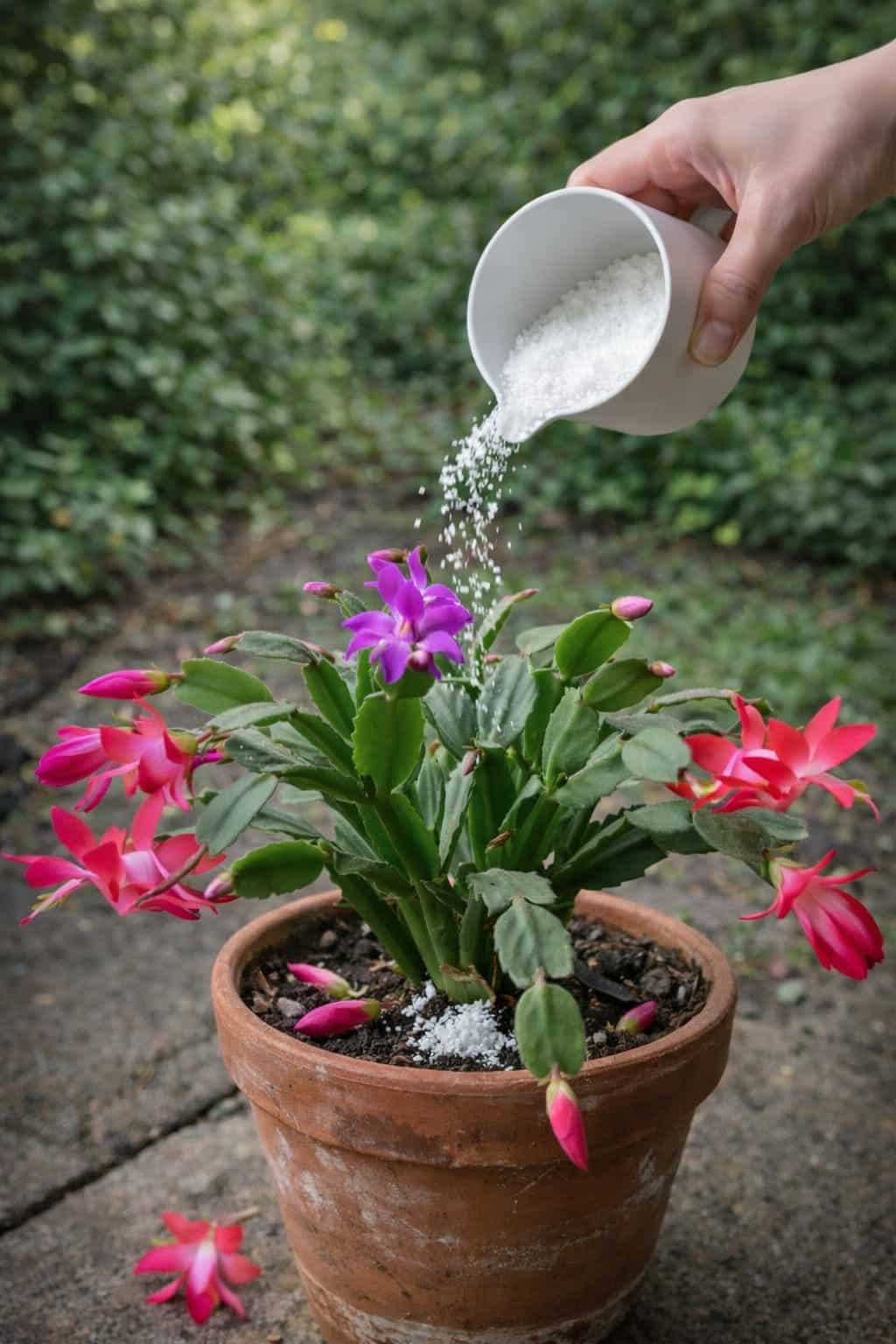
The Christmas cactus in the viral photo or video is already thriving: strong stems, multiple blooms, balanced growth. That result comes from consistent care over time — weeks or months of proper light, watering, temperature, and seasonal rhythm — not a last‑minute sprinkle.
Videos rarely show the preparation. They do not show the plant being moved to a dark closet every night for six weeks. They do not show the careful reduction in watering. They just show the powder and the final result. This creates a false cause‑and‑effect relationship.
The truth is: if you want a Christmas cactus that looks like that, you need to give it the right environment. No powder can substitute for that.
Common Mistakes to Avoid
If you want a healthier, more floriferous Christmas cactus, avoid these common errors.
- Using Random Powders Without Research
Do not sprinkle baking soda, sugar, or unknown substances on your plant. They can harm the roots and soil.
- Overwatering
Christmas cacti are not succulents like desert cacti, but they still dislike soggy soil. Overwatering leads to root rot, yellow segments, and bud drop.
- Ignoring Light and Temperature Needs
Without the proper darkness cycle and cool nights, your Christmas cactus may never bloom, no matter what you sprinkle on it.
- Moving the Plant Once Buds Appear
Even a slight change in light direction (rotating the pot) can cause buds to fall. Once buds form, leave the plant alone.
- Over‑Fertilizing in Fall
Fertilizer applied after buds should have formed can cause leaf growth instead of flowers. Stop feeding in early fall.
- Expecting Overnight Results
Blooming takes time. The darkness cycle alone takes 6–8 weeks. Be patient and consistent.
A Complete Year‑Round Christmas Cactus Care Calendar
Use this monthly guide to keep your plant healthy and blooming every year.
Spring (March – May)
· Light: Bright indirect light.
· Water: When top inch of soil is dry.
· Fertilizer: Begin feeding every 2–4 weeks with half‑strength balanced fertilizer.
· Other: Prune back leggy segments. Repot if needed (every 2–3 years).
Summer (June – August)
· Light: Bright indirect light. Can move outdoors to a shaded patio.
· Water: Water more frequently (1–2 times per week) but still let soil dry between.
· Fertilizer: Continue feeding every 2–4 weeks.
· Other: Pinch back tips for fullness.
Early Fall (September – October) – Bloom Prep
· Light: Bright indirect light during the day.
· Darkness: 12–14 hours of complete darkness each night.
· Temperature: Cool nights (50–65°F / 10–18°C).
· Water: Reduce slightly. Let soil dry a bit more.
· Fertilizer: Stop feeding completely.
· Do not repot or move the plant.
Late Fall (November – December) – Budding & Blooming
· Light: Bright indirect light (no darkness treatment once buds are visible).
· Water: Keep soil lightly moist. Do not let it dry completely or stay soggy.
· Fertilizer: None.
· Temperature: Stable, avoid drafts and heat vents.
· Do not move the plant. Do not rotate.
Winter (January – February) – Rest Period
· Light: Still bright light, but days are shorter — consider a grow light.
· Water: Reduce watering (once every 2–3 weeks).
· Fertilizer: None.
· Other: Remove spent flowers. Let the plant rest for 6–8 weeks.
Late Winter (February – March)
· Gradually increase watering and resume fertilizer as new growth appears.
· Prepare for the next growth cycle.
Frequently Asked Questions (Christmas Cactus Blooms)
Can I use Epsom salt to make my Christmas cactus bloom?
Epsom salt provides magnesium. If your plant has a magnesium deficiency (yellowing between leaf veins), a diluted solution (1 teaspoon per gallon) once a month may help overall health. It is not a direct bloom trigger.
How long does it take for a Christmas cactus to bloom after starting the darkness treatment?
You should see tiny buds within 4–6 weeks of consistent 12–14 hour dark nights and cool temperatures. Full blooms appear 2–4 weeks later.
Why are my Christmas cactus buds falling off?
Bud drop is usually caused by moving the plant, temperature fluctuations (drafts or heat vents), overwatering or underwatering, too much light at night, or low humidity.
Is it safe to put baking soda on my Christmas cactus?
No. Baking soda alters soil pH and can harm roots. It is not a fertilizer or bloom booster.
Can I use coffee grounds on my Christmas cactus?
Used coffee grounds can be acidic and add organic matter, but they can also compact the soil and encourage mold. Use sparingly, if at all. A balanced fertilizer is safer.
What is the best fertilizer for Christmas cactus blooms?
A balanced, water‑soluble fertilizer (20‑20‑20) diluted to half strength, applied every 2–4 weeks during spring and summer. Stop fertilizing in early fall. Do not fertilize during blooming.
Will a white powder make my Christmas cactus bloom faster?
No. Blooming is triggered by light cycles, temperature, and proper watering — not by random powders. Powders may even harm the plant.
How do I get my Christmas cactus to bloom for the holidays?
Start the darkness/cool night treatment in late September. Be consistent. Then, once buds appear, keep conditions stable. Do not move the plant.
The Bottom Line: No Shortcut, Just Good Care
Sprinkling white powder on your Christmas cactus might look like a secret shortcut in viral videos. But the real secret is much simpler — and more reliable. It is:
· Proper light – Bright indirect light during the day.
· A consistent darkness cycle – 12–14 hours of uninterrupted darkness each night for 6–8 weeks in fall.
· Cooler nights – 50–65°F (10–18°C) to trigger budding.
· Careful watering – Slightly drier before buds, lightly moist after.
· No fertilizing during bud formation and blooming.
· Stability – Do not move the plant once buds appear.
That is what makes a Christmas cactus bloom beautifully, year after year. No powder required.
So the next time you see a video promising “instant blooms” with a mysterious white powder, remember: the plant in the video likely received weeks of proper care before the sprinkle. Focus on the fundamentals, and your Christmas cactus will reward you with a spectacular display of colorful flowers — without the risk of harming it.
Have you ever tried a powder trick on your Christmas cactus? Share your experience in the comments below. And if you found this guide helpful, save it for later or send it to a friend who wants a truly thriving holiday cactus.
This article is for informational purposes only. Always research any product before applying it to your plants. When in doubt, stick to proven care methods: light, water, temperature, and patience.