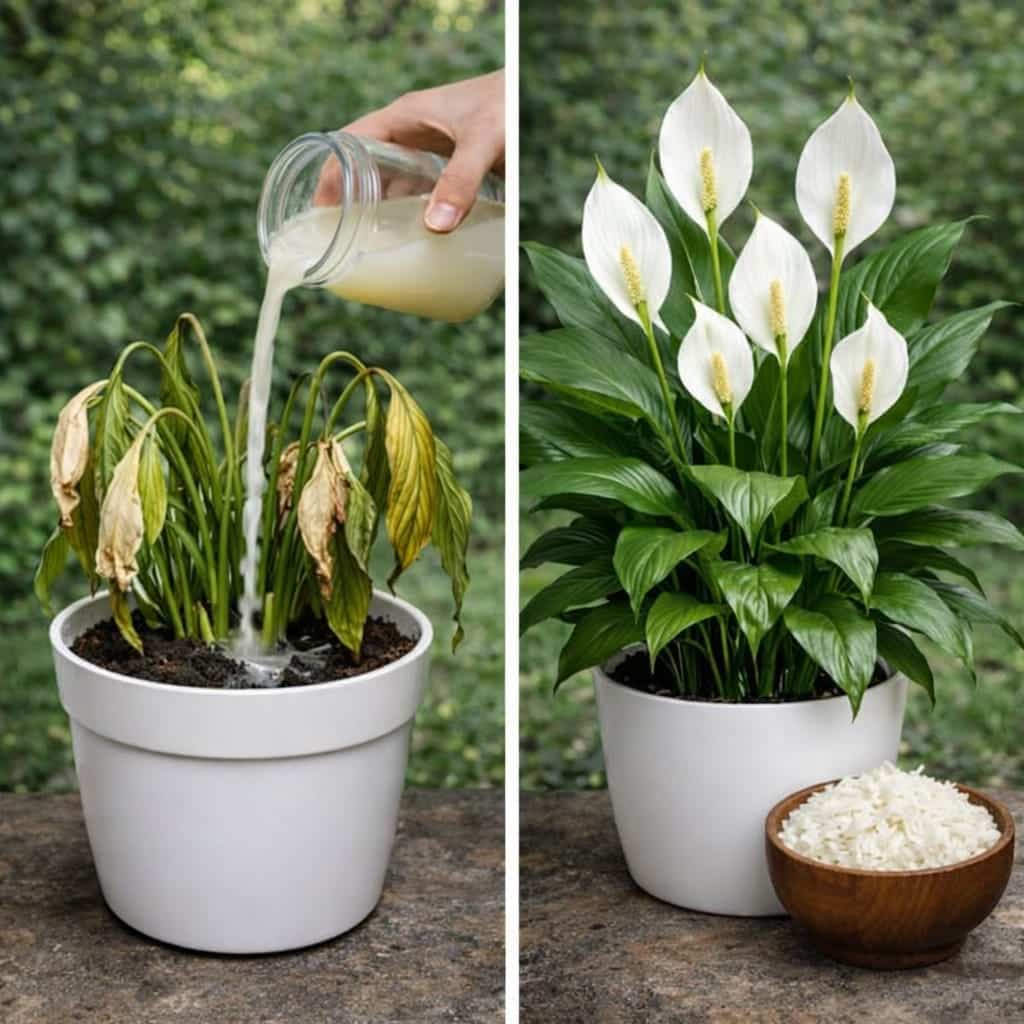
Peace lilies are known for their elegant white blooms and lush green leaves. They purify the air, tolerate low light, and bring a sense of calm to any room. But when they start to wilt, turn yellow, or collapse, it can feel like you are losing one of the most beautiful plants in your home. The leaves droop dramatically, the flowers fade, and suddenly that once‑vibrant centerpiece looks beyond saving.
That is why viral tips — like pouring cloudy “rice water” onto the soil — get so much attention. The video shows a sad, limp peace lily, then a person pours a milky white liquid into the pot. Cut to a lush, blooming plant with upright leaves and fresh white flowers. It looks simple. It looks natural. And the before‑and‑after transformation looks almost magical.
But does it really work? Can a kitchen byproduct truly revive a dying peace lily? In this guide, we will separate fact from fiction. You will learn what rice water actually is, when it can help, when it cannot, and — most importantly — the proven steps to bring a struggling peace lily back to life and keep it thriving for years.
Why This Trick Looks So Powerful (The Viral Illusion)
The image tells a strong story: a drooping, dying plant, a natural liquid being poured, and a fully revived, blooming plant. It creates the idea that “this one ingredient brought the plant back to life.” But in reality, plant recovery is rarely that instant or that simple.
There are several reasons why these videos are so convincing:
· Dramatic before‑and‑after – Peace lilies are expressive. They droop noticeably when dry, then perk up within hours of watering. Any liquid — even plain water — would produce the same result.
· The power of suggestion – Viewers want to believe in a simple, cheap solution. Rice water feels natural and accessible.
· No disclosure of other care changes – The video does not show whether the plant was also moved to better light, repotted, or given proper drainage. Often, the improvement comes from basic care, not the rice water itself.
Understanding this illusion is the first step to becoming a smarter plant parent.
What Is Rice Water?
Rice water is the starchy, cloudy liquid left after rinsing or soaking uncooked rice. When you wash white or brown rice, the water turns milky white due to the presence of:
· Starch – A carbohydrate that can feed soil microbes.
· Trace minerals – Small amounts of potassium, phosphorus, magnesium, and zinc.
· Organic compounds – Very low levels of amino acids and vitamins.
Because it is natural and often free, many people assume it is automatically good for plants. And in some contexts — like outdoor gardens or compost piles — rice water can be a gentle supplement. But for indoor potted plants like peace lilies, the situation is more nuanced.
Can Rice Water Help a Peace Lily? (The Honest Answer)
In some cases, lightly diluted rice water may:
· Provide mild nutrients – The trace minerals can supplement a slightly depleted potting mix.
· Support beneficial soil microbes – Starches can feed bacteria that help break down organic matter.
· Act as a gentle supplement – When used occasionally, it is unlikely to harm a healthy plant.
However, here is the critical point: It is not a cure for a dying plant. If your peace lily is suffering from root rot, severe underwatering, poor drainage, or disease, rice water will not fix the underlying problem. It is like giving a vitamin to someone who needs emergency surgery — it might help in the long term, but it will not address the immediate crisis.
The Real Reason Peace Lilies “Collapse” (And How to Fix It)
Peace lilies are famous for dramatic drooping. But most of the time, it is not death — it is a signal. The plant is telling you exactly what is wrong. Here are the most common reasons a peace lily collapses, and what to do about each.
- Underwatering (The Most Common Cause of Drooping)
Peace lilies wilt quickly when the soil becomes too dry. Their leaves lose turgor pressure and flop over dramatically. However, they are also resilient — within hours of watering, they often bounce back.
Fix: Water thoroughly until water runs from the drainage holes. Let the pot drain completely. In most cases, the plant will perk up within 4–6 hours.
- Overwatering (The #1 Killer)
Too much water suffocates the roots, leading to root rot. The leaves turn yellow, then brown, and the plant may collapse. Unlike underwatering, overwatered peace lilies do not recover quickly; they decline slowly over weeks.
Fix: Check the soil. If it is soggy and smells sour, remove the plant from the pot. Trim any brown, mushy roots. Repot in fresh, well‑draining soil. Water only when the top inch of soil is dry.
- Poor Drainage
A pot without drainage holes traps water at the bottom. Even if you water lightly, the roots will eventually sit in moisture, leading to rot. This is one of the most common hidden killers.
Fix: Always use a pot with drainage holes. If you love a decorative pot without holes, plant your peace lily in a plastic nursery pot and place it inside the decorative pot. Remove it for watering.
- Low Light
Peace lilies tolerate low light, but they need bright indirect light to thrive. In deep shade, growth slows, leaves become pale, and the plant becomes weak and floppy.
Fix: Move your peace lily to a spot near an east or north window, or a south/west window with a sheer curtain. Within a few weeks, new growth will be stronger and more upright.
- Compacted or Old Soil
Over time, potting mix breaks down and becomes dense. It holds too much water and does not allow roots to breathe. The plant may look tired and stop producing blooms.
Fix: Repot every 1–2 years with fresh, well‑draining potting mix. Add perlite for extra aeration.
- Lack of Nutrients (Less Common)
Peace lilies are not heavy feeders, but after years in the same soil, they may lack essential nutrients. Leaves may be pale, and blooms may be small or absent.
Fix: Feed with a balanced liquid fertilizer (10‑10‑10) diluted to half strength, once a month in spring and summer. Do not fertilize in fall and winter.
Why the “Before & After” Can Be Misleading
Many dramatic recoveries shown in viral videos happen simply because the plant was watered properly after being dry. Not because of the rice water itself. If a peace lily is drooping from underwatering, pouring any liquid — plain water, rice water, even tap water — will cause it to perk up within hours. The improvement comes from hydration, not the special properties of rice water.
The video creator may also have moved the plant to better light, improved drainage, or repotted it — changes that are not shown. The rice water gets the credit, but the real work was done elsewhere.
To test this yourself, do a simple experiment: take a drooping peace lily and water it with plain water. Time how long it takes to recover. Then, another time, try diluted rice water. You will likely see little difference.
When Rice Water Can Be Used Safely (And How to Do It)
If you want to try rice water as a mild supplement, it is not harmful when used correctly. Follow these guidelines.
How to Make Rice Water for Plants
· Rinse method: Rinse ½ cup of uncooked rice in water. Save the cloudy liquid. Dilute with an equal amount of fresh water.
· Soak method: Soak ½ cup of rice in 2 cups of water for 30 minutes. Strain out the rice. Dilute the liquid (1 part rice water to 1 part fresh water).
How to Use It
· Use it occasionally – Once every 3–4 weeks during spring and summer is plenty.
· Water the soil only – Do not pour it on the leaves or into the crown.
· Do not let it ferment – Use fresh rice water within 24 hours. Fermented rice water smells sour and can harm roots.
· Stop if you see mold or smell sourness – This indicates the mixture is too strong or the soil is staying too wet.
When NOT to Use Rice Water
· If the plant is already overwatered (soggy soil).
· If the plant has root rot (brown, mushy roots).
· If the plant is in very low light (it cannot use the nutrients).
· If the plant is stressed from repotting or pests.
Think of rice water as a light supplement, not a main care routine. It is like giving your plant a very weak vitamin — helpful for an already healthy plant, but useless for a sick one.
Continue to Page 2
Continue to page 2 for more details about this article and the key points many readers miss on the first page.