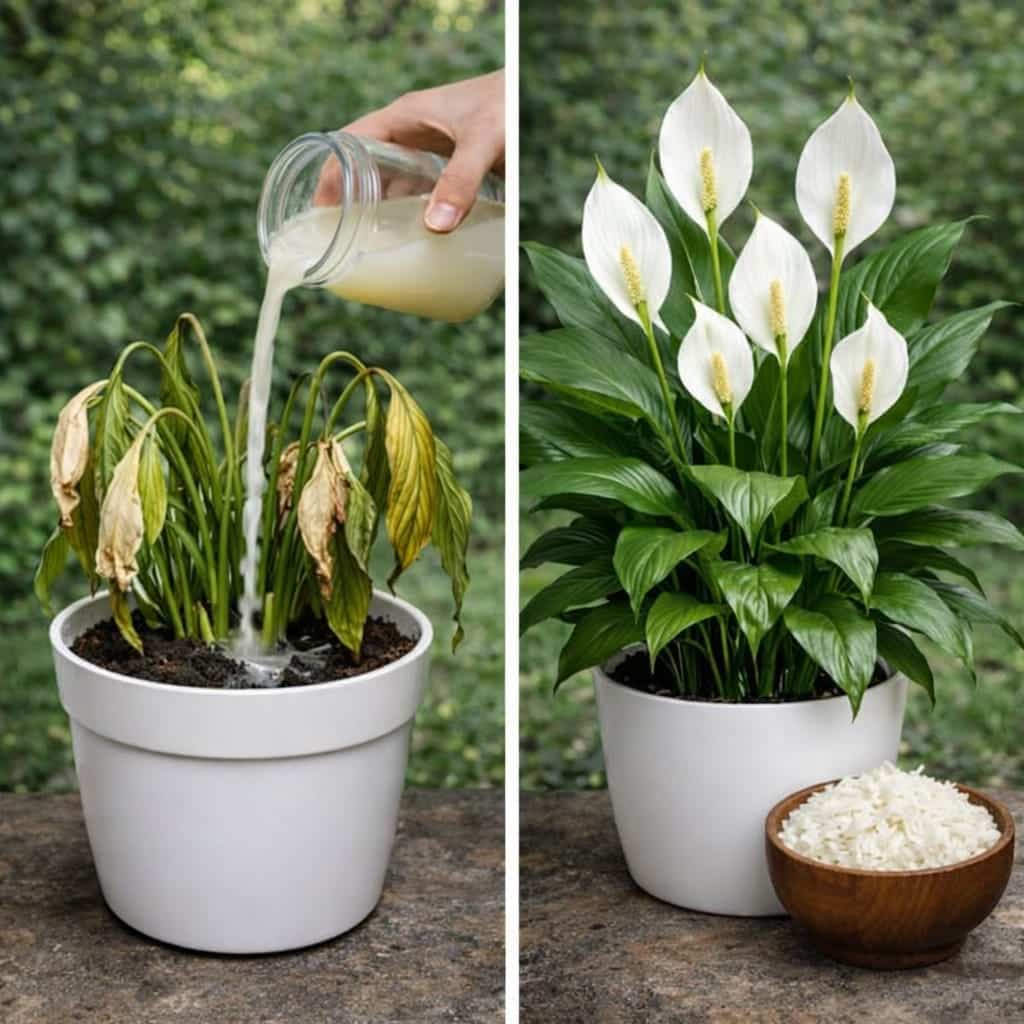
What Actually Revives a Dying Peace Lily (Step‑by‑Step)
If your peace lily is struggling, do not reach for rice water first. Follow this proven recovery plan.
Step 1 – Check the Soil Moisture
Stick your finger into the soil. Is it bone dry? Soggy? Somewhere in between?
· If dry: Water thoroughly with plain water. The plant should perk up within a day.
· If wet and smelly: You likely have root rot. Proceed to Step 2.
Step 2 – Inspect the Roots
Unpot the peace lily. Gently remove old soil. Look at the roots.
· Healthy roots: Firm, white or tan, earthy smell.
· Rotten roots: Brown, black, mushy, foul smell.
Trim away all rotten roots with clean scissors. If more than half the roots are gone, the plant is in critical condition but may still be saved.
Step 3 – Repot in Fresh, Well‑Draining Soil
Use a pot with drainage holes. Fill with a mix of 2 parts all‑purpose potting soil + 1 part perlite. Do not use garden soil or heavy moisture‑retentive mixes.
Step 4 – Water Correctly After Repotting
Water lightly once to settle the soil. Then wait until the top inch feels dry before watering again. Do not keep the soil constantly wet.
Step 5 – Move to Bright Indirect Light
Place the repotted peace lily near an east or north window, or a south/west window with a sheer curtain. Good light is essential for recovery.
Step 6 – Remove Damaged Leaves and Blooms
Cut off any yellow, brown, or dead leaves at the base. Remove spent flowers. This redirects energy to new growth.
Step 7 – Be Patient
Recovery takes time. You may see new leaves within 2–4 weeks. Blooms may take 2–3 months. Do not fertilize until you see active new growth (about 6 weeks after repotting).
Only after the plant has stabilized should you consider using a mild supplement like rice water — and even then, it is optional.
A Simple Peace Lily Care Routine (No Rice Water Required)
Use this weekly and seasonal plan to keep your peace lily healthy, green, and blooming.
Weekly
· Check soil moisture. Water when the top inch is dry.
· Wipe leaves with a damp cloth to remove dust.
· Remove any yellow or dead leaves.
Monthly
· Flush the soil with plain water to prevent salt buildup.
· Inspect for pests (mealybugs, spider mites, aphids).
· Rotate the pot for even light.
Spring & Summer (Active Growth)
· Bright indirect light (10–12 hours).
· Water every 5–7 days (when top inch dries).
· Feed once a month with half‑strength balanced fertilizer.
· Maintain humidity (pebble tray or humidifier).
Fall & Winter (Resting Period)
· Still bright light, but days are shorter – consider a grow light.
· Water less often (every 10–14 days).
· Stop fertilizing.
· Keep away from cold drafts (below 55°F / 13°C).
Annually
· Repot every 1–2 years with fresh, well‑draining potting mix.
· Divide if the plant is overcrowded.
· Trim any dead or brown roots.
Frequently Asked Questions (Rice Water for Peace Lilies)
Can I use rice water on a peace lily every day?
No. Overuse of rice water can lead to mold, fungus gnats, and soil imbalance. Use it once every 3–4 weeks at most.
Will rice water fix yellow leaves?
No. Yellow leaves are usually a sign of overwatering, poor drainage, or low light. Fix the underlying cause first. Rice water will not turn yellow leaves green.
Can I use fermented rice water?
Fermented rice water (left to sit for days) is sour and can harm roots. Only use fresh, diluted rice water within 24 hours.
Is rice water better than regular water for peace lilies?
No. For a healthy plant, plain water works just as well. Rice water is a mild supplement, not a replacement.
Can I use rice water on other houseplants?
Yes, with caution. Dilute it well and use occasionally. Avoid succulents, cacti, and plants that prefer dry conditions.
Why does my peace lily have brown tips even after using rice water?
Brown tips are usually caused by fluoride or chlorine in tap water, low humidity, or salt buildup. Rice water will not fix these. Use filtered water and increase humidity.
How do I know if my peace lily needs nutrients?
Signs include pale leaves, very slow growth (no new leaves in over a year), and small or absent blooms. If the plant has been in the same pot for years, a light feeding may help.
Can I add rice water to a peace lily that is in bloom?
It is not harmful, but it is unnecessary. During blooming, focus on stable conditions — do not change watering or feeding routines.
The Bottom Line: No Shortcuts, Just Good Care
Rice water is not a magic cure for a dying peace lily. The dramatic before‑and‑after videos you see online are often the result of proper watering, better light, or repotting — not the rice water itself. While diluted rice water can be a mild supplement for an already healthy plant, it will not fix root rot, overwatering, or poor drainage.
The real secret to a healthy, blooming peace lily is simple:
· Consistent watering – When the top inch of soil is dry.
· Good drainage – A pot with holes and well‑draining soil.
· Bright indirect light – Near a window, not a dark corner.
· Regular feeding – Once a month in spring and summer.
· Patience – Recovery takes time.
So the next time you see a viral video promising to revive a dying peace lily with rice water, remember: the real transformation comes from understanding what your plant actually needs. Focus on the basics, and your peace lily will reward you with lush green leaves and elegant white blooms — no trendy shortcuts required.
Have you tried rice water on your peace lily? Share your experience in the comments below. And if you found this guide helpful, save it for later or send it to a friend who needs a real peace lily rescue plan.
This article is for informational purposes only. Always observe your plant and adjust care as needed. When in doubt, focus on light, water, and soil before any supplement.