Feeding Alocasia Plants
Alocasia plants benefit from light feeding during active growth. Use a balanced liquid houseplant fertilizer diluted to half strength every 3 to 4 weeks in spring and summer.
Do not fertilize a stressed plant, a newly repotted plant, or a plant with root rot. Fertilizer cannot fix damaged roots and may make stress worse.
During winter, reduce or stop feeding unless the plant is actively growing under strong light.
Common Alocasia Problems
Alocasia plants can be sensitive, but most problems have clear causes. Here are common issues:
- Yellow leaves from overwatering, low light, or natural aging
- Brown edges from low humidity, underwatering, or mineral buildup
- Drooping from thirst, wet roots, cold stress, or shock
- Small leaves from low light or weak roots
- Leaf spots from excess moisture on leaves or poor airflow
- Pests from dry air or crowded plants
The key is to check the whole care routine, not just one symptom.
Repotting Without Shock
Alocasia plants can sulk after repotting. To reduce shock, repot only when needed, use a similar pot size, avoid damaging too many roots, and keep the plant warm afterward.
Do not place a freshly repotted Alocasia in harsh sun. Give it bright indirect light and stable conditions.
Water carefully after repotting. If the roots were disturbed heavily, avoid soaking the soil too much right away.
Choosing the Right Pot
Choose a pot with drainage holes. This is essential. Alocasia plants like moisture, but they cannot sit in stagnant water.
The pot should be only one size larger than the root ball. Oversized pots hold too much wet soil, which can lead to root rot.
Ceramic, plastic, and nursery pots can all work. Terracotta dries faster, which may be useful if you tend to overwater, but it may dry too quickly in hot dry rooms.
Decor Styling With Alocasia Plants
Alocasia plants are natural statement pieces. Their large leaves and bold veins create instant drama. They look beautiful in simple pots that let the foliage stand out.
Good pot styles include:
- Matte white ceramic
- Stone-textured planters
- Black modern pots
- Warm terracotta
- Woven basket covers
- Neutral ribbed pots
Because Alocasia leaves are visually strong, simple containers often look best.
Best Places to Display Alocasia Plants
Place Alocasia plants where they receive bright filtered light and have room for their leaves to spread.
Good locations include:
- Bright living room corners
- Near east-facing windows
- Plant stands beside windows
- Home offices with natural light
- Bathrooms with bright windows
- Sunrooms with filtered light
- Bedroom corners away from cold drafts
Avoid narrow spots where leaves constantly brush against walls, curtains, or furniture. Damaged leaves can brown at the edges.
Pairing Alocasia With Other Plants
Alocasia plants look beautiful with other tropical houseplants. Good companions include pothos, philodendron, calathea, peace lily, bird’s nest fern, monstera, and ZZ plant.
For a dramatic display, place Alocasia as the main focal plant and surround it with smaller trailing plants. This creates layers of height, texture, and leaf shape.
Keep each plant in its own pot if their watering needs are different.
A Simple Weekly Alocasia Routine
Use this simple weekly routine:
- Check leaf color and firmness
- Feel the soil before watering
- Rotate the pot for even light
- Inspect undersides of leaves for pests
- Remove yellow or damaged leaves
- Check humidity and room temperature
- Wipe dust when needed
This routine prevents many common issues and keeps the plant looking polished.
A Monthly Alocasia Routine
Once a month, take a deeper look at the plant. Check if the soil is compacted, if roots are visible from drainage holes, or if the plant needs a light feed during active growth.
Clean the leaves more thoroughly and inspect the stems near the base. If the plant is growing strongly, continue the same routine. If it is struggling, adjust only one thing at a time so you can see what helps.
Alocasia plants respond better to calm adjustments than constant changes.
Common Mistakes to Avoid
Avoid these common mistakes:
- Watering on a strict schedule without checking soil
- Using heavy compact soil
- Keeping the plant in low light
- Letting the pot sit in water
- Repotting too often
- Using a pot without drainage
- Ignoring pests under leaves
- Placing the plant near cold drafts
- Using heavy leaf shine products
Most Alocasia problems come from watering, light, humidity, or root stress. Fixing those basics makes the plant much easier to grow.
Final Thoughts
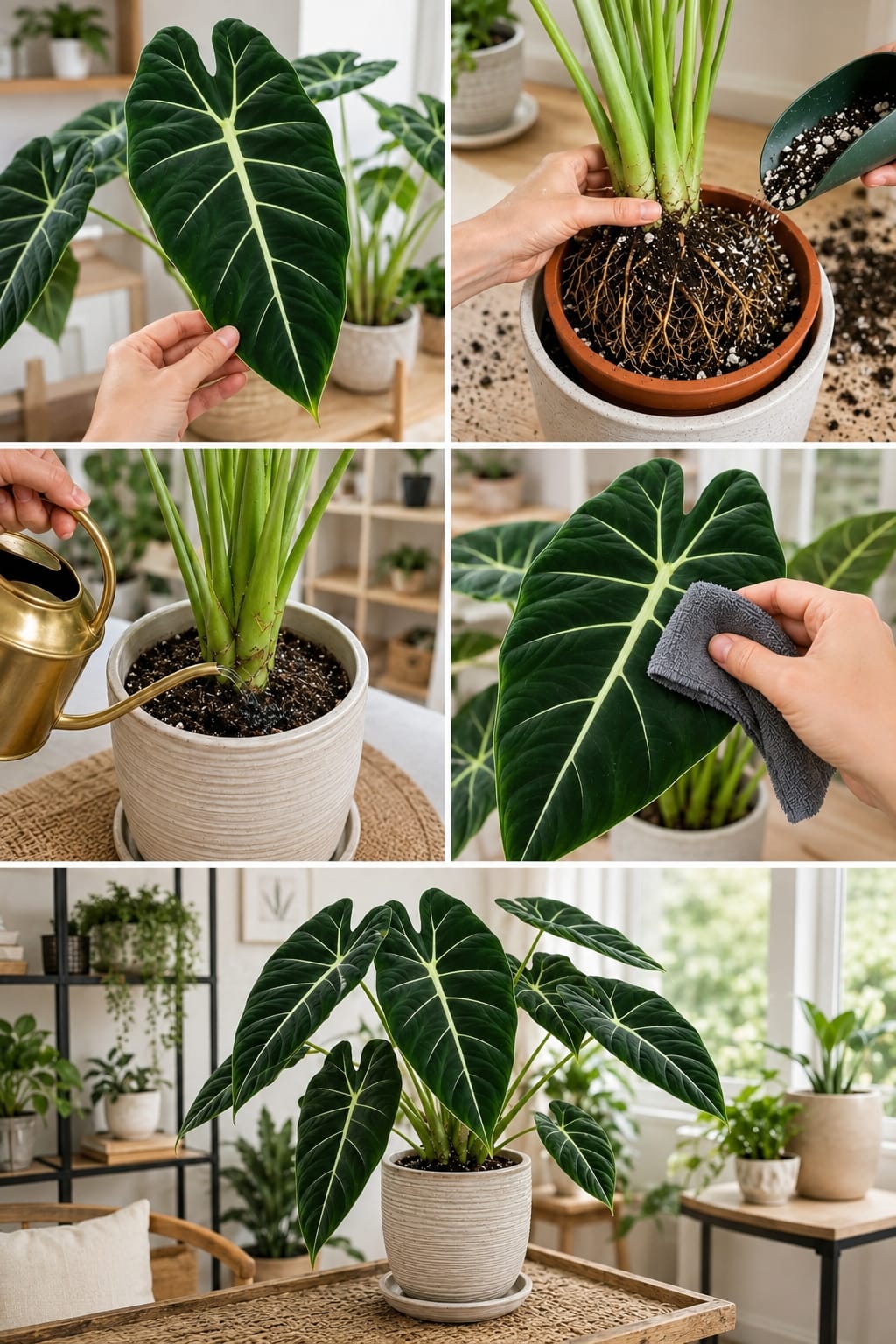
The 5-step Alocasia care routine is simple but powerful. Check the leaves, refresh the root zone, use an airy soil mix, water correctly, and clean the foliage. These steps support strong roots, bigger leaves, and a healthier indoor plant over time.
Alocasia plants are dramatic, beautiful, and rewarding, but they need balance. They do not want soggy soil, cold drafts, dry air, or dark corners. They thrive with warmth, humidity, bright indirect light, careful watering, and clean leaves.
With steady care and patience, your Alocasia can become a stunning indoor statement plant with bold tropical leaves that bring depth, elegance, and natural beauty to your home.