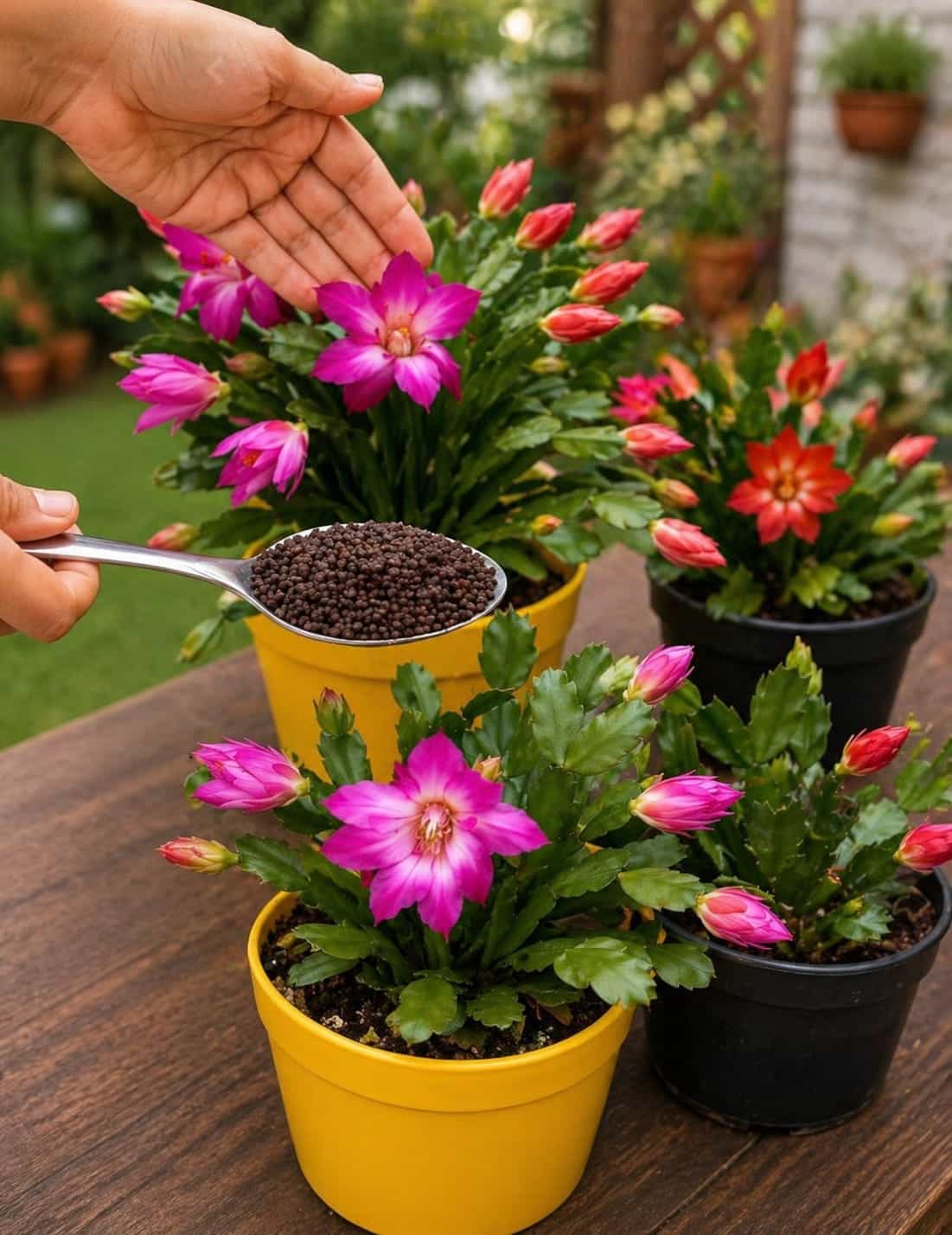
Christmas cactus is one of those plants that can make any garden table, porch corner, windowsill, or indoor plant shelf feel instantly cheerful. When it is full of buds and colorful blooms, it looks like a living bouquet. The flat green segments cascade over the pot, the flower buds appear at the tips, and then suddenly the plant opens in shades of pink, red, coral, purple, salmon, white, or orange.
But many people struggle with the same problem: their Christmas cactus blooms beautifully once, then becomes quiet. It may grow leaves but no flowers. It may produce buds that drop before opening. It may look healthy but never give that full holiday display again. This is why plant lovers are always interested in simple bloom tricks, especially the ones that look easy and natural.
One eye-catching method is the brown pellet trick. In the image, a spoonful of small dark brown granules is being held near blooming Christmas cactus plants. The flowers look bright, the buds look full, and the plant seems strong and ready to keep producing. At first glance, it looks like a secret bloom-boosting ingredient that can be sprinkled into the pot to wake up tired holiday cactus plants.
So what are these brown pellets?
The safest and most practical version of this trick is a gentle slow-release flowering plant fertilizer, worm casting pellets, composted manure pellets, or an organic bloom-supporting granular feed. These small brown granules are used lightly on the soil surface to support healthy growth and future blooming. They are not meant to be dumped heavily into the pot. They are not magic beads. They are a slow, steady feeding method that works best when combined with the true Christmas cactus bloom secret: the right seasonal light and temperature routine.
Christmas cactus does not bloom from fertilizer alone. It blooms when it has enough stored energy and receives the right environmental signal, especially long dark nights and cooler temperatures in fall. The brown pellet trick can help build a stronger plant during the growing season, but it cannot replace the fall rest period. Used correctly, though, a light granular feeding routine can help your Christmas cactus grow fuller stems, form more healthy tips, and prepare for a better bloom show later.
In this complete guide, you will learn what the brown pellet Christmas cactus trick is, how to use it safely, when to apply it, how much to use, what mistakes to avoid, and how to combine it with the correct seasonal care routine for year-after-year blooms.
What Is the Brown Pellet Christmas Cactus Trick?
The brown pellet Christmas cactus trick is a simple feeding method where a small amount of dry granular plant food is added to the soil surface around a Christmas cactus. The pellets may be slow-release fertilizer beads, organic fertilizer granules, worm casting pellets, composted manure pellets, or another gentle plant-safe granular feed.
The idea is to give the plant a slow, steady supply of nutrients during its active growing period. Instead of watering with liquid fertilizer every week, the pellets break down gradually as you water. This can make feeding easier for people who forget fertilizer schedules or worry about mixing liquid plant food too strongly.
For Christmas cactus, the trick works best when used lightly. This plant is not a heavy feeder. Too much fertilizer can create weak growth, salt buildup, brown edges, root stress, or fewer blooms. A small amount during spring or early summer is usually enough to support new stem growth.
The brown pellets should never be sprinkled directly onto leaves, buds, or flowers. They belong on the soil surface, away from the crown and stem joints. They should be used only in a pot with drainage holes, because any fertilizer needs proper watering and drainage to prevent buildup.
Most importantly, the pellets should be plant-safe. Do not use random pellets, animal feed, coffee granules, chocolate sprinkles, seed beads, craft beads, or anything not made for plants. The safe version is always a fertilizer or soil amendment clearly intended for gardening.
Why Christmas Cactus Needs the Right Kind of Feeding
Christmas cactus is a tropical forest cactus, not a desert cactus. It naturally grows in loose organic material where roots receive moisture, air, and small amounts of nutrients. Indoors, it needs a potting mix that stays lightly moist but drains well. It also benefits from gentle feeding during the growing season.
However, Christmas cactus does not need strong feeding all year. Its growth cycle matters. After blooming, the plant rests. In spring and summer, it grows new stem segments. In fall, it needs a rest period with longer nights and cooler temperatures to set buds. In winter, it blooms.
If you feed too heavily during the wrong season, the plant may keep producing green growth instead of forming buds. This is one reason some Christmas cactus plants grow lots of leaves but never bloom. They may be getting warmth, water, and nutrients when they actually need a cool, darker rest period.
The brown pellet trick is most useful during the active growth stage, not during bud formation. Think of it as preparation. You feed lightly in spring or early summer so the plant can build strong stems. Then you stop feeding before fall so the plant receives the bloom signal.
What Kind of Brown Pellets Should You Use?
There are several possible brown pellet options, but they are not all the same. The best choice depends on whether you want a commercial fertilizer or a more natural organic amendment.
Slow-release flowering plant fertilizer is one of the easiest choices. These pellets are designed to release nutrients gradually over time. Look for one suitable for houseplants or blooming plants, and use less than the full outdoor dose.
Worm casting pellets are a gentler organic option. Worm castings are popular because they provide mild nutrients and improve the soil environment. Pelleted forms are easy to sprinkle and less messy than loose castings.
Composted manure pellets can be used carefully, but they must be fully composted and mild. They are often better for outdoor container plants than indoor pots because they can have an earthy smell. Use very little if trying them on potted Christmas cactus.
Organic bloom granules may contain ingredients such as bone meal, feather meal, kelp meal, or other natural materials. These can work, but they should be used sparingly in pots because organic granules can smell or attract gnats if overapplied.
For beginners, a mild slow-release houseplant fertilizer or worm casting pellets are usually the easiest and safest choices.
Are These Pellets a Magic Bloom Booster?
No. The brown pellets can support plant health, but they do not magically force flowers. Christmas cactus blooms because it receives the right combination of plant maturity, stored energy, long nights, cooler temperatures, and stable care.
Fertilizer helps the plant build energy during the growing season. It encourages stronger green segments and healthier roots. More healthy stem tips can mean more places for buds to form later. But if the plant does not receive the fall darkness and cool temperature signal, it may not bloom heavily, even if it is well fed.
This is the part many people miss. They feed the plant, water it, and keep it warm all year, then wonder why it will not bloom. Christmas cactus needs a seasonal rhythm. Feeding is only one part of that rhythm.
The brown pellet trick works best when you use it as a spring and summer support method, then stop before fall. That way the plant grows strong first, then receives the correct bloom trigger later.
When Should You Use the Brown Pellet Trick?
The best time to use brown pellets on Christmas cactus is after the plant has finished blooming and has entered active growth. This usually means spring or early summer. During this period, the plant begins producing new green segments. Feeding lightly can help those segments grow strong and healthy.
You can also use a very small amount in midsummer if the plant is actively growing and has not been fed recently. But avoid feeding heavily in late summer or fall. By that time, you want the plant to slow down and prepare for bud formation.
Stop feeding about six to eight weeks before the expected bloom period. This gives the plant time to enter its rest stage. During the rest stage, it needs longer nights, cooler temperatures, and slightly reduced watering.
Do not use brown pellets when the plant is already covered in buds or flowers. The plant does not need a heavy feeding push during bloom. It needs stable conditions so the buds do not drop.
How Much Brown Pellet Fertilizer Should You Use?
Use less than you think. Christmas cactus is not a hungry vegetable plant. It is a potted tropical cactus with sensitive roots. Too much fertilizer can do more harm than good.
For a small pot, use only a small pinch of pellets. For a medium pot, use about 1/4 teaspoon to 1/2 teaspoon, depending on the product strength. For a large pot, use about 1 teaspoon at most. If the fertilizer label gives specific instructions for houseplants, follow the label but choose the lighter end of the range.
Do not cover the soil with pellets. Do not pile them against the stems. Scatter them lightly around the outer soil surface, then gently scratch them into the top layer if the product instructions allow it.
If using worm casting pellets, you can use slightly more than synthetic slow-release fertilizer because they are usually gentler, but moderation is still important. A light sprinkle is enough.
How to Apply Brown Pellets Correctly
Start by checking the soil. The plant should not be soaking wet when you apply fertilizer. Slightly moist soil is fine, but soggy soil can increase the risk of root stress. If the pot is wet and heavy, wait.
Sprinkle the pellets lightly around the soil surface. Keep them away from the direct base of the stems. Christmas cactus stems emerge in clusters, and you do not want concentrated fertilizer sitting right against them.
After applying, water the plant normally the next time it needs water. The pellets will begin to release nutrients slowly as moisture reaches them. If the fertilizer requires watering in immediately, use a small amount of plain water and let the pot drain completely.
Always empty the saucer after watering. Fertilizer water sitting in a saucer can be pulled back into the pot and create buildup.
If your Christmas cactus is in a decorative pot with no drainage holes, do not use this trick until you repot into a draining container. Fertilizer without drainage is risky.
Should You Mix the Pellets Into the Soil?
It depends on the product. Some slow-release pellets are designed to sit on the surface. Others can be gently mixed into the top inch of soil. Read the label if you are using a commercial product.
For Christmas cactus, surface application is usually safer than deep mixing. The roots are sensitive, and you do not want concentrated fertilizer pressed deep around them. A light top-dressing allows nutrients to release gradually with watering.
If using worm casting pellets, you can lightly scratch them into the top layer. This helps them blend into the potting mix without disturbing roots too much.
Do not dig deeply around a Christmas cactus just to bury pellets. Root disturbance can stress the plant, especially close to bloom season.
Can You Use Coffee Grounds Instead?
Coffee grounds are often suggested as a brown plant trick, but they are not the best option for Christmas cactus pots. Fresh or used coffee grounds can hold moisture, compact the soil surface, grow mold, and attract fungus gnats if used indoors. They may also make the soil messy and uneven.
Christmas cactus needs an airy potting mix. A layer of coffee grounds can reduce airflow at the surface and keep the pot too damp. This is especially risky if the plant is indoors or in a low-light room.
If you want to use a brown soil amendment, worm casting pellets or a proper houseplant fertilizer is a better choice. Coffee grounds are better added to compost in small amounts rather than directly to Christmas cactus pots.
Can You Use Tea Leaves Instead?
Tea leaves are another brown kitchen ingredient people sometimes add to plants. Like coffee grounds, they can become moldy and hold moisture if placed directly on the soil. This is not ideal for Christmas cactus.
Plain weak tea water may be tolerated occasionally by some houseplants, but tea leaves themselves should not be piled into the pot. They can break down slowly, attract gnats, and make the soil surface messy.
For feeding, use a proper fertilizer or gentle organic pellets. Christmas cactus does not need tea leaves to bloom.
Can You Use Compost Pellets Indoors?
Compost pellets can be useful, but they must be used carefully indoors. Some organic pellets have a strong earthy smell when wet. They may also attract fungus gnats if overused or if the soil stays damp.
If you use compost pellets, use a tiny amount and make sure the pot has excellent drainage. Keep the plant in bright indirect light and avoid overwatering. If you notice odor, mold, or gnats, remove the pellets and replace the top layer of soil.
For indoor Christmas cactus, worm casting pellets or slow-release houseplant fertilizer are usually cleaner and easier.
Can Brown Pellets Help a Christmas Cactus Bloom?
Brown pellets can help indirectly. They can support strong growth during the growing season, which helps the plant build energy. A healthy plant with many strong stem tips is more likely to produce a better bloom display when the correct season arrives.
But pellets alone will not trigger buds. Christmas cactus needs long nights and cooler temperatures for bud formation. If your plant is kept in a bright room with lights on late into the evening, it may not receive enough darkness. If it stays too warm all night, it may keep growing instead of setting buds.
Use the pellets in spring and summer. Then in fall, stop feeding and begin the bloom-trigger routine. That combination gives the best chance of success.
The Real Bloom Trigger: Long Nights
Christmas cactus is a short-day plant. This means it forms buds when nights become longer. Indoors, you can encourage blooming by giving the plant 12 to 14 hours of darkness each night for about six to eight weeks.
This darkness should be uninterrupted. A room that stays dark at night is ideal. If the plant is in a living room with lamps, television, and overhead lights on late, it may not receive the signal properly.
You can move the plant to a darker room in fall, or cover it with a breathable box in the evening and uncover it in the morning. During the day, it still needs bright indirect light.
This darkness routine is more important for blooming than any fertilizer trick. The brown pellets prepare the plant, but the dark nights trigger the buds.
The Cool Temperature Trick
Cooler nights also help Christmas cactus form buds. Aim for nighttime temperatures around 55 to 65 degrees Fahrenheit during the fall bud-setting period. The plant should not freeze, and it should not sit in cold drafts, but a slightly cool room is helpful.
If your home is warm all day and night, the plant may not bloom as heavily. Moving it to a cooler room in fall can make a big difference.
Once buds form, avoid sudden temperature changes. Moving the plant from a cool room to a hot room can cause bud drop. Stability is important after buds appear.
Continue to Page 2
Continue to page 2 for more details about this article and the key points many readers miss on the first page.