Anthuriums are some of the most eye-catching houseplants you can grow indoors. Their glossy heart-shaped leaves, bright red, pink, white, or purple spathes, and upright yellow spadices make them look like tropical flowers from a luxury garden. A healthy anthurium can brighten a living room, kitchen shelf, office corner, or bedroom window with color that lasts for weeks at a time.
But anthuriums can also be confusing. They may look perfect when you first bring them home, then slowly lose their shine. The leaves may become dull. The red blooms may fade. New growth may slow down. The roots may sit in wet soil too long. Sometimes the plant keeps leaves but refuses to flower again. When this happens, many plant lovers start looking for simple tricks to bring back that greenhouse look.
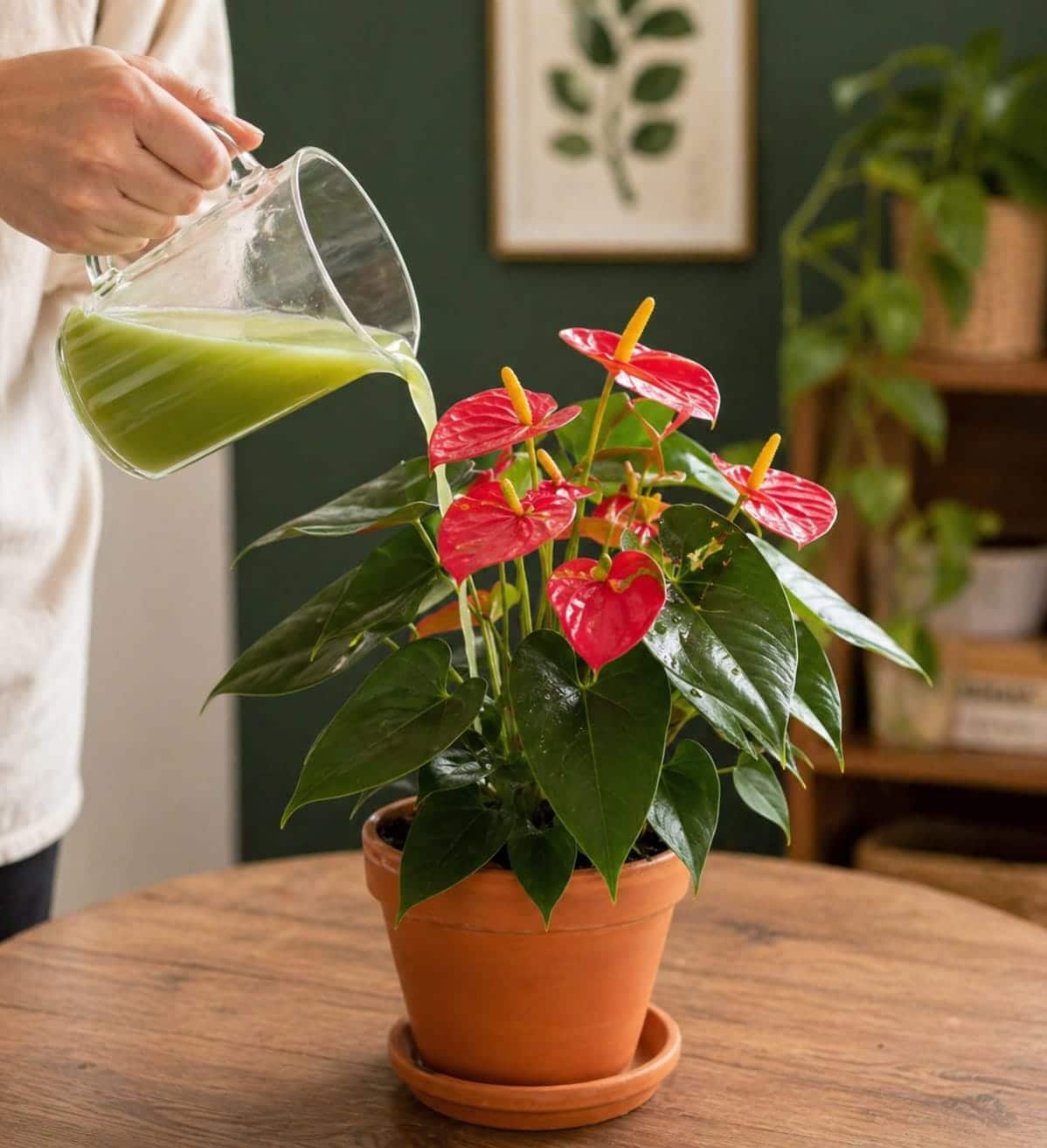
One method that has been getting attention is the green liquid anthurium trick. In the image, a pale green liquid is being poured around the base of a blooming anthurium. The plant looks glossy, fresh, and full of red blooms, making the liquid look like a secret tropical plant drink. It seems simple, natural, and exciting: a green homemade tonic that promises stronger roots, shinier leaves, and more vibrant flowers.
So what is this green liquid?
The safest version of this trick is a very diluted green plant tonic made from aloe vera water, cucumber peel water, spinach rinse water, or a weak liquid seaweed-style plant feed. These liquids can have a light green color and are often used by plant lovers as gentle natural supplements. The goal is not to pour thick vegetable juice into the pot. The goal is to use a weak, strained, watery mixture that supports the plant during active growth without clogging the soil or stressing the roots.
Anthuriums are tropical plants, but they are not plants that enjoy heavy, soggy soil. In nature, many anthuriums grow in loose organic material where their roots receive moisture and air at the same time. Indoors, they need a chunky, airy potting mix, bright indirect light, humidity, and careful watering. A green liquid trick can only help when those basics are already in place.
In this guide, you will learn what the green liquid anthurium trick is, how to make a safe version at home, when to use it, how often to apply it, and what mistakes to avoid. You will also learn the real care routine behind stronger roots, glossier leaves, and more colorful blooms.
What Is the Green Liquid Anthurium Trick?
The green liquid anthurium trick is a homemade plant-care method where a pale green, nutrient-style liquid is poured into the soil as an occasional supplement. It is usually made from plant-based ingredients that naturally tint the water green. Common safe versions include diluted aloe vera water, cucumber peel water, spinach rinse water, or a very weak liquid seaweed fertilizer.
The green color makes the method look powerful, but the color itself is not magic. What matters is the preparation. The liquid should be fresh, strained, diluted, and mild. It should never be thick, sour, salty, oily, or sugary. Anthurium roots need air as much as they need moisture, so anything that leaves pulp, slime, or residue in the pot can become a problem.
This method is best used as a gentle boost during the growing season. It may support the plant when it is producing new leaves, new roots, or new blooms. However, it should not replace proper fertilizer completely, and it should not be used on a plant that is already suffering from root rot or soggy soil.
Think of the green liquid as a light tropical rinse. It is a small extra step that can make your plant-care routine feel more intentional. The real results come from combining it with the right light, soil, humidity, watering, and feeding schedule.
Why Anthuriums Need Gentle Care
Anthuriums are tropical plants with a special root system. They like moisture, but they also need oxygen around the roots. This is why many anthuriums struggle in regular dense potting soil. If the soil stays wet and compacted, the roots can suffocate and rot.
A healthy anthurium root system should be firm, pale, and active. When the roots are healthy, the leaves look glossy, the stems stay upright, and the plant has enough strength to produce colorful spathes. When the roots are stressed, everything above the soil begins to suffer.
This is why gentle care matters. Anthuriums do not like extremes. They do not want to dry out completely for long periods, but they also do not want to sit in wet soil. They do not want harsh direct sun, but they do need bright light. They enjoy humidity, but they still need airflow. They benefit from feeding, but too much fertilizer can burn the roots.
The green liquid trick works best when used in this same gentle spirit. It should be weak, occasional, and supportive, not strong or constant.
What Can the Green Liquid Be Made From?
There are several safe ways to make a green liquid for anthuriums. The best option depends on what you have available and how careful you want to be.
Aloe vera water is one of the most popular options. Aloe gel, when diluted heavily in water and strained, creates a pale greenish liquid. Plant lovers use it because aloe is associated with soothing, hydrating, and root-supporting properties. For anthuriums, it must be very diluted.
Cucumber peel water is another mild option. Cucumber peels soaked briefly in water can create a faint green liquid. It is light and gentle when strained well.
Spinach rinse water can create a green tint, but it should be extremely weak and made only from clean, fresh leaves rinsed in water. It should not contain salt, oil, vinegar, seasoning, or cooked vegetable water.
Liquid seaweed fertilizer is the most predictable option if you want a true plant product. It often has a greenish or brown-green color and is made for plant use. It should still be diluted more than the label suggests for sensitive houseplants.
For beginners, diluted aloe vera water or very weak liquid seaweed feed is usually the easiest option.
The Safest Aloe Green Liquid Recipe
Aloe vera water is a popular homemade plant tonic because it feels natural and gentle. For anthuriums, the key is to use a tiny amount of aloe and plenty of water. Thick aloe gel should never be poured directly into the pot.
Ingredients
- 1 teaspoon fresh aloe vera gel
- 4 cups clean room-temperature water
- A blender or jar
- A fine strainer, cloth, or coffee filter
- 4 additional cups water for dilution
Instructions
- Use fresh clear aloe gel from inside the leaf, not the yellow sap near the skin.
- Add 1 teaspoon of gel to 4 cups of water.
- Blend or shake until the gel is fully dispersed.
- Strain the liquid carefully so no gel pieces remain.
- Dilute the strained liquid with 4 more cups of water.
- Use immediately when your anthurium is ready for watering.
The final mixture should look like slightly tinted water. It should not be thick or slippery. If it feels slimy, dilute it more. Anthurium roots need a light rinse, not a gel coating.
Cucumber Peel Green Water Recipe
Cucumber peel water is very mild and easy to make. It gives the water a soft green tint and can be used as an occasional gentle rinse.
Ingredients
- Peels from half a cucumber
- 4 cups clean water
- A jar
- A fine strainer
- 4 cups extra water for dilution
Instructions
- Wash the cucumber well before peeling.
- Place the clean peels in a jar.
- Add 4 cups of water.
- Let the peels soak for 2 to 4 hours.
- Strain the liquid completely.
- Dilute with 4 more cups of clean water.
- Use the same day.
Do not leave cucumber peels soaking for days. Long soaking can create an unpleasant smell or fermentation. Fresh, weak, and strained is the safest approach.
Weak Seaweed Green Feed Recipe
If you want a more reliable feeding effect, a liquid seaweed-style plant product can be used. This is not exactly a kitchen trick, but it is often safer and more predictable than homemade vegetable water.
Ingredients
- Liquid seaweed plant feed
- Clean water
- A watering can
Instructions
- Read the product label.
- Use one-quarter of the recommended dose for houseplants.
- Mix it into room-temperature water.
- Apply only when the anthurium is ready for watering.
- Let excess drain away completely.
Do not assume more is better. Anthuriums prefer gentle feeding. A weak solution used occasionally is safer than a strong solution that burns roots.
How to Apply the Green Liquid Correctly
Before using the green liquid, check the soil. Anthuriums like lightly moist soil, but they do not like soggy roots. Push your finger into the potting mix. If the top inch feels slightly dry and the pot feels ready for watering, you can apply the liquid. If the soil is still wet, wait.
Pour the diluted green liquid slowly around the soil surface. Try to water the potting mix, not the leaves or flowers. Avoid pouring liquid directly into the tight center of the plant where moisture can collect. Anthuriums enjoy humidity, but trapped wetness around stems can create problems.
Let the liquid run through the pot. Drainage is essential. If the pot has drainage holes, allow excess liquid to escape. Empty the saucer after watering. If the pot has no drainage holes, do not use this trick. Anthuriums should not sit in trapped liquid.
After watering, place the plant in bright indirect light and let it settle. Do not immediately add fertilizer, milk water, rice water, or any other homemade treatment. Keep the routine simple.
How Often Should You Use the Green Liquid?
Use the green liquid only occasionally. Once every four to six weeks during spring and summer is enough for most anthuriums. During fall and winter, reduce or stop use unless the plant is actively growing in bright conditions.
Do not use green liquid every time you water. Too much homemade organic liquid can create buildup, mold, fungus gnats, or sour soil. Even gentle ingredients can become a problem if repeated too often.
Plain water should be used most of the time. If your anthurium needs nutrients, use a balanced houseplant fertilizer or an anthurium-friendly fertilizer at a weak dose during active growth. The green liquid can be a monthly bonus, not the main feeding plan.
A simple routine is best: plain water most waterings, weak fertilizer during active growth, and green liquid only once in a while.
Can the Green Liquid Make Anthuriums Bloom More?
The green liquid may support plant health, but it does not force blooms by itself. Anthurium blooms depend on several factors: bright indirect light, healthy roots, warmth, humidity, and steady feeding. If the plant is in low light, it may produce leaves but few flowers.
The colorful red part of an anthurium is not technically a flower. It is a spathe, a modified leaf, surrounding the yellow spadix. To produce those bright spathes regularly, the plant needs energy. That energy comes mostly from light.
If your anthurium is not blooming, first move it to brighter indirect light. Then check the roots and soil. Make sure the potting mix is airy and not staying wet. Feed lightly during active growth. Keep humidity moderate.
The green liquid can be part of that care routine, but it is not the main bloom trigger. Light and root health matter more.
Can the Green Liquid Make Leaves Glossier?
The liquid should not be poured or wiped onto the leaves as a shine product. Anthurium leaves are naturally glossy when they are clean and healthy. If they look dull, dust is often the reason.
To make leaves shine, wipe them with a soft damp cloth using plain water. Support the leaf gently from underneath and wipe from base to tip. Avoid leaf shine sprays, oils, milk, or thick aloe gel on the leaves. These can leave residue and attract dust.
Long-term gloss comes from healthy roots, proper hydration, humidity, and bright indirect light. The green liquid may support the roots slightly, but clean leaves and good care are what create that polished tropical look.
Can the Green Liquid Strengthen Roots?
A weak, fresh aloe water or seaweed-style liquid may support root health as part of a good routine, but it cannot repair rotten roots. Strong roots come from an airy potting mix, correct watering, oxygen, and stable conditions.
If your anthurium roots are healthy, a gentle monthly tonic may encourage steady growth. If the roots are brown, mushy, or rotten, the plant needs repotting and root cleanup first.
To check roots, gently remove the plant from its pot if it is declining. Healthy roots should be firm. Rotten roots are soft, dark, and may smell bad. Trim damaged roots with clean scissors and repot into fresh chunky mix.
No green liquid can replace oxygen around the roots. Airy soil is the real root-strength secret.
Best Soil for Anthuriums
Anthuriums do best in a chunky, airy mix. Regular potting soil alone is often too dense and wet. A better mix allows water to pass through while holding some moisture.
A simple anthurium mix can include:
- 2 parts orchid bark
- 1 part indoor potting mix or coco coir
- 1 part perlite or pumice
- A small amount of charcoal, if available
This kind of mix gives roots air pockets and prevents soggy conditions. It also makes homemade liquids safer because excess moisture drains away faster.
If your anthurium soil stays wet for many days or smells sour, repotting into a chunky mix will help more than any tonic.
Best Pot for Anthuriums
Anthuriums need pots with drainage holes. This is essential. A decorative pot without drainage can trap water at the bottom and cause root rot. If you love a cover pot, keep the plant in a nursery pot with holes and place it inside the decorative container.
When watering, remove the nursery pot, let it drain fully, and then return it to the cover pot. Never leave water standing in the bottom.
Choose a pot that is only slightly larger than the root ball. A pot that is too large holds too much mix, and too much mix holds too much moisture. Anthuriums like room for roots, but they do not need an oversized container.
Good drainage makes every care trick safer.
Best Light for Anthurium Blooms
Light is the biggest factor in anthurium blooming. Anthuriums need bright indirect light to produce colorful spathes. They can survive in medium light, but they may bloom less often.
An east-facing window is often ideal because it gives gentle morning light. A bright north-facing room can also work. A south- or west-facing window may be too strong unless filtered with a sheer curtain.
Direct hot sun can burn leaves and spathes. Brown patches, faded leaves, or crispy spots may mean the light is too intense. On the other hand, dark green leaves with no blooms may mean the plant needs more brightness.
If you want more flowers, improve light before trying any homemade tonic.
How to Water Anthuriums Correctly
Anthuriums like consistent moisture but not wet feet. Water when the top inch of the mix begins to dry. Because anthurium mix is often chunky, you may need to feel deeper than the surface or lift the pot to judge weight.
Water thoroughly until liquid drains from the bottom. Then empty the saucer. Do not let the plant sit in standing water.
In warm bright conditions, the plant may need water more often. In cooler or darker rooms, it will need water less often. Always check the mix instead of following a strict calendar.
If using green liquid, treat it as a watering. Do not pour it into the pot between waterings.
Humidity for Anthuriums
Anthuriums love humidity. Dry indoor air can cause brown tips, curled edges, and slower growth. If your home is dry, increasing humidity can make a noticeable difference.
You can group plants together, use a pebble tray, or run a small humidifier nearby. If using a pebble tray, keep the pot above the waterline so the roots are not sitting in water.
Misting can make the plant look fresh temporarily, but it does not raise humidity for long. If you mist, do it lightly and avoid keeping the flowers wet for hours.
Humidity helps leaves stay lush and supports better growth, but airflow is still important. Humid, stagnant air can encourage fungal problems.
How to Feed Anthuriums
Anthuriums benefit from gentle feeding during active growth. Use a balanced liquid houseplant fertilizer or a bloom-supporting fertilizer diluted to half strength or weaker. Feed every four to six weeks during spring and summer.
Do not overfeed. Too much fertilizer can burn roots and cause brown leaf tips. Anthuriums prefer light, steady nutrition over strong doses.
The green liquid trick can be used in a separate watering, not on the same day as fertilizer. Avoid combining many treatments at once because it becomes harder to know what helps and what causes problems.
During fall and winter, reduce feeding unless the plant is still actively growing under bright light.
Can You Use Blended Green Juice?
No, thick blended green juice should not be poured into an anthurium pot. Blended spinach, kale, cucumber, herbs, or vegetable pulp may look natural, but it can clog the potting mix, rot, smell bad, and attract pests.
The safe green liquid should be watery and strained. No pulp should remain. If the liquid looks like a smoothie, it is too strong and too thick.
Houseplant pots are not compost bins. Solid organic scraps belong in compost, not around delicate indoor roots.
Can You Use Cooked Vegetable Water?
Only if it is completely plain and unsalted, but even then it is not the best option for anthuriums. Cooked vegetable water often contains starches or minerals, but if it has salt, oil, butter, spices, or seasoning, it should never be used on plants.
For the green liquid trick, fresh peel water or diluted aloe water is safer than cooked water. Fresh mixtures are easier to control and less likely to contain harmful additives.
If you are unsure whether the liquid contains salt, do not use it.
Continue to Page 2
Continue to page 2 for more details about this article and the key points many readers miss on the first page.