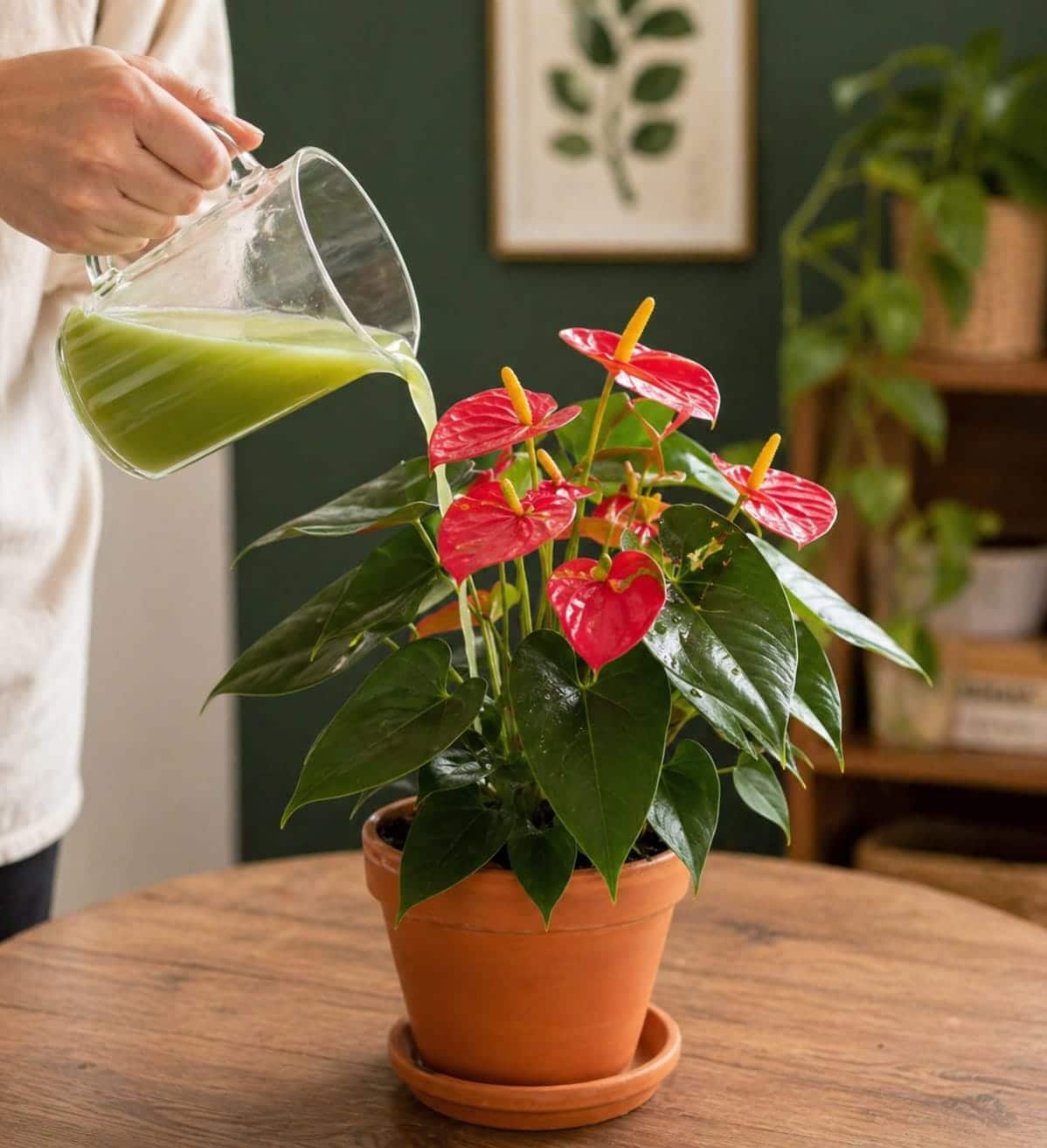
Can You Use Matcha or Green Tea?
Plain weak green tea may be used by some plant owners, but it is not the best first choice for anthuriums. Tea contains compounds that may not be necessary for the plant, and strong tea can affect the soil over time.
Never use sweetened tea, bottled tea, flavored tea, milk tea, or tea with lemon. Sugar and additives can attract pests and create soil problems.
If you want a green liquid, aloe water, cucumber peel water, or a proper weak plant feed is a cleaner option.
Can You Use Grass Clipping Water?
It is better not to use grass clipping water on indoor anthuriums. Grass clippings can contain pesticides, herbicides, fertilizers, soil organisms, or outdoor contaminants. Soaking them can create a strong, unpleasant liquid that may not be safe for houseplant roots.
Anthuriums are sensitive enough that clean ingredients are better. Use fresh household ingredients that you know are safe and unsprayed.
Common Mistakes With the Green Liquid Trick
Using It Too Strong
Strong green liquid can leave residue, smell bad, or overwhelm roots. Always dilute until it looks like lightly tinted water.
Leaving Pulp in the Pot
Pulp can rot and attract gnats. Always strain the mixture thoroughly.
Using It Too Often
Once every four to six weeks during active growth is enough. More is not better.
Using It on Wet Soil
If the soil is already wet, do not add more liquid. Wait until the plant is ready for watering.
Expecting Instant Blooms
Blooms come from light, healthy roots, warmth, humidity, and steady feeding. A green liquid alone cannot force flowers.
Ignoring the Potting Mix
If the mix is dense and soggy, repot into an airy blend before using any tonic.
Signs the Green Liquid Is Helping
If the green liquid is being used safely, your anthurium should remain steady and healthy. New leaves may emerge glossy and firm. Roots may continue growing. Blooms may last well if the rest of the care routine is good.
The soil should not smell sour. There should be no fungus gnats, mold, sticky residue, or yellowing after use. The pot should drain normally, and the plant should not droop afterward.
Remember that results are gradual. Anthuriums do not transform overnight. A good routine creates better growth over weeks and months.
Signs You Should Stop Using It
Stop using the green liquid if you notice sour smells, mold, fungus gnats, yellowing leaves, brown tips, sticky soil, drooping after watering, or soil that stays wet too long. These signs mean the mixture may be too strong or the plant’s root zone is not healthy.
Return to plain water. Check the roots if the plant continues to decline. Repot into fresh chunky mix if the soil smells bad or stays wet.
Homemade tricks should never make plant care harder. If the plant does not respond well, skip the trick.
How to Fix an Anthurium After Too Much Green Liquid
If you accidentally used a thick or strong green liquid, let the pot drain completely. Empty the saucer. If the pot drains well and the soil is not already soggy, you can flush lightly with plain water and let it drain again.
If the mix smells bad or contains pulp, repot the plant. Remove the old mix from around the roots, trim any rotten roots, and place the plant in a fresh airy anthurium mix.
After repotting, avoid fertilizer and homemade liquids for a few weeks. Let the plant settle with bright indirect light and careful watering.
How to Encourage More Red Anthurium Blooms
For more red blooms, focus on light first. Move the plant to a brighter location with indirect light. Avoid direct hot sun, but do not keep the plant in a dark corner.
Next, make sure the roots are healthy. Use a chunky mix and a draining pot. Water when the top inch begins to dry. Keep humidity moderate. Feed lightly during active growth.
Remove old faded spathes by cutting the stem near the base. This helps the plant look tidy and redirect energy.
The green liquid can be used occasionally as a gentle supplement, but bloom production depends on the full care routine.
How to Keep Anthurium Leaves Glossy
Clean leaves are essential. Dust can dull the shine and block light. Use a soft damp cloth to wipe each leaf gently. Do not use oils or heavy leaf shine products.
Keep humidity steady and avoid letting the plant dry out completely for long periods. Avoid overwatering, which can damage roots and reduce leaf quality.
Place the plant where it gets bright indirect light. Healthy light helps the leaves develop rich color and natural shine.
If leaves are dull because the plant is stressed, check roots and soil. Glossy leaves start below the surface with healthy roots.
A Safe Green Liquid Anthurium Routine
If you want to try the green liquid trick, follow this simple routine:
- Choose aloe water, cucumber peel water, or weak seaweed feed.
- Make the liquid fresh.
- Strain out all solids.
- Dilute until it is pale and watery.
- Use only during active growth.
- Apply only when the soil is ready for watering.
- Pour onto the soil, not the leaves or blooms.
- Let the pot drain completely.
- Use no more than once every four to six weeks.
- Stop if odor, mold, gnats, or yellowing appears.
This routine keeps the trick gentle and reduces the risk of harming the plant.
Seasonal Anthurium Care With the Green Liquid Trick
Spring
Spring is a good time for new growth. Increase watering slightly as the plant grows, feed lightly, and use green liquid once if the plant is healthy and active.
Summer
Warmth and humidity support strong growth. Keep the plant in bright indirect light. Use the green liquid no more than once every four to six weeks.
Fall
Growth may slow as light decreases. Reduce feeding and use plain water more often. Only use green liquid if the plant is still actively growing.
Winter
Use caution. Anthuriums may grow more slowly in winter. Avoid homemade liquids if the soil dries slowly. Focus on light, warmth, and humidity.
Common Anthurium Problems and What to Do
Yellow Leaves
Yellow leaves often come from overwatering, poor drainage, low light, or root stress. Check the soil before adding any tonic.
Brown Tips
Brown tips may come from dry air, fertilizer buildup, inconsistent watering, or low humidity. Improve humidity and avoid overfeeding.
No Blooms
No blooms usually means not enough bright indirect light or weak feeding during active growth. Improve light first.
Drooping Leaves
Drooping can mean dry soil, wet roots, cold stress, or heat stress. Check moisture and location.
Root Rot
Root rot needs repotting and trimming. Do not use green liquid on rotten roots.
Fungus Gnats
Gnats usually mean the mix is staying too wet or organic material is breaking down. Let the top layer dry and avoid homemade liquids until the problem is gone.
Frequently Asked Questions
What is the green liquid used on anthuriums?
It is usually a diluted plant tonic made from aloe vera water, cucumber peel water, spinach rinse water, or weak liquid seaweed feed.
Can green liquid make anthuriums bloom?
It may support overall health, but blooms depend mostly on bright indirect light, healthy roots, humidity, warmth, and gentle feeding.
How often should I use it?
Use it no more than once every four to six weeks during active growth. Use plain water most of the time.
Can I use blended green juice?
No. Thick juice or pulp can rot in the soil and attract pests. Use only strained, watery, diluted mixtures.
Can I use aloe vera on anthuriums?
Yes, but only a tiny amount of clear aloe gel diluted heavily in water and strained well. Do not pour thick gel into the pot.
Can I pour it on the leaves?
No. Apply it to the soil only. Clean leaves with plain water and a soft cloth.
Can it fix root rot?
No. Root rot requires removing damaged roots and repotting into fresh airy mix.
Is seaweed fertilizer better than homemade green water?
It is more predictable because it is made for plants. Use it weakly and follow the label carefully.
Can I use green tea?
Plain weak green tea may be tolerated occasionally, but aloe water or weak seaweed feed is usually a better option. Never use sweetened tea.
What should I do if the soil smells bad after using it?
Stop using the liquid, let the mix dry slightly, and repot if the smell continues. Bad smell usually means the mix is too wet or organic residue is breaking down.
Final Thoughts
The green liquid anthurium trick is beautiful, simple, and satisfying. It looks like a tropical plant drink, and when used carefully, it can become a gentle part of your anthurium care routine. The safest versions are diluted aloe vera water, cucumber peel water, or weak seaweed-style plant feed. The liquid should always be fresh, strained, watery, and mild.
But the green liquid is not magic. It will not force blooms, repair rotten roots, or replace proper care. Anthuriums need bright indirect light, chunky soil, humidity, warmth, good drainage, and gentle feeding. Without those basics, no homemade tonic will create lasting results.
Use the green liquid only during active growth and only when the plant needs watering. Let the pot drain completely. Avoid thick juices, pulp, salt, sugar, oils, and fermented mixtures. Stop immediately if the soil smells sour, gnats appear, or leaves begin to yellow.
For stronger roots, give the plant an airy mix. For glossier leaves, clean them and provide humidity. For more vibrant blooms, improve light and feed gently. When all of these pieces come together, your anthurium can become fuller, shinier, and more colorful over time.
The green liquid may be the trick that catches attention, but steady care is what truly transforms an anthurium. Treat it gently, keep the roots breathing, and give it the tropical conditions it loves. With patience, your anthurium can reward you with glossy leaves, strong roots, and bright heart-shaped blooms again and again.