A mature jade plant can be one of the most impressive plants in a home or patio garden. With thick woody stems, clusters of plump oval leaves, and sometimes masses of tiny star-shaped buds, a large jade can look almost like a miniature flowering tree. It has that old-fashioned charm that makes people stop and ask, “How long have you had that plant?” A healthy jade plant can live for decades, grow into a sculptural shrub, and become a treasured part of a garden collection.
But when a jade plant starts to droop, it can look alarming. The leaves may hang downward, the branches may lose their firmness, and the flower buds may look tired before they ever open. A plant that once looked full and glossy can suddenly appear thirsty, exhausted, or close to collapse. This is when many gardeners start looking for a rescue trick that feels simple, natural, and fast.
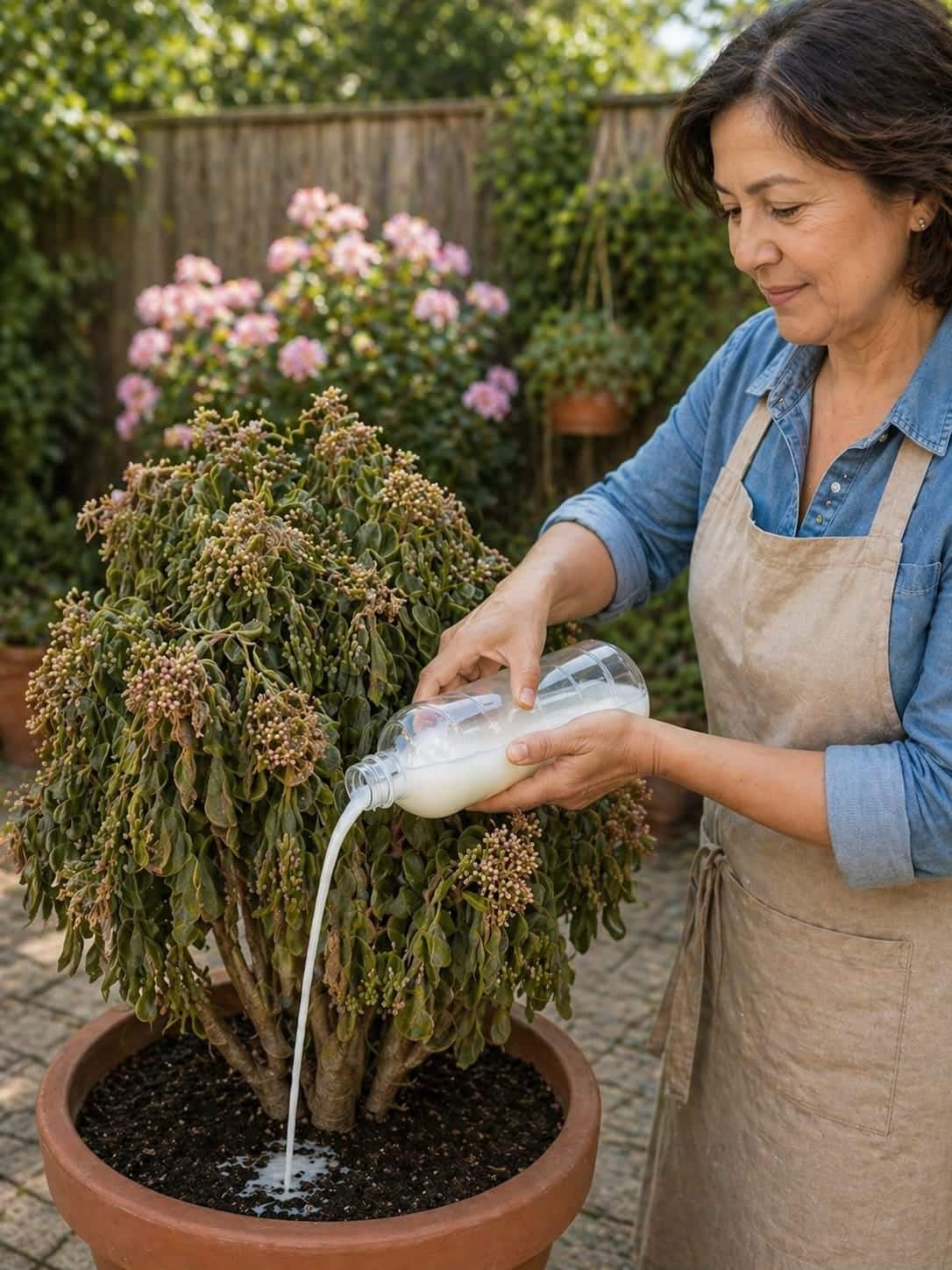
One method that has been getting attention is the white liquid trick. In the image, a creamy white liquid is being poured around the base of a large drooping jade plant. It looks like a homemade plant drink, almost like a nourishing tonic for tired roots. The color immediately makes people wonder: is it milk? Is it rice water? Is it a calcium drink? Can this white liquid really help a weak jade plant recover?
The safest version of this trick is a very diluted milk-water rinse, or sometimes a diluted rice-water rinse, used only occasionally and only when the plant actually needs watering. Milk contains calcium and small amounts of other nutrients, which is why some gardeners experiment with it as a gentle plant supplement. Rice water is another popular white liquid because it looks milky after rinsing rice and feels like a mild homemade plant tonic.
However, jade plants are succulents. They do not like soggy soil, heavy organic liquids, or frequent watering. That means this trick must be used carefully. Straight milk should never be poured heavily into the pot. Thick milk can sour, smell bad, attract ants and fungus gnats, and make the soil unhealthy. A jade plant needs dry-down time, airy soil, and excellent drainage. The white liquid can be a small occasional boost, but it cannot replace proper care.
In this complete guide, you will learn what the white liquid jade plant trick is, how to make a safer diluted version, when to use it, when to avoid it, what results to expect, and what a drooping jade plant really needs to recover. You will also learn why the plant may be drooping in the first place, because the same sad appearance can come from underwatering, overwatering, root rot, heat stress, poor soil, or lack of light.
What Is the White Liquid Jade Plant Trick?
The white liquid jade plant trick is a homemade care method where a pale, milky-looking liquid is poured into the soil around a jade plant. The liquid is usually promoted as a natural boost for tired, drooping, or slow-growing plants. The most common safe versions are diluted milk water and diluted rice water.
Diluted milk water is made by mixing a small amount of plain milk with a much larger amount of water. The goal is not to feed the plant with dairy. The goal is to create a very weak, cloudy liquid that may provide a tiny calcium-based supplement while watering the plant.
Diluted rice water is made from the cloudy water left after rinsing uncooked rice. It contains some starch and trace organic material. Some gardeners use it occasionally as a mild plant rinse. It is usually less risky than milk when used fresh and diluted, but it can still ferment or attract pests if overused.
For jade plants, the white liquid should always be weak, fresh, and used rarely. It should never be thick, sour, sweetened, flavored, or poured into already-wet soil. Jade plants store water in their leaves and stems, so they do not need frequent liquid treatments.
The trick is best seen as a small optional supplement, not a miracle cure. It may help a healthy jade plant that is actively growing, but it will not save a plant with rotten roots or fix poor drainage.
Why People Try White Liquid on Drooping Jade Plants
People try this trick because a drooping jade plant can look desperate. When the branches hang and the leaves lose their firmness, it feels like the plant needs immediate nourishment. A white liquid looks rich and calming, almost like a homemade plant medicine.
Milk also has a strong association with calcium and strength. Since calcium is important for plant structure, many gardeners assume that milk water can strengthen weak stems and tired leaves. There is some logic behind the idea, but the effect is not instant and should not be exaggerated. Milk is not a balanced fertilizer, and jade plants do not need a lot of it.
Rice water is popular for a similar reason. It looks soft and natural, and many people like the idea of reusing kitchen water instead of wasting it. When used carefully, rice water can be part of a gentle routine, but it should not be allowed to ferment in the pot.
The biggest benefit of the white liquid trick may actually be attention. When someone decides to use a special plant drink, they often inspect the soil, check the roots, move the plant to better light, prune dead parts, and water more thoughtfully. Those actions can help more than the liquid itself.
Is the Plant in the Image a Jade Plant?
The plant in the image appears to be a mature jade-type succulent, likely a large Crassula plant. It has thick woody stems, clusters of small fleshy leaves, and many flower buds. Some jade plants can bloom with clusters of small star-shaped flowers when mature and grown in strong light with the right seasonal conditions.
A large blooming jade plant can look like a small shrub. When healthy, its leaves should be firm, plump, and glossy. When stressed, the leaves can hang downward, wrinkle, dull, or drop. Flower buds may also fail to open if the plant is stressed by water problems, heat, cold, or sudden changes.
Because jade plants are succulents, their care is different from peace lilies, pothos, or other leafy tropical plants. They prefer brighter light, faster-draining soil, and less frequent watering. This is why any white liquid trick must be adapted for succulent care.
Can Milk Water Help a Jade Plant?
Diluted milk water may provide a tiny calcium-based supplement, but it should not be treated as a major fertilizer or emergency rescue. A healthy jade plant may tolerate a very weak milk-water rinse once in a while during active growth. But if the plant is drooping from root rot, milk water can make the problem worse by adding moisture and organic residue.
The key is dilution. Straight milk is too rich for houseplant soil. It can spoil, smell sour, attract pests, and create a sticky or unpleasant potting environment. A jade plant’s roots need air and dryness between waterings. Thick milk works against that.
If you use milk water, it should be mostly water with just a small splash of plain milk. The mixture should look only slightly cloudy. If it looks like full milk, it is too strong.
Even then, it should be used rarely. Think of it as an occasional supplement during spring or summer, not a weekly treatment.
Can Rice Water Help a Jade Plant?
Rice water is another possible white liquid for jade plants. It is the cloudy water from rinsing uncooked rice. Some plant owners use it as a mild homemade watering supplement. It is often gentler than milk because it does not contain dairy fats or proteins, but it still contains organic material that can ferment if left too long.
For jade plants, rice water must be fresh and diluted. Do not use fermented rice water unless you know exactly what you are doing, and even then, succulents are not the best plants for fermented liquids. A fresh, lightly cloudy rinse is safer.
Rice water should not be used if the soil is damp, if the pot has no drainage, or if fungus gnats are already present. It can feed unwanted soil activity if overused.
As with milk water, rice water is only a small optional trick. The real foundation is light, drainage, and correct watering.
The Safest Milk-Water Recipe for Jade Plants
If you want to try the white liquid trick with milk, keep the mixture extremely weak. Jade plants do not need a rich dairy drink. They need a gentle rinse that drains away quickly.
Ingredients
- 1 teaspoon plain milk
- 2 cups clean room-temperature water
- A small watering container
- A spoon for mixing
Instructions
- Use plain milk only. Do not use sweetened, flavored, chocolate, condensed, or cream-based milk.
- Add 1 teaspoon of milk to 2 cups of water.
- Stir until the mixture looks very lightly cloudy.
- Check that the jade plant soil is completely dry.
- Pour a small amount around the outer soil surface.
- Let the liquid drain fully from the pot.
- Empty the saucer immediately.
This mixture is intentionally weak. Stronger is not better. If your plant is in a large outdoor pot, you can make more mixture using the same weak ratio, but do not saturate the soil with dairy liquid.
The Safest Rice-Water Recipe for Jade Plants
If you prefer not to use milk, rice water may be a better white liquid option. It still needs caution, but it is less likely to smell like sour dairy if used fresh.
Ingredients
- 1/4 cup uncooked rice
- 2 cups water for rinsing
- 2 extra cups clean water for dilution
- A strainer
Instructions
- Place the uncooked rice in a bowl.
- Add 2 cups of water.
- Swirl the rice for 20 to 30 seconds.
- Strain the cloudy water into a separate container.
- Dilute the cloudy water with 2 more cups of clean water.
- Use immediately.
- Do not store it for days.
The finished liquid should be lightly cloudy, not thick. Do not use cooked rice water with salt, oil, butter, spices, or seasoning. Only plain fresh rinse water is suitable.
How Often Should You Use the White Liquid Trick?
For jade plants, use the white liquid trick rarely. Once every six to eight weeks during spring or summer is enough. Some jade plants do not need it at all. If the plant is not actively growing, skip it.
Do not use milk water or rice water every week. Do not use it every time you water. Do not use it in winter unless the plant is actively growing under strong light. During darker months, jade plants often slow down and need less water.
Too much white liquid can create sour soil, fungus gnats, mold, or root stress. Jade plants prefer lean, dry, airy conditions. A little occasional supplement may be fine, but regular rich watering is not.
Plain water should be used most of the time. If the jade needs nutrients, a diluted cactus or succulent fertilizer is more predictable than milk or rice water.
When You Should Avoid This Trick
Do not use the white liquid trick if the jade plant soil is wet. This is the most important rule. A drooping jade with wet soil may have root rot. Adding more liquid can make the plant decline faster.
Do not use it if the pot has no drainage holes. Any liquid must be able to drain away. A no-drainage pot is risky for jade plants even with plain water.
Do not use it if the soil smells sour, rotten, or swampy. That means the root zone may already be unhealthy.
Do not use it if fungus gnats, ants, or mold are present. Organic liquids can make pest problems worse.
Do not use it on fresh cuttings that have not rooted. Jade cuttings need to callus and root in dry, airy conditions. Milk water or rice water can cause rot if used too soon.
Why Is the Jade Plant Drooping?
A drooping jade plant can be confusing because the same symptom can come from different causes. The most common causes are underwatering, overwatering, poor drainage, heat stress, cold stress, root damage, low light, or a heavy bloom load.
If the soil is dry and the leaves are wrinkled, the plant may be thirsty. A proper watering with plain water may help it recover. If the soil is wet and the leaves are drooping, the roots may be damaged and unable to absorb water. In that case, more liquid is harmful.
A large blooming jade can also droop when it is carrying many buds and flowers, especially if it is stressed by heat or inconsistent watering. Mature plants in large pots can become heavy, and branches may naturally arch downward. But if the leaves are soft, dull, or falling, stress is likely.
Before using any trick, check the soil and roots. Diagnosis comes first.
How to Tell If a Drooping Jade Needs Water
A thirsty jade plant usually has dry soil and slightly wrinkled, less firm leaves. The pot may feel light. The leaves may not be mushy; they may simply feel thinner or less plump. If you gently squeeze a healthy jade leaf, it should feel firm. A dehydrated leaf may feel slightly soft or flexible.
If the soil is completely dry, water thoroughly with plain water or a very weak white liquid if you are choosing to use the trick. Let water drain out fully. Empty the saucer. Then wait.
Jade leaves may take time to plump back up. Do not keep watering again and again in the same week because you want instant results. Once the soil has been watered, let it dry again.
Patience is essential. Jade plants respond slowly.
How to Tell If a Drooping Jade Is Overwatered
An overwatered jade may have wet soil, yellowing leaves, sudden leaf drop, mushy stems, blackened areas, or a soft base. The leaves may feel swollen and weak rather than dry and wrinkled. The pot may smell sour.
If the soil is wet and the plant is drooping, remove the plant from the pot and inspect the roots. Healthy roots are firm. Rotten roots are dark, mushy, slimy, or smelly. The thick stem base may also show signs of rot.
Do not add milk water, rice water, fertilizer, or any tonic to an overwatered jade. The plant needs dryness, fresh gritty soil, and root cleanup.
Trim rotten roots with clean tools. Let the plant dry briefly. Repot into fresh succulent mix. Wait before watering again.
Can the White Liquid Save Root Rot?
No. The white liquid trick cannot save root rot. Root rot is a physical root problem caused by too much moisture and not enough oxygen. Adding more liquid, especially organic liquid, can worsen the situation.
If root rot is present, the correct rescue method is to remove the plant from the pot, cut away rotten roots, let the remaining healthy parts dry, and repot into fresh fast-draining soil. If the base is rotten, you may need to take healthy cuttings from the upper branches and restart the plant.
Milk water or rice water should only be considered after the plant has recovered and is growing again. Never use it as the first rescue step for rot.
Best Soil for a Jade Plant
Jade plants need fast-draining soil. Regular potting soil often holds too much moisture, especially in large pots. A mature jade plant in a heavy pot can stay wet deep down even when the surface looks dry.
A good jade plant soil mix can include:
- 2 parts cactus or succulent mix
- 1 part perlite or pumice
- 1 part coarse sand, lava rock, or orchid bark
This mix lets water move through quickly and gives the roots air. It also reduces the risk that any homemade liquid will linger around the roots.
If your jade plant is in dark, dense, soggy soil, repotting will help more than any white liquid trick. Healthy roots need structure and oxygen.
Best Pot for a Large Jade Plant
A large jade plant needs a sturdy pot with drainage holes. Terracotta is an excellent choice because it is breathable and helps the soil dry faster. It is also heavy, which helps support a top-heavy plant.
The pot should be only slightly larger than the root ball. A huge pot holds too much soil, and too much soil holds too much moisture. This is one reason large jade plants can develop root problems.
If your pot has a saucer, empty it after watering. A jade plant should never sit in standing water. If it is outdoors, make sure rainwater does not collect in the saucer for days.
Drainage is more important than any homemade tonic.
Best Light for Jade Plant Recovery
Jade plants need bright light to recover and grow well. A drooping plant should not be placed in deep shade unless it is recovering from severe heat stress. Most jade plants need bright indirect light or several hours of gentle direct sun.
Indoors, a south-facing or west-facing window is often best, though the plant should be acclimated gradually. Outdoors, a jade plant may enjoy morning sun and bright filtered light, but harsh afternoon sun during hot weather can stress it.
If your jade plant is blooming, it likely has been receiving strong light. But if it suddenly droops during a hot period, check whether the pot dried too much or heated up excessively.
Light gives the plant energy. Without enough light, it cannot use water or nutrients efficiently.
Continue to Page 2
Continue to page 2 for more details about this article and the key points many readers miss on the first page.