How to Water a Large Jade Plant Correctly
Large jade plants should be watered deeply but infrequently. Water when the soil has dried well. For a large pot, the top inch may dry quickly while the lower soil stays damp, so check deeper if possible.
Use a wooden skewer or moisture meter if needed. Insert it deep into the soil. If it comes out damp, wait. If it comes out dry, water thoroughly.
When watering, pour slowly until water drains from the bottom. Then empty the saucer. Do not give small daily splashes. Small frequent waterings keep the top damp and can encourage shallow roots, mold, or gnats.
If using the white liquid trick, count it as a watering. Do not add it between regular waterings.
Can Milk Water Make Jade Leaves Shinier?
Milk water should not be poured or wiped onto jade leaves. It can leave residue, attract dust, or smell sour. Jade leaves are naturally shiny when clean and healthy.
To make jade leaves look glossier, wipe them with a soft damp cloth using plain water. Support each leaf gently and remove dust. Clean leaves reflect light better and instantly improve the plant’s appearance.
For long-term shine, give the plant strong light, correct watering, and good airflow. Avoid leaf shine products, oils, milk, or sticky liquids on the foliage.
Can Milk Water Help Jade Flowers?
Milk water does not directly make jade plants bloom. Jade plants usually flower when they are mature, receive strong light, experience seasonal changes, and are not overwatered. Some jade plants bloom after a cooler, drier rest period, followed by good light.
If your jade is already covered in buds, avoid stressing it with strong homemade treatments. A blooming plant needs stability. Too much moisture, fertilizer, or sudden change can cause buds to dry or drop.
If you use the white liquid trick on a budding jade, make it very weak and only apply it if the soil is dry and the plant needs watering. Plain water is often safer during blooming.
Can Rice Water Help Jade Flowers?
Rice water is not a bloom trigger for jade plants. It may act as a mild organic rinse, but flowering depends more on maturity, light, seasonal rhythm, and plant health.
If you want a jade plant to flower, focus on bright light, proper watering, and avoiding overly rich feeding. Mature jade plants may bloom when they experience cooler nights and a drier period, especially in outdoor or bright indoor conditions.
Rice water can be used occasionally during active growth, but it should not be relied on for flowers.
What to Do If the Plant Is Loaded With Buds but Drooping
A jade plant covered in buds may droop because it is using a lot of energy. But heavy bud production alone usually does not cause severe collapse unless another stress is present. Check the soil first.
If the soil is dry, water properly. If the soil is wet, check for root stress. If the plant is in hot direct sun, move it to a slightly protected bright spot. If it is cold, protect it from drafts or frost.
Do not fertilize heavily while the plant is stressed. Do not pour thick milk into the soil. Keep the routine simple and stable.
Remove dead or dried flower clusters only after they fade. Avoid heavy pruning while the plant is in bloom unless branches are damaged.
How to Use the White Liquid Trick Without Attracting Bugs
The biggest risk of milk water and rice water is pests. Organic liquids can attract fungus gnats, ants, flies, or mold if they are too strong or used too often.
To reduce risk, dilute heavily. Use only fresh mixtures. Apply only when the soil is dry. Let the pot drain completely. Do not leave liquid in the saucer. Do not splash leaves or stems. Do not use the trick in cool, damp weather or in low-light rooms where soil dries slowly.
If you see gnats after using the trick, stop immediately. Let the soil dry. Use sticky traps if needed. If the soil smells sour, remove the top layer or repot.
What If the Soil Smells Sour After Milk Water?
A sour smell means the milk is breaking down in the pot. Stop using milk water. If the pot has drainage holes and the soil is not dangerously wet, flush lightly with plain water and let it drain. Then allow the soil to dry well.
If the smell continues, remove the top layer of soil. If the pot still smells bad or the plant begins to decline, repot into fresh gritty succulent mix.
Next time, use a much weaker mixture or switch to plain water. For jade plants, it is always safer to keep things lean and clean.
What If the Soil Gets Moldy After Rice Water?
Mold after rice water means the liquid was too strong, used too often, or the soil stayed too damp. Remove the moldy top layer. Let the soil dry. Improve airflow and light. Avoid rice water until the plant is stable.
Rice water should be fresh and diluted. It should not be stored until it smells sour. It should not be used in a pot that already has moisture problems.
If mold keeps returning, the issue is likely watering or soil structure. Repot into a faster-draining mix.
Should You Use Fertilizer Instead?
If your jade plant needs nutrients, a cactus or succulent fertilizer is more reliable than milk water or rice water. Use it during spring or summer when the plant is actively growing. Dilute it to half strength or weaker.
Do not fertilize a stressed, drooping, or rotting plant. Fertilizer is for healthy active growth, not emergency rescue. A plant with damaged roots cannot use fertilizer properly.
Milk water and rice water are not complete fertilizers. They are optional homemade supplements. A measured plant fertilizer gives more predictable results.
How to Revive a Drooping Jade Plant Step by Step
If your jade plant is drooping, follow this careful rescue routine:
- Check the soil moisture deeply.
- If the soil is dry, water thoroughly with plain water.
- If the soil is wet, remove the plant and inspect the roots.
- Trim rotten roots or soft stems with clean tools.
- Repot into fresh gritty succulent soil if needed.
- Use a pot with drainage holes.
- Place the plant in bright light, protected from harsh stress.
- Do not fertilize until new growth appears.
- Use milk water or rice water only after recovery, and only rarely.
- Monitor leaf firmness, soil smell, and drainage.
This routine addresses the real causes. The white liquid trick should never be the only rescue step.
How to Keep a Mature Jade Plant Strong
A mature jade plant needs steady seasonal care. Give it bright light, fast-draining soil, and careful watering. Rotate the pot occasionally so growth stays balanced. Prune after flowering or during active growth to keep the shape strong.
Remove dead leaves and spent flowers from the soil surface. Old plant debris can hold moisture and attract pests. Keep the base of the plant clean and airy.
Do not overpot. Do not overwater. Do not overfeed. Mature jade plants often thrive with less attention than people expect.
When care is balanced, the plant can grow into a beautiful woody shrub and may bloom repeatedly in the right conditions.
Can You Use This Trick on Other Succulents?
Use caution. Many succulents are more sensitive than jade plants. Echeveria, haworthia, aloe, and small succulents may not tolerate organic liquids well, especially if their soil stays damp.
If you try a white liquid on another succulent, make it extremely weak and use it rarely. Avoid applying it to rosettes or leaves. Always use a pot with drainage.
For most succulents, plain water and diluted succulent fertilizer are safer than kitchen liquids.
Can You Use This Trick on Outdoor Potted Plants?
Outdoor potted plants may tolerate diluted homemade liquids better than indoor plants because there is more airflow and sunlight. However, pots can still develop odors, pests, or rot if the mixture is too strong.
For an outdoor jade plant, use the trick only during warm active growth and only when the soil is dry. Avoid using milk water during rainy weather or cool cloudy periods.
Outdoor conditions can change quickly. If the plant is in intense sun, a stressed root system may struggle after any treatment. Keep the routine gentle.
Common Mistakes With the White Liquid Trick
Using Straight Milk
Straight milk is too rich and can spoil in the soil. Always dilute heavily.
Using It Too Often
Once every six to eight weeks during active growth is enough. More can create buildup and pests.
Using It on Wet Soil
Never add white liquid to damp jade soil. Wait until the plant is ready for watering.
Using Sweetened or Flavored Liquids
Chocolate milk, sweetened milk, plant-based milk with additives, or rice water with salt should never be used.
Expecting Instant Recovery
Jade plants recover slowly. Look for gradual improvement, not overnight transformation.
Ignoring Root Rot
If roots are rotten, no liquid trick will help. Repot and remove damaged roots.
Signs the Trick Is Helping
If the white liquid trick is being used safely, the plant should remain stable. The soil should dry normally. There should be no sour smell, no mold, no gnats, and no sudden leaf drop.
Over time, if the plant was slightly undernourished and otherwise healthy, leaves may look firmer and growth may continue steadily. But the most important signs of recovery are healthy roots, firm leaves, and new growth during the active season.
If the plant looks worse after treatment, stop immediately.
Signs You Should Stop Using It
Stop using milk water or rice water if you notice sour odor, mold, fungus gnats, ants, sticky soil, yellowing leaves, soft stems, or soil that stays wet for too long. These are warning signs that the pot environment is becoming unhealthy.
Return to plain water only. Improve drainage. Increase light if needed. Remove any spoiled top soil. Repot if the smell or decline continues.
A plant trick should never make the plant harder to care for. If the jade does not tolerate it, skip it completely.
Frequently Asked Questions
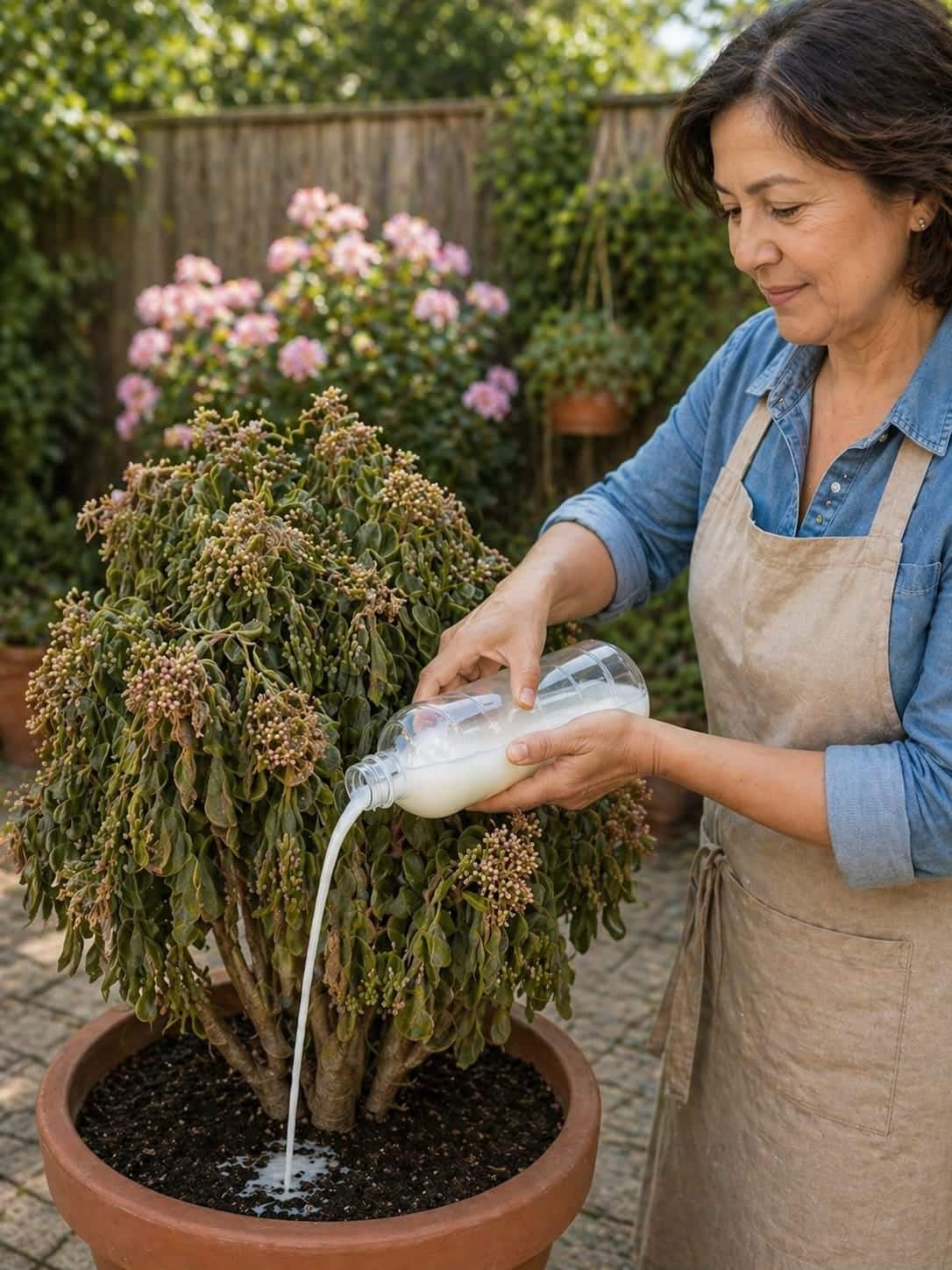
What is the white liquid being poured on the jade plant?
It is usually a diluted milk-water mixture or diluted rice water. Both are used by some gardeners as occasional homemade plant tonics.
Can I pour milk directly on a jade plant?
No. Straight milk can spoil, smell sour, attract pests, and damage the soil environment. Always dilute heavily if using milk at all.
How much milk should I use?
Use only about 1 teaspoon of plain milk mixed into 2 cups of water. The mixture should look lightly cloudy, not thick.
Is rice water safer than milk water?
Fresh diluted rice water is often less risky than milk, but it can still ferment or attract pests if used too often. Use it fresh and rarely.
Can white liquid save a drooping jade plant?
Only if the plant simply needs watering and the mixture is very weak. If the plant has root rot or wet soil, the white liquid can make things worse.
How often should I use this trick?
No more than once every six to eight weeks during active growth. Many jade plants do not need it at all.
Can it make jade plants bloom?
No. Jade blooms depend mostly on maturity, strong light, seasonal conditions, and healthy roots.
Can it attract bugs?
Yes, especially if too strong or used too often. Milk and rice water can attract gnats, ants, or mold if misused.
Should I use it on leaves?
No. Apply only to the soil. Clean leaves with plain water and a soft cloth.
What is better for jade plants than milk water?
Bright light, fast-draining soil, a pot with drainage, correct watering, and occasional diluted succulent fertilizer are better for long-term health.
Final Thoughts
The white liquid jade plant trick is eye-catching because it looks like a simple rescue drink for a tired, drooping plant. A creamy stream poured around the base of a mature jade gives the impression of instant nourishment. But jade plants are succulents, and they need careful treatment.
The safest versions of this trick are heavily diluted milk water or fresh diluted rice water, used rarely and only when the soil is dry. These liquids should never be thick, sour, sweetened, or applied to wet soil. Straight milk can spoil and attract pests, while fermented rice water can create mold and odor if misused.
The real secret to reviving a drooping jade plant is diagnosis. If the soil is dry, water properly. If the soil is wet, inspect the roots. If the plant is in heavy soil, repot into gritty succulent mix. If it lacks light, move it to a brighter spot. If it is blooming heavily, keep care stable and avoid sudden stress.
The white liquid can be a small occasional supplement, but it cannot replace bright light, drainage, healthy roots, and correct watering. Use plain water most of the time. Use fertilizer only during active growth. Keep the soil clean and airy. Watch for signs of rot, pests, or sour smells.
With patience and proper care, a mature jade plant can recover from drooping, regain firm leaves, and continue growing into a beautiful woody succulent shrub. The white liquid may be the trick that gets attention, but steady, balanced care is what truly brings the plant back to strength.