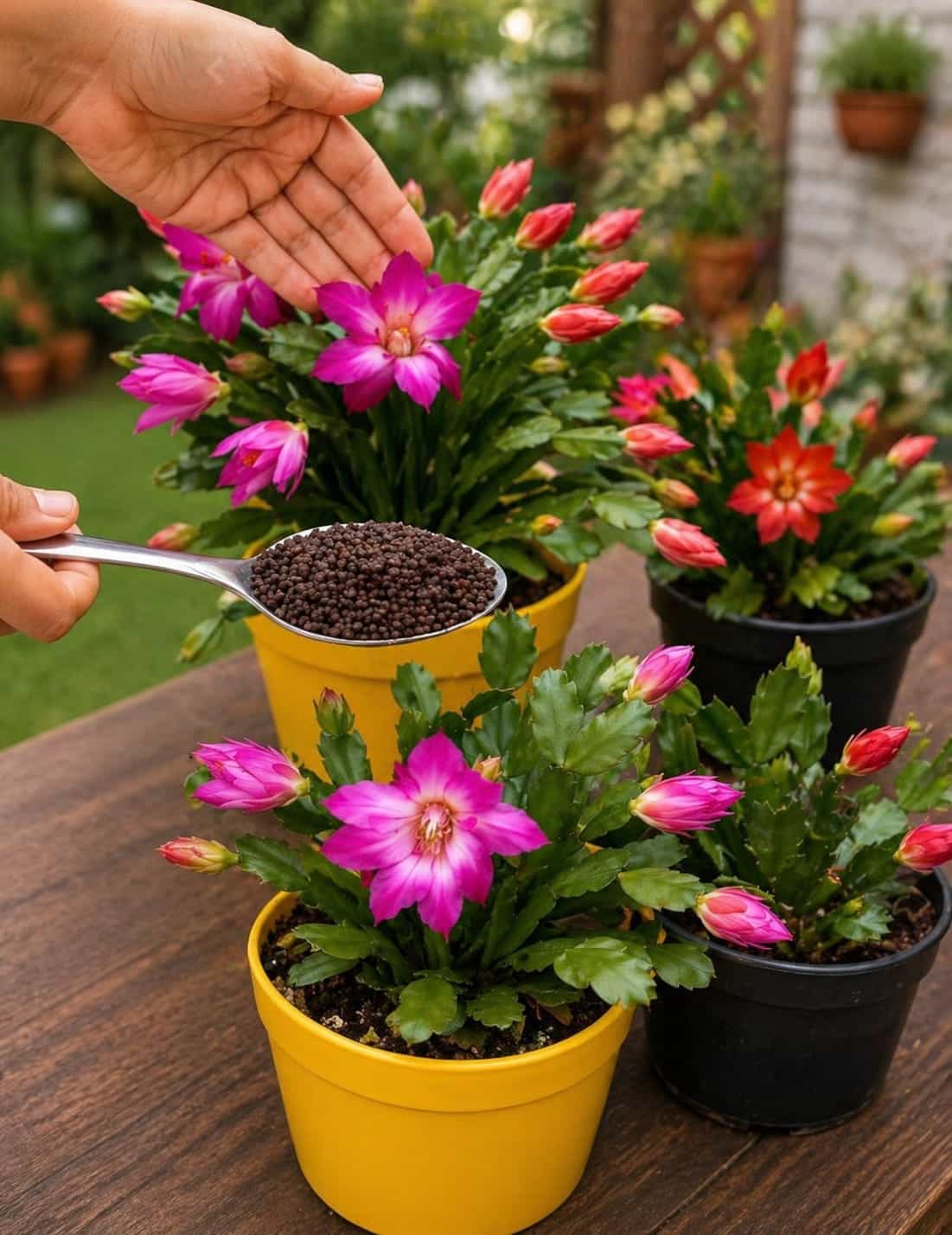
Why Buds Drop After Feeding
If you feed a Christmas cactus heavily when it already has buds, the plant may become stressed. Bud drop can happen from sudden changes in watering, temperature, light, humidity, or fertilizer levels. Strong fertilizer can disturb the roots and cause the plant to shed buds.
This is why the brown pellet trick should be used before the bud-setting season, not during bloom. Once buds are visible, keep care steady. Water when needed, avoid drafts, and do not move the plant too much.
If you accidentally applied too much fertilizer while the plant had buds, remove excess pellets from the soil surface and water carefully with plain water if the pot drains well. Then keep the plant stable.
Best Soil for Christmas Cactus
Christmas cactus needs soil that holds some moisture but drains well. Dense potting soil can stay wet too long, while dry cactus sand may not hold enough moisture. A balanced, airy mix is best.
A good Christmas cactus mix can include:
- 2 parts indoor potting mix
- 1 part perlite or pumice
- 1 part orchid bark or coco coir
This mix gives roots both moisture and oxygen. It also allows fertilizer pellets to release nutrients without creating soggy conditions.
If your plant is in old compacted soil, repotting may help more than adding pellets. Old soil can hold water poorly, compact around the roots, and reduce blooming.
Best Pot for Christmas Cactus
A Christmas cactus pot should have drainage holes. This is essential. The plant likes moisture, but it cannot sit in standing water. Fertilizer use becomes much riskier in a pot without drainage because salts and nutrients can build up.
Choose a pot that is only slightly larger than the root ball. Christmas cactus often blooms better when slightly rootbound. A huge pot holds too much soil and can stay wet too long.
If you use a decorative cover pot, remove the inner pot when watering and let it drain fully before putting it back. Do not allow fertilizer water to collect in the bottom of a cover pot.
How to Water After Using Brown Pellets
After applying brown pellets, water normally. Do not overwater just to dissolve the pellets quickly. Slow release is the point. The plant should still be watered based on soil moisture.
During active growth, water when the top inch of soil feels dry. Water thoroughly, let excess drain, and empty the saucer.
During the fall bud-setting period, water slightly less. The plant should not become severely shriveled, but it should not stay constantly moist either.
During bloom, keep soil lightly moist and stable. Avoid extremes.
Can You Combine Brown Pellets With Liquid Fertilizer?
Be careful. Combining slow-release pellets with liquid fertilizer can overfeed the plant. If you use pellets, reduce or skip liquid feeding for a while. Too many nutrients can burn roots or cause weak growth.
If you already use a monthly liquid fertilizer during spring and summer, you may not need pellets at all. Choose one method and keep it gentle.
For Christmas cactus, less is often better. A small amount of consistent nutrition is safer than strong feeding from multiple sources.
Can You Use Brown Pellets on All Holiday Cactus Types?
Yes, the same general method can be used on Christmas cactus, Thanksgiving cactus, and Easter cactus, but timing may differ slightly because they bloom at different times.
Thanksgiving cactus often blooms earlier, so stop feeding earlier in the season. Easter cactus blooms later, so its growth and rest schedule is different. Still, the basic idea is the same: feed lightly during active growth, stop before bud formation, and provide the correct seasonal conditions.
Always adjust care based on your plant’s bloom cycle.
How to Tell If Your Christmas Cactus Needs Feeding
A Christmas cactus may need feeding if it has been in the same soil for a long time, produces pale new growth, grows slowly during spring and summer, or has not been fertilized in many months. However, slow growth can also happen from low light, cool temperatures, or old roots, so do not assume fertilizer is always the answer.
If the plant is dark green, firm, and growing well, it may only need light feeding. If it is weak and drooping, check watering and roots first. Fertilizer should not be used as emergency medicine for a stressed plant.
Feed healthy active plants. Rescue stressed plants with better care first.
Signs You Used Too Much Fertilizer
Too much fertilizer can cause brown edges, shriveled segments, white crust on the soil, weak growth, bud drop, or root stress. The plant may look worse after feeding instead of better.
If this happens, remove visible pellets from the soil surface. If the pot drains well, flush the soil with plain water and let it drain completely. Do not let the plant sit in runoff water. Avoid feeding again for a few months.
If the soil has heavy buildup or smells bad, repot after the plant stabilizes.
Can Brown Pellets Help Weak Christmas Cactus Plants?
Only if the plant is weak from lack of nutrients and is otherwise healthy. If the weakness comes from overwatering, root rot, poor drainage, cold damage, heat stress, or low light, fertilizer pellets will not fix it.
A weak Christmas cactus should be checked carefully before feeding. Look at the soil. If it is wet and the plant is limp, inspect roots. If it is dry and wrinkled, water properly. If the plant is in a dark corner, improve light. If the pot has no drainage, repot.
Once the plant is stable and producing new growth, a small amount of brown pellets may help support recovery.
How to Use Brown Pellets for Outdoor Potted Christmas Cactus
If your Christmas cactus spends part of the year outdoors, brown pellets can be useful during warm active growth. Outdoor plants may grow more strongly because they receive brighter light and better airflow.
Still, keep the dose light. Outdoor pots can dry faster, but they can also receive rain. Rain may dissolve pellets more quickly and wash nutrients through the pot. Make sure the pot drains well and is not sitting in a saucer full of water.
Keep the plant out of harsh direct afternoon sun. Christmas cactus prefers bright shade or filtered light outdoors.
How to Keep Christmas Cactus Blooming Year After Year
The best bloom routine is seasonal. After flowering, let the plant rest briefly. In spring, resume normal watering and light feeding. Use brown pellets sparingly if desired. In summer, keep it in bright indirect light and maintain steady care.
In late summer, stop feeding. In fall, begin the bloom trigger routine: long dark nights, cooler temperatures, and slightly reduced watering. Once buds form, keep conditions stable. During bloom, avoid drafts, heat vents, and sudden movement.
After blooming, the cycle begins again.
This rhythm matters more than any single ingredient. The brown pellets are helpful only when they fit into the right timing.
How to Prune for More Bloom Tips
Pruning helps Christmas cactus become fuller. Since flowers form at the ends of the stems, more branches can mean more bloom tips. The best time to prune is after flowering, usually in late winter or spring.
Twist or pinch off one or two segments from long stems. This encourages branching. You can root the removed segments to make new plants.
Do not prune heavily in fall, because you may remove the tips where buds would form. Feed lightly after pruning only when new growth begins.
How to Propagate Christmas Cactus Cuttings
Christmas cactus is easy to propagate. Take a cutting with two to four segments. Let it dry for a day. Place the bottom segment into lightly moist, well-draining mix. Keep it in bright indirect light.
Do not add brown fertilizer pellets to fresh cuttings right away. Young cuttings do not need strong feeding before they root. Too much fertilizer can damage tender new roots.
Once the cutting is established and growing, you can feed lightly during the growing season.
Common Mistakes With the Brown Pellet Trick
Using Too Many Pellets
Christmas cactus does not need heavy feeding. Too many pellets can stress roots and reduce blooming.
Feeding During Bud Formation
Stop feeding before the fall rest period. Fertilizer at the wrong time can interfere with blooming.
Using Random Brown Granules
Only use plant-safe fertilizer or organic amendments. Do not use unknown pellets.
Applying Pellets to Wet, Rotten Soil
If the plant has root problems, fix the roots first. Fertilizer cannot heal rot.
Ignoring Darkness
No feeding trick can replace long dark nights for bud formation.
Using Pellets in a No-Drainage Pot
Fertilizer needs drainage. Without drainage, buildup can damage roots.
Signs the Brown Pellet Trick Is Working
If the trick is helping, you may see stronger spring and summer growth. New segments may look firm and healthy. The plant may become fuller over time. When fall arrives and the plant receives long nights, it may have more healthy tips ready to form buds.
The soil should still smell fresh. There should be no white crust, no fertilizer burn, no gnats, and no sudden decline. The plant should remain steady and firm.
Remember that fertilizer results are gradual. The plant will not bloom overnight because pellets were added. The goal is steady strength.
Signs You Should Stop Using Pellets
Stop using pellets if you notice brown segment edges, white crust on the soil, sour smells, fungus gnats, weak floppy growth, bud drop after feeding, or signs of root stress. Remove visible pellets if possible and return to plain water.
If the plant continues to struggle, check the roots and soil. Repot if the mix is compacted or unhealthy.
Do not keep adding fertilizer to a plant that is reacting badly. More feeding rarely fixes fertilizer stress.
A Safe Brown Pellet Routine
Here is a simple routine for using the brown pellet trick safely:
- Use only plant-safe brown pellets.
- Apply in spring or early summer during active growth.
- Use a small amount, less than the full outdoor dose.
- Keep pellets away from stems and flowers.
- Use only in a pot with drainage holes.
- Water normally and let the pot drain completely.
- Do not combine with strong liquid fertilizer.
- Stop feeding in late summer or early fall.
- Use long dark nights and cooler temperatures to trigger buds.
- Do not feed heavily while buds or flowers are present.
This routine gives the plant gentle support without disrupting its bloom cycle.
Frequently Asked Questions
What are the brown pellets used on Christmas cactus?
They are usually slow-release fertilizer pellets, worm casting pellets, composted organic granules, or bloom-supporting plant food. Use only products made for plants.
Can brown pellets make Christmas cactus bloom?
They can support healthy growth, but they do not trigger blooms by themselves. Long dark nights and cooler temperatures are the true bloom triggers.
When should I apply fertilizer pellets?
Apply them lightly in spring or early summer when the plant is actively growing. Stop feeding before fall bud formation.
How much should I use?
Use a small pinch for small pots, about 1/4 to 1/2 teaspoon for medium pots, and about 1 teaspoon for large pots, depending on product strength.
Can I use coffee grounds as brown pellets?
No. Coffee grounds can hold moisture, mold, and attract gnats. Use proper plant fertilizer or worm casting pellets instead.
Can I feed while the plant is blooming?
It is better not to feed heavily during bloom. Keep care stable and use plain water when needed.
Why did my buds fall after feeding?
Bud drop can happen from stress, including too much fertilizer, sudden changes, drafts, or inconsistent watering. Stop feeding and stabilize care.
Do Christmas cactus plants need fertilizer?
They benefit from light feeding during spring and summer, but they do not need heavy fertilizer.
Can I use pellets on new cuttings?
Not right away. Wait until cuttings are rooted and actively growing before feeding lightly.
What is the best way to make Christmas cactus bloom every year?
Give bright indirect light, light feeding during growth, stop feeding in late summer, then provide 12 to 14 hours of darkness nightly and cooler temperatures for six to eight weeks in fall.
Final Thoughts
The brown pellet Christmas cactus trick is a simple and satisfying way to support fuller growth and future blooms, but it must be used at the right time and in the right amount. The safest pellets are plant-safe slow-release fertilizer, worm casting pellets, or gentle organic bloom granules. They should be applied lightly during spring or early summer, not dumped heavily into the pot.
These pellets can help the plant build stronger segments and more healthy tips, but they are not a magic bloom switch. Christmas cactus blooms when it receives the correct seasonal signals: long dark nights, cooler temperatures, and steady care. Feeding prepares the plant; the fall rest period triggers the flowers.
Use a pot with drainage, a loose well-draining mix, and bright indirect light. Water when the top inch of soil begins to dry. Stop feeding before the bud-setting season. Once buds appear, keep the plant stable and avoid sudden changes.
If you use the brown pellet trick wisely, it can become a helpful part of your yearly routine. It gives your Christmas cactus gentle support while allowing the plant to follow its natural rhythm. With patience, proper timing, and balanced care, those small green segments can become covered in bright buds and beautiful blooms year after year.