Jade plants are some of the most beautiful and meaningful houseplants you can grow. Their thick, rounded leaves look like little green coins, their sturdy stems become woody with age, and a mature jade plant can look like a miniature indoor tree. Many people keep jade plants for years because they are long-lived, low-maintenance, and often associated with luck, prosperity, and positive energy.
But even a strong jade plant can run into problems. The leaves may lose their shine. The stems may stretch. The soil may stay damp too long. A fresh cutting may struggle to root. A pruned stem may look exposed. The base of the plant may become vulnerable after trimming or repotting. And sometimes, after watering mistakes, a jade plant can begin to look weak, soft, or unstable.
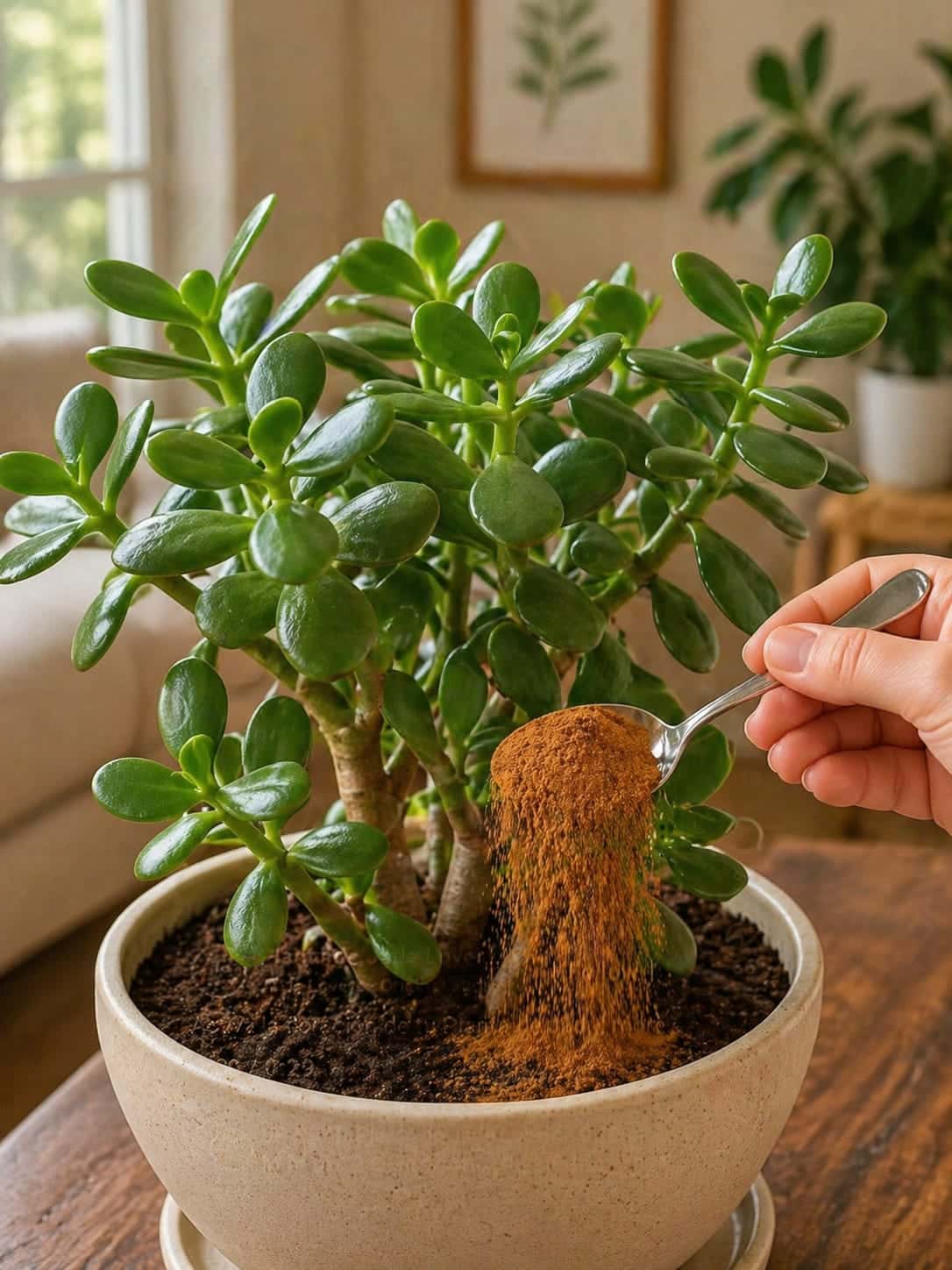
That is why plant lovers are becoming curious about the brown powder trick for jade plants. In the image, a fine cinnamon-colored powder is being sprinkled around the base of a healthy jade plant. It looks simple, natural, and almost like a secret old-fashioned houseplant remedy. The warm brown dust falls onto the soil, creating the impression of a protective layer around the plant’s woody stems.
So what is this brown powder?
The safest and most popular version of this trick is cinnamon powder. Cinnamon has long been used by plant owners as a natural drying and protective powder on plant cuts, pruning wounds, and fresh propagation ends. It is also commonly sprinkled lightly on the soil surface when growers want to keep the top layer drier and less inviting to surface mold. For jade plants, which are succulents and dislike soggy conditions, a small amount of cinnamon can fit well into a careful care routine.
However, this trick must be used correctly. A jade plant does not need a mountain of cinnamon poured over the soil. Too much powder can form a crust, hold moisture in strange ways, or make the pot messy. Cinnamon is not a complete fertilizer, and it will not magically fix root rot, low light, or overwatering. It is best used as a light surface dusting, a pruning aid, or a propagation helper.
In this complete guide, you will learn exactly what the cinnamon powder jade plant trick is, why people use it, how to apply it safely, when it helps, when it does not help, and how to combine it with the real jade plant care secrets: bright light, gritty soil, drainage, careful watering, and smart pruning.
What Is the Cinnamon Powder Jade Plant Trick?
The cinnamon powder jade plant trick is a simple houseplant method where a small amount of ground cinnamon is used around a jade plant. It may be sprinkled lightly over the soil surface, dusted onto a cut stem after pruning, or applied to the end of a cutting before propagation.
The idea is not to feed the plant. Cinnamon is not a fertilizer. Instead, the trick is used as a natural protective and drying method. Many plant owners use cinnamon because it is easy to find in the kitchen, inexpensive, pleasant-smelling, and simple to apply.
For jade plants, cinnamon is especially interesting because jade plants are succulents. They have thick leaves and stems that store water. They do not like excess moisture around their roots or fresh cuts. When a jade stem is cut or a leaf is removed, the wound needs to dry and callus before too much moisture touches it. Cinnamon can be used as a light dusting on those cut surfaces to help keep them dry and clean while they seal.
Some growers also sprinkle cinnamon on the top of the soil if they notice light surface mold, damp soil, or a musty smell. A very light dusting may make the surface less friendly to mold, especially when combined with better airflow and reduced watering.
The key phrase is “very light.” Cinnamon should be used like a seasoning, not like mulch. A tiny dusting can be helpful. A thick pile is unnecessary.
Why Jade Plants Love Dry, Clean Conditions
To understand why cinnamon is used on jade plants, it helps to understand how jade plants grow. Jade plants are succulents, which means they store water in their fleshy leaves and stems. This makes them drought-tolerant and able to survive dry periods. It also means they are vulnerable to overwatering.
A jade plant’s roots need oxygen. When the soil stays wet for too long, the roots can suffocate and begin to rot. Once root rot begins, the plant may show symptoms such as soft leaves, yellowing, sudden leaf drop, mushy stems, or a collapsing base. Many people see wrinkled leaves and assume the plant needs more water, but if the roots are damaged, more water can make the problem worse.
Jade plants grow best in a gritty, fast-draining mix. They prefer deep watering followed by a full drying period. They also need strong light to grow compact and healthy. When a jade plant is grown in dim light and wet soil, it becomes weak and more prone to problems.
Cinnamon fits into this care style because it is dry and light. It is not a wet tonic. It does not add extra moisture. It is used as a dry powder, which makes it more suitable for succulents than many liquid kitchen hacks.
Why People Use Cinnamon on Houseplants
Cinnamon is popular in houseplant care for several reasons. First, it is easy to access. Most kitchens already have ground cinnamon in a spice jar. Second, it smells pleasant, unlike some homemade plant mixtures that can become sour or unpleasant. Third, it is simple to apply with a spoon, brush, or fingertip.
Plant owners often use cinnamon in three main ways. They dust it onto cut stems after pruning. They apply it to cuttings before propagation. They sprinkle a tiny amount on damp soil surfaces where mold appears.
For jade plants, all three uses can be relevant. Jade plants are often pruned to encourage branching. Their cuttings are commonly propagated. Their soil can develop surface mold if watered too often or kept in poor airflow. Cinnamon becomes a simple tool that fits several common jade plant situations.
But it should never be treated as a cure-all. If the soil is soggy, cinnamon cannot fix the wet root zone underneath. If the plant is in a dark corner, cinnamon cannot create strong growth. If the pot has no drainage holes, cinnamon cannot protect the roots from standing water. It is a supporting trick, not the main care method.
Is Cinnamon a Fertilizer for Jade Plants?
No, cinnamon is not a fertilizer. This is one of the most important things to understand. Cinnamon does not provide the balanced nutrients a jade plant needs for growth. It is not a source of nitrogen, phosphorus, potassium, or complete mineral nutrition in a meaningful houseplant-feeding way.
If your jade plant is weak because it has been growing for years in depleted soil, cinnamon will not replace fertilizer. If the plant needs nutrients during active growth, use a diluted cactus or succulent fertilizer. A proper fertilizer is designed to provide measured nutrition. Cinnamon is not.
Think of cinnamon as a protective dusting powder. It may help with cut surfaces and surface freshness, but it does not feed the plant into rapid growth. The plant’s growth comes from light, healthy roots, water balance, and gentle feeding when needed.
If a jade plant looks healthier after someone uses cinnamon, it may be because they also improved the care routine. They may have pruned the plant, stopped overwatering, moved it to better light, repotted it into better soil, or removed damaged parts. Cinnamon may be part of that reset, but it is not the whole reason.
When to Use Cinnamon on a Jade Plant
The best times to use cinnamon on a jade plant are after pruning, when propagating cuttings, or when the soil surface is showing mild mold from damp conditions. These are situations where a dry powder can be useful.
After pruning, a jade plant stem has a fresh cut. That cut should dry and callus. A tiny dusting of cinnamon can be applied to the cut surface. This helps keep the area dry while the plant seals itself.
When propagating a jade cutting, you can dip the cut end lightly in cinnamon after it has been allowed to dry briefly. Then let the cutting callus before planting it in dry or barely moist succulent mix. This is especially useful for people who accidentally plant jade cuttings too soon and lose them to rot.
If the top of the soil develops light white or gray surface mold, cinnamon can be sprinkled lightly after removing the moldy layer. But you must also fix the cause. Usually the cause is too much moisture, poor airflow, low light, or dense soil.
Cinnamon can also be used after removing a damaged leaf or trimming a small soft area, but only if the remaining tissue is healthy. If rot is spreading, the plant needs stronger rescue steps.
When Not to Use Cinnamon
Do not use cinnamon as a heavy soil covering. A thick layer can create a crust and make watering awkward. It can also look messy and may not solve the real problem. The soil should still be able to breathe.
Do not use cinnamon on a jade plant with severe root rot and assume it will fix the problem. Root rot happens below the soil. A surface dusting will not repair rotten roots. The plant must be removed from the pot, rotten roots must be trimmed, and the plant must be repotted into fresh dry, gritty mix.
Do not use cinnamon repeatedly every few days. More is not better. Too much of any powder in a pot can create buildup.
Do not use cinnamon mixed with sugar. Some cinnamon blends, dessert toppings, or flavored powders may contain sugar or additives. Use plain ground cinnamon only.
Do not use cinnamon oil directly on jade plants. Essential oils are concentrated and can damage plant tissue. This trick is about dry ground cinnamon powder, not oil.
How to Apply Cinnamon Powder to Jade Plant Soil
If you want to apply cinnamon to the soil surface, start by checking why you are using it. If the soil is damp and moldy, remove the visible mold first. Use a spoon to gently scrape away the top layer if needed. Then let the soil dry more than usual.
Once the surface is clean, sprinkle only a small pinch of cinnamon over the top. For a small pot, use less than 1/8 teaspoon. For a medium pot, use about 1/8 to 1/4 teaspoon. For a large pot, use no more than 1/2 teaspoon. You do not need to coat the whole pot heavily.
Use a spoon or small brush to distribute it lightly. Avoid piling cinnamon against the trunk. The base of a jade plant should stay dry and airy. A little dusting around the surface is enough.
After applying cinnamon, do not water immediately unless the plant is truly due for water. If mold appeared because the soil was too wet, watering right away defeats the purpose. Let the pot dry properly.
How to Use Cinnamon After Pruning a Jade Plant
Pruning is one of the best ways to make a jade plant bushier. When you cut a stem, the plant may branch below the cut. This helps create a fuller, tree-like shape. Cinnamon can be used after pruning to dust the cut area.
First, use clean, sharp scissors or pruners. Make your cut above a leaf node or where you want branching to happen. After cutting, let the fresh wound sit for a few minutes so the surface is not wet. Then dip a clean fingertip, cotton swab, or small brush into plain cinnamon and apply a light coating to the cut.
Do not pack cinnamon into the wound. A thin dusting is enough. Place the plant in bright indirect light and avoid watering for a few days if the soil is already moist. The cut should dry and callus naturally.
Pruning is best done during spring or early summer when the plant is actively growing. Avoid heavy pruning in winter when growth is slow.
How to Use Cinnamon for Jade Plant Cuttings
Jade plant cuttings root easily when handled correctly. The most common mistake is planting them too wet or too soon. Fresh succulent cuttings need time to callus before they are placed in soil. Cinnamon can help support this process.
Take a healthy stem cutting with clean scissors. Remove the lower leaves if needed. Let the cutting sit in a dry, shaded place for several days until the cut end feels dry and sealed. Then lightly dust the cut end with cinnamon.
Plant the cutting in dry or barely moist succulent mix. Do not water heavily right away. Wait a few days before giving a small amount of water. Too much moisture before roots form can cause rot.
Place the cutting in bright indirect light. Avoid harsh direct sun until it has roots. Over time, the cutting should root and begin growing new leaves.
Can Cinnamon Help With Fungus Gnats?
Cinnamon may make the soil surface less inviting when used lightly, but it is not a complete fungus gnat solution. Fungus gnats usually appear because the soil stays too moist and contains organic matter that their larvae can feed on. The real fix is to let the soil dry more, improve drainage, and avoid overwatering.
For jade plants, fungus gnats are a sign that the soil is probably too wet. Since jade plants prefer dry soil, gnats should be taken seriously. Let the pot dry thoroughly. Remove decaying material from the soil surface. Use sticky traps to catch adult gnats. If the problem continues, repot into a gritty succulent mix.
A light sprinkle of cinnamon can be part of the surface cleanup, but it will not solve a deep moisture problem. The most powerful gnat control for jade plants is correct watering.
Can Cinnamon Stop Mold on Jade Plant Soil?
Cinnamon can help discourage light surface mold, but it will not fix the conditions that caused the mold. Surface mold usually appears when the top of the soil stays damp, airflow is poor, or organic material is breaking down.
To handle mold, first remove the visible mold. Then let the soil dry. Move the plant to brighter light if possible. Improve airflow around the pot. Check whether the soil is too dense. If the soil stays wet for too long, consider repotting into a faster-draining mix.
After removing the mold, you can dust a small amount of cinnamon on the surface. But if you keep watering too often, the mold may return. Cinnamon works best when combined with better care.
What If You Used Too Much Cinnamon?
If you accidentally poured too much cinnamon onto the soil, remove the excess. Use a spoon to scoop off the thick layer. If it has mixed into the top layer heavily, remove the top inch of soil and replace it with fresh succulent mix.
A little cinnamon is usually harmless, but a thick pile is unnecessary. It can make the soil surface crusty and messy. It may also hide whether the soil is dry or wet, making watering decisions harder.
After removing the extra powder, return to normal care. Do not water immediately unless the soil is dry and the plant needs water.
The Real Secret to a Strong Jade Plant
The cinnamon trick is useful, but the real secret to a strong jade plant is proper light. Jade plants need bright light to grow compact, thick, and healthy. Without enough light, the stems stretch, the leaves become spaced apart, and the plant loses its strong tree-like form.
Place your jade plant near a bright window. A south-facing or west-facing window is often excellent if the plant is gradually acclimated. An east-facing window can also work well, especially for gentler morning light. If your home is dark, a grow light can help.
Do not suddenly move a low-light jade into harsh direct sun for many hours. The leaves can scorch. Increase light gradually over one to two weeks.
Once the jade plant receives enough light, everything else works better. Watering becomes safer because the soil dries more efficiently. Growth becomes stronger. Pruning creates better branching. Feeding becomes more useful. Cinnamon becomes a small support, not a rescue attempt.
Best Soil for Jade Plants
Jade plants need fast-draining soil. Regular potting soil often holds too much moisture, especially indoors. A better mix is gritty and airy, allowing water to pass through quickly and roots to breathe.
A simple jade plant soil mix can include:
- 2 parts cactus or succulent mix
- 1 part perlite or pumice
- 1 part coarse sand, lava rock, or orchid bark
This type of mix helps prevent root rot. It also keeps the surface from staying damp too long, reducing the need for mold-related tricks.
If your jade plant is growing in dense soil that stays wet for many days, repotting is more important than cinnamon. A dry powder cannot make heavy soil drain properly. The root environment must be fixed first.
Best Pot for Jade Plants
A good jade plant pot should be sturdy and have drainage holes. Terracotta is one of the best choices because it is breathable and helps the soil dry faster. It is also heavy enough to support a top-heavy jade plant.
Ceramic pots can work if they have drainage holes. Plastic pots hold moisture longer, so you must water more carefully. Decorative pots without drainage should be used only as outer covers. Keep the jade in a nursery pot inside and remove it for watering.
Choose a pot that is only slightly larger than the root ball. A huge pot holds too much soil, and too much soil holds too much water. Jade plants prefer a snug, well-drained home.
How to Water Jade Plants Correctly
Watering is the most important jade plant skill. Jade plants should dry out between waterings. Before watering, check the soil deeply. The top may be dry while the lower soil is still moist. Use your finger, a wooden skewer, or the weight of the pot as a guide.
When the soil is dry, water thoroughly until excess drains from the bottom. Then empty the saucer. After that, wait until the soil dries again.
Do not give small daily sips. This keeps the top layer damp and can encourage surface mold or gnats. Deep, occasional watering is better.
In winter, jade plants often need much less water because growth slows and light levels are lower. Overwatering in winter is a common cause of jade plant decline.
Continue to Page 2
Continue to page 2 for more details about this article and the key points many readers miss on the first page.