Jade plants are the kind of houseplants that seem to carry a little story with them. Their thick green leaves look like tiny coins, their stems become woody with age, and a mature jade plant can look almost like a miniature indoor tree. Many people keep jade plants for years, sometimes decades, because they are beautiful, easy to share from cuttings, and often connected with good luck, prosperity, and a peaceful home.
But even a tough jade plant can start looking tired. The leaves may lose their shine. The stems may stretch toward the window. The soil may stay damp too long. A cutting may refuse to root. The base of the plant may become weak after overwatering. Or the plant may simply stop growing and sit there, alive but not really thriving.
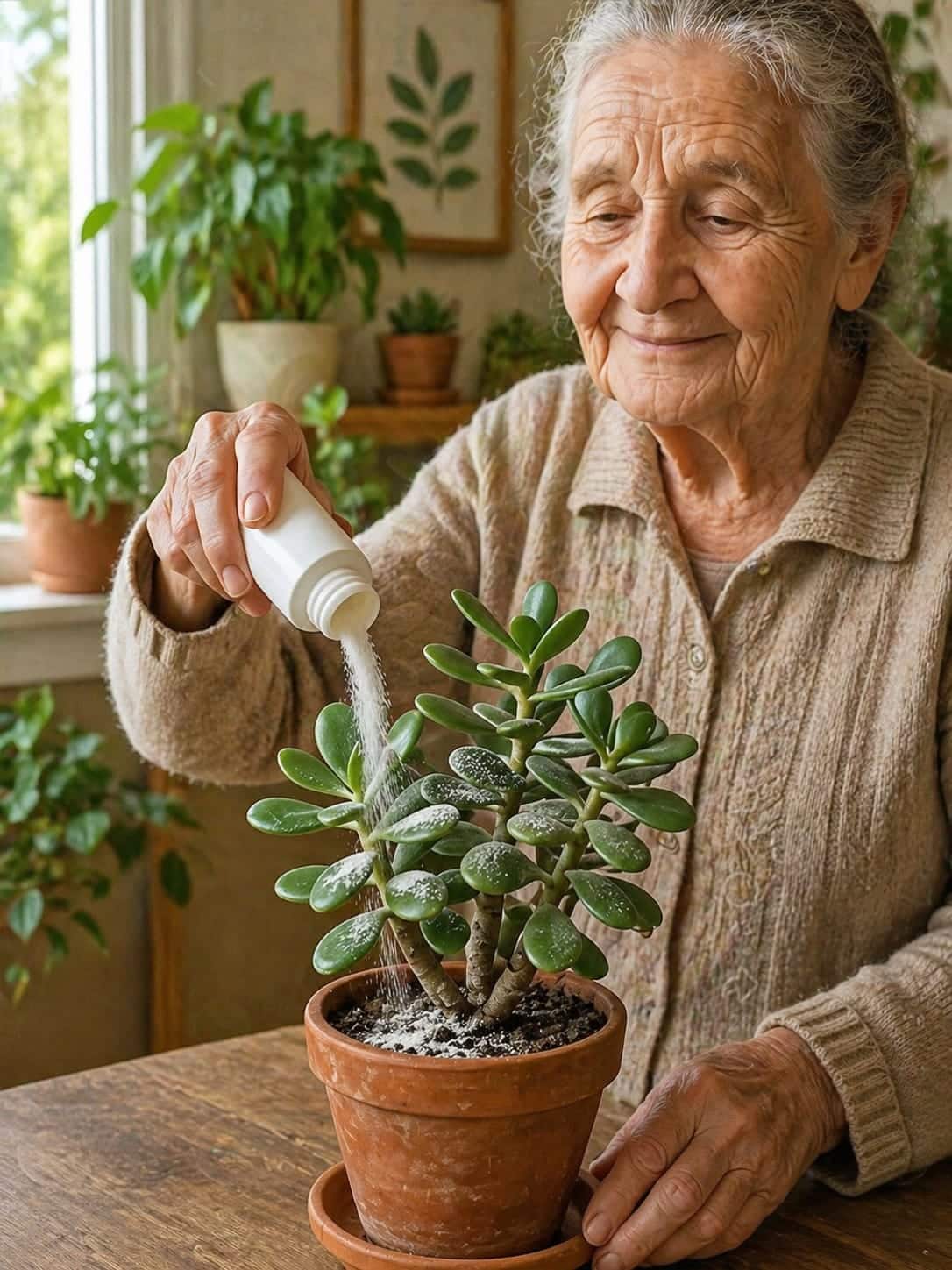
That is why many plant lovers are becoming curious about the simple white powder trick. In the image, a gentle white powder is being sprinkled around the base of a jade plant, almost like an old-fashioned houseplant remedy passed down from someone who has kept plants alive for years. It looks simple, clean, and natural. No complicated fertilizer bottle, no expensive plant spray, no dramatic repotting project — just a small white dusting around the soil.
So what is this white powder?
The safest and most useful version of this trick is finely crushed eggshell powder. Some people also use food-grade diatomaceous earth for pest prevention, but for general jade plant support, eggshell powder is the better beginner-friendly option. Eggshell powder is made from clean, dried eggshells ground into a fine white powder. It is mostly calcium carbonate, and many gardeners use it as a slow mineral amendment for soil.
For jade plants, this trick is not about instant growth or magical overnight results. It is about gently supporting the soil, keeping the surface clean, and adding a slow, natural mineral boost while you focus on the real care essentials: bright light, fast-draining soil, careful watering, and a pot with drainage.
Used correctly, the white powder trick can become a small but satisfying part of your jade plant care routine. Used incorrectly, especially if you dump too much powder or use the wrong kind, it can create mess, buildup, or even stress the plant. The secret is to use the right powder, in the right amount, at the right time.
In this complete guide, you will learn what the white powder jade plant trick is, how to make eggshell powder, how to apply it safely, when it helps, when it does not help, and how to keep your jade plant full, glossy, and strong for years.
What Is the White Powder Jade Plant Trick?
The white powder jade plant trick is a simple houseplant method where a small amount of fine white powder is added to the top layer of soil around a jade plant. In the safest natural version, this powder is finely ground eggshell powder. It is used lightly as a slow mineral supplement and soil surface refresh.
Eggshell powder is popular because it is easy to make at home. Instead of throwing eggshells away, you rinse them, dry them, grind them, and use a tiny sprinkle around plants. It feels practical, natural, and old-fashioned in the best way. Many longtime plant keepers love these small household tricks because they make plant care feel personal and resourceful.
For jade plants, the trick is especially appealing because jade plants do not like rich, wet, heavy soil. They are succulents, so they prefer a leaner, drier, fast-draining environment. Eggshell powder is dry and mild, unlike many liquid kitchen hacks that can make succulent soil too wet or sticky.
However, it is important to understand what eggshell powder can and cannot do. It is not a complete fertilizer. It will not replace proper feeding during the growing season. It will not cure root rot. It will not fix a jade plant sitting in a dark corner. It will not make a weak plant instantly grow new leaves.
Instead, it works slowly and gently. It may add a little calcium over time, help refresh the top layer of soil, and become part of a careful routine that encourages stronger growth.
Why Jade Plants Are Perfect for Simple Dry Tricks
Jade plants are succulents, which means they store water in their thick leaves and stems. This is why their leaves look plump and shiny when healthy. It is also why they can survive dry periods better than many leafy tropical plants.
Because jade plants store water, they do not need frequent watering. In fact, overwatering is one of the fastest ways to damage them. If the soil stays wet for too long, the roots can rot. When roots rot, the plant may drop leaves, develop soft stems, wrinkle, yellow, or collapse.
This is why dry tricks are often safer for jade plants than wet tricks. A small sprinkle of eggshell powder does not soak the soil. It does not create sticky residue. It does not ferment. It does not turn the pot into a wet compost pile.
That said, even dry tricks must be used with restraint. A thick layer of powder can crust on the soil, make watering harder, and create a messy surface. The goal is not to cover the plant like snow. The goal is to add a tiny amount and let the soil remain airy.
Why Eggshell Powder Is Used on Jade Plants
Eggshells are mostly calcium carbonate. Calcium is an important mineral for plants because it helps support cell structure and healthy growth. In outdoor gardening, crushed eggshells are often added to compost or soil. Indoors, they break down more slowly, but finely ground powder can still be used as a gentle amendment.
For jade plants, eggshell powder may be useful because it is mild and slow. Jade plants do not need heavy feeding. They grow best with small, careful support during active growth. A little eggshell powder can fit into that style of care.
Another reason people like eggshell powder is that it is a way to reuse kitchen waste. Instead of tossing shells into the trash, you turn them into a fine powder for your plants. This makes the care routine feel sustainable and satisfying.
But the biggest benefit may be the attention the trick encourages. When you apply eggshell powder, you usually check the soil, look at the base of the plant, notice whether the pot drains well, and think about whether the plant is healthy. That careful observation can prevent bigger problems.
Is the White Powder a Fertilizer?
Eggshell powder is not a complete fertilizer. This is one of the most important points. It may provide calcium slowly, but it does not provide a balanced supply of nitrogen, phosphorus, potassium, and other nutrients that plants need.
If your jade plant truly needs feeding, a diluted cactus or succulent fertilizer is more predictable. Fertilizer is designed to provide measured nutrition. Eggshell powder is more of a slow mineral supplement.
Think of eggshell powder like a tiny soil support, not a full meal. It can be part of the routine, but it should not be the only thing you rely on if the plant is actively growing and has not been fed in a long time.
For most jade plants, light feeding during spring and summer is enough. You can use a diluted succulent fertilizer once every one or two months during active growth. Eggshell powder can be used separately and sparingly, but it should not be overdone.
What White Powders Should You Avoid?
Not every white powder is safe for jade plants. This is very important. Never sprinkle random household powders into plant soil. Some white powders can seriously harm roots.
Avoid laundry detergent, cleaning powder, powdered bleach, dishwasher powder, deodorizing powders, baking soda in large amounts, powdered sugar, salt, flour, and random supplement powders. These are not plant soil amendments.
Baking soda is especially misunderstood. Some gardeners use diluted baking soda sprays for certain outdoor plant problems, but sprinkling baking soda heavily into jade plant soil is not a good idea. It contains sodium and can disturb the soil environment.
Flour is also a bad idea because it can clump, mold, attract pests, and create a sticky mess. Powdered sugar can attract ants and fungus gnats. Salt can damage roots. Cleaning products can kill the plant.
For this trick, use only clean finely ground eggshell powder, or use a plant-safe product clearly labeled for houseplants. When in doubt, do not add it.
Eggshell Powder vs. Diatomaceous Earth
Some people use food-grade diatomaceous earth as a white powder around houseplants. It is not the same as eggshell powder. Diatomaceous earth is often used as a pest-control dust for crawling insects when dry. It works physically, not as a fertilizer.
Eggshell powder is used as a slow calcium amendment. Diatomaceous earth is used more for surface pest management. Both are white powders, but they have different purposes.
For a jade plant that simply needs general support, eggshell powder is the better choice. For a jade plant with crawling insects or fungus gnat activity, food-grade diatomaceous earth may be used lightly on the dry soil surface, but it becomes less effective when wet and should not be inhaled during application.
If you are not dealing with pests, there is no need to use diatomaceous earth. A small amount of eggshell powder is enough for the classic white powder trick.
How to Make Eggshell Powder for Jade Plants
Making eggshell powder is easy, but the shells must be cleaned and dried properly. Do not crush fresh dirty eggshells and sprinkle them directly into the pot. Egg residue can smell, attract pests, and create bacteria.
What You Need
- Eggshells from 2 to 4 eggs
- Warm water
- A plate or baking tray
- A blender, spice grinder, coffee grinder, mortar and pestle, or rolling pin
- A small dry jar for storage
Instructions
- Rinse the eggshells well under warm water.
- Remove any leftover egg residue from the inside.
- Let the shells dry completely.
- For extra cleanliness, bake the shells at a low temperature for 10 to 15 minutes.
- Let them cool.
- Grind them into the finest powder you can make.
- Store the powder in a dry jar.
The finer the powder, the better. Large eggshell pieces break down very slowly and can look messy on the soil. Fine powder blends more easily into the top layer.
How Much White Powder Should You Use?
Use far less than you think. A jade plant does not need a heavy coating. Too much powder is unnecessary and can create a crust on the soil.
For a small jade plant pot, use about 1/8 to 1/4 teaspoon of eggshell powder. For a medium pot, use about 1/2 teaspoon. For a large pot, use no more than 1 teaspoon.
Sprinkle the powder lightly over the soil surface. Then gently mix it into the top half-inch or inch of soil with a spoon, chopstick, or your fingers. Do not pile it against the stems. The base of a jade plant should stay dry and airy.
After applying, do not water immediately unless the soil is already dry and the plant needs watering. Eggshell powder does not require immediate watering. If the soil is damp, wait.
How Often Should You Use Eggshell Powder?
Eggshell powder should be used occasionally, not constantly. Once every two to three months is plenty for most jade plants. Some plants may need it even less often.
Because eggshell powder breaks down slowly, repeated applications can build up. Do not apply it every week. Do not keep adding more just because you do not see instant growth. Jade plants are slow growers, and eggshell powder is a slow amendment.
If you are also using fertilizer, keep the routine simple. Fertilize lightly during spring and summer. Use eggshell powder only once in a while as a separate soil support. Avoid adding too many things at once.
When Is the Best Time to Use the White Powder Trick?
The best time to use the white powder trick is during the active growing season, usually spring or summer. This is when the jade plant is more likely to use available minerals and produce new growth.
You can also use a tiny amount after repotting, but only after the plant has settled and the soil is dry. If the plant has damaged roots, wait until it stabilizes before adding anything extra.
Avoid using eggshell powder heavily in winter. Jade plants often slow down during colder, darker months. They need less water and less feeding. During winter, focus on bright light, dry soil, and avoiding cold drafts.
If your plant is weak, do not assume powder is the first solution. Check light, watering, soil, and roots first.
What Results Can You Expect?
The white powder trick will not create overnight results. Jade plants grow slowly, and eggshell powder works slowly. The realistic results are subtle and gradual.
Over time, if the plant has good light, proper soil, and correct watering, it may produce firmer new leaves, stronger stems, and a healthier overall appearance. The powder may support the soil mineral balance slightly, but the main improvements will come from the complete care routine.
If the jade plant is already healthy, you may not notice a dramatic difference. That is normal. The trick is not meant to be dramatic. It is a gentle supporting step.
If your jade plant is struggling badly, the powder alone will not save it. It may need repotting, pruning, better light, or root inspection.
The Real Secret to a Strong Jade Plant
The real secret to a strong jade plant is bright light. Jade plants need plenty of light to grow compact, thick, and glossy. In low light, they stretch. The stems become long and weak, and the leaves grow farther apart. A low-light jade may survive, but it will not become the full, tree-like plant most people want.
Place your jade plant near a bright window. A south-facing or west-facing window is often excellent if the plant is introduced gradually. An east-facing window can also work well with morning sun. If your home does not have enough natural light, use a grow light.
When moving a jade plant to stronger light, do it gradually. Leaves that grew in lower light can scorch if suddenly placed in hot direct sun. Increase exposure over a week or two.
Once the plant has enough light, everything improves. The soil dries more predictably. The stems thicken. New growth becomes compact. The leaves become glossier. Feeding becomes more useful. The white powder trick becomes a small bonus rather than a rescue attempt.
Best Soil for Jade Plants
Jade plants need fast-draining soil. Regular potting soil often stays too wet indoors. Since jade plants store water in their leaves and stems, wet soil can quickly lead to root problems.
A good jade plant soil mix can include:
- 2 parts cactus or succulent potting mix
- 1 part perlite or pumice
- 1 part coarse sand, lava rock, or orchid bark
This mix helps water pass through quickly and allows air to reach the roots. Healthy roots are the foundation of a strong jade plant.
If your jade plant is in dense, dark, soggy soil, repotting into a gritty mix will do more than any powder. Eggshell powder cannot make heavy soil drain properly. The structure of the soil matters most.
Best Pot for Jade Plants
Jade plants can become top-heavy as they grow. A sturdy pot is important. Terracotta is one of the best choices because it is heavy and breathable. It allows moisture to evaporate through the sides, helping the soil dry faster.
Ceramic pots can work if they have drainage holes. Plastic pots hold moisture longer, so watering must be more careful.
Drainage holes are essential. A jade plant should not sit in a pot without drainage. If you love a decorative pot that has no holes, use it as an outer cover only. Keep the jade plant in a smaller nursery pot with holes inside it. Remove the inner pot when watering, let it drain completely, and then place it back.
Choose a pot only slightly larger than the root ball. A huge pot holds too much soil, and too much soil stays wet for too long.
How to Water Jade Plants Correctly
Watering is the most important jade plant skill. The plant should dry out between waterings. Before watering, check the soil deeply. The top may feel dry while the lower soil is still damp.
Use your finger, a wooden skewer, or the weight of the pot. If the soil is dry, water thoroughly until liquid drains from the bottom. Then empty the saucer. After that, leave the plant alone until the soil dries again.
Do not give small daily sips. This can keep the top layer damp and encourage mold or gnats. Deep, occasional watering is better.
In winter, jade plants often need much less water. Low light and cool temperatures slow growth, so the soil dries more slowly. Overwatering in winter is one of the most common causes of jade plant decline.
Can Eggshell Powder Fix Overwatering?
No. Eggshell powder cannot fix overwatering. If the soil is wet and the roots are rotting, a white powder on top will not solve the problem below the surface.
If your jade plant has soft leaves, mushy stems, blackened areas, or sudden leaf drop, remove it from the pot and inspect the roots. Healthy roots should be firm. Rotten roots are dark, soft, and may smell bad.
Trim away rotten roots with clean tools. Let the plant dry. Repot it into fresh dry succulent mix. Do not water immediately unless the plant is severely dehydrated and still has healthy roots.
After the plant stabilizes, you can consider a tiny amount of eggshell powder later. But during active rot, the priority is dryness, drainage, and clean roots.
Can Eggshell Powder Help Wrinkled Leaves?
Wrinkled jade leaves can mean the plant is thirsty, but they can also mean the roots are damaged. This is important. If the soil is completely dry and the leaves are wrinkled, the plant may need water. After a proper watering, the leaves may slowly plump up.
If the soil is wet and the leaves are wrinkled, the roots may be unable to absorb water because they are rotting. In that case, adding eggshell powder will not help. Inspect the roots instead.
Eggshell powder does not directly rehydrate leaves. Correct watering and healthy roots do that.
Can Eggshell Powder Make Jade Leaves Shinier?
Not directly. Shiny jade leaves come from health, light, hydration balance, and clean leaf surfaces. If the leaves look dull, they may simply be dusty.
Wipe the leaves gently with a soft damp cloth. Do not use eggshell powder, milk, oil, honey, or leaf shine products on jade leaves. These can leave residue and attract dust.
Clean leaves reflect light better and look healthier immediately. For long-term shine, give the plant bright light and avoid overwatering.
Can Eggshell Powder Encourage New Growth?
Eggshell powder may support the plant slowly, but it does not directly force new growth. New growth comes from the right growing conditions: bright light, warm temperatures, healthy roots, and careful watering.
If your jade plant is not growing, check the season. Many jade plants slow down in winter. Check the light. A jade in a dark room may not grow much. Check the soil. If roots are stuck in compacted wet soil, growth will slow.
During spring and summer, light feeding with a succulent fertilizer may encourage growth more reliably than eggshell powder. The powder is a small mineral support, not a growth switch.
Can Eggshell Powder Help a Jade Cutting Root?
Eggshell powder is not usually used as a rooting powder. For jade cuttings, the most important step is letting the cut end dry and callus before planting. If you plant a fresh cutting into wet soil too soon, it can rot.
To propagate jade, cut a healthy stem, let it dry for several days, then place it in dry or barely moist succulent mix. Keep it in bright indirect light. Water sparingly until roots develop.
If you want to dust the soil lightly with eggshell powder later, you can, but it is not required for rooting. Some people prefer cinnamon powder on cut ends because it is used as a dry protective dusting. Eggshell powder is more for soil mineral support.
Continue to Page 2
Continue to page 2 for more details about this article and the key points many readers miss on the first page.