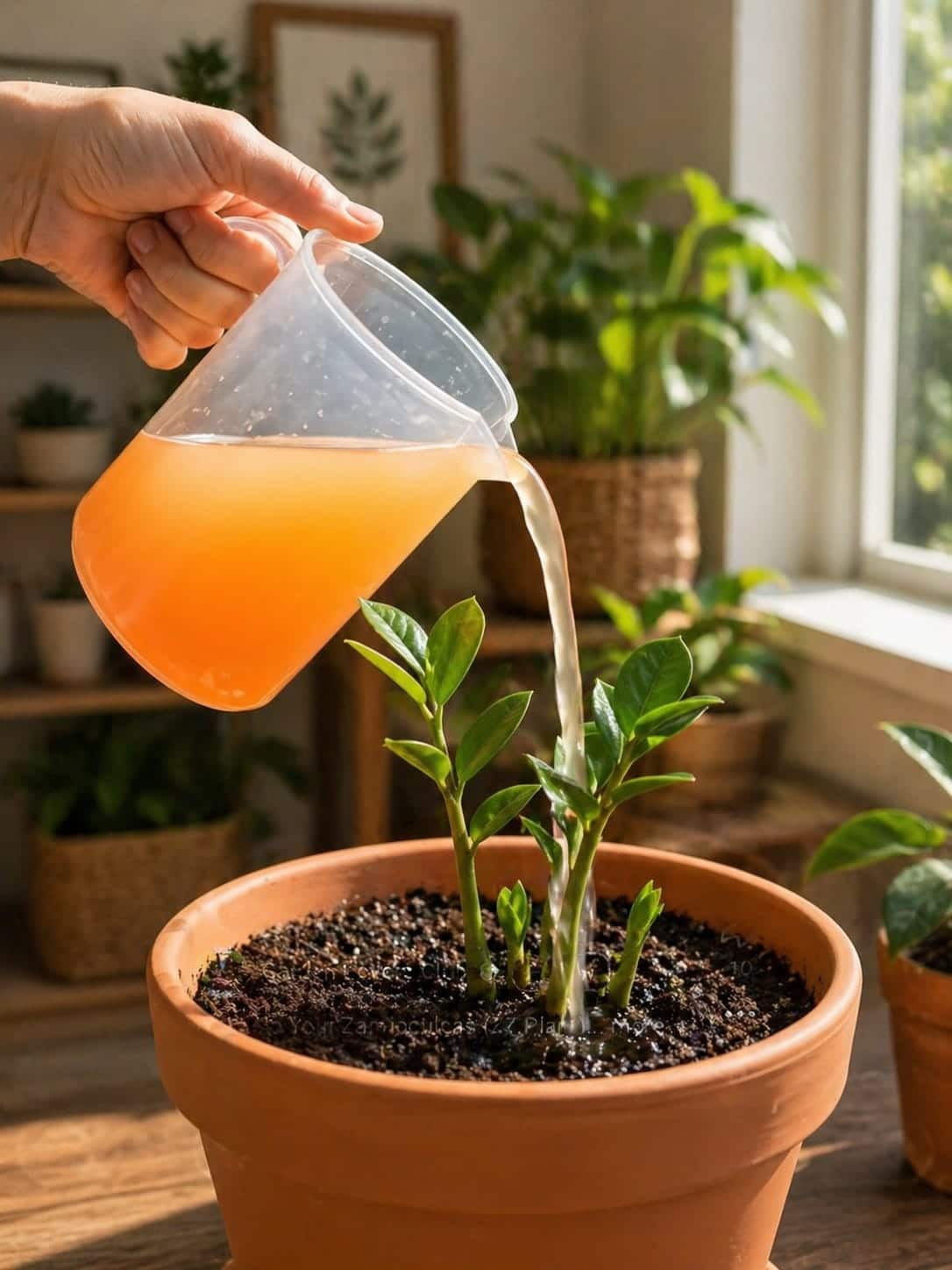
There is something exciting about seeing new green shoots pushing up from the soil. Whether you are growing a ZZ plant, a young houseplant cutting, or a recently divided indoor plant, those fresh stems are a sign that the roots are waking up and the plant is ready to grow. But young growth can also feel delicate. The stems are small, the leaves are still forming, and the plant may need extra care before it becomes full, glossy, and strong.
That is why many plant lovers are becoming interested in the “orange liquid” plant trick. In the image, a warm orange liquid is being poured around small upright shoots in a terracotta pot. It looks bright, natural, and almost like a homemade vitamin drink for plants. The color makes it feel powerful, as if the plant is receiving a special growth booster made from kitchen scraps or natural ingredients.
So what is this orange liquid?
The safest and most practical version of this trick is a diluted carrot peel water or orange peel water, sometimes combined with a very weak compost-style plant tea. These homemade liquids can take on a golden-orange color when vegetable peels or citrus peels are soaked briefly in water. Some plant owners use them as a mild natural supplement during the active growing season, especially when a plant is producing new shoots.
However, this trick must be used carefully. Not every orange liquid is safe for plants. Orange juice, soda, sweet drinks, fruit punch, cooking water with salt, or thick blended vegetable pulp should never be poured into houseplant soil. These can attract pests, create sour smells, feed mold, and damage roots. The safe version is light, diluted, strained, unsweetened, and used only occasionally.
For plants like ZZ plants, moderation is especially important. ZZ plants are tough, drought-tolerant houseplants with thick underground rhizomes that store water. They do not like constantly wet soil. If you pour rich homemade liquid into the pot too often, the roots and rhizomes may rot. The orange liquid trick can be a gentle support only when the plant is already growing in the right conditions: bright indirect light, well-draining soil, and a pot with drainage holes.
In this complete guide, you will learn what the orange liquid plant trick is, how to make a safe version at home, how to use it on ZZ plants and young houseplant shoots, how often to apply it, what results to expect, and what mistakes to avoid. You will also learn the real care routine that makes new shoots grow strong, because the orange liquid is only one small part of the process.
What Is the Orange Liquid Plant Trick?
The orange liquid plant trick is a homemade houseplant method where a light orange-colored liquid is poured into the soil as an occasional plant tonic. The liquid is usually made by soaking orange peels, carrot peels, or other clean kitchen scraps in water, then straining and diluting the liquid before using it on plants.
The idea is simple: instead of throwing away peels, you reuse them to make a mild plant drink. The orange color makes the trick look impressive, but the color itself is not magic. What matters is how the liquid is prepared. It should be fresh, weak, clean, and free of sugar, salt, oil, or thick pulp.
For a young plant or newly emerging shoots, the orange liquid is meant to be a small boost during active growth. It may provide trace organic compounds and encourage a more attentive watering routine. It is not a complete fertilizer, and it should not replace proper plant food if your plant needs balanced nutrients.
The trick is most useful when it is treated as an occasional supplement. Think of it as a gentle seasonal rinse, not a miracle potion. Plants grow from light, healthy roots, water balance, and good soil. A homemade orange liquid can support the routine, but it cannot replace the basics.
What Plant Is This Trick Best For?
The plant in this type of image often looks like a young ZZ plant because of the upright shoots and glossy oval leaves. ZZ plants, also called Zamioculcas zamiifolia, are popular indoor plants known for their thick stems, waxy leaves, and ability to tolerate low water conditions.
ZZ plants grow from underground rhizomes. These rhizomes store water and energy, which is why the plant can survive dry periods. When conditions are good, new shoots emerge from the soil like little green spears. Over time, those shoots open into glossy stems full of leaves.
The orange liquid trick can also be used carefully on other sturdy houseplants, such as pothos, philodendron, spider plant, peace lily, and young rubber plant shoots. However, the method must be adjusted based on the plant. Moisture-loving tropical plants may tolerate homemade liquids more easily than drought-tolerant plants. Succulents, cacti, orchids, and carnivorous plants need much more caution.
For ZZ plants, the rule is simple: use very little, use it rarely, and only apply it when the soil is dry and the plant is actively growing.
Why People Use Orange Peel or Carrot Peel Water
People love kitchen-scrap plant tricks because they feel natural and resourceful. Orange peels and carrot peels are usually thrown away, but they contain organic material and small amounts of plant-related compounds. Soaking them in water creates a light-colored infusion that feels like a homemade plant tonic.
Carrot peel water is popular because carrots are associated with minerals and natural plant compounds. The liquid can become pale orange, especially if the peels are fresh. Orange peel water is popular because citrus peels smell fresh and produce a golden liquid when soaked briefly.
But there is an important difference between a weak peel infusion and pouring juice into the soil. Orange juice is too sugary and acidic for routine houseplant watering. It can attract insects and create sticky soil. A peel infusion is much lighter and safer when diluted.
The main reason this trick seems to help is that it encourages intentional care. When people make a homemade plant tonic, they usually check the soil first, observe the plant, look for new shoots, and water more thoughtfully. That careful attention is often what helps the plant most.
Is the Orange Color Important?
No, the orange color itself does not make the plant grow. The color is mostly visual. It makes the liquid look rich and special, but plants do not grow because water is orange. They grow because they receive enough light, moisture, nutrients, oxygen, and root space.
This is important because some people may think any orange liquid is useful. That is not true. Many orange liquids are harmful to plants. Orange soda, juice, sweet tea, sports drinks, flavored beverages, or cooking liquids with salt should never be used.
A safe orange plant tonic should be made from clean peels and water only. It should be strained until no solids remain. It should be diluted until it looks pale, not thick. It should smell fresh, not sour.
The best version looks like lightly tinted water. If it looks like a smoothie, juice, syrup, or soup, it is too strong for houseplant soil.
The Safest Orange Liquid Recipe for ZZ Plants
For ZZ plants, the safest recipe is very diluted carrot peel water. Carrot peel water is usually gentler than citrus-heavy mixtures and does not have the same sharp acidity as orange juice. It creates a soft golden-orange liquid without needing sugar or fruit pulp.
Ingredients
- Peels from 1 small carrot
- 4 cups clean room-temperature water
- A clean jar or bowl
- A fine strainer or cloth
- 4 extra cups clean water for dilution
Instructions
- Rinse the carrot well before peeling.
- Place the clean carrot peels in a jar.
- Add 4 cups of room-temperature water.
- Let the peels soak for 2 to 4 hours.
- Strain out every piece of carrot peel.
- Dilute the orange-tinted water with 4 more cups of clean water.
- Use the diluted liquid immediately.
The finished liquid should be pale orange, not dark or thick. If it smells strange, do not use it. Fresh is best. Do not store it for days, because homemade plant liquids can ferment or grow bacteria.
Orange Peel Water Recipe for Houseplants
Orange peel water can also be used, but it should be made carefully and diluted well. Citrus peels contain aromatic oils and can be strong if overused. For ZZ plants, a very weak version is safest.
Ingredients
- A small strip of clean orange peel
- 4 cups clean water
- A jar
- A fine strainer
- 4 to 8 extra cups water for dilution
Instructions
- Use only a small strip of orange peel, not a whole orange peel.
- Place the peel in a jar with 4 cups of water.
- Soak for 1 to 2 hours only.
- Remove and strain completely.
- Dilute the liquid with 4 to 8 cups of fresh water.
- Use only when the plant needs watering.
Do not make orange peel water strong. Do not soak citrus peels for several days for indoor plants. Long soaking can create a strong, sour, or oily liquid that may not be good for roots.
Can You Use Orange Juice?
No. Orange juice should not be used on ZZ plants or most houseplants. It contains sugar and acid, and it can attract insects, mold, and bacteria. It may also create sticky soil and unpleasant smells.
Even fresh orange juice is not the same as diluted orange peel water. Juice is a food product. Houseplant soil is not meant to digest fruit juice. A small pot indoors does not have the same balance as an outdoor compost pile.
If you want the orange liquid look, use a weak peel infusion or diluted carrot peel water. Never use bottled juice, sweetened juice, soda, or flavored drinks.
How to Apply the Orange Liquid Correctly
Before applying the orange liquid, check the soil. For ZZ plants, this step is essential. The soil should be dry or almost dry before watering. ZZ plants store water in their rhizomes and do not like frequent moisture.
Push your finger into the soil, or use a wooden skewer. If the lower soil still feels damp, wait. Do not use the orange liquid just because you made it. The plant must actually be ready for water.
When the soil is dry, pour the diluted orange liquid slowly around the soil surface. Aim for the soil, not the stems or leaves. Use enough to lightly water the plant, but do not flood the pot. If your pot has drainage holes, let excess liquid drain out. Empty the saucer afterward.
Do not let the pot sit in leftover orange liquid. Standing liquid can cause root problems and may attract pests.
How Often Should You Use the Orange Liquid Trick?
For ZZ plants, once every six to eight weeks during spring and summer is enough. Some plants may need it even less often. If the plant is not actively growing, skip it.
Do not use orange liquid every week. Do not use it every time you water. Do not use it during winter if the plant is resting and the soil dries slowly. Too much homemade organic liquid can cause mold, fungus gnats, sour smells, and root stress.
A simple routine is best: plain water most of the time, a light fertilizer during active growth if needed, and the orange liquid only as an occasional gentle supplement.
If you notice any negative reaction, stop using it immediately and return to plain water.
What Results Can You Expect?
The orange liquid trick will not make a ZZ plant double in size overnight. ZZ plants are naturally slow growers. New shoots can take time to emerge, and once they appear, they may take weeks to fully open.
If the plant is healthy and actively growing, the orange liquid may support the routine slightly. You may notice the new shoots continuing to grow steadily, the leaves becoming glossy, and the plant looking fresher over time. But the biggest results come from correct light, watering, and soil.
If your ZZ plant is in a dark corner, sitting in soggy soil, or planted in a pot without drainage, orange liquid will not fix it. In fact, it could make things worse by adding extra moisture. Always correct the basics first.
The Real Secret: New Shoots Need Light
When a ZZ plant produces new shoots, it needs enough light to develop them properly. ZZ plants are often sold as low-light plants, and they can survive in low light, but they grow better in bright indirect light.
A ZZ plant in a dim corner may stay alive for a long time but produce very little new growth. If it does produce shoots, they may be weak or slow. Bright indirect light gives the plant the energy it needs to grow strong stems and glossy leaves.
Place your ZZ plant near a bright window where it does not receive harsh direct afternoon sun. An east-facing window is often excellent. A north-facing bright room can work. A south- or west-facing window may be fine if the plant is set back or filtered with a curtain.
Light is more important than any homemade tonic. The orange liquid can only support growth that the plant already has the energy to make.
Best Soil for ZZ Plants
ZZ plants need well-draining soil. Their rhizomes store water, so soggy soil is risky. Regular potting soil can hold too much moisture if used alone. A better mix is light, airy, and quick-draining.
A simple ZZ plant soil mix can include:
- 2 parts indoor potting mix
- 1 part perlite or pumice
- 1 part cactus mix or orchid bark
This kind of soil gives the roots enough moisture after watering but allows excess water to drain away. It also reduces the chance that homemade liquids will linger around the rhizomes.
If your ZZ plant soil stays wet for many days, repotting into a better mix may help more than any orange liquid trick.
Best Pot for ZZ Plants
A ZZ plant pot must have drainage holes. This is especially important if you use any homemade plant drink. The liquid must be able to pass through the soil and drain away.
If your decorative pot has no drainage, use it only as an outer cover. Keep the ZZ plant in a plastic nursery pot with holes. When watering, remove the inner pot, let it drain completely, and then place it back inside the decorative container.
Choose a pot that is only slightly larger than the root system. ZZ plants do not need oversized pots. A huge pot holds extra soil, and extra soil holds extra moisture. This can increase the risk of rhizome rot.
Terracotta pots can be helpful because they dry faster, but plastic and ceramic pots can also work if watering is careful.
How to Water ZZ Plants Correctly
Watering is the most important part of ZZ plant care. ZZ plants prefer to dry out between waterings. Their thick rhizomes store moisture, so they do not need frequent watering.
When the soil is dry, water thoroughly until excess drains from the bottom. Then empty the saucer. After that, wait until the soil dries again before watering.
In bright warm conditions, a ZZ plant may need water more often. In low light or winter, it may need water only occasionally. Do not water by calendar alone. Always check the soil.
The orange liquid should be treated as a watering, not an extra drink. Use it only when the plant is already ready for water.
Continue to Page 2
Continue to page 2 for more details about this article and the key points many readers miss on the first page.