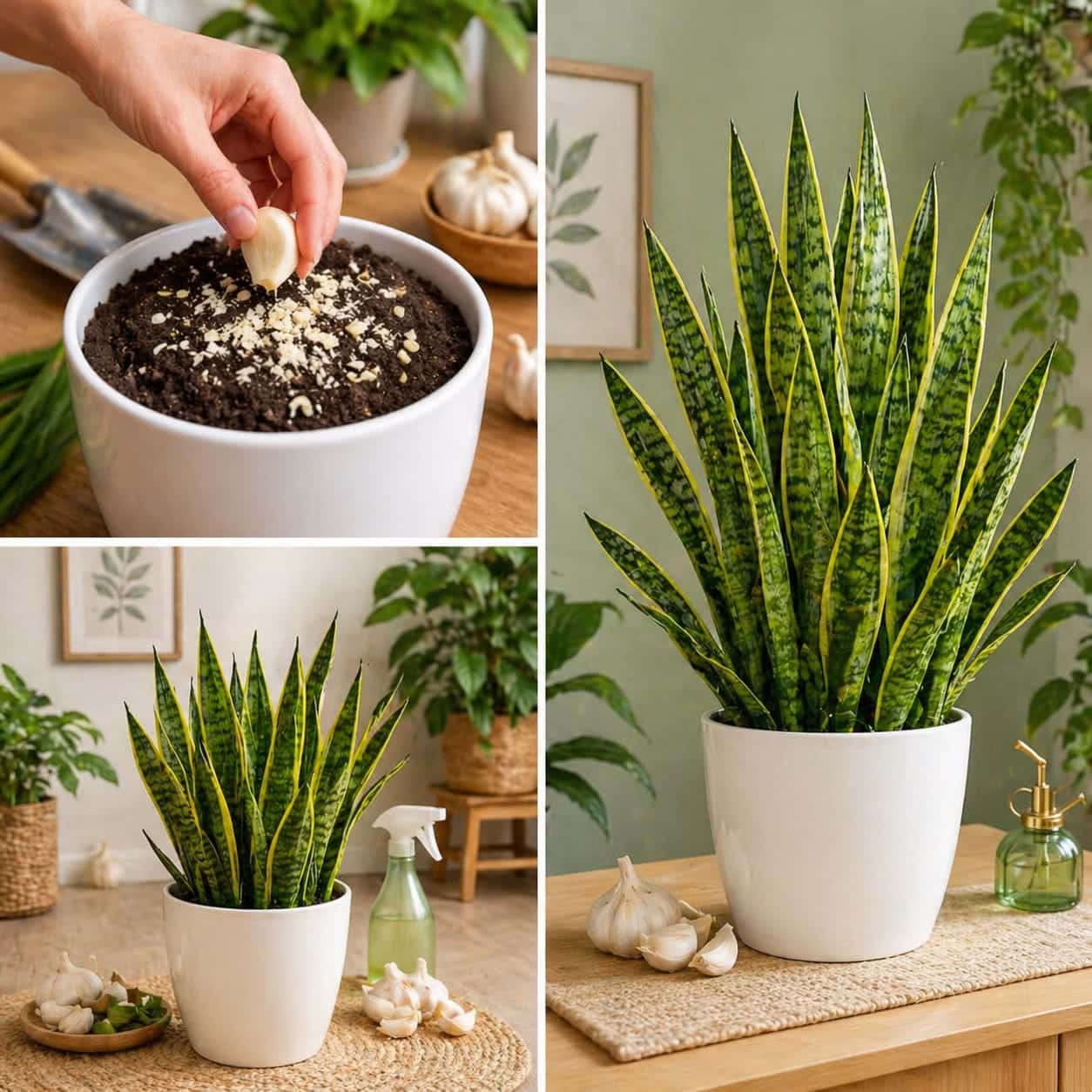
Snake plants are some of the most reliable houseplants you can grow. They are bold, upright, sculptural, and easy to style in almost any room. Their tall sword-like leaves bring structure to a space, and their yellow-edged patterns make them look fresh even when the rest of the plant shelf feels plain. A healthy snake plant can sit in a bright living room, bedroom corner, office, hallway, or sunny kitchen and still look elegant with very little effort.
But even a tough snake plant can run into problems. The leaves may stop growing. The soil may smell stale. Fungus gnats may appear around the pot. The plant may look dusty, weak, or tired. Sometimes the leaves develop small marks, or the base of the plant seems less firm than before. When that happens, many homeowners begin looking for simple natural tricks before reaching for chemical sprays or expensive plant products.
One surprising method getting attention is the garlic snake plant trick. In the image, garlic cloves and chopped garlic are being used around a snake plant, almost like a natural soil treatment. It looks old-fashioned, simple, and powerful. Garlic has a strong smell, a strong reputation, and a long history in home remedies, so it is easy to see why plant lovers are curious about it.
So what exactly is this trick?
The garlic snake plant trick is a homemade method where garlic is used carefully as a mild soil or pest-deterring treatment. The safest version is not burying whole garlic cloves deeply into the pot and forgetting them. The safest version is usually a very weak garlic water spray or a light garlic soil rinse used occasionally, plus clean plant care habits. Garlic contains sulfur-like compounds that create its strong smell, and many gardeners use garlic-based mixtures as a natural pest deterrent around plants.
However, snake plants are drought-tolerant plants that do not like wet, rotting organic matter in their pots. That means garlic must be used carefully. Too much garlic, too much liquid, or garlic pieces left to rot in the soil can cause smells, mold, pests, and root stress. The trick can be useful only when it is light, occasional, and combined with proper snake plant care.
In this complete guide, you will learn what the garlic snake plant trick is, why people use it, how to prepare a safe garlic water solution, how to apply it, when to avoid it, what results to expect, and what mistakes can harm your plant. You will also learn the real care routine behind a strong snake plant: bright indirect light, fast-draining soil, careful watering, clean leaves, and proper drainage.
What Is the Garlic Snake Plant Trick?
The garlic snake plant trick is a natural houseplant method where garlic is used in small amounts to support a cleaner growing environment and help discourage certain pests. Some people place garlic pieces on the soil surface, some sprinkle chopped garlic around the pot, and others make garlic water to spray or lightly water the soil.
The most practical version for indoor snake plants is diluted garlic water. This is made by soaking or blending a small amount of garlic in water, straining it very carefully, and diluting it before use. The goal is to create a weak garlic-scented solution, not a thick garlic soup.
Garlic is popular in plant care because of its strong odor and natural compounds. Many gardeners believe it can help discourage insects, especially when used as a mild spray or soil treatment. It may also make the soil surface less attractive to some pests for a short time. But it is not a complete pest-control solution, and it is not a fertilizer.
For snake plants, garlic should be treated as a temporary support method. It is not something to use constantly. It is not something to pile into the pot. The plant does not need garlic as food. The garlic is used more like a natural deterrent and soil-refreshing trick.
Why People Use Garlic Around Snake Plants
People use garlic around snake plants for several reasons. First, garlic is easy to find. Almost every kitchen has a bulb of garlic, and it feels like a natural solution compared with chemical sprays. Second, garlic has a strong smell, and strong-smelling natural ingredients are often used in gardening to discourage pests.
Snake plants can sometimes attract fungus gnats if the soil stays too wet. They can also occasionally deal with pests such as spider mites, mealybugs, or scale, especially if the plant is stressed or surrounded by other infested houseplants. A weak garlic spray may be used as part of a pest-prevention routine, although severe infestations need more direct treatment.
Another reason people like this trick is that it makes plant care feel active. When you prepare garlic water, you inspect the plant, check the leaves, look at the soil, and notice whether the plant has pests or watering issues. That attention alone can help you catch problems early.
The trick also feels traditional. Many older gardening methods use kitchen ingredients in small, practical ways. Garlic, cinnamon, eggshells, rice water, banana peels, and coffee grounds all appear in home plant-care discussions because they are familiar and inexpensive. But familiar does not always mean risk-free. Each ingredient must be used correctly for the right plant.
Can Garlic Really Help a Snake Plant?
Garlic may help in a limited way, mostly as a natural pest deterrent or soil-surface refresh. It is not a miracle cure. It will not make a snake plant grow twice as fast. It will not fix root rot. It will not replace fertilizer. It will not save a plant that is sitting in soggy soil.
The strongest benefit of garlic is its smell and natural compounds, which may make the plant or soil surface less appealing to some pests. A weak garlic solution may be used to wipe or mist leaves lightly if pests are suspected, or as a very occasional soil rinse if fungus gnats are becoming a problem.
But if your snake plant has gnats, the real cause is usually moisture. Fungus gnats love damp organic soil. Since snake plants prefer dry soil, gnats are a warning sign that you may be watering too often or using soil that stays wet too long. Garlic water may discourage them temporarily, but the real fix is to let the soil dry, improve drainage, and avoid overwatering.
If your snake plant is weak, yellowing, or mushy, garlic will not solve the problem. Those signs usually point to root stress, water issues, cold damage, or poor light. Always diagnose the real cause before adding any homemade treatment.
Is It Safe to Put Garlic Cloves Directly in Snake Plant Soil?
It is better not to bury whole garlic cloves directly in snake plant soil. While the image may show garlic pieces near the plant, leaving fresh garlic in a pot can cause problems. Garlic cloves can sprout, soften, rot, smell strong, attract pests, or create mold if the soil becomes damp.
Snake plants need a clean, dry, airy root environment. Fresh food scraps sitting in the pot are not ideal. Indoor pots are not compost bins. A compost pile has airflow, volume, microbes, and balance. A small houseplant pot is a much more limited environment, and rotting organic material can quickly become a problem.
If you want to use garlic, garlic water is safer than buried cloves. It lets you use the scent and compounds without leaving solid food in the soil. The key is to strain the liquid completely and dilute it well.
If you already placed garlic cloves in the soil, remove them before they soften or sprout. If the soil smells bad afterward, remove the top layer of soil and replace it with fresh dry mix.
The Safest Garlic Water Recipe for Snake Plants
The safest garlic method for snake plants is a weak garlic water solution. It should be light, strained, and used sparingly. Strong garlic mixtures can irritate leaves, create odors, or stress the soil.
Ingredients
- 1 small garlic clove
- 4 cups clean water
- A jar or bowl
- A fine strainer, cheesecloth, or coffee filter
- A spray bottle or small watering cup
- 4 additional cups water for dilution
Instructions
- Peel 1 small garlic clove.
- Crush it gently with the side of a knife.
- Place the crushed clove in 4 cups of water.
- Let it sit for 2 to 4 hours only.
- Strain the liquid very carefully through cloth or a coffee filter.
- Dilute the strained liquid with 4 more cups of clean water.
- Use the mixture the same day.
The finished solution should smell lightly of garlic, not overwhelmingly strong. If it smells too intense, dilute it again. Do not store garlic water for many days. It can become unpleasant and may ferment. Fresh and weak is safest.
How to Use Garlic Water on Snake Plant Soil
If you want to use garlic water as a soil rinse, first check the soil moisture. Snake plants should only be watered when the soil is dry. Do not pour garlic water into damp soil just because you made the mixture.
Push your finger or a wooden stick several inches into the potting mix. If the lower soil is still damp, wait. If the soil is dry and the plant is due for watering, you can use a small amount of diluted garlic water.
Pour it slowly around the outer edge of the soil, not into the center of the leaf cluster. Avoid getting liquid trapped between the leaves. Snake plant crowns can rot if water sits in the center, especially in cool or low-airflow rooms.
Let excess liquid drain from the bottom of the pot. Empty the saucer immediately. Never let your snake plant sit in garlic water or any other liquid.
Use this method rarely. Once every six to eight weeks at most is enough if you are using it as a deterrent. It is not a regular watering routine.
How to Use Garlic Water as a Leaf Spray
If you suspect pests on the leaves, garlic water can be used as a very light spray, but it must be diluted well. Strong garlic water can leave odor or residue. Before spraying the whole plant, test one small leaf area first.
Spray a small amount on a cloth and wipe one leaf. Wait 24 hours. If the leaf looks fine, you may wipe the rest of the leaves lightly. Avoid soaking the plant. Avoid spraying directly into the crown or leaf bases.
For snake plants, wiping is better than heavy spraying. Their upright leaves can collect moisture in tight spaces. A damp cloth gives you more control.
If pests are visible, wipe both sides of the leaves. Pay attention to the base of the leaves, where pests may hide. Repeat only if needed. For heavy pest infestations, use a more reliable pest-control method such as insecticidal soap, neem-based products used correctly, or manual removal depending on the pest.
Can Garlic Water Stop Fungus Gnats?
Garlic water may help discourage fungus gnats temporarily, but it is not the main solution. Fungus gnats appear when soil stays damp and organic. A snake plant with fungus gnats is usually being watered too often or growing in soil that holds too much moisture.
To control fungus gnats, let the soil dry more thoroughly. Remove decaying material from the soil surface. Improve airflow. Use a fast-draining mix. Consider sticky traps to catch adult gnats. If the problem continues, repot into fresh gritty soil.
Garlic water can be used as a light soil rinse only when the soil is dry and the plant needs water. But if you keep the soil wet, gnats will return. Dry-down is the real cure.
Do not keep pouring garlic water into the pot hoping to kill gnats. Too much moisture makes the problem worse.
Can Garlic Water Stop Mealybugs or Spider Mites?
Garlic water may discourage some pests, but it is not a guaranteed treatment for mealybugs, scale, or spider mites. These pests often require direct removal and repeated treatment.
Mealybugs look like small white cottony clusters. They often hide at leaf bases. Remove them with a cotton swab dipped in rubbing alcohol, then monitor closely. Scale insects appear as small raised bumps and may need manual scraping or treatment. Spider mites can create fine webbing and tiny speckled damage, especially in dry indoor air.
Garlic water can be part of a natural routine, but do not rely on it for serious infestations. If pests are spreading, isolate the plant and treat it properly.
Can Garlic Make Snake Plants Grow Faster?
No, garlic is not a growth fertilizer for snake plants. It does not provide balanced nutrients in a useful way. It should not be used as a feeding method.
If your snake plant is not growing, the most likely reasons are low light, cool temperatures, winter dormancy, root crowding, old soil, or slow natural growth. Snake plants are not fast growers, especially indoors.
To encourage growth, move the plant to bright indirect light, use fast-draining soil, water correctly, and feed lightly during spring and summer with a diluted houseplant or cactus fertilizer. Garlic water may help deter pests, but it will not create fast new leaves by itself.
Growth comes from energy, and energy comes from light. Garlic is not a substitute for light.
Best Light for Snake Plants
Snake plants are famous for tolerating low light, but tolerating is not the same as thriving. A snake plant in low light may survive for years, but it may grow very slowly. If you want stronger leaves, more pups, and better color, provide bright indirect light.
An east-facing window is excellent because it gives gentle morning light. A south- or west-facing window can also work if the plant is not suddenly exposed to harsh direct sun. If your plant has been in low light, move it gradually to avoid sunburn.
Bright light helps the soil dry properly, which also reduces fungus gnats and root rot. A plant in a dark corner stays wet longer after watering, making garlic tricks less effective.
If your home is dark, a grow light can help. Snake plants do not need complicated light setups, but consistent brightness makes a noticeable difference.
Best Soil for Snake Plants
Snake plants need fast-draining soil. Regular potting soil can stay too wet, especially indoors. A better mix is gritty and airy, similar to a succulent or cactus blend.
A simple snake plant mix can include:
- 2 parts cactus or succulent mix
- 1 part perlite or pumice
- 1 part orchid bark or coarse sand
This type of soil allows water to pass through quickly and gives roots access to oxygen. It also helps prevent problems that garlic water is often used for, such as gnats and stale soil.
If your snake plant is in dense soil that stays wet for many days, repotting into a better mix is more important than using garlic. Garlic cannot make heavy soil drain properly.
Best Pot for Snake Plants
A snake plant pot must have drainage holes. This is essential. If the pot has no drainage, water can collect at the bottom and damage the roots. This risk becomes even greater when using homemade liquids.
Terracotta pots are a good choice because they help soil dry faster. Ceramic and plastic pots can also work, but you must be careful not to overwater. Choose a pot that is only slightly larger than the root ball. A huge pot holds too much soil, and too much soil holds too much moisture.
If you love a decorative pot without holes, use it as a cover pot only. Keep the snake plant in a nursery pot with drainage holes inside it. Remove the inner pot for watering, let it drain fully, and then place it back.
How to Water Snake Plants Correctly
Correct watering is the most important part of snake plant care. Let the soil dry out between waterings. Depending on your light, pot size, soil, and season, this may take one week, two weeks, three weeks, or longer.
Do not water on a fixed schedule without checking the soil. Use your finger, a wooden skewer, or the weight of the pot. If the soil is dry deep down, water thoroughly. Let excess water drain out. Empty the saucer. Then wait until the soil dries again.
Do not give tiny daily sips. This keeps the upper soil damp and encourages gnats. Deep but infrequent watering is better.
Garlic water, if used, should follow the same rule. It counts as watering. It is not an extra treatment between waterings.
Can Garlic Hurt a Snake Plant?
Yes, garlic can hurt a snake plant if used incorrectly. Strong garlic water can irritate leaves. Garlic pieces left in the pot can rot. Too much garlic water can keep soil wet and cause root problems. Garlic odor can linger indoors if the mixture is too strong.
The risk is higher in low light, cool rooms, no-drainage pots, and dense soil. In those conditions, any extra organic liquid can become a problem.
To keep the method safe, use only a weak garlic solution, strain it completely, apply it rarely, and never bury garlic cloves in the pot. Stop using it if you notice odor, mold, yellowing, soft leaves, or gnats.
What If Garlic Sprouts in the Pot?
If a garlic clove sprouts in your snake plant pot, remove it. Garlic shoots may look interesting, but they are not helpful. They compete for moisture and nutrients, and the clove may eventually soften or rot.
Gently pull out the garlic clove and any roots. If the surrounding soil smells bad or looks moldy, remove the top layer and replace it with fresh dry soil.
Do not grow garlic and snake plants in the same indoor pot. They have different needs. Garlic likes more regular moisture and seasonal growth, while snake plants prefer dry-down periods.
Continue to Page 2
Continue to page 2 for more details about this article and the key points many readers miss on the first page.