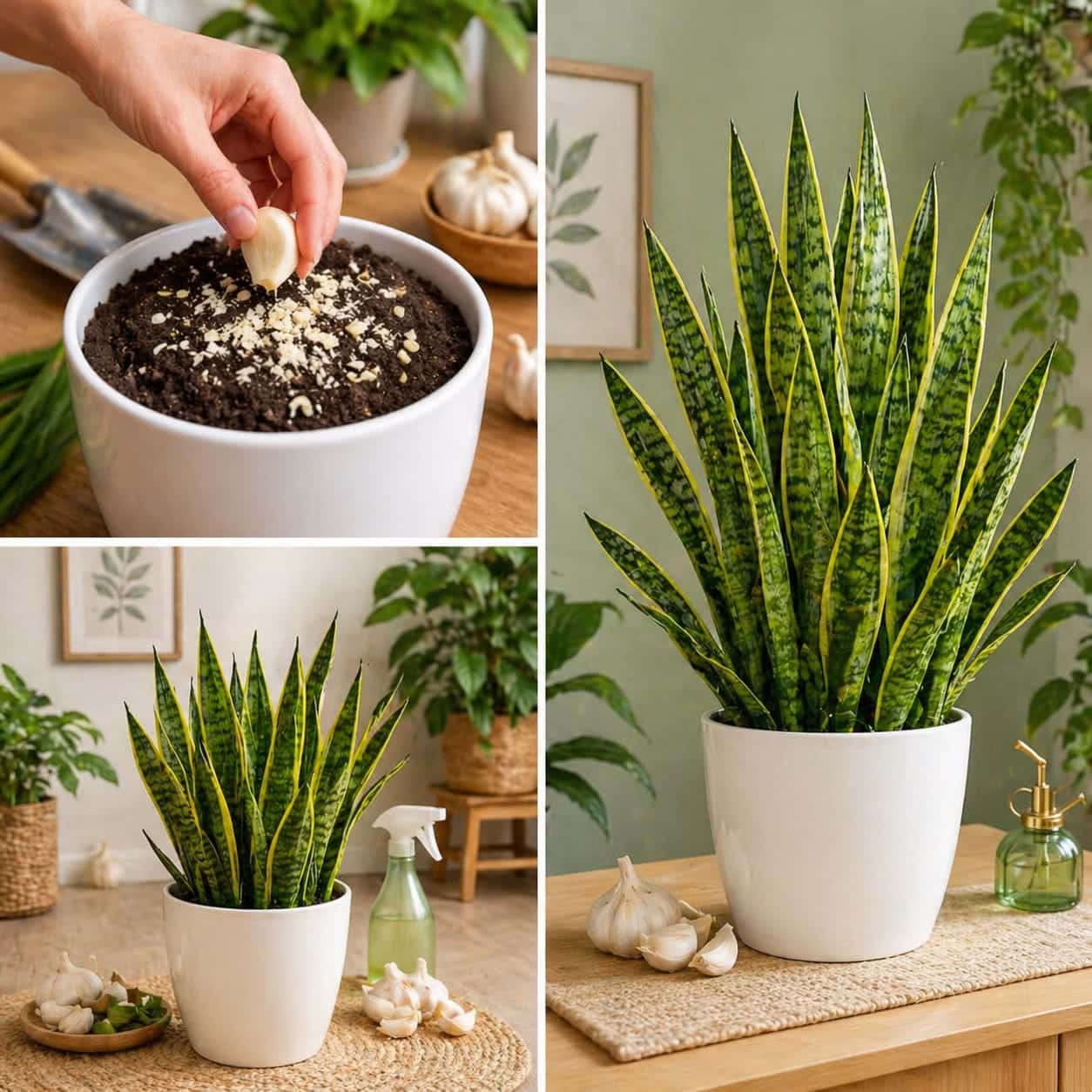
What If the Soil Smells Like Garlic?
A light garlic smell after treatment is normal, but it should fade. If the soil smells strongly of garlic for days, the mixture may have been too strong or garlic pieces may be decomposing in the pot.
Remove any solid garlic pieces. Let the soil dry. Improve airflow. If the smell remains sour or unpleasant, remove the top layer of soil. If the plant begins to decline or the soil smells rotten, repot the snake plant into fresh fast-draining mix.
Next time, use a weaker solution or skip garlic altogether. Not every indoor environment is suitable for garlic treatments.
Can You Mix Garlic with Other Ingredients?
It is better not to mix garlic with many other ingredients for snake plants. Some online recipes combine garlic with chili, soap, oil, vinegar, or baking soda. These mixtures can be too harsh for houseplants, especially if used incorrectly.
Vinegar can damage roots and leaves. Too much soap can strip leaf surfaces. Oil can clog and leave residue. Chili can irritate skin and eyes and may not be necessary indoors. Baking soda can affect soil balance.
For snake plants, simple is safer. A weak garlic water solution is enough if you want to try the trick. Do not create a strong kitchen chemical mixture and pour it into the pot.
Can You Use Garlic Powder Instead of Fresh Garlic?
Fresh garlic is better than garlic powder for this method. Garlic powder can contain additives, anti-caking agents, or salt depending on the product. It may also clump on the soil and create residue.
If you only have garlic powder, it is better to skip the trick. Do not sprinkle garlic powder directly onto snake plant soil. It can become messy, smell strong, and may not behave the same way as a weak fresh garlic infusion.
Use one small fresh clove, soak briefly, strain thoroughly, and dilute well.
Can You Use Garlic Oil?
No. Garlic oil should not be used on snake plants. Oils can coat soil particles, interfere with water movement, attract dust, and leave residue on leaves. Essential oils and infused oils can be too concentrated and may damage plant tissue.
The garlic trick should be water-based and very diluted. Avoid oils completely.
Can You Use Garlic on Other Houseplants?
A weak garlic water solution can be tried carefully on some sturdy houseplants, especially as a pest deterrent. Pothos, philodendrons, spider plants, and some tropical plants may tolerate a light garlic spray or soil rinse. But always test first and dilute well.
Do not use garlic water on sensitive plants without caution. Avoid using it on carnivorous plants, delicate ferns, orchids, seedlings, or plants with fuzzy leaves. Avoid using it on succulents and cacti too often because they dislike extra moisture.
Every plant is different. A trick that is safe for one plant may stress another.
Signs the Garlic Trick Is Working
If the garlic trick is helping, you may notice fewer gnats around the soil, cleaner-looking leaves, and a fresher care routine. The snake plant should remain firm, upright, and healthy. The soil should dry normally after watering.
There should be no strong odor, no mold, no soft leaf bases, and no yellowing caused by excess moisture. If the plant looks stable and the pest problem decreases, the method may be useful as an occasional support.
Remember that garlic does not create instant growth. Success is more about prevention and cleanliness than dramatic transformation.
Signs You Should Stop Using Garlic
Stop using garlic if the soil smells bad, mold appears, gnats increase, leaves turn yellow, leaf bases become soft, or the pot stays wet too long. These signs mean the treatment may be adding too much moisture or organic material.
Return to plain water. Let the soil dry. Improve light and airflow. If the plant is soft or the soil smells rotten, inspect the roots and repot if needed.
Do not keep adding garlic water to a struggling plant. More is not better.
How to Fix a Snake Plant After Too Much Garlic
If you used too much garlic or buried cloves in the pot, remove all garlic pieces. If the soil is wet, let it dry. If the smell is strong, remove the top inch of soil and replace it with fresh dry mix.
If the plant shows signs of rot, remove it from the pot. Check the roots and rhizomes. Healthy roots and rhizomes should be firm. Rotten sections are soft, dark, or smelly. Cut away rotten parts with clean tools. Let the plant dry briefly, then repot into fresh fast-draining soil.
After repotting, do not water immediately if the plant was wet or damaged. Give it bright indirect light and time to recover.
A Safe Garlic Snake Plant Routine
Here is a simple routine if you want to try the garlic trick safely:
- Use only one small fresh garlic clove.
- Soak it briefly in water.
- Strain the liquid completely.
- Dilute until the smell is mild.
- Use only when the snake plant soil is dry.
- Apply to soil sparingly or wipe leaves lightly with a cloth.
- Keep liquid out of the leaf crown.
- Let the pot drain completely.
- Use no more than once every six to eight weeks.
- Stop if odor, mold, yellowing, or softness appears.
This routine keeps the trick gentle and reduces the chance of harming the plant.
The Real Secret to a Strong Snake Plant
The real secret is not garlic. The real secret is the right environment. A strong snake plant needs bright indirect light, a pot with drainage, fast-draining soil, and careful watering.
Garlic may help discourage pests, but it cannot replace these basics. If your snake plant is weak, fix the care conditions first. Move it to better light. Repot it if the soil is dense. Water less often if the soil stays wet. Clean the leaves. Check for pests. Remove dead or damaged growth.
Once the basics are right, garlic can be an occasional natural trick. But the plant’s strength comes from roots, light, and balanced watering.
Frequently Asked Questions
Can I put garlic cloves in my snake plant pot?
It is better not to leave garlic cloves in the pot. They can sprout, rot, smell, or attract pests. Use weak strained garlic water instead.
How do I make garlic water for snake plants?
Crush one small garlic clove, soak it in four cups of water for two to four hours, strain completely, dilute with four more cups of water, and use sparingly.
How often should I use garlic water?
No more than once every six to eight weeks, and only when the soil is dry and the plant needs watering.
Can garlic kill fungus gnats?
It may discourage them temporarily, but the real fix is letting the soil dry, improving drainage, and avoiding overwatering.
Can garlic make my snake plant grow faster?
No. Garlic is not fertilizer. Faster growth comes from bright indirect light, proper soil, correct watering, and light feeding during active growth.
Can I spray garlic water on snake plant leaves?
You can wipe leaves lightly with a very diluted garlic solution, but test first and avoid soaking the plant. Keep liquid out of the leaf bases.
Can garlic hurt snake plants?
Yes, if it is too strong, used too often, or left as solid pieces in the soil. Use only weak strained garlic water occasionally.
Can I use garlic powder?
Fresh garlic is better. Garlic powder may contain additives or clump in the soil. It is better to skip the trick than use garlic powder.
Can I use garlic oil?
No. Oils can damage leaves, coat soil, and create residue. Use only a weak water-based garlic solution.
What should I do if my pot smells bad after garlic?
Remove any garlic pieces, let the soil dry, replace the top layer if needed, and repot if the smell continues or the plant shows signs of rot.
Final Thoughts
The garlic snake plant trick is a simple natural method that can be useful when handled carefully. The safest version is not burying garlic cloves in the pot, but making a weak, strained, diluted garlic water solution and using it sparingly as a soil rinse or light leaf wipe.
Garlic may help discourage some pests and refresh your care routine, but it is not a fertilizer, growth booster, or cure for root rot. Snake plants are drought-tolerant and do not like wet, rotting organic matter around their roots. That means garlic must be used lightly and only when the plant actually needs water.
For the best results, focus on the real foundations of snake plant health. Give your plant bright indirect light, fast-draining soil, a pot with drainage holes, and deep but infrequent watering. Clean the leaves, watch for pests, and avoid keeping the soil damp.
If you use garlic, use it as a small extra tool, not the main care method. One small clove, a short soak, careful straining, heavy dilution, and rare use are the keys. When combined with proper care, the garlic trick can become a simple old-fashioned routine that helps keep your snake plant cleaner, fresher, and less inviting to pests.
A strong snake plant does not need complicated treatment. It needs the right conditions and a little attention. Garlic may be the surprising trick that gets people talking, but your steady care is what keeps those tall green leaves standing proud year after year.