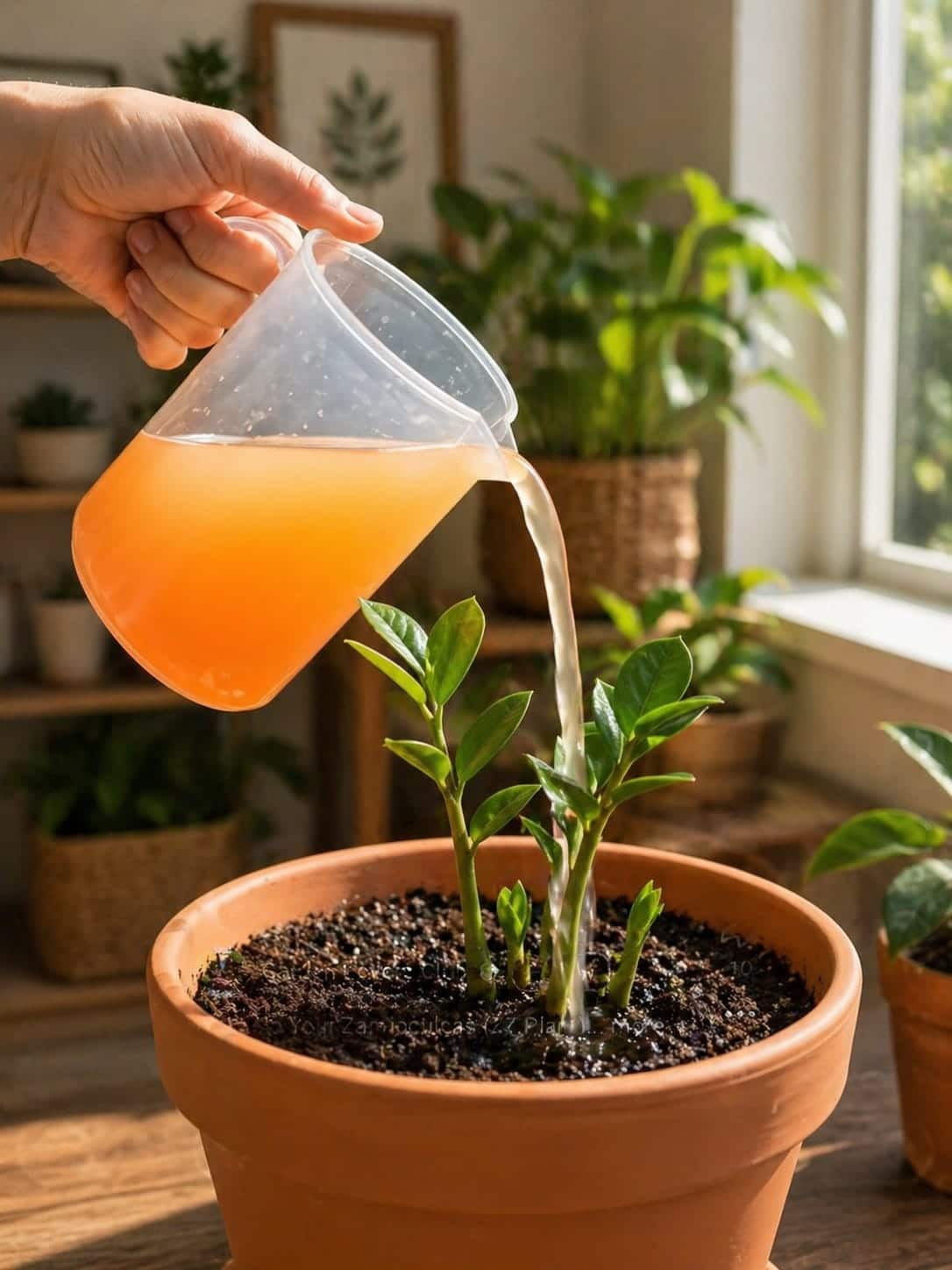
Can the Orange Liquid Help New Shoots Grow Faster?
It may support active growth slightly, but it will not force rapid growth. New shoots grow because the rhizomes have stored energy and the plant receives enough light, warmth, and water. A weak homemade liquid cannot replace those conditions.
If you want new shoots to grow faster, improve the plant’s environment first. Give it brighter indirect light. Keep it warm. Use well-draining soil. Water correctly. Feed lightly during spring and summer with a balanced houseplant fertilizer if needed.
The orange liquid can be used as a mild bonus, but it is not the main growth engine.
Can the Orange Liquid Make Leaves Shinier?
The orange liquid should not be poured or wiped onto leaves. It may leave residue, attract dust, or create sticky spots if made too strong. If you want shiny ZZ plant leaves, clean them with a soft damp cloth.
ZZ leaves are naturally glossy when healthy. Dust can make them look dull. Wiping the leaves gently with plain water often makes the plant look instantly better.
Healthy shine comes from clean leaves, proper hydration, and good light. Do not use orange liquid, oil, milk, honey, or leaf shine products on the leaves.
Can You Use This Trick on Newly Propagated ZZ Plants?
Be careful with newly propagated ZZ plants. Fresh cuttings and young divisions can rot if kept too wet. If the plant has not developed strong roots or rhizomes yet, avoid homemade organic liquids. Use plain water and very careful moisture control.
Once the plant is established and producing new shoots, you can try a very diluted orange liquid during active growth. Even then, use it rarely.
Young ZZ plants need patience. They often grow slowly at first while building underground rhizomes. Do not overwater or overfeed in an attempt to speed them up.
Can You Use This Trick on Other Plants?
Yes, but carefully. Diluted carrot peel water or very weak orange peel water may be used occasionally on some sturdy tropical houseplants. Pothos, philodendron, spider plant, and peace lily may tolerate gentle homemade liquids better than dry-loving plants.
However, not all plants should receive this treatment. Avoid using it on carnivorous plants, orchids, cacti, sensitive succulents, or plants in no-drainage pots. Avoid using it on sick plants with root rot.
Every plant has different needs. A trick that works for one houseplant may harm another if copied blindly.
What Orange Liquids Should Never Be Used?
Never use orange soda, sports drinks, fruit punch, orange juice, flavored water, sweet tea, carrot juice with additives, soup, sauce, or cooking water with salt. These are not plant tonics.
Also avoid blended peel pulp. Thick pulp can sit in the soil, rot, and attract pests. Always strain homemade plant liquids carefully.
Do not use liquids that smell sour, fermented, rotten, alcoholic, or moldy. Fresh and weak is the rule.
If you would not want it sitting in your indoor pot for a week, do not pour it into the soil.
Signs the Orange Liquid Is Helping
If the orange liquid is working as part of a good routine, your plant should remain firm, clean, and healthy. New shoots should continue developing. Leaves should open glossy and strong. The soil should dry normally after watering.
There should be no sour smell, mold, fungus gnats, sticky residue, yellowing, or mushy stems. The plant should look stable, not stressed.
Remember that improvement will be gradual. ZZ plants grow slowly. The best signs are steady shoots and healthy leaves over several weeks or months.
Signs You Should Stop Using It
Stop using orange liquid if you notice fungus gnats, mold, sour smells, sticky soil, yellowing leaves, mushy stems, or soil that stays wet too long. These are signs that the mixture may be too strong or the plant is receiving too much moisture.
Return to plain water only. Let the soil dry properly. Improve light and airflow. If the soil smells bad or the plant becomes soft, inspect the roots and rhizomes.
Do not keep adding homemade tricks to a plant that is reacting badly. Simple care is safer.
How to Fix a ZZ Plant After Too Much Orange Liquid
If you accidentally used a strong orange liquid, first let the pot drain completely. Empty the saucer. If the pot has drainage holes, you can flush the soil with plain water and let it drain fully. Then allow the soil to dry.
If the soil smells sour, sticky, or rotten, repot the plant. Remove the old soil, inspect the rhizomes, and trim away any mushy roots or soft rhizome sections. Repot into fresh well-draining mix.
After repotting, do not water immediately if the rhizomes were damaged. Let the plant settle in a bright indirect light location.
Common ZZ Plant Problems
Yellow Leaves
Yellow leaves often come from overwatering or poor drainage. Check the soil before adding any tonic. If the soil is wet, stop watering and inspect the roots if needed.
Mushy Stems
Mushy stems may indicate rot. Remove the plant from the pot and check the rhizomes. Cut away rotten parts and repot into fresh dry mix.
No New Growth
No new growth may be normal for a ZZ plant, especially in winter. Improve light and be patient. Do not overwater to force growth.
Wrinkled Stems
Wrinkled stems may mean underwatering, but they can also mean damaged roots. Check soil moisture and root health.
Fungus Gnats
Gnats mean the soil is staying too wet or too organic. Let the soil dry more, improve drainage, and avoid homemade liquids until the problem is gone.
A Safe Orange Liquid Routine
Here is a simple safe routine for using the orange liquid trick on a ZZ plant:
- Make a weak carrot peel or orange peel infusion.
- Strain out every solid piece.
- Dilute the liquid until it is pale and watery.
- Use only during spring or summer.
- Apply only when the soil is dry.
- Pour onto the soil, not the leaves.
- Let the pot drain completely.
- Use no more than once every six to eight weeks.
- Stop if mold, gnats, or sour smell appears.
- Use plain water most of the time.
This keeps the method gentle and reduces the risk of problems.
Why This Trick Looks So Powerful
The orange liquid trick looks powerful because it is visual. Clear water looks ordinary, but orange liquid looks like a special plant drink. It catches attention. It makes the care moment feel more exciting. It gives the impression that the plant is receiving something rich and energizing.
But plants do not thrive because a liquid looks colorful. They thrive because their roots are healthy and their leaves receive enough light. The trick works best when it makes you more attentive. If it encourages you to check the soil, observe the shoots, and care for the plant carefully, it can be useful.
The color is the fun part. The routine is the real benefit.
Best Full Care Routine for Strong New Shoots
If your goal is strong new shoots, follow this complete care routine:
- Place the plant in bright indirect light.
- Use a pot with drainage holes.
- Plant it in well-draining soil.
- Water only when the soil is dry.
- Keep the plant warm and away from cold drafts.
- Clean the leaves with a damp cloth.
- Feed lightly during spring and summer if needed.
- Use orange liquid only as an occasional supplement.
- Avoid sweet, salty, or thick liquids.
- Be patient with slow-growing plants.
This routine gives the plant the foundation it needs. The orange liquid is only a small extra.
Frequently Asked Questions
What is the orange liquid used on houseplants?
It is usually a diluted homemade plant tonic made from carrot peels, orange peels, or another mild organic infusion. It should be strained and heavily diluted before use.
Can I use orange juice on plants?
No. Orange juice contains sugar and acid and can attract pests, mold, and bacteria. Use weak orange peel water instead if you want a citrus-based liquid.
Is orange peel water safe for ZZ plants?
It can be used very carefully if it is weak, strained, diluted, and applied only when the soil is dry. Carrot peel water is often gentler.
How often should I use orange liquid?
Once every six to eight weeks during spring and summer is enough for ZZ plants. Do not use it every time you water.
Can orange liquid make new shoots grow faster?
It may support growth slightly, but bright indirect light, healthy rhizomes, proper soil, and correct watering are much more important.
Can I pour it on the leaves?
No. Apply it to the soil only. Clean leaves with plain water and a soft cloth.
Can this trick save a rotting ZZ plant?
No. A rotting ZZ plant needs root and rhizome inspection, trimming, drying, and repotting into fresh well-draining soil.
Can I store the orange liquid?
It is better not to store it. Make it fresh and use it immediately. Stored homemade liquids can ferment or smell bad.
Can I use carrot juice?
No. Carrot juice is too concentrated and may contain pulp or sugars. Use diluted carrot peel water instead.
What should I do if gnats appear?
Stop using homemade liquids, let the soil dry more, improve drainage, and use sticky traps if needed.
Final Thoughts
The orange liquid plant trick is bright, eye-catching, and fun to try, but it should be used with care. The safest version is a weak, strained, diluted carrot peel or orange peel water used only occasionally during active growth. It should never be thick, sweet, salty, sour, or poured into wet soil.
For ZZ plants and young houseplant shoots, the real secret to strong growth is not the orange color. It is bright indirect light, healthy roots or rhizomes, well-draining soil, a pot with drainage, and careful watering. The orange liquid can be a small seasonal bonus, but it cannot replace proper care.
Use plain water most of the time. Use the orange liquid rarely. Watch the plant closely. If the soil smells fresh, drains well, and new shoots continue growing, your routine is working. If you notice mold, gnats, sour smells, or mushy stems, stop the treatment and return to simple care.
With patience and the right conditions, those small green shoots can become strong glossy stems. The orange liquid may make the process feel special, but your steady care is what truly helps the plant grow into a full, beautiful houseplant.