How to Make a Jade Plant Bushier
If you want your jade plant to become bushier, pruning is more important than powder. Jade plants branch when they are cut correctly during active growth. The best time to prune is spring or early summer.
Use clean scissors or pruners and cut above a leaf node. New branches may form below the cut. Place the plant in bright light after pruning so the new growth stays compact and strong.
You can propagate the cut pieces. Let them callus first, then plant them in succulent mix.
Eggshell powder can support the soil, but it will not shape the plant. Shape comes from pruning, light, and patience.
How to Save a Weak Jade Plant Before Using Powder
If your jade plant looks weak, do not immediately reach for any trick. First, diagnose the problem.
Check the soil. Is it wet, dry, compacted, or sour-smelling? Check the pot. Does it have drainage holes? Check the light. Is the plant near a bright window or sitting in a dim corner? Check the stems. Are they firm or soft? Check the leaves. Are they wrinkled, yellow, dropping, or mushy?
If the soil is wet and the plant is soft, inspect the roots. If the soil is dry and the leaves are wrinkled, water properly. If the plant is stretched, improve light. If the soil is old and compacted, repot into gritty mix.
Only after correcting the real problem should you consider eggshell powder. A healthy care routine matters more than the powder itself.
How to Apply White Powder Without Making a Mess
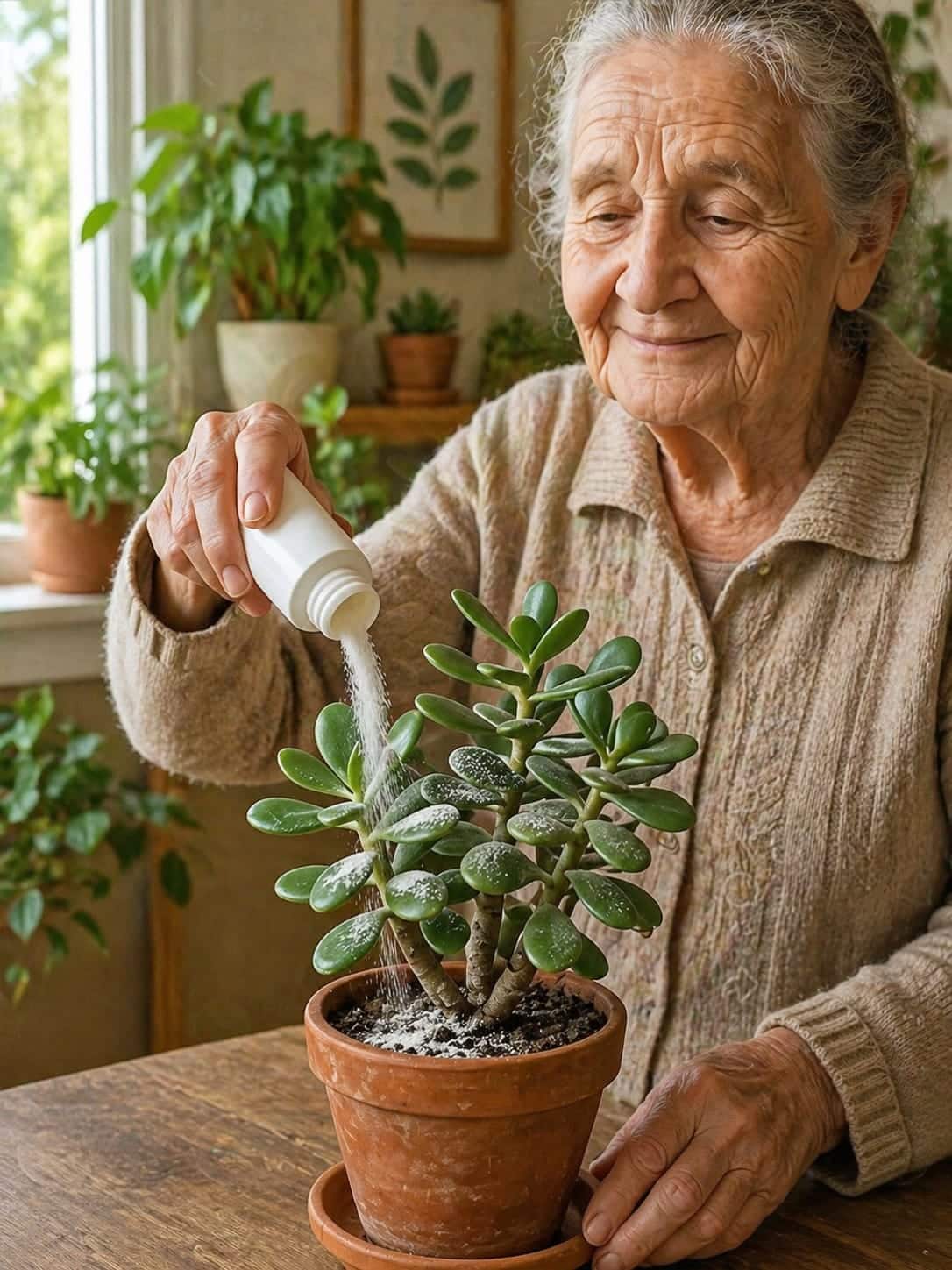
The easiest way to apply eggshell powder neatly is with a small spoon. Do not pour from a large bottle or jar unless you can control the amount. A tiny sprinkle is enough.
Hold the spoon close to the soil surface and tap gently. Avoid dusting the leaves. If powder lands on the leaves, wipe it off with a damp cloth. Jade leaves should stay clean and glossy.
After sprinkling, gently mix the powder into the top layer of soil. This prevents a bright white crust from sitting on top. It also helps the powder blend naturally into the potting mix.
Apply over a tray or newspaper if you are worried about spills.
What If You Used Too Much White Powder?
If you accidentally added too much eggshell powder, remove the excess. Use a spoon to scoop off the top layer. If it has formed a thick crust, remove the top inch of soil and replace it with fresh succulent mix.
A small overdose of clean eggshell powder is usually not an emergency, but thick layers are unnecessary. They can make it harder to see soil moisture and may look unattractive.
If you used the wrong powder, such as baking soda, flour, detergent, or cleaning powder, remove it immediately. If it mixed into the soil, repot the plant into fresh mix. Do not take risks with unknown powders.
Should You Water After Applying Eggshell Powder?
Only water if the jade plant is already due for watering. Do not water damp soil just because you applied powder. Jade plants need dry-down time.
If the soil is dry, you can water normally after applying the powder. Water thoroughly until excess drains out, then empty the saucer. If the soil is still moist, wait several days or longer.
The powder does not need to be activated immediately. It breaks down slowly over time.
Can You Mix Eggshell Powder into the Soil When Repotting?
Yes, you can mix a small amount into the soil when repotting, but keep it light. For a small pot, a pinch is enough. For a medium pot, use about 1/2 teaspoon. For a large pot, use about 1 teaspoon mixed throughout the potting mix.
Do not add handfuls of eggshell powder. More is not better. Jade plants prefer a simple gritty mix. The main purpose of repotting should be improving drainage and root health, not loading the soil with amendments.
After repotting, avoid watering immediately if roots were trimmed or damaged. Let the plant settle, especially if you removed rotten roots.
Can You Use Eggshell Water Instead?
Some people soak eggshells in water and use the water on plants. This method is less useful for jade plants than dry powder because eggshells do not dissolve quickly in plain water. The water may contain very little calcium unless treated in specific ways.
For jade plants, dry finely ground eggshell powder is simpler and more controlled. It does not add extra moisture. Since jade plants are succulents, avoiding unnecessary liquid is often a good thing.
If you want to water with nutrients, use a diluted succulent fertilizer instead of relying on eggshell water.
White Powder vs. Cinnamon Powder for Jade Plants
White eggshell powder and brown cinnamon powder have different purposes. Eggshell powder is a slow mineral amendment. Cinnamon powder is often used as a dry protective dusting on pruning cuts, cuttings, or light surface mold.
If you are trying to support soil minerals, use eggshell powder. If you just pruned a jade plant or took cuttings, cinnamon may be more useful on the cut surfaces. Neither is a complete fertilizer.
Both should be used lightly. A jade plant does not need thick layers of any powder.
White Powder vs. Succulent Fertilizer
Succulent fertilizer is more predictable than eggshell powder because it provides measured nutrients. Eggshell powder provides mainly calcium slowly. If your plant needs actual feeding, fertilizer is the better choice.
Use succulent fertilizer during spring and summer when the plant is actively growing. Dilute it to half strength or weaker. Feed once every one to two months. Do not fertilize heavily in winter.
Eggshell powder can be used as a separate occasional amendment, but it should not replace fertilizer completely if the plant needs nutrients.
Seasonal Jade Plant Care with the White Powder Trick
Spring
Spring is a good time for fresh growth. Move the plant into brighter light if needed, prune leggy stems, and begin light feeding. You can apply a small amount of eggshell powder during this season if desired.
Summer
Summer is active growth time. Keep the plant bright, water when dry, and avoid overfeeding. If using eggshell powder, use it sparingly and do not repeat too often.
Fall
Growth may slow as days shorten. Reduce watering and stop heavy feeding. Avoid unnecessary powder applications unless the plant is still actively growing.
Winter
Water less often and give the brightest light possible. Do not use many amendments in winter. Focus on keeping the plant dry, warm, and away from cold drafts.
Common Jade Plant Problems and Whether White Powder Helps
Soft Leaves
Soft leaves can come from overwatering or underwatering. Check the soil and roots. Eggshell powder is not the first solution.
Wrinkled Leaves
Wrinkled leaves may mean thirst or root damage. Water if the soil is dry. Inspect roots if the soil is wet.
Leaf Drop
Leaf drop can happen from overwatering, underwatering, low light, cold stress, or sudden changes. Eggshell powder will not fix the cause by itself.
Leggy Growth
Leggy growth means the plant needs more light. Powder will not make stems compact again. Prune and improve light.
Surface Mold
Eggshell powder is not the best mold treatment. Improve airflow, reduce watering, and use a gritty mix. Cinnamon is often used more for surface mold than eggshell powder.
Slow Growth
Slow growth may be normal, especially in winter. For active-season growth, improve light and consider diluted succulent fertilizer.
A Complete Jade Plant Care Routine
For a strong jade plant, follow a simple routine:
- Place the plant in bright light.
- Use a pot with drainage holes.
- Grow it in gritty succulent soil.
- Water deeply only when the soil is dry.
- Empty the saucer after watering.
- Prune in spring or summer to encourage branching.
- Feed lightly during active growth.
- Use eggshell powder only occasionally and sparingly.
- Keep leaves clean with a damp cloth.
- Reduce watering in winter.
This routine gives the plant what it truly needs. The white powder trick is only one small part.
Frequently Asked Questions
What is the white powder used on jade plants?
The safest natural version is finely crushed eggshell powder. It is used lightly as a slow calcium amendment for the soil.
Can eggshell powder make a jade plant grow faster?
Not directly. It may support soil minerals slowly, but faster growth comes mainly from bright light, healthy roots, correct watering, and proper feeding.
How much eggshell powder should I use?
Use about 1/8 to 1/4 teaspoon for a small pot, 1/2 teaspoon for a medium pot, and no more than 1 teaspoon for a large pot.
How often should I use it?
Once every two to three months is enough. Many jade plants need it even less often.
Can I use baking soda as the white powder?
No. Baking soda is not recommended as a jade plant soil amendment because it contains sodium and can disturb the soil environment.
Can I use flour?
No. Flour can clump, mold, and attract pests. It should not be used in houseplant soil.
Can eggshell powder fix root rot?
No. Root rot requires removing rotten roots, drying the plant, and repotting into fresh, gritty soil.
Should I water after applying eggshell powder?
Only if the soil is already dry and the plant needs watering. Do not water damp soil just because you applied powder.
Can I put eggshell chunks in the pot?
You can, but fine powder is better. Large chunks break down very slowly and may look messy.
Is eggshell powder better than fertilizer?
No. Eggshell powder is a slow mineral amendment, not a complete fertilizer. Use diluted succulent fertilizer if the plant needs balanced nutrition.
Final Thoughts
The white powder jade plant trick is simple, natural, and satisfying when used correctly. The safest version is finely crushed eggshell powder applied lightly to the top layer of soil. It may provide a slow calcium boost and help refresh the soil surface as part of a gentle care routine.
But this trick is not magic. A jade plant becomes strong because of bright light, fast-draining soil, a pot with drainage, careful watering, and time. Eggshell powder cannot fix root rot, poor light, soggy soil, or a pot without drainage. It should never be used as a substitute for proper care.
Use only a tiny amount. Mix it lightly into the top layer. Avoid piling it against the stems. Do not water unless the soil is dry. Never use random white powders such as flour, baking soda, cleaning powder, or detergent.
With the right routine, your jade plant can grow thick stems, glossy leaves, and a beautiful tree-like form that lasts for years. The white powder may be the old-fashioned trick that gets attention, but your steady care is what creates the real transformation. Give your jade plant light, drainage, patience, and a gentle touch, and it can reward you with strong, healthy growth season after season.