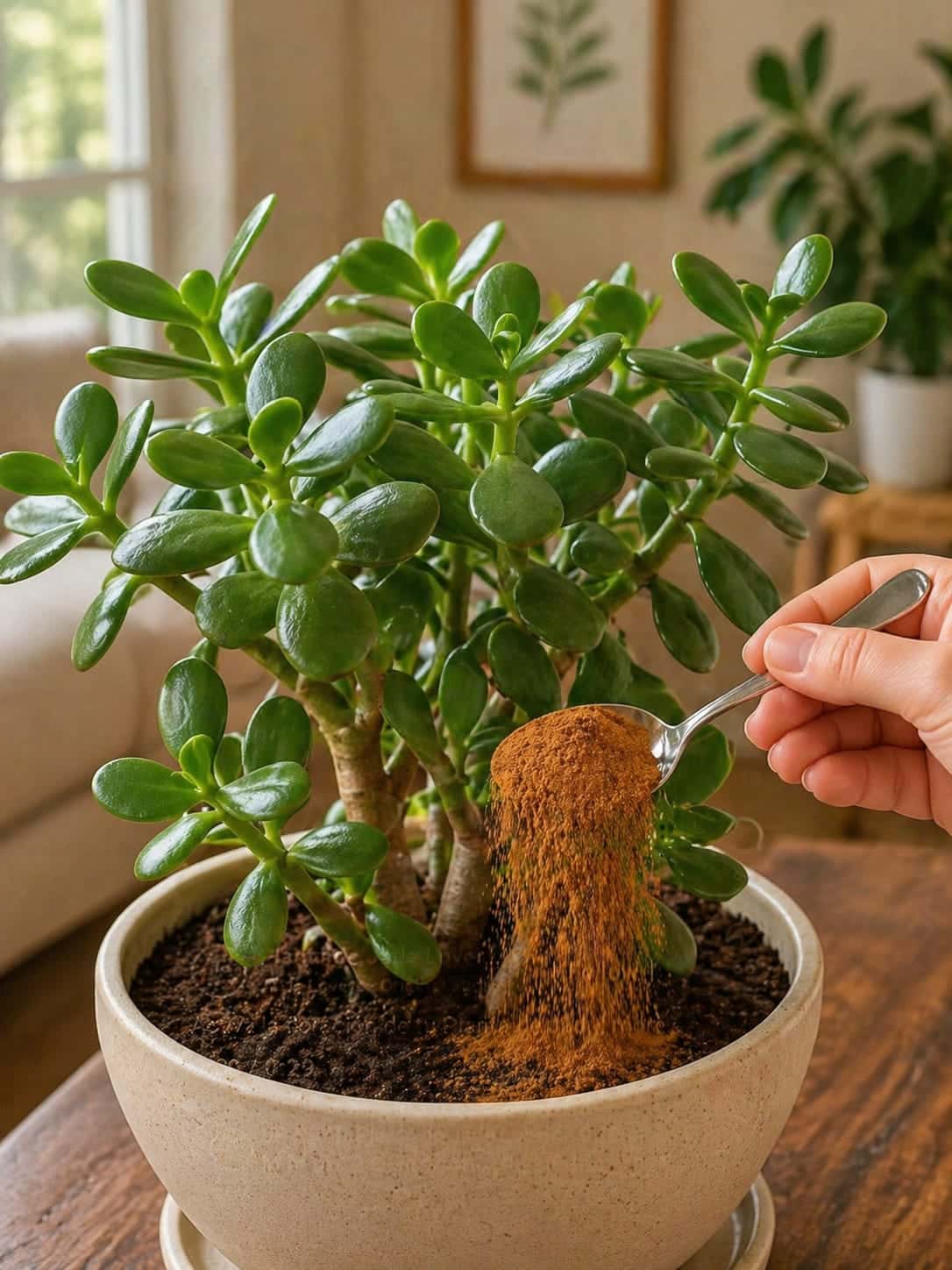
Can Cinnamon Fix Overwatering?
Cinnamon cannot fix overwatering by itself. If the soil is wet and the roots are stressed, the plant needs dryness, drainage, and possibly repotting. A sprinkle of cinnamon on top will not remove water from the lower soil.
If your jade plant has soft leaves, mushy stems, or a blackened base, remove it from the pot and inspect the roots. Healthy roots are firm. Rotten roots are dark, mushy, and may smell bad. Trim rotten roots with clean tools, let the plant dry, and repot into fresh gritty mix.
After repotting, wait before watering. A recovering jade plant needs dry, airy conditions. Cinnamon may be dusted lightly on cut areas, but it is not the main treatment.
Can Cinnamon Help a Soft Jade Stem?
If a jade stem is soft because of rot, cinnamon alone will not save it. You need to cut away rotten tissue until only firm healthy tissue remains. Dust the healthy cut with cinnamon if desired, then let it dry and callus.
If the entire base is mushy, you may need to take healthy cuttings from the upper parts of the plant and propagate them. Jade plants can often be saved through cuttings even when the original root system is lost.
Use cinnamon on the cut ends, but remember to let the cuttings dry before planting. Planting wet cuttings into wet soil is one of the fastest ways to lose them.
Can Cinnamon Encourage New Growth?
Cinnamon does not directly stimulate new growth like a fertilizer or plant hormone. However, when used after pruning, it can be part of a process that leads to branching. The pruning cut is what encourages new growth below the cut. Cinnamon simply helps protect the cut surface while it dries.
If you want a jade plant to grow bushier, prune it during active growth and provide bright light. Without enough light, new growth may be weak and stretched. With bright light, new branches can become compact and sturdy.
Cinnamon can support the pruning process, but light and timing create the best results.
Can Cinnamon Make Jade Leaves Shinier?
No, cinnamon should not be applied to jade leaves for shine. It is a powder and can leave a dusty residue. If your jade leaves look dull, clean them with a soft damp cloth. Dust often makes jade leaves look less glossy than they really are.
Healthy jade leaves become naturally shiny when the plant receives enough light, proper watering, and good airflow. Avoid using oils, milk, honey, or cinnamon on the leaf surface. These can attract dust or pests.
Plain water and a gentle cloth are enough.
Should You Mix Cinnamon with Water?
For jade plants, cinnamon is usually better used dry. Mixing it with water creates a brown liquid that may not apply evenly and may leave residue. The traditional use is a dry dusting on cuts or the soil surface.
If you want a liquid supplement for jade plants, use a diluted succulent fertilizer or a very mild banana peel tea. Do not turn cinnamon into a heavy paste and spread it on roots or stems.
Dry cinnamon works best as a light powder. Keep it simple.
Cinnamon vs. Coffee Grounds for Jade Plants
Some people use coffee grounds as a brown soil amendment, but coffee grounds are not ideal for jade plants. They can hold moisture, compact the soil, and encourage mold if used indoors. Jade plants prefer dry, gritty soil.
Cinnamon is different because it is used in tiny amounts as a surface dusting or cut treatment. It is not meant to be mixed heavily into the soil as organic matter.
If you want to feed a jade plant, use a diluted succulent fertilizer. If you want to improve drainage, use pumice, perlite, coarse sand, or gritty mix. Coffee grounds are not the best choice for jade plants.
Cinnamon vs. Eggshell Powder for Jade Plants
Eggshell powder is sometimes used as a slow calcium amendment. Cinnamon is used more as a dry protective powder. They are not the same.
Eggshell powder breaks down slowly and may add calcium over time. Cinnamon is mostly used on cut surfaces or mild soil surface issues. Neither is a complete fertilizer.
If your jade plant is healthy, you may not need either. If you prune or propagate, cinnamon is more useful. If you are refreshing soil minerals, finely crushed eggshell powder may be used sparingly. For actual feeding, use a plant fertilizer.
How to Make a Jade Plant Bushier
A bushier jade plant comes from pruning, light, and patience. If your plant has long bare stems, cut back leggy growth during spring or early summer. Make cuts above leaf nodes. New branches may form below the cut.
After pruning, dust the cut lightly with cinnamon if desired. Then place the plant in bright light. New growth needs strong light to stay compact.
Do not overwater after pruning. The plant has fewer leaves and may use water more slowly for a while. Check the soil before watering.
Over time, repeated light pruning can create a fuller, more tree-like jade plant.
How to Save a Leggy Jade Plant
A leggy jade plant usually needs more light. Cinnamon will not fix legginess. Start by moving the plant to a brighter location gradually. Then prune stretched stems to encourage branching.
You can propagate the cut pieces. Let them callus, dust with cinnamon, and root them in succulent mix. This gives you new compact plants while improving the shape of the original plant.
After pruning, rotate the pot regularly so light reaches all sides. A jade plant leaning strongly toward one direction is usually reaching for light.
How to Save a Rotting Jade Plant
If your jade plant is rotting, act quickly. Remove it from the pot. Shake away wet soil. Inspect the roots and stem base. Cut away all mushy, black, or rotten tissue. Keep only firm healthy sections.
Dust cut surfaces lightly with cinnamon. Let the plant or cuttings dry in a shaded airy place until the wounds callus. Then repot into dry, gritty succulent mix. Do not water immediately unless the plant is extremely dehydrated and has healthy roots.
Place it in bright indirect light and wait. Recovery may take time. The most important thing is to keep the remaining healthy tissue from sitting in wet soil.
Can You Use Cinnamon on Other Succulents?
Yes, cinnamon can be used on many succulents in similar ways. It can be dusted on cuttings, pruning wounds, or mild surface mold after the cause is addressed. Succulents such as echeveria, crassula, sedum, and kalanchoe may tolerate light cinnamon use.
However, every plant still needs proper care. Cinnamon will not replace drainage, light, and correct watering. Avoid using too much powder on small rosettes, especially if it can settle between leaves and trap moisture.
For fuzzy or delicate succulents, apply carefully and avoid coating the leaves.
Seasonal Jade Plant Care with Cinnamon
Spring
Spring is the best time for pruning, repotting, and propagation. Use cinnamon on cut surfaces if needed. Begin light feeding when new growth appears.
Summer
Keep the plant in bright light and water when dry. Cinnamon is usually only needed if pruning, propagating, or managing surface mold.
Fall
Growth may slow as light decreases. Reduce watering and stop heavy feeding. Avoid unnecessary pruning unless needed.
Winter
Water sparingly and keep the plant in the brightest spot possible. Do not add powders or treatments unless there is a specific reason. Low light and overwatering are the biggest winter risks.
Common Jade Plant Problems and How Cinnamon Fits In
Surface Mold
Remove the mold, let soil dry, improve airflow, and sprinkle a tiny amount of cinnamon if desired.
Fresh Pruning Cuts
Dust the cut lightly with cinnamon and allow it to callus.
Stem Cuttings
Let the cutting dry, dust with cinnamon, and root in gritty mix.
Root Rot
Cinnamon can be used on trimmed cuts, but the main fix is removing rotten roots and repotting into dry soil.
Leggy Growth
Cinnamon does not fix legginess. More light and pruning are needed.
Leaf Drop
Leaf drop is usually caused by watering, light, temperature, or stress. Cinnamon is not the main solution.
Frequently Asked Questions
What is the brown powder used on jade plants?
The safest and most common brown powder is plain ground cinnamon. It is often used lightly on pruning cuts, cuttings, or soil surfaces.
Can cinnamon help a jade plant grow faster?
Not directly. Cinnamon is not a fertilizer. It can support pruning and propagation, but growth depends mostly on light, soil, watering, and nutrients.
Can I sprinkle cinnamon on jade plant soil?
Yes, but only a very small amount. Use a light dusting, not a thick layer.
Can cinnamon stop root rot?
No. Root rot requires removing rotten roots and repotting into fresh dry succulent mix. Cinnamon can be dusted on cut surfaces after trimming.
Can I use cinnamon on jade cuttings?
Yes. Let the cutting dry and callus, then dust the cut end lightly with cinnamon before planting.
How often should I use cinnamon?
Only when needed. Use it after pruning, during propagation, or for light surface mold. It is not a weekly treatment.
Can too much cinnamon hurt the plant?
Too much can crust the soil and make a mess. Remove excess powder if you accidentally apply a thick layer.
Should I water after applying cinnamon?
Only water if the jade plant is already due for watering. Do not water damp soil just because you added cinnamon.
Can I use cinnamon oil?
No. Cinnamon essential oil is concentrated and can damage plant tissue. Use plain ground cinnamon powder only.
Is cinnamon better than fertilizer?
No. Cinnamon is not fertilizer. Use diluted succulent fertilizer during active growth if your jade plant needs feeding.
Final Thoughts
The cinnamon powder jade plant trick is simple, natural, and useful when done correctly. It is best used as a light dusting on pruning cuts, propagation ends, or the soil surface after mild mold has been removed. For a succulent like jade, a dry powder trick is often safer than many wet kitchen remedies, but it still needs moderation.
Cinnamon is not magic. It will not replace bright light, gritty soil, a draining pot, or correct watering. It will not cure deep root rot or make a dark-grown jade plant suddenly become full and compact. But it can be a helpful little tool in your jade plant care routine, especially when pruning or propagating.
Use plain ground cinnamon only. Apply a tiny amount. Avoid thick piles. Keep it off the leaves. Do not water unless the soil is dry. If your jade plant is weak, check the roots, soil, pot, and light before reaching for any trick.
With the right care, your jade plant can grow into a strong, glossy, tree-like houseplant that lasts for years. Cinnamon may be the small brown powder that gets attention, but your steady routine is what creates the real transformation. Give your jade bright light, fast-draining soil, careful watering, and patient pruning, and it will reward you with thick stems, shiny leaves, and beautiful long-term growth.