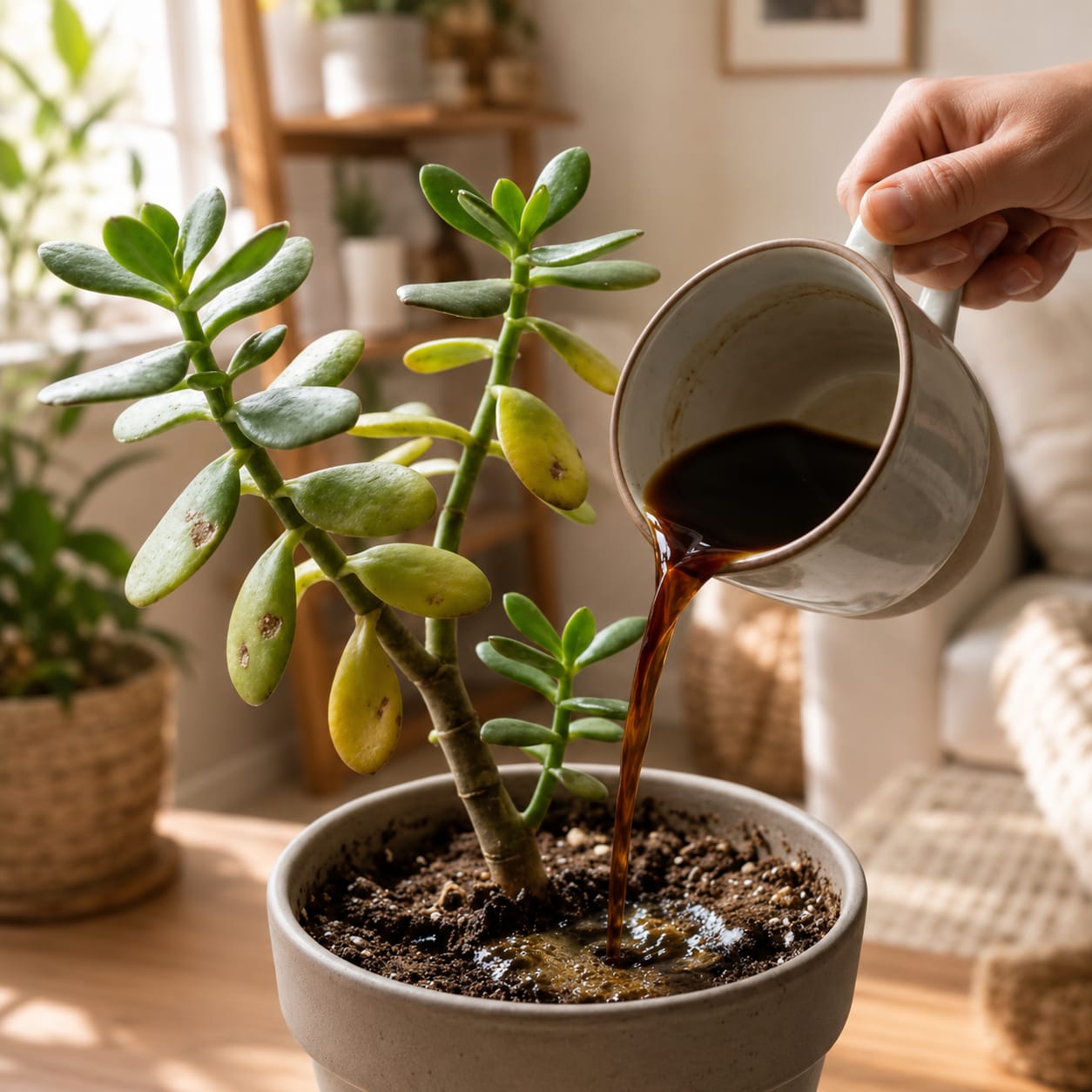
What Is the Dark Liquid Trick?
The dark liquid trick is a simple plant-care method where a small amount of diluted natural liquid is poured around the soil. For jade plants, this should be treated as a light tonic or weak fertilizer, not a miracle solution.
The liquid might be:
- Very weak worm casting tea
- Very weak compost tea
- Diluted organic succulent fertilizer
- Diluted balanced houseplant fertilizer
- Extremely weak plain black coffee water, used rarely
The important word is diluted. Jade plants are not heavy feeders. Strong liquids can stress the roots and create problems in the soil.
Why Jade Plants Need Gentle Feeding
Jade plants store water in their thick leaves and stems. This makes them drought-tolerant, but it also means they do not like constant moisture. Their roots need oxygen and dry periods. If the soil stays wet, the roots may rot.
Because jade plants grow slowly, they do not need frequent fertilizer. Too much feeding can cause weak, stretched, soft growth instead of sturdy compact stems. A jade plant should grow slowly and strongly.
Gentle feeding during active growth can help, but overfeeding can harm the plant faster than underfeeding.
Best Dark Liquid Options for Jade Plants
The safest dark liquids are mild plant-safe options. A weak worm casting tea or diluted succulent fertilizer is usually better than random kitchen liquids.
Good options include:
- Worm casting tea: Mild and gentle when diluted well.
- Compost tea: Useful only when weak, fresh, and strained.
- Organic succulent fertilizer: More predictable than homemade liquid.
- Balanced liquid fertilizer: Safe when diluted to half or quarter strength.
- Plain black coffee water: Only extremely diluted and rarely used.
If you are unsure what the liquid contains, do not use it. Jade plant roots are sensitive to bad mixtures.
What Not to Pour on Jade Plants
Many dark liquids can harm a jade plant. Natural does not always mean safe. A small pot can trap residue, smell, and moisture around the roots.
Avoid these:
- Sweet tea
- Coffee with sugar or milk
- Cola or soda
- Cooking water with salt
- Vinegar mixtures
- Oil-based mixtures
- Thick fermented liquids
- Molasses water
- Strong compost tea
- Random dark kitchen liquids
Jade plants need clean, dry-friendly conditions. Sticky or sour liquids can attract pests and damage the soil.
Safe Weak Worm Casting Tea Recipe
Worm casting tea is one of the gentler options for jade plants. It can provide mild nutrients without being too harsh when diluted properly.
Use this simple recipe:
- Add 1 teaspoon of worm castings to 2 cups of clean water.
- Stir gently.
- Let it sit for 30 minutes to 2 hours.
- Strain well so no thick particles remain.
- Dilute with 2 more cups of clean water.
- Use only a small amount on dry soil.
The final liquid should be watery, not thick. It should smell earthy, not rotten.
Can You Use Coffee Water?
Some people use watered-down black coffee on houseplants, but it must be used carefully. Coffee can affect soil acidity and may create buildup if used often. Jade plants do not need acidic soil tricks to grow well.
If using coffee water, make it extremely weak. Mix 1 tablespoon of plain black coffee into at least 2 cups of water. Use it rarely, no more than once every 2 to 3 months. Never use coffee with sugar, milk, cream, flavoring, or sweetener.
For most jade plants, a diluted succulent fertilizer is safer and more reliable than coffee water.
How Often to Use a Dark Liquid Tonic
Use a dark liquid tonic only once every 6 to 8 weeks during spring and summer. This is when jade plants are more actively growing.
Do not use it every week. Do not use it every time you water. Do not use it in winter if the plant is resting or growing slowly.
Most of the time, plain water is enough. The tonic is optional.
When Not to Use Any Tonic
Do not use a dark liquid tonic if the jade plant is already stressed. Extra feeding can make problems worse.
Avoid it if you notice:
- Yellow leaves
- Soft mushy stems
- Leaves falling easily
- Wet soil for many days
- Black or brown roots
- Bad smell from the pot
- Fungus gnats
- White crust on the soil
- Recent repotting stress
Fix the care issue first. A tonic cannot save roots that are sitting in soggy soil.
Apply It Only When the Soil Is Dry
The most important rule is simple: apply any liquid only when the jade plant actually needs watering. The soil should be dry before you use a tonic.
If the soil is already damp, wait. Adding liquid to wet soil increases the risk of root rot.
When applying, pour a small amount around the soil, away from the main stem. Do not soak the pot heavily.
Why Drainage Holes Are Essential
Jade plants should grow in pots with drainage holes. Without drainage, water collects at the bottom and suffocates the roots. This is one of the most common reasons jade plants fail indoors.
If you use a decorative pot without holes, keep the jade plant in a nursery pot with holes and place it inside the decorative container. After watering, empty any standing water.
Good drainage matters more than any homemade plant trick.
Best Soil for Jade Plants
Jade plants need fast-draining soil. Regular potting soil can hold too much moisture if used alone. A cactus or succulent mix is usually better.
A good jade plant mix can include:
- 2 parts cactus or succulent soil
- 1 part perlite
- 1 part pumice or coarse sand
- A small amount of orchid bark, optional
The mix should feel loose and gritty. It should not stay muddy after watering.
Why Heavy Soil Is Dangerous
Heavy soil stays wet too long. Jade plant roots need air around them. When the soil is compacted and wet, the roots cannot breathe. This can lead to rot, yellow leaves, soft stems, and leaf drop.
If you pour a dark liquid into heavy soil, the risk becomes even higher because the liquid may sit around the roots for too long.
Before using any tonic, make sure the soil drains quickly.
Watering Jade Plants Correctly
Jade plants should dry out between waterings. Water deeply, then let the soil dry before watering again. The exact timing depends on the pot size, light, temperature, and soil mix.
In bright light, a jade plant may need water more often. In low light or winter, it may need water much less often.
Always check the soil first. Do not water only by schedule.
Signs Your Jade Plant Needs Water
A thirsty jade plant may show slightly wrinkled or thinner leaves. The pot may feel light, and the soil will be dry.
Signs include:
- Dry soil
- Slightly soft leaves
- Wrinkled leaf surface
- Lightweight pot
- Leaves losing plumpness
Water thoroughly when these signs appear, then allow the soil to dry again.
Signs of Overwatering
Overwatering is more dangerous than underwatering for jade plants. A jade plant can recover from dryness, but root rot can kill it quickly.
Signs of overwatering include:
- Yellow leaves
- Leaves dropping suddenly
- Soft mushy leaves
- Blackened stem base
- Wet soil for too long
- Sour smell from the pot
- Brown mushy roots
If these signs appear, stop watering and inspect the roots. Repot into dry succulent soil if needed.
Why Leaves Turn Yellow
Yellow leaves on a jade plant can happen for several reasons. The most common cause is overwatering. Other causes include low light, cold stress, poor soil, root rot, pests, or too much fertilizer.
Do not treat yellow leaves by adding more tonic. First check the soil moisture and roots.
If the soil is wet, the plant needs drying and better drainage, not more liquid.
Best Light for Jade Plants
Jade plants need bright light to stay compact and strong. A sunny windowsill is often ideal. They can handle several hours of gentle direct sun, especially morning sun.
Low light causes weak stretched growth. The stems may lean, leaves may become pale, and the plant may lose its sturdy shape.
If moving a jade plant into stronger sun, do it gradually so the leaves do not burn.
How Light Affects Stem Strength
Strong light helps jade plants build thick stems and compact leaves. Without enough light, the plant stretches toward the window. This creates long weak stems that may bend or break.
A dark liquid tonic will not fix weak growth caused by low light. Light is the real growth driver.
Place the jade plant in the brightest safe spot you have.
Can Jade Plants Grow Indoors Long-Term?
Yes, jade plants can grow indoors for many years. The key is enough light and careful watering. They are long-lived plants when their roots stay healthy.
Indoors, a jade plant may grow slower than outdoors. That is normal. Slow steady growth is healthy for this plant.
Do not push it with too much fertilizer or frequent homemade tonics.
Feeding Jade Plants Properly
Use a diluted cactus or succulent fertilizer during spring and summer. Half strength or quarter strength is usually enough. Feed once every 6 to 8 weeks during active growth.
Do not fertilize in winter unless the plant is actively growing under strong light.
Too much fertilizer can cause soft growth and root stress.
Can Dark Liquid Replace Fertilizer?
A homemade dark liquid does not always provide balanced nutrition. Compost tea and worm casting tea may contain mild nutrients, but the amount is not exact. A cactus fertilizer gives more predictable results.
If your jade plant is healthy, it may not need much feeding at all. Bright light and proper watering are more important.
Use dark liquid only as a light optional support.
Pruning Jade Plants
Pruning helps jade plants become fuller and more tree-like. If a stem grows too long, cut it just above a leaf node. New branches may form near the cut.
Use clean scissors or pruners. Let cut areas dry. Do not splash tonics or water on fresh cuts.
Pruning is best during active growth, usually spring or early summer.
How to Encourage a Thicker Trunk
A thicker jade trunk develops with time, light, and correct pruning. Give the plant bright light and avoid overwatering. Let the soil dry between waterings so the roots stay healthy.
Rotate the pot every few weeks so the plant grows evenly. Prune leggy stems to encourage branching.
Do not expect fast trunk thickening from liquid tonics. Jade plants grow slowly.
Propagating Jade Plants
Jade plants are easy to propagate from stem cuttings or leaves. Cut a healthy stem, let the cut end dry for a few days, then place it in dry succulent soil.
Do not water immediately. Wait a few days, then water lightly. Too much moisture before roots form can cause rot.
New plants grow slowly, but they can become beautiful with patience.
Cleaning Jade Leaves
Jade leaves can collect dust. Dust blocks light and makes the plant look dull. Clean leaves help the plant absorb light better.
Use a soft dry or slightly damp cloth. Wipe gently. Do not leave water sitting on the leaves in a dark room.
A clean jade plant looks glossy, fresh, and decorative.
Common Pests
Jade plants may attract mealybugs, scale, spider mites, and fungus gnats. Fungus gnats usually appear when soil stays too wet or organic liquids are used too often.
Check the stems and leaf joints regularly. Mealybugs often hide where leaves meet the stem.
If pests appear, stop all tonics and treat the plant first.
How to Avoid Fungus Gnats
Fungus gnats love damp organic soil. To prevent them, keep the jade plant on the dry side and avoid frequent homemade liquids.
Tips:
- Let soil dry between waterings.
- Use fast-draining soil.
- Avoid thick organic tonics.
- Remove dead leaves from the pot.
- Use sticky traps if needed.
- Do not leave water in the saucer.
Dry, airy soil is the best defense.
Decor Ideas for Jade Plants
Jade plants are excellent decor plants because they look like small indoor trees. Their thick stems and round leaves work well with many design styles.
- Place a jade plant in a terracotta pot for a classic look.
- Use a white ceramic pot for modern decor.
- Place it on a wooden windowsill for warmth.
- Use a shallow stone pot for bonsai style.
- Group it with snake plants and aloe for a succulent display.
- Place it on an office desk for clean greenery.
- Use it as a bright kitchen windowsill plant.
Jade plants look especially beautiful when paired with natural materials like clay, stone, wood, and linen.
Best Places to Display Jade Plants
Choose a bright spot. A south, east, or west window can work well depending on sun intensity. Morning sun is usually gentle. Afternoon sun may be stronger, so introduce it gradually.
Avoid dark corners. A jade plant in low light may survive but will not stay compact and strong.
Also avoid cold drafts and heaters. Stable warmth supports healthy growth.
Using Jade Plants as Indoor Bonsai
Jade plants can be styled like small bonsai trees because they naturally develop woody stems. Prune carefully, rotate the pot, and keep the plant in bright light.
A shallow pot can look beautiful, but it must drain well. Since shallow pots dry faster, check soil moisture regularly.
Do not overfeed a bonsai-style jade. Slow growth creates the best shape.
Common Mistakes With Dark Liquid Tonics
Avoid these mistakes:
- Using strong coffee or tea
- Using sweetened liquids
- Pouring tonic into wet soil
- Using dark liquid every week
- Using thick compost tea
- Adding liquid to a plant with root rot
- Using a pot without drainage
- Thinking tonic replaces light
- Ignoring yellow leaves
The safest dark liquid is weak, clean, and rare.
A Simple Jade Plant Care Routine
Follow this easy routine:
- Place the jade plant in bright light.
- Use fast-draining succulent soil.
- Water only when the soil is dry.
- Use a pot with drainage holes.
- Feed lightly during spring and summer.
- Use a weak dark liquid tonic only once every 6 to 8 weeks if desired.
- Do not use tonics in winter unless the plant is actively growing.
- Clean leaves gently when dusty.
- Prune leggy stems during active growth.
This routine supports strong, slow, healthy growth.
Final Thoughts
The gentle dark liquid trick for jade plants can be useful only when the mixture is very weak, clean, and used rarely. A mild worm casting tea, weak compost tea, or diluted succulent fertilizer can offer light support during active growth. Strong coffee, sweet liquids, salty water, or thick homemade mixtures can harm the roots and attract pests.
The real secret to a healthy jade plant is not a dark liquid. It is bright light, dry-friendly watering, fast-draining soil, a pot with drainage, and patience. Jade plants grow slowly, and that slow growth is part of their beauty.
Use any tonic as a small optional support, not as the main care method. With steady care, your jade plant can develop plump leaves, strong stems, and a beautiful tree-like shape that brings natural charm to your indoor space for many years.