How to Tell If the Plant Is Underwatered
An underwatered Christmas cactus often has wrinkled, thin, soft segments. The soil is dry, the pot feels light, and the plant may perk up slightly after proper watering.
Signs of underwatering include:
- Dry soil
- Shriveled segments
- Limp stems
- Pot feels very light
- Flower buds dropping
- Soil pulling away from pot edges
If the soil is extremely dry and compacted, water may run down the sides without soaking the root ball. In that case, bottom watering for a short time may help rehydrate the soil.
How to Rehydrate a Dry Christmas Cactus
If the plant is dry but not rotten, rehydrate slowly.
Rehydration Steps
- Move the plant to bright indirect light.
- Water the soil gently from the top.
- Let excess water drain fully.
- If water runs straight through, place the pot in a shallow bowl of water for 10 to 15 minutes.
- Remove the pot and let it drain completely.
- Do not leave it soaking for hours.
- Mist lightly around the plant the next morning if the air is dry.
The stems may take a few days to firm up. Do not keep watering repeatedly in panic.
How to Tell If the Plant Is Overwatered
An overwatered Christmas cactus may also droop, but the soil will be wet and heavy. The roots may be brown, mushy, or smelly. The stems may become soft, dark, or translucent.
Signs of overwatering include:
- Wet soil that does not dry
- Sour smell from the pot
- Mushy roots
- Soft collapsing stems
- Yellowing segments
- Fungus gnats
- Blackened base
If the plant is overwatered, misting and watering will not fix it. The roots need air and fresh soil.
How to Rescue an Overwatered Christmas Cactus
If the soil is soggy, act quickly.
Rescue Steps
- Remove the plant from the pot.
- Shake away wet soil.
- Inspect the roots.
- Trim mushy or black roots with clean scissors.
- Let the root ball air out briefly.
- Repot into fresh airy cactus mix.
- Use a pot with drainage holes.
- Do not water heavily immediately.
- Keep in bright indirect light.
After repotting, wait several days before watering unless the plant is extremely dry. Damaged roots need oxygen more than extra moisture.
Best Soil for Christmas Cactus Recovery
Christmas cactus plants need soil that is moisture-retentive but airy. They are not desert cacti, so they do not want pure sand. But they also do not want dense wet potting soil.
A good recovery mix can include:
- 2 parts indoor potting mix
- 1 part orchid bark
- 1 part perlite or pumice
- A small amount of coco coir or leaf mold
This kind of mix holds light moisture while still allowing oxygen around the roots.
Best Pot for a Christmas Cactus
Choose a pot with drainage holes. This is essential. A decorative pot without drainage can cause root rot even if you water carefully.
Christmas cactus plants often bloom better when slightly root-bound, so do not move them into a much larger pot. Choose a pot only one size larger if repotting is needed.
If the plant is in a decorative pot, make sure excess water can drain away completely.
Best Light for a Wilting Christmas Cactus
A Christmas cactus needs bright indirect light. It can handle gentle morning sun, but harsh midday or afternoon sun can stress the stems and cause reddish discoloration.
For recovery, place it:
- Near a bright window with filtered light
- A few feet away from direct sun
- Away from heating vents
- Away from cold drafts
- In a stable room temperature
Do not place a stressed plant in hot direct sun after misting. Wet stems in strong sun can spot or burn.
Temperature Matters More Than People Think
Holiday cactus plants are sensitive to sudden temperature changes. Bud drop and wilting can happen when the plant is moved from a cool room to a warm room, placed near a heater, or exposed to cold windows.
Keep the plant in a stable indoor environment. Avoid:
- Cold drafts
- Hot radiators
- Heating vents
- Air conditioning blasts
- Sudden room changes during blooming
Stable conditions help preserve blooms and support recovery.
Can Misting Help Bud Drop?
Light misting can help if bud drop is caused by dry air, but it will not fix all causes. Buds can drop from underwatering, overwatering, low light, sudden movement, temperature swings, or root stress.
To reduce bud drop:
- Keep care consistent
- Avoid moving the plant during bloom
- Water when the top soil begins to dry
- Maintain moderate humidity
- Protect from drafts
- Avoid strong fertilizer while blooming
Gentle misting is useful only when the air is dry and the plant dries quickly afterward.
Should You Fertilize a Wilting Christmas Cactus?
No, not immediately. A wilting plant is stressed, and fertilizer can burn weak roots. First, correct water, soil, light, and humidity. Once the plant begins producing healthy new growth, you can feed lightly.
Use a diluted balanced houseplant fertilizer or cactus fertilizer during active growth. Do not fertilize heavily during bloom stress or root rot recovery.
When to Feed a Christmas Cactus
Feed lightly after the blooming period, especially in spring and summer when new growth begins. Use half-strength fertilizer once a month during active growth.
Stop or reduce feeding in late fall when the plant is preparing to bloom. During blooming, avoid strong feeding. The plant needs stable moisture and light more than fertilizer.
Can You Add Anything to the Mist Bottle?
For this rescue trick, plain water is best. Do not add fertilizer, oil, milk, sugar, vinegar, lemon juice, or soap to a mist bottle unless treating a specific pest problem with a known safe recipe.
Christmas cactus stems can be sensitive. Spraying random homemade mixtures can leave residue, clog pores, damage flowers, and cause spotting.
Use clean water only for humidity misting.
Can You Mist With Rice Water or Tea?
No. Do not mist Christmas cactus leaves or flowers with rice water, tea, coffee, milk, or fertilizer water. These liquids can leave residue on the stems and attract pests or mold.
If using a mild homemade plant tonic, apply it to the soil only and dilute it heavily. But for a wilting blooming plant, plain water and correct care are safer.
How to Clean a Large Christmas Cactus
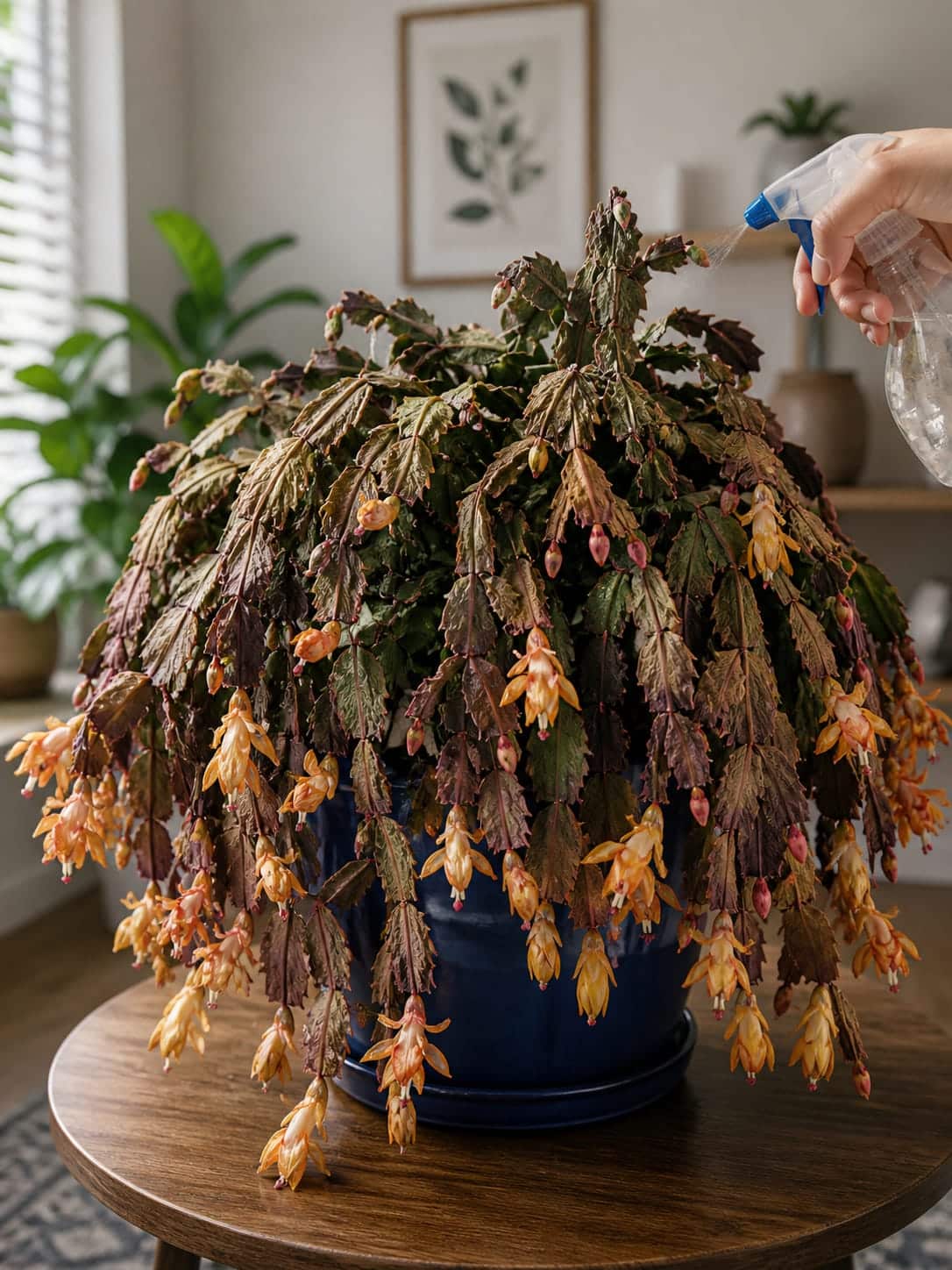
A large plant like the one in the image can collect dust and spent flowers. Cleaning helps airflow and reduces disease.
Cleaning Steps
- Remove spent flowers by hand.
- Pick fallen blooms from the soil surface.
- Trim dead or rotting stem segments.
- Wipe dusty segments with a damp cloth if needed.
- Avoid rough handling because segments break easily.
- Let the plant dry in bright indirect light.
Do not prune heavily while the plant is in full stress unless stems are dead or rotting.
How to Prune After Blooming
After the flowers fade and the plant stabilizes, pruning can help it grow fuller. Pinch or cut between segments. Each removed piece can often be propagated.
Pruning encourages branching and helps shape a large, heavy plant. But wait until recovery begins before doing major pruning.
How to Propagate Healthy Segments
If part of the plant is still healthy, you can take cuttings as a backup.
Propagation Steps
- Choose a healthy stem with 2 to 4 segments.
- Twist it off gently at a joint.
- Let the cutting dry for 24 hours.
- Plant in lightly moist airy mix.
- Keep in bright indirect light.
- Do not overwater.
Propagation is useful if the mother plant has root problems. Healthy cuttings can preserve the plant even if the original pot declines.
Signs the Mist Trick Is Helping
A Christmas cactus does not recover instantly, but you may see gradual improvement.
Good signs include:
- Stems becoming slightly firmer
- Less shriveling
- No new bud drop
- Flowers lasting longer
- New green growth after blooming
- Soil drying normally
- No sour smell from the pot
- No mold or fungal spots
Old damaged stems may remain discolored. Focus on new healthy growth.
Signs Misting Is Making Things Worse
Stop misting if you notice:
- Spots on flowers
- Mold on stems
- Blackened segments
- Rot near joints
- Water sitting between leaves for hours
- Fungus gnats increasing
- Soft mushy stems
- Cold damp smell around the plant
These signs mean the plant needs more airflow and less surface moisture.
Christmas Cactus Care Table
| Care Factor | Best Setup | Why It Matters |
|---|---|---|
| Light | Bright indirect light | Supports blooms without scorching stems |
| Watering | When top soil begins to dry | Prevents both shriveling and root rot |
| Humidity | Moderate humidity | Reduces bud drop and wrinkled stems |
| Soil | Airy, well-draining mix | Protects roots while holding light moisture |
| Pot | Drainage holes required | Stops water from sitting at the roots |
| Misting | Light morning mist only | Refreshes dry foliage without soaking |
| Feeding | Light feeding after blooming | Supports future growth and flowers |
Simple Mist Rescue Routine
- Move the plant to bright indirect light.
- Check the soil moisture deeply.
- If soil is dry, water properly and drain fully.
- If soil is wet, check roots before watering again.
- Remove spent flowers and fallen petals.
- Fill a clean spray bottle with filtered water.
- Mist lightly in the morning from a distance.
- Avoid soaking flowers and stem joints.
- Make sure the plant dries within one to two hours.
- Repeat only two to three times per week while air is dry.
Common Mistakes to Avoid
- Misting at night
- Soaking the flowers
- Misting a plant with root rot
- Watering every time the plant droops without checking soil
- Keeping the cactus in direct hot sun
- Leaving it near a heater or cold window
- Using a pot without drainage
- Adding fertilizer to the mist bottle
- Using milk, tea, coffee, or sugar water as spray
- Ignoring old compacted soil
What to Do Immediately for the Plant in the Image
For a holiday cactus that looks like the one in the image, the safest immediate plan is:
- Move it away from harsh direct sun and vents.
- Check the soil moisture deeply.
- Remove dead flowers and any rotting segments.
- If dry, water thoroughly and drain completely.
- If wet, inspect roots and repot if needed.
- Mist lightly in the morning only if the air is dry.
- Keep the plant in stable bright indirect light.
- Do not fertilize until new growth appears.
This balanced approach is better than relying on mist alone.
Short Caption for This Trick
“For a wilting Christmas cactus, use a gentle filtered-water mist only in the morning and only when the plant has good airflow. Mist lightly around the stems, avoid soaking flowers, and always check the soil first. If the soil is dry, water properly. If the soil is wet, check the roots. Misting helps dry-air stress, but it cannot fix root rot.”
Frequently Asked Questions
Should I mist a Christmas cactus?
Yes, light misting can help in dry indoor air, but it should be done in the morning and the plant must dry quickly. Do not keep the stems wet for hours.
Can misting revive a wilting Christmas cactus?
Misting can help if the problem is dry air or heat stress. It will not fix root rot, soggy soil, or severe dehydration by itself.
Why is my Christmas cactus drooping?
Drooping can be caused by underwatering, overwatering, root rot, low humidity, direct sun, heat stress, or sudden temperature changes.
How often should I mist?
Mist lightly two to three times per week only if the air is dry. Reduce misting once the plant improves.
Should I mist the flowers?
No. Avoid spraying flowers directly because wet blooms can spot, collapse, or age faster.
Should I water when the stems look wrinkled?
Check the soil first. If the soil is dry, water. If the soil is wet, check for root rot instead.
What is the best soil for Christmas cactus?
An airy mix with potting soil, orchid bark, and perlite works well. It should hold light moisture but drain quickly.
Why are the stems turning purple or brown?
This can happen from too much light, dehydration, temperature stress, or root problems.
Should I fertilize a wilting Christmas cactus?
No. Wait until the plant stabilizes and produces healthy new growth before feeding lightly.
Can Christmas cactus recover after wilting?
Yes, if the roots are still healthy and care is corrected. Recovery may take several weeks, and old damaged stems may not fully improve.
Final Thoughts
The gentle mist rescue trick can be helpful for a wilting Christmas cactus, but it must be used wisely. These plants enjoy more humidity than desert cacti, yet they do not want to stay wet or sit in soggy soil. A fine morning mist can refresh limp stems and reduce dry-air stress, especially during blooming season, but it is only one part of the recovery process.
The most important step is always diagnosis. Check the soil. If the plant is dry, water properly and let it drain. If the soil is wet, inspect the roots. Remove spent flowers, keep the plant in bright indirect light, protect it from drafts and heat, and avoid strong fertilizer while it is stressed.
Used correctly, light misting can support a tired Christmas cactus and help it hold onto its remaining buds. Combined with proper watering, airy soil, drainage, and stable indoor conditions, this simple routine can help your holiday cactus recover and prepare for a healthier blooming cycle next season.