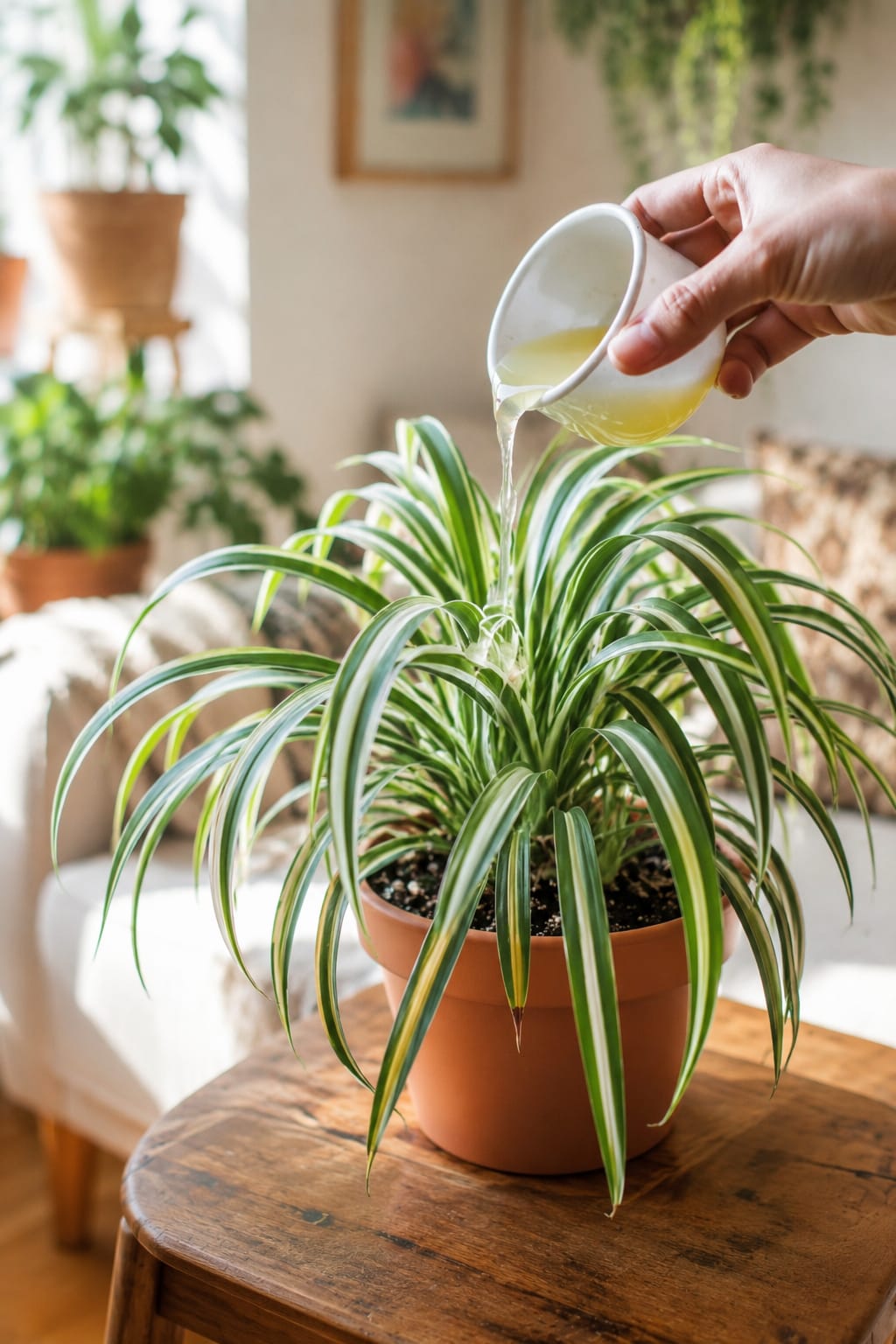
Propagating Spider Plant Babies
Spider plant babies are easy to propagate. Once a baby has small roots or visible root bumps, you can remove it and plant it in a small pot with light soil.
You can also place the baby in water until roots grow longer, then move it to soil. Keep the young plant in bright indirect light and water lightly until established.
This is one of the easiest ways to multiply spider plants.
Repotting Spider Plants
Spider plants grow thick roots and can become crowded in their pots. Repot when roots fill the container, soil dries too quickly, or the plant pushes itself upward.
Choose a pot only one size larger. Too much extra soil can hold too much water.
Spring or summer is the best time to repot. After repotting, avoid strong fertilizer or natural tonics for a few weeks while the plant settles.
Dividing a Large Spider Plant
A large spider plant can be divided into smaller plants. Remove it from the pot, gently separate clumps with roots attached, and plant each section in fresh soil.
Water lightly after division and keep the new plants in bright indirect light. Do not overwater while they recover.
Division is helpful when a plant becomes crowded or when you want more full-looking pots.
Best Indoor Decor Ideas
Spider plants are excellent decor plants because their leaves arch beautifully. They soften shelves, corners, and windowsills. Their striped leaves brighten dark furniture and look fresh in almost any room.
Good display ideas include:
- Hanging baskets near bright windows
- Terracotta pots on wooden stands
- White ceramic pots on shelves
- Macrame hangers in bedrooms
- Kitchen window herb-and-plant corners
- Bathroom shelves with natural light
- Grouped plant displays with pothos and peace lilies
The plant’s flowing shape adds movement and softness to indoor spaces.
Best Pot Styles for Spider Plants
Spider plants look beautiful in simple pots. Terracotta gives a warm natural feel. White ceramic makes the green-and-white leaves look crisp. Black planters create modern contrast. Woven baskets add a cozy bohemian style.
Hanging pots are especially attractive because the leaves and baby plantlets can cascade naturally.
Choose a pot with drainage, even if it sits inside a decorative cover.
Where to Place Spider Plants Indoors
Good locations include bright living rooms, bedroom windows, kitchens, home offices, bathrooms with windows, and covered balconies.
Avoid very dark corners, cold drafts, and hot direct sun. Spider plants like stable conditions.
Rotate the pot every few weeks so growth stays even.
Common Pests
Spider plants are usually pest-resistant, but they can sometimes get spider mites, aphids, mealybugs, or fungus gnats.
Fungus gnats often appear when the soil stays too wet or when organic liquids are used too often. If gnats appear, reduce watering, let the top soil dry more, and stop using natural tonics until the issue clears.
Check leaves regularly and treat pests early.
Common Mistakes With Natural Liquids
Avoid these mistakes:
- Using undiluted rice water
- Using fermented banana peel water indoors
- Pouring liquid onto wet soil
- Using natural tonic every week
- Adding sugar, milk, or oil
- Leaving solids in the liquid
- Ignoring mold or gnats
- Using it as a replacement for good light
Natural liquid care should be simple and clean. The plant should never smell bad after watering.
A Simple Spider Plant Natural Liquid Routine
Here is a safe routine to follow:
- Keep the spider plant in bright indirect light.
- Water when the top inch of soil dries.
- Use a pot with drainage holes.
- Use diluted rice water or banana peel water once every 4 to 6 weeks during active growth.
- Use plain water the rest of the time.
- Clean leaves regularly.
- Stop natural tonics if mold, gnats, or sour smell appear.
- Feed lightly with diluted houseplant fertilizer when needed.
This routine gives the plant gentle support without overwhelming the soil.
Final Thoughts
The gentle natural liquid trick for spider plants can be a helpful part of a balanced care routine when used correctly. A mild diluted rice water or banana peel water can offer light support during active growth, but it should never be strong, sticky, fermented, or used too often.
The real foundation of a healthy spider plant is bright indirect light, proper watering, airy soil, drainage, clean leaves, and occasional light feeding. When these basics are right, the plant can grow fuller, produce brighter striped leaves, and send out charming baby plantlets.
With simple care and a gentle touch, your spider plant can become a beautiful long-lasting houseplant that brings freshness, movement, and natural style into your home.