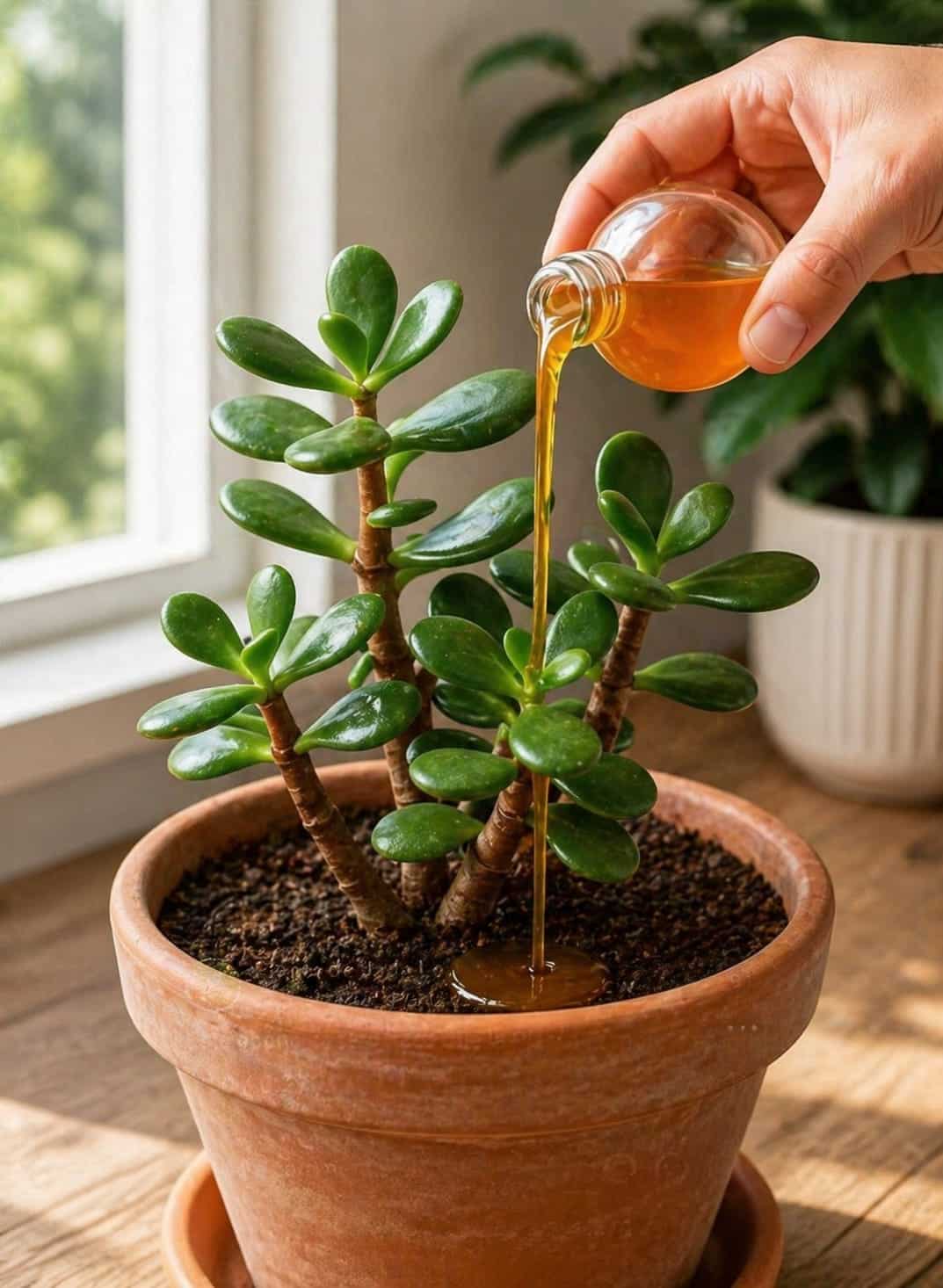
How to Water Jade Plants Correctly
Watering is where most jade plant problems begin. Jade plants should dry out between waterings. Do not water on a strict schedule without checking the soil.
When the soil is dry, water thoroughly until liquid drains from the bottom. Then empty the saucer. After that, wait until the soil dries again before watering. In winter, this may take much longer than in summer.
Do not give small daily sips. This can keep the top layer damp while the deeper roots remain unevenly watered. Deep, occasional watering is better.
The golden liquid should be treated like a watering, not an extra drink. Only use it when the plant is ready for water.
Can the Golden Liquid Help Wrinkled Jade Leaves?
Wrinkled jade leaves can mean the plant is thirsty, but they can also mean the roots are damaged. This is important. If the soil is dry and the leaves are wrinkled, the plant may need water. A light watering may help the leaves firm up over time.
If the soil is wet and the leaves are wrinkled, the roots may be rotting and unable to absorb water. In that case, adding golden liquid can make things worse. Remove the plant from the pot and inspect the roots.
Healthy roots are firm and pale. Rotten roots are dark, mushy, or smelly. Trim rotten roots and repot into fresh dry succulent mix.
Can the Golden Liquid Make Jade Plants Grow Faster?
The golden liquid may support growth slightly if the plant is already healthy, but light is much more important. Jade plants grow fastest when they receive bright light, warm temperatures, proper watering, and a suitable potting mix.
A homemade tonic cannot force fast growth from a jade plant sitting in a dark room. It also cannot overcome winter dormancy. Jade plants often slow down during darker months, and that is normal.
For faster growth, improve light first. Then consider light feeding during the growing season.
Can It Make Jade Leaves Shinier?
The golden liquid should not be poured or wiped onto the leaves. Sticky or organic liquids on leaves can attract dust and pests. If jade leaves look dull, clean them with a soft damp cloth.
Healthy jade leaves naturally become glossy when the plant is well hydrated, receives enough light, and has clean foliage. Dust can make even a healthy jade look tired.
For shine, use plain water on a cloth, not honey, banana tea, or oil.
Should You Fertilize Jade Plants Too?
Jade plants can benefit from light fertilizing during spring and summer. Use a cactus or succulent fertilizer diluted to half strength or weaker. Once every one to two months during active growth is usually enough.
If you use golden liquid, do not use fertilizer on the same day. Too many nutrients or organic additives can stress the roots. Alternate treatments or choose one method.
During fall and winter, reduce or stop feeding. Let the plant rest if growth slows.
Common Mistakes with the Golden Liquid Trick
Using Thick Honey
Never pour straight honey into jade plant soil. It can attract pests, mold, and create sticky soil problems.
Using It Too Often
Once every six to eight weeks during active growth is enough. More can cause buildup.
Using It on Wet Soil
Jade plants need dry soil before watering. Do not add any liquid to damp soil.
Using a Pot Without Drainage
Any liquid tonic must drain out. No-drainage pots are risky for jade plants.
Expecting Overnight Growth
Jade plants grow slowly. Look for gradual improvement, not instant change.
Ignoring Light
Low light causes weak growth. The golden liquid cannot replace sunlight.
Signs the Trick Is Helping
If the golden liquid is helping as part of a good routine, the jade plant should remain firm and healthy. New leaves may appear at the tips. Existing leaves may look plumper and glossier. Stems may continue thickening over time.
The soil should dry normally after watering. There should be no sour smell, mold, sticky surface, or gnats. The plant should not drop leaves after treatment.
Positive results are usually slow and subtle. Jade plants reward patience.
Signs You Should Stop Using It
Stop using the golden liquid if you notice fungus gnats, ants, mold, sour smells, sticky soil, yellowing leaves, soft stems, or sudden leaf drop. These are signs that the mixture may be too strong or the soil is staying too wet.
Return to plain water only. Let the soil dry. If the pot smells bad or the plant declines, repot into fresh gritty mix.
Do not keep adding homemade remedies to a plant that is reacting badly. Simple care is safer.
How to Fix a Jade Plant After Too Much Golden Liquid
If you accidentally used too much honey-like liquid, act quickly. If the pot has drainage holes, flush the soil with plain water and let it drain completely. Empty the saucer. Place the plant in bright light and allow the soil to dry.
If the soil remains sticky or smells bad, repot the plant. Remove as much old soil as possible, inspect the roots, trim any rotten sections, and repot into fresh dry succulent mix.
Do not water again immediately after repotting unless the plant is severely dehydrated. Let damaged roots recover.
Can You Use This Trick on Other Succulents?
Use caution. Many succulents are even more sensitive to excess moisture than jade plants. Thick organic liquids can cause problems quickly. If you try a golden tonic on other succulents, make it very weak and use it rarely.
Succulents such as echeveria, haworthia, and aloe generally prefer simple care: bright light, gritty soil, and careful watering. A proper succulent fertilizer is often safer than homemade sugary liquids.
Never assume all plants want the same treatment. A peace lily and a jade plant have very different needs.
How to Make a Jade Plant Bushier
If your jade plant is tall and sparse, pruning can help make it bushier. Cut back leggy stems above a leaf node using clean scissors or pruners. New growth may branch from below the cut.
Pruning works best during spring or early summer when the plant is actively growing. Give the plant bright light after pruning so new growth comes in compact and strong.
The golden liquid will not create a bushy shape by itself. Shape comes from pruning, light, and time.
How to Propagate Jade Plant Cuttings
Jade plants are easy to propagate. You can grow new plants from stem cuttings or even individual leaves. Cut a healthy stem, let the cut end dry for a few days, then place it in dry or lightly moist succulent mix. Roots will form over time.
Do not place fresh cuttings into wet soil or golden liquid. They need to callus first. Too much moisture can cause rot.
Once rooted and growing, the cutting can be treated like a normal jade plant.
Seasonal Care for Jade Plants
Spring
Spring is the best time for growth. Increase light if needed, water when dry, and begin light feeding. This is a good time to use a very mild golden tonic if the plant is healthy.
Summer
Growth may continue strongly. Keep the plant in bright light and water only when dry. Avoid intense outdoor sun unless the plant is acclimated gradually.
Fall
Growth begins to slow as light decreases. Reduce feeding and water less often.
Winter
Water sparingly and avoid homemade tonics unless the plant is under strong light and actively growing. Keep away from cold drafts.
Frequently Asked Questions
What is the golden liquid used on jade plants?
It is usually a diluted banana peel tea, weak worm casting tea, very diluted honey water, or an amber-colored plant-safe fertilizer. For jade plants, it must be very weak and used rarely.
Can I pour honey directly on my jade plant?
No. Straight honey is too sticky and sugary. It can attract pests and cause soil problems. If honey is used at all, it must be extremely diluted.
How often should I use the golden liquid?
Once every six to eight weeks during spring or summer is enough. Do not use it in winter unless the plant is actively growing.
Can this trick make jade plants grow faster?
It may support growth slightly, but bright light, proper soil, and correct watering matter much more.
Can banana peel water help jade plants?
It can be used occasionally if strained and diluted well. Do not leave banana peel pieces in the pot.
Can golden liquid cause pests?
Yes, especially if it is sugary, thick, or used too often. Always dilute and let the soil dry properly.
Should I pour it on the leaves?
No. Apply it to the soil only. Clean leaves with plain water and a soft cloth.
Can it save a rotting jade plant?
No. A rotting jade plant needs root inspection, trimming, drying, and repotting into fresh gritty soil.
Do jade plants need fertilizer?
They need very little. A diluted succulent fertilizer during spring and summer is enough for most jade plants.
Why are my jade leaves falling off?
Common causes include overwatering, underwatering, low light, cold stress, or sudden changes. Check the soil and roots before adding any tonic.
Final Thoughts
The golden liquid jade plant trick is eye-catching, simple, and satisfying, but it must be used wisely. Jade plants are succulents, and they do not want thick, wet, sugary soil. The safest golden liquid is a very diluted banana peel tea, weak worm casting tea, or a plant-safe fertilizer used lightly during active growth.
Straight honey should never be poured into the pot. If honey is used at all, it should be diluted so heavily that the water is only lightly tinted. For most plant owners, banana peel tea or a proper succulent fertilizer is safer and more practical.
The real secret to a strong jade plant is not one golden trick. It is bright light, gritty soil, a pot with drainage, careful watering, and patience. Clean the leaves, rotate the pot, prune when needed, and let the soil dry between waterings. Use homemade tonics only as small extras, not as the main care method.
With the right routine, your jade plant can grow thick stems, glossy leaves, and a beautiful tree-like shape over time. The golden liquid may look like the magic ingredient, but your steady care is what truly turns a simple jade plant into a long-lasting indoor treasure.