Why Blooming Dracaena Is Special
A flowering Dracaena is exciting because many people grow this plant for foliage only. When flower spikes appear, it means the plant has reached a mature stage and is comfortable enough to invest energy into blooming.
Dracaena flowers can be fragrant and attractive, but they can also be sticky or messy as they age. Some owners enjoy the fragrance, while others remove the flower spikes if the scent is too strong indoors.
After the flowers fade, the plant may look a little tired because blooming uses energy. Light feeding after the bloom cycle can help the plant return to leaf growth.
What to Do While Dracaena Is Flowering
When your Dracaena is blooming, avoid making sudden changes. Do not move the plant repeatedly, do not overwater, and do not apply strong fertilizer.
During Flowering
- Keep the plant in bright indirect light
- Water only when the top soil dries
- Keep flowers dry
- Avoid strong fertilizer
- Empty the saucer after watering
- Protect from cold drafts
- Enjoy the fragrance if it is pleasant
If the flower scent becomes too strong, you can cut the flower spike with clean scissors. This will not harm the plant.
What to Do After Flowers Fade
Once the flowers turn brown or dry, remove the flower stalk. This helps the plant redirect energy toward leaves and roots.
After-Bloom Care
- Cut the spent flower stalk near its base.
- Remove fallen flowers from the soil surface.
- Check the soil moisture.
- Give bright indirect light.
- Wait 2 to 3 weeks before feeding.
- Use only a weak fertilizer solution.
Do not fertilize heavily immediately after flowering. A tired plant needs gentle recovery.
Best Light for Dracaena
Dracaena can tolerate medium indoor light, but it grows best in bright indirect light. Variegated varieties need more light than plain green types to maintain strong color.
Good light helps the plant produce energy for:
- New leaves
- Strong stems
- Healthy roots
- Better variegation
- Possible flowering
A bright room near an east-facing window is ideal. A south or west window can also work if direct afternoon sun is filtered with a curtain. Avoid harsh direct sun because it can burn the leaves.
Best Watering Routine for Dracaena
Dracaenas prefer moderate watering. The soil should dry partly between waterings. Constant wet soil is one of the biggest reasons Dracaena plants decline indoors.
Use this simple rule:
Water when the top 1 to 2 inches of soil are dry.
When watering, pour slowly until water drains from the bottom. Then empty the saucer. Do not water again until the soil begins to dry.
Why Water Quality Matters
Dracaena plants are known to be sensitive to certain minerals in tap water. Brown tips often appear when the plant receives water with high mineral content, fluoride, or excess fertilizer salts.
If your Dracaena develops brown tips often, try using:
- Filtered water
- Distilled water
- Rainwater
- Low-mineral water
- Tap water left out overnight
Better water quality can make a big difference in Dracaena leaf care.
Best Soil Mix for Dracaena
Dracaena plants need soil that holds some moisture but drains well. Heavy, compacted soil can suffocate the roots. Very loose soil may dry too quickly. A balanced indoor plant mix works best.
Good Dracaena Soil Blend
- 2 parts indoor potting soil
- 1 part perlite or pumice
- 1 part orchid bark or coco chips
This mix gives the roots moisture, airflow, and drainage. If your plant is in old compacted soil, fresh soil may help more than any tonic.
Why Drainage Holes Are Essential
The pot must have drainage holes. A beautiful pot without drainage can trap water at the bottom and cause root rot. If you use a decorative planter, place the Dracaena in a draining nursery pot inside the decorative container.
After watering, remove extra water from the saucer. Fertilizer water should never sit around the roots.
When Not to Use the Pink Bloom Water Trick
Do not use this trick if the plant is already stressed. Fertilizer supports growth only when roots are healthy. Feeding a sick plant can make problems worse.
Avoid this trick if:
- The soil is wet
- The plant has root rot
- Leaves are yellowing quickly
- The stem base is soft
- The pot has no drainage holes
- The plant was recently repotted
- It is winter and the plant is not growing
- There is white crust on the soil
- Fungus gnats are present
- The plant has severe brown tips
Fix the root cause first. A plant tonic is helpful only when the plant can actually use it.
How to Fix Brown Tips Before Feeding
If your Dracaena already has brown tips, do not rush to fertilize. Brown tips usually mean the plant is reacting to water quality, fertilizer salts, dry air, or inconsistent watering.
Brown Tip Recovery Steps
- Trim brown tips with clean scissors if desired.
- Switch to filtered or distilled water.
- Flush the soil with clean water if the pot drains well.
- Stop fertilizing for 4 to 6 weeks.
- Check that the soil dries between waterings.
- Keep the plant in bright indirect light.
Once new growth looks healthy, you can resume very light feeding.
How to Flush Fertilizer Buildup
If fertilizer salts build up in the soil, you may notice white crust on the surface or brown leaf tips. Flushing helps wash out excess salts.
Flushing Steps
- Move the plant to a sink, tub, or outdoor area.
- Slowly pour clean water through the soil.
- Let water drain from the bottom.
- Repeat gently for several minutes.
- Let the pot drain completely.
- Do not fertilize again for several weeks.
Only flush if the pot has drainage holes. Do not flush a pot without drainage.
Can Pink Liquid Stain the Pot?
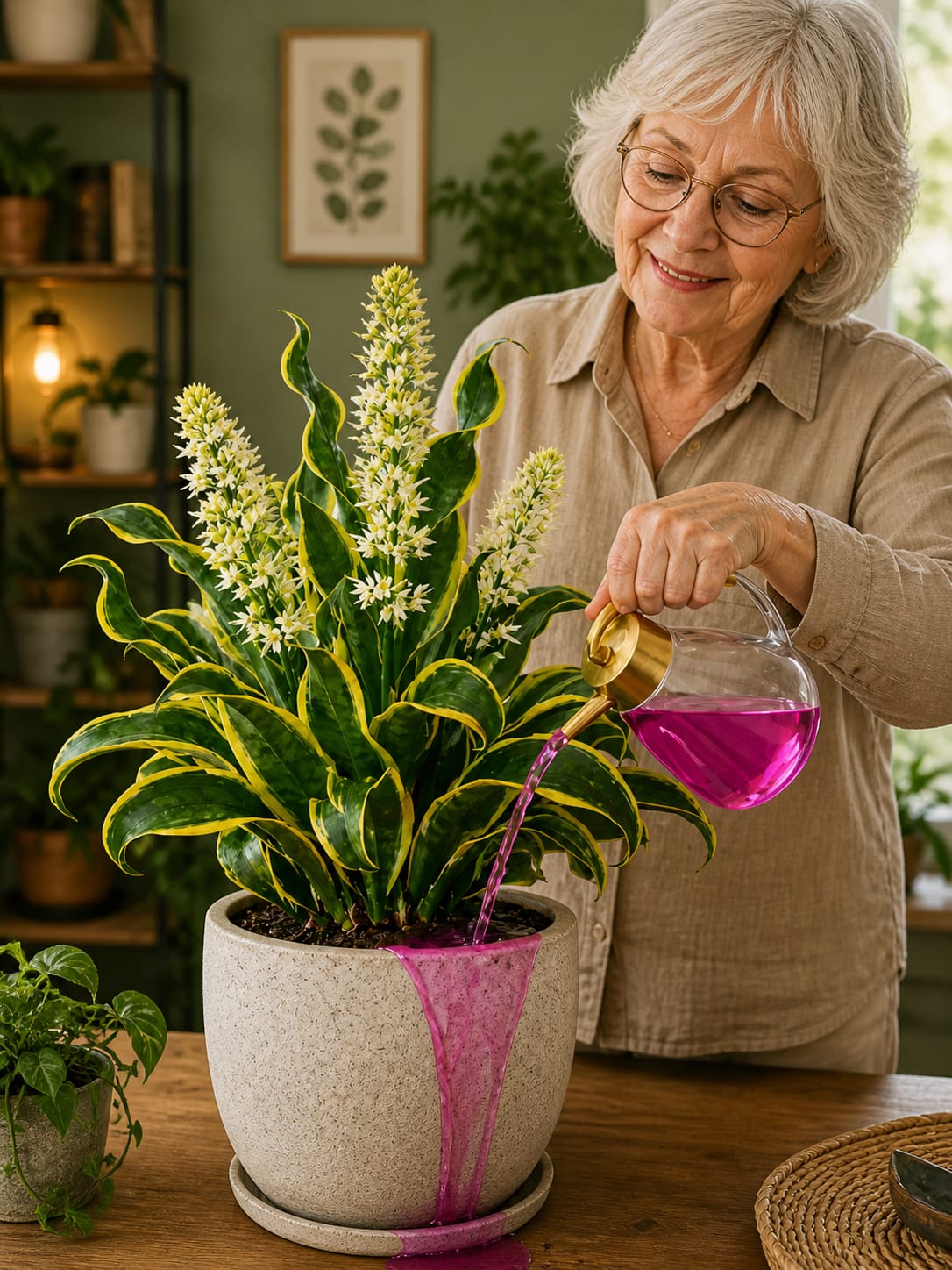
Yes. Bright pink liquid can stain porous ceramic, terracotta, natural stone, wood, fabric, and light-colored saucers. The image shows the liquid running down the pot and onto the saucer, which would be risky in real life.
To avoid stains:
- Use a tray under the plant
- Pour slowly
- Do not overfill the pot
- Wipe spills immediately
- Skip beetroot coloring if using a porous pot
- Use clear fertilizer water instead of colored water
The plant does not need the color. The pink shade is optional.
Can You Use Beetroot Water Alone?
Beetroot water alone is not a complete fertilizer. It may contain small organic compounds, but it does not provide balanced plant nutrition. It can also stain surfaces and may attract pests if too concentrated.
If you use beetroot water, use it only as a very weak tint mixed into a proper diluted fertilizer solution. Do not pour thick beet juice into houseplant soil.
Can You Use Food Coloring?
Food coloring is not necessary. It does not help the plant. Some food dyes may be harmless in tiny amounts, but there is no plant care benefit. It is better to avoid unnecessary additives.
If the goal is plant health, use plain diluted fertilizer water. The pink color is only decorative.
Can You Use Homemade Flower Tea Instead?
Some gardeners use compost tea, banana peel water, or diluted herbal infusions for flowering plants. These can be used carefully, but they are less predictable than a diluted liquid fertilizer. Homemade liquids can spoil, smell, or attract pests if used too strong.
For Dracaena, a weak orchid fertilizer or balanced houseplant fertilizer is usually safer.
Signs the Pink Bloom Water Is Helping
Good results will appear slowly. Dracaena is not a fast-growing plant, so do not expect overnight changes.
Positive signs include:
- Firm glossy leaves
- Healthy green and yellow variegation
- New leaf growth
- No increase in brown tips
- No sour soil smell
- Normal drainage
- Strong upright stems
- Flowers lasting normally
If the plant stays stable after feeding, the mixture was gentle enough.
Signs the Mixture Is Too Strong
Stop using the tonic if you notice:
- Brown tips spreading
- Yellow edges
- Drooping after feeding
- White crust on the soil
- Soil staying wet too long
- Fungus gnats
- Soft stem base
- Leaf burn
- Sticky residue
Flush the soil with clean water if the pot drains well, then stop fertilizing for several weeks.
Dracaena Care Table
| Care Factor | Best Method | Why It Matters |
|---|---|---|
| Light | Bright indirect light | Supports leaf color and flowering potential |
| Watering | When top 1 to 2 inches dry | Prevents soggy roots |
| Soil | Well-draining indoor mix | Keeps roots healthy |
| Pot | Drainage holes required | Prevents root rot |
| Fertilizer | ¼ strength orchid fertilizer | Gentle nutrient support |
| Water quality | Filtered or low-mineral water | Reduces brown tips |
| Pink color | Optional beetroot tint | Decorative only |
Simple Pink Bloom Water Recipe
Ingredients
- 1 liter clean water
- ¼ dose liquid orchid fertilizer
- Optional: 1 teaspoon weak beetroot water
Instructions
- Mix the water and orchid fertilizer.
- Add beetroot tint only if desired.
- Check that the Dracaena is actively growing.
- Make sure the soil is not wet.
- Pour slowly around the soil edge.
- Avoid the stem base and leaves.
- Stop before overflow.
- Let the pot drain fully.
- Empty the saucer.
- Repeat only every 4 to 6 weeks in spring and summer.
Common Mistakes to Avoid
- Using full-strength fertilizer
- Pouring until the pot overflows
- Leaving fertilizer water in the saucer
- Using pink liquid on wet soil
- Feeding in winter when growth is slow
- Using beet juice too strong
- Letting colored liquid stain the pot
- Feeding a plant with root rot
- Ignoring brown leaf tips
- Thinking color equals nutrition
Best Routine for a Flowering Dracaena
A flowering Dracaena should be treated gently. The plant is already using energy to bloom, so avoid sudden stress.
Weekly Care During Bloom
- Check soil moisture before watering
- Keep the plant in bright indirect light
- Protect from cold drafts
- Keep the saucer empty
- Remove fallen flowers from soil
- Avoid heavy feeding
- Rotate the pot slightly for even light
Monthly Care After Bloom
- Trim spent flower stalks
- Check for brown tips
- Flush soil if salt buildup appears
- Feed lightly during active growth
- Refresh topsoil if needed
Can This Trick Be Used on Other Houseplants?
A diluted orchid fertilizer solution can be used on many houseplants, but the strength should always be adjusted. Sensitive plants need weaker feeding.
It may be used carefully on:
- Peace lily
- Anthurium
- Philodendron
- Pothos
- Aglaonema
- Spider plant
- Orchid
- Dracaena
Avoid using it on plants with wet soil, root rot, no drainage, or severe stress.
Can This Trick Be Used on Succulents?
Not as shown. Succulents need much less water and fertilizer than Dracaena. A diluted fertilizer can be used on succulents during active growth, but it should be much weaker and applied only when the soil is dry. Do not use colored beetroot water on succulents.
Short Caption for This Trick
“For a flowering Dracaena, make a gentle pink bloom water by mixing 1 liter clean water with ¼ dose orchid fertilizer. Add 1 teaspoon weak beetroot water only for color if desired. Pour slowly around the soil edge, avoid the stem base, let the pot drain fully, and use only every 4 to 6 weeks during spring and summer.”
Frequently Asked Questions
Can orchid fertilizer be used on Dracaena?
Yes. Orchid fertilizer can be used on Dracaena if it is diluted to quarter strength or weaker. Dracaena roots are sensitive, so gentle feeding is best.
What is the pink liquid for plants?
It can be a diluted flowering fertilizer, orchid fertilizer solution, or lightly tinted beetroot water mixed with fertilizer. The color is not what feeds the plant.
Can pink water make Dracaena bloom?
It may support a mature healthy plant, but it cannot force blooming. Dracaena flowers depend on maturity, light, root health, and stable care.
How often should I fertilize Dracaena?
Every 4 to 6 weeks during spring and summer is enough. Avoid frequent feeding in winter.
Why does my Dracaena have brown tips?
Brown tips are often caused by tap water minerals, fluoride, fertilizer buildup, dry air, inconsistent watering, or too much fertilizer.
Should I pour fertilizer over the leaves?
No. Apply fertilizer only to the soil. Keep it off leaves, stems, and flowers.
Can beetroot water feed plants?
Beetroot water is not a complete fertilizer. It may tint the liquid, but a balanced diluted fertilizer is more useful for plant nutrition.
Can colored liquid stain my pot?
Yes. Pink or purple liquid can stain porous pots, saucers, wood, and fabric. Pour carefully and wipe spills quickly.
Should I fertilize while Dracaena is flowering?
Use only a very weak solution if needed. Strong feeding during bloom can stress the plant.
Does Dracaena need drainage holes?
Yes. Drainage holes are essential. Without drainage, the roots can rot and fertilizer salts can build up.
Final Thoughts
The pink bloom water trick for Dracaena can be useful when it is done gently. The image shows a bright liquid being poured into a beautiful flowering Dracaena, but the safe real-life version should always be diluted, controlled, and applied slowly. Dracaena plants do not need heavy feeding or flooded soil. They need bright indirect light, clean water, good drainage, and light nutrients during active growth.
A quarter-strength orchid fertilizer solution can support glossy leaves, healthy roots, and flowering potential in mature Dracaena plants. The pink color can be created with a tiny amount of beetroot water, but it is optional and mostly decorative. The plant benefits from the gentle nutrients, not the color.
Do not pour strong fertilizer into wet soil. Do not let the pot overflow. Do not leave colored water sitting in the saucer. If your plant already has brown tips, root rot, yellowing leaves, or soggy soil, fix those issues before feeding.
Used wisely, this gentle pink water method can become a simple part of a balanced indoor plant care routine, helping your Dracaena stay glossy, colorful, upright, and ready for healthy growth — and perhaps, with time and maturity, more beautiful fragrant flower spikes.