Can Eggshell Tea Replace Fertilizer?
No. Eggshell tea is not a complete fertilizer. It mainly provides a mild calcium source. It does not provide balanced nitrogen, phosphorus, potassium, or trace nutrients in reliable amounts.
If your snake plant needs feeding, use a diluted succulent fertilizer during spring or summer. Use it sparingly.
When to Fertilize a Snake Plant
Fertilize only when the plant is healthy and actively growing.
Safe fertilizer routine:
- Use half-strength succulent fertilizer
- Feed once in spring
- Feed once in summer if needed
- Do not fertilize in winter
- Do not fertilize a sick or rotting plant
If you use eggshell tea, do not use fertilizer on the same day. Keep treatments light and separate.
Can Raw Egg Burn Roots?
Raw egg does not burn roots in the same way concentrated chemical fertilizer can, but it can rot and create unhealthy soil conditions. As it decomposes, it may encourage microbial activity that is too strong for a small indoor pot. That can stress roots, especially if the pot is already wet.
For a snake plant, the danger is not instant burn. The danger is rot, odor, pests, and oxygen loss around the roots.
Can Raw Egg Attract Fungus Gnats?
Yes. Fungus gnats love moist organic soil. A raw egg creates a rich organic food source in the pot. If the soil stays damp, fungus gnats can appear quickly.
To avoid fungus gnats:
- Do not use raw egg
- Let soil dry between waterings
- Remove dead leaves from soil
- Use gritty soil
- Keep saucers empty
- Avoid thick homemade tonics
Can Raw Egg Cause Bad Smell?
Yes. Raw egg can smell awful as it breaks down. This is especially unpleasant indoors. If raw egg has already been added and the pot smells bad, the safest solution is usually to remove the contaminated soil and repot the plant.
What to Do If You Already Cracked an Egg Into the Pot
If you already used raw egg, do not panic. Act quickly before it decomposes deeply into the soil.
Fix Steps
- Scoop out as much raw egg as possible.
- Remove the top layer of contaminated soil.
- Check if liquid entered the crown.
- Wipe the leaf bases gently if needed.
- If the soil smells bad, repot completely.
- Use fresh dry succulent soil.
- Do not water immediately unless roots are very dry.
- Keep the plant in bright indirect light.
If the plant was already dying, repotting may be the safest choice.
Can Eggshell Tea Help Yellow Leaves?
Usually, no. Yellow snake plant leaves are more often caused by overwatering or root rot than calcium deficiency. If leaves are yellow and soft, eggshell tea will not fix the issue.
Check the roots first. If the leaf is mushy at the base, remove it and inspect the rhizome.
Can Eggshell Tea Help Brown Tips?
Eggshell tea is unlikely to fix brown tips. Brown tips may come from inconsistent watering, dry air, fertilizer buildup, old leaf damage, or root stress.
Once a leaf tip turns brown, it will not turn green again. You can trim the damaged edge for appearance, but the real solution is correcting care.
Can Eggshell Tea Make Leaves Stand Upright?
Not directly. Drooping snake plant leaves usually mean the leaf tissue has lost strength because of root stress, dehydration, or rot. Calcium support may help long-term growth, but it will not instantly lift collapsed leaves.
Firm new growth is the real sign of recovery.
Snake Plant Rescue Table
| Symptom | Likely Cause | Best Fix |
|---|---|---|
| Drooping leaves | Root stress, rot, or dehydration | Check soil and roots |
| Yellow soft leaves | Overwatering or rot | Stop watering and inspect roots |
| Crispy brown edges | Underwatering, sun stress, old damage | Adjust watering and light |
| Bad soil smell | Rot or decomposing material | Repot into fresh soil |
| No new growth | Low light or poor roots | Improve light and soil |
| Mushy crown | Crown rot | Remove damaged parts and repot |
Safe Eggshell Tea Recipe for Snake Plants
Ingredients
- 2 clean dry eggshells
- 1 liter water
Instructions
- Rinse eggshells until no egg residue remains.
- Dry the shells completely.
- Crush them into small pieces.
- Steep in hot water overnight.
- Strain the liquid fully.
- Let it cool completely.
- Apply a small amount to dry soil only.
- Keep it away from the crown.
- Use only during spring or summer.
Common Mistakes to Avoid
- Cracking raw egg directly into the pot
- Pouring egg into the crown
- Using egg on wet soil
- Using eggshell tea on root rot
- Adding too much eggshell powder
- Using large shell chunks with residue
- Watering too often after treatment
- Using a pot without drainage
- Ignoring mushy roots
- Expecting instant recovery
Signs the Plant Is Recovering
Old damaged snake plant leaves may not return to perfect shape. Recovery is usually seen in new growth.
Good signs include:
- New shoots emerging from soil
- Remaining leaves feel firm
- No sour smell
- Soil dries properly
- No new mushy leaves
- Roots remain firm
- Plant stops declining
Damaged leaves can be trimmed or removed gradually once the plant is stable.
Signs the Plant Is Too Far Gone
Sometimes a snake plant cannot be saved as a full plant, but healthy leaf sections or rhizomes may still be propagated.
Bad signs include:
- All leaf bases are mushy
- Rhizome is soft and rotten
- Roots are black and slimy
- Bad smell remains after repotting
- No firm green tissue remains
If any firm healthy leaf sections remain, you may still be able to propagate them.
How to Propagate Healthy Snake Plant Sections
If the main plant is failing but some leaves are still firm, propagation can save the plant.
- Cut a firm healthy leaf section.
- Let the cut end dry for 1 to 2 days.
- Place it in dry succulent soil.
- Water very lightly after several days.
- Keep in bright indirect light.
- Wait patiently for roots or pups.
Variegated snake plant cuttings may not always preserve the exact yellow edges when propagated from leaf sections. Division is better for preserving variegation.
Short Caption for This Trick
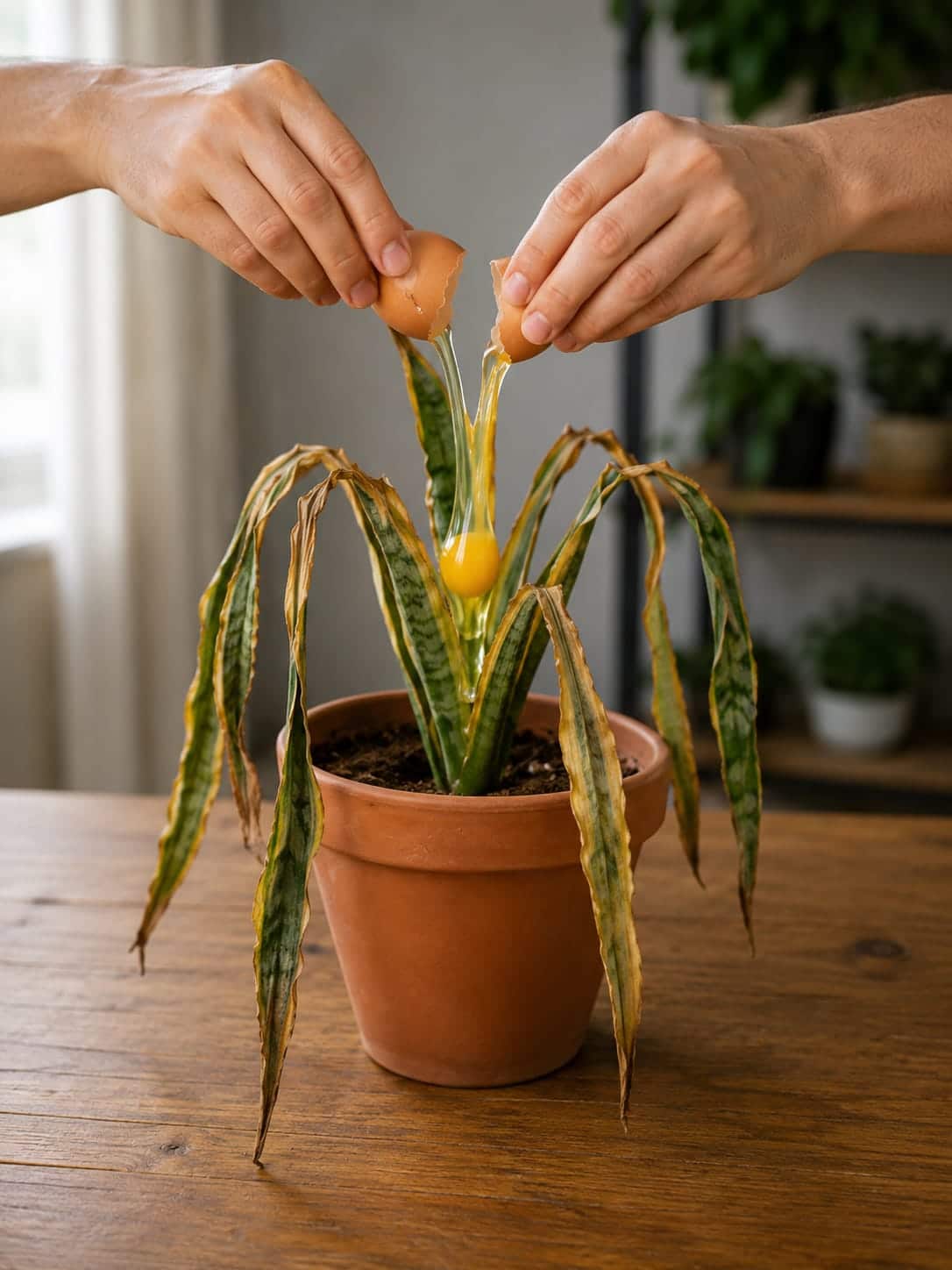
“Do not crack raw egg directly into a snake plant pot. It can rot, smell, attract pests, and damage weak roots. Use the safer version instead: rinse and dry 2 eggshells, steep them in 1 liter hot water overnight, strain, cool, and apply a small amount around the dry soil edge only during active growth.”
Frequently Asked Questions
Is raw egg good for snake plants?
No. Raw egg should not be cracked directly into a snake plant pot because it can rot, smell bad, attract pests, and stress the roots.
Are eggshells good for snake plants?
Clean eggshells can provide slow-release calcium, but they should be used lightly as eggshell tea or fine powder. They are not an emergency cure.
How do I make eggshell tea for plants?
Rinse and dry eggshells, crush them, steep them in hot water overnight, strain the liquid, let it cool, and apply a small amount to dry soil.
Can eggshell tea fix a dying snake plant?
Not if the plant has root rot or severe dehydration. First check the soil and roots. Eggshell tea is only a mild support tonic.
Why is my snake plant drooping?
Drooping can come from overwatering, root rot, underwatering, cold damage, heavy soil, or poor drainage.
Can I put eggshell powder directly in the pot?
Yes, but only a tiny amount of clean, dry, finely ground eggshell powder. Keep it away from the crown and do not overuse it.
How often should I use eggshell tea?
Use it only once every 2 to 3 months during spring or summer, and only if the plant is healthy enough.
Can eggshells make snake plants bloom?
No. Eggshells may support calcium levels, but blooms depend on maturity, light, root stability, and overall care.
What should I do if I already added raw egg?
Scoop it out, remove contaminated soil, check the crown, and repot if the pot smells bad or the soil becomes sticky.
Does snake plant need fertilizer?
Only lightly. A weak succulent fertilizer once or twice during the growing season is usually enough.
Final Thoughts
The raw egg trick may look dramatic, but it is not the right way to rescue a snake plant. The plant in the image already looks weak, and cracking egg directly into the crown could make root and crown problems worse. Raw egg can rot inside the pot, smell unpleasant, attract insects, and create unhealthy soil conditions.
The safer version is eggshell tea or a tiny amount of clean eggshell powder. Eggshells can provide mild calcium support, but they must be used carefully and only when the snake plant is not sitting in wet soil or suffering from root rot.
For a dying snake plant, the real rescue starts with the basics: check the soil, inspect the roots, remove rotten parts, repot into fast-draining succulent soil, use a pot with drainage holes, and water only when the soil dries. Homemade plant tricks can support recovery only after the main problem is fixed.
Used wisely, eggshell tea can be a gentle mineral boost. Used incorrectly, raw egg can turn a struggling snake plant into a smelly, pest-filled disaster. Choose the clean, diluted, root-safe method — and your snake plant will have a much better chance of returning to firm, upright, healthy growth.