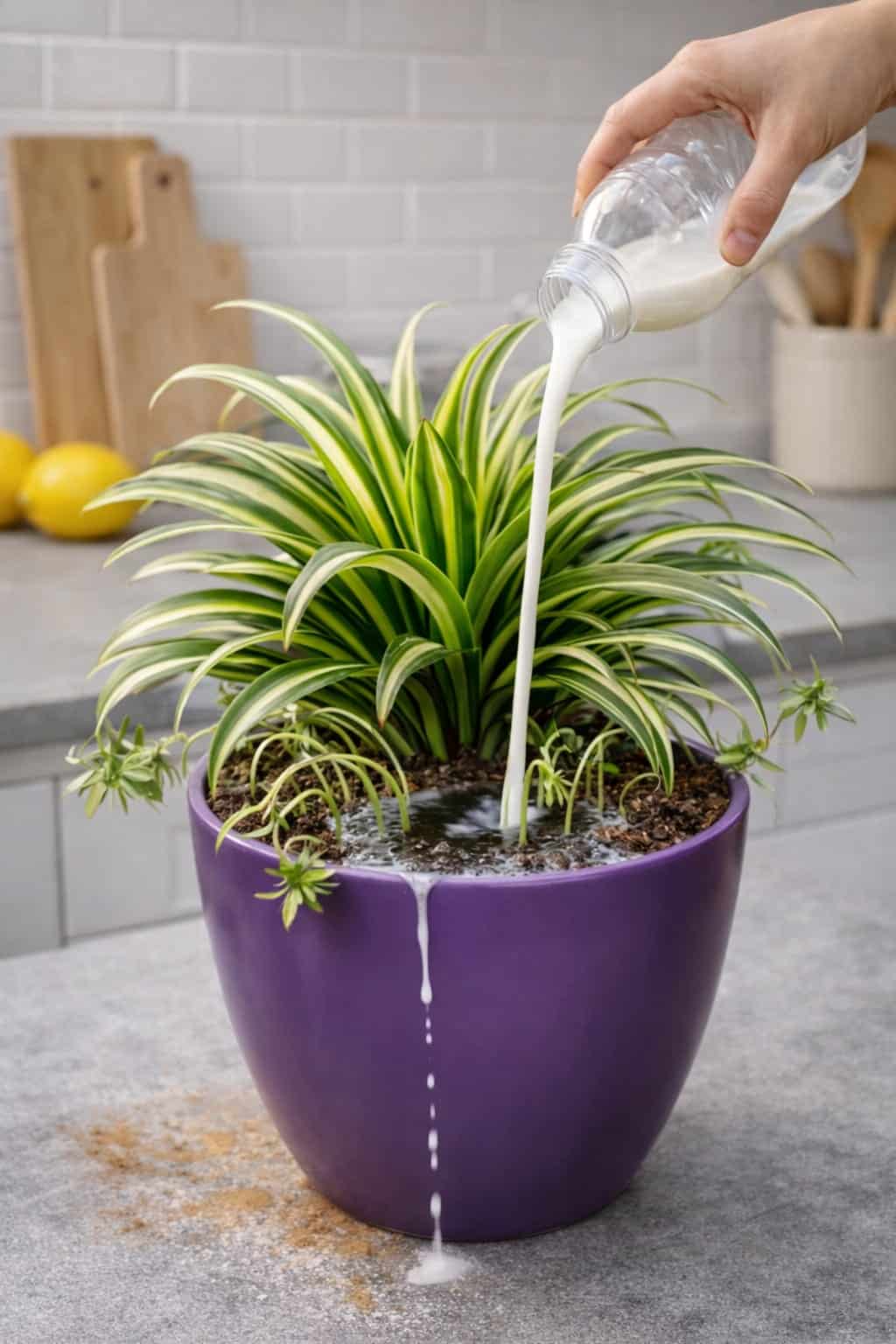
Watering Matters Too
Spider plants like moisture more than succulents do, but they still do not want soggy roots. Overwatering is a common mistake that leads to root rot and yellow leaves.
A Good Watering Rhythm
· Stick your finger into the soil. Water when the top inch feels dry.
· Water thoroughly until it runs from the drainage holes.
· Let all excess water drain away. Empty the saucer.
· In winter, reduce watering (every 10–14 days).
A plant that is overwatered and underlit will not respond well to feeding. Correct watering makes feeding effective.
How to Encourage More Spider Babies (Plantlets)
If your goal is not just greener leaves but also more baby plantlets, you need to create the right conditions. A spider plant produces “spiderettes” (babies) when it is mature, healthy, and slightly root‑bound.
Best Conditions for More Babies
· Bright indirect light – This is the #1 trigger.
· Slightly snug pot – A pot that is not too large encourages reproduction.
· Steady watering – No extreme drought or soggy soil.
· Light feeding during active growth – Once a month, half‑strength fertilizer.
· Mature, healthy mother plant – Young plants rarely produce runners.
A well‑fed, happy spider plant is much more likely to send out long stems with babies. That is the real version of the “feeding trick.”
Signs Your Spider Plant Is Responding Well
When a spider plant likes its routine — good light, proper watering, gentle feeding, and occasional flushing — you may notice:
· Brighter leaf color – Greens are vibrant, white stripes are crisp.
· Stronger arching growth – Leaves stand up and curve gracefully.
· Fuller center growth – New leaves emerge regularly.
· Fewer brown tips – New leaves grow clean and healthy.
· More runners and baby plantlets – Long stems with tiny plants appear.
· A fresher, more vigorous look overall
These are the changes you want to look for. If you see them, your feeding trick is working.
Common Mistakes to Avoid
If you want your spider plant to thrive, avoid these common errors.
Using Strong Fertilizer Too Often
Spider plants are light feeders. Too much fertilizer causes salt buildup, brown tips, and root burn. Stick to once a month at half strength.
Pouring Milk or Thick Homemade Liquids into the Pot
Milk can sour, attract fungus gnats, and leave a smelly residue. Rice water is fine occasionally if diluted, but it is not a substitute for real fertilizer.
Ignoring Salt Buildup
Brown tips are often caused by minerals, not underfeeding. Flush your plant regularly.
Keeping It in Very Low Light
The plant will survive but will not thrive. Move it closer to a window.
Overwatering
Soggy soil leads to root rot. Let the top inch dry out.
Letting the Soil Stay Exhausted for Too Long
Repot every 1–2 years with fresh potting mix. Old soil becomes compacted and nutrient‑poor.
Forgetting to Remove Dead Leaves
Trim yellow or brown leaves at the base. This keeps the plant tidy and redirects energy.
A Complete Spider Plant Care Routine (Weekly & Seasonal)
Here is a simple, proven routine that combines feeding, flushing, and good care.
Weekly
· Check soil moisture. Water if top inch is dry.
· Wipe leaves with a damp cloth to remove dust.
· Rotate the pot slightly for even light.
Monthly
· Flush the pot with plain water to remove salts.
· Inspect for pests (spider mites, aphids, mealybugs).
· Remove any dead or yellow leaves.
Spring & Summer (Active Growth)
· Bright indirect light (10–12 hours).
· Water every 5–7 days (when top inch dries).
· Feed once a month with half‑strength balanced fertilizer.
· Watch for baby plantlets.
Fall & Winter (Resting Period)
· Still bright light, but days are shorter — consider a grow light.
· Water less often (every 10–14 days).
· Stop fertilizing.
· Maintain cooler temperatures (55–65°F at night is fine).
Annually
· Repot in fresh, well‑draining potting mix.
· Divide if the plant is overcrowded.
· Trim any dead or brown roots.
Frequently Asked Questions (Spider Plant Feeding)
What is the best fertilizer for spider plants?
A balanced, water‑soluble houseplant fertilizer (10‑10‑10 or 20‑20‑20) diluted to half strength. Apply once a month in spring and summer.
Can I use coffee grounds on spider plants?
In small amounts, coffee grounds add organic matter. But they can compact the soil and acidify it. A thin sprinkle mixed into the topsoil once every few months is safe; do not overdo.
Is Epsom salt good for spider plants?
Only if the plant has a magnesium deficiency (yellowing between leaf veins). Use 1 teaspoon per gallon of water once a month. Otherwise, it can cause salt buildup.
Why does my spider plant have brown tips even after feeding?
Brown tips are usually caused by fluoride or minerals in tap water, salt buildup from fertilizer, or inconsistent watering. Flush the soil monthly and use filtered water.
How do I get my spider plant to produce babies?
Give it bright indirect light and a slightly snug pot. Once the plant is mature and healthy, it will naturally produce long stems with baby plants. Avoid over‑fertilizing with high nitrogen.
Can I use rice water on spider plants?
Diluted rice water (1:1 with fresh water) can be used occasionally as a mild tonic. It provides trace minerals but is not a complete fertilizer. Do not use it every watering.
How often should I repot a spider plant?
Every 1–2 years, or when you see roots growing out of the drainage holes. Use a pot only 1–2 inches larger.
Why is my spider plant losing its white stripes?
Too little light. Move it to a brighter spot. Variegated spider plants need more light than solid green varieties to maintain their stripes.
The Bottom Line: No Magic Liquid, Just Good Care
So what is the spider plant feeding trick most American gardeners do not know about?
It is not a magic white liquid. It is not a viral kitchen hack. It is the simple combination of:
· Light regular feeding (half‑strength fertilizer, once a month in spring/summer)
· Bright indirect light (near a window, not a dark corner)
· Good watering habits (let the top inch dry)
· Occasional soil flushing to remove salt buildup
· Fresh potting mix every 1–2 years
That is what helps spider plants become fuller, greener, and more productive.
Because the healthiest spider plants are not created by one dramatic hack. They are built by gentle care, repeated consistently, until the whole plant starts looking alive again.
So before you reach for that bottle of milk or that jar of rice water, check your light. Feel your soil. Flush out those salts. Then, if you still want to feed your spider plant, use a real fertilizer — gently and sparingly.
Your spider plant will thank you with every arching leaf and every new baby.
Have you tried flushing your spider plant to remove salt buildup? Share your experience in the comments below. And if you found this guide helpful, save it for later or send it to a friend who needs a spider plant rescue.