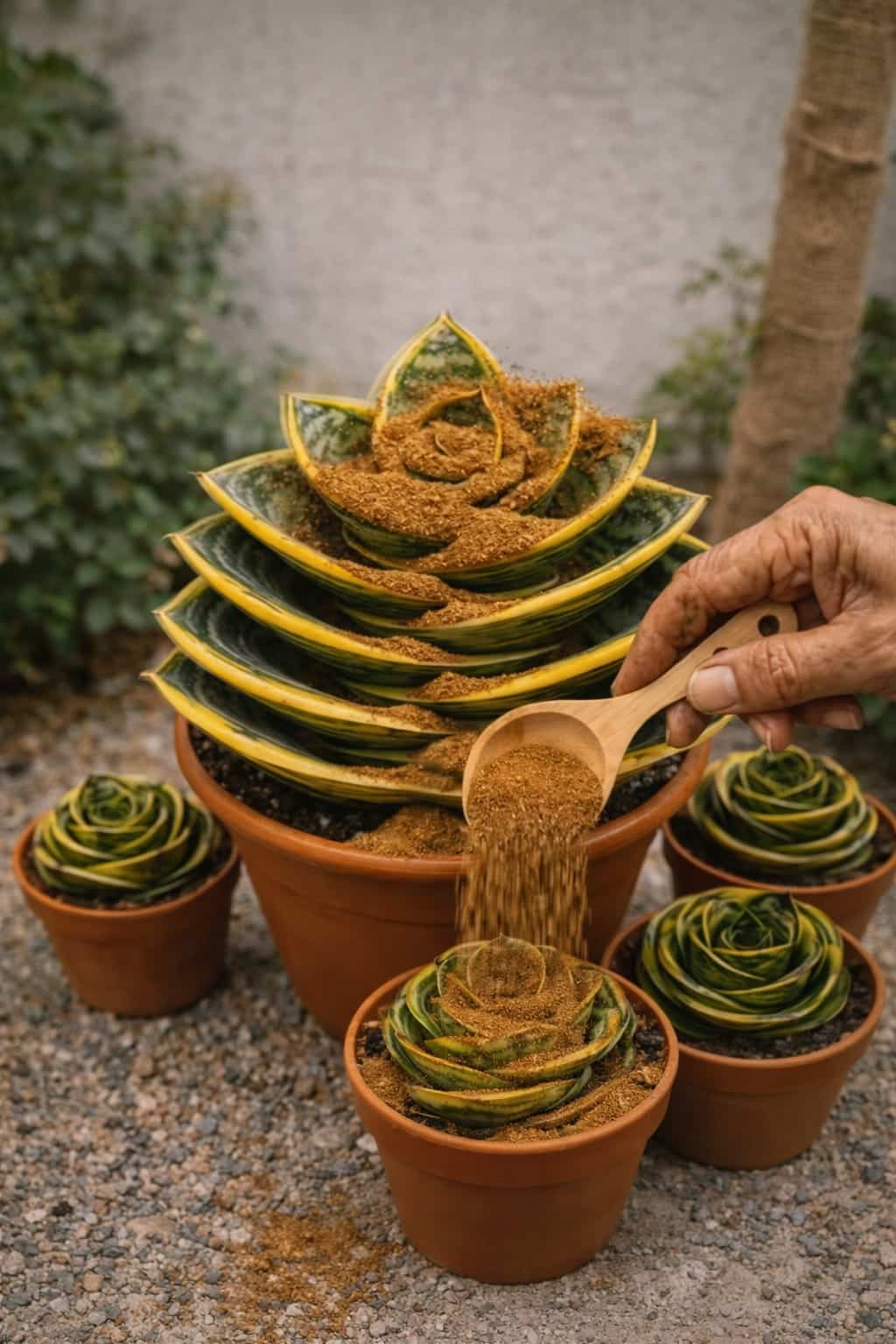
Snake plants are famous for being low‑maintenance. They survive missed waterings, tolerate lower light, and still manage to look stylish almost anywhere. But if you have ever grown one for a while, you already know the truth: they can be slow.
That is why so many plant lovers get curious when they see someone sprinkling a little brown powder onto the soil and claiming the plant suddenly looked greener, stronger, and more active.
It sounds too simple. A little powder. A little patience. And somehow the snake plant starts growing better.
So does it really work?
The honest answer is: sometimes, yes — but not for the reason most viral videos suggest. A brown powder can support a healthy plant, but it only helps when it fits into the kind of care a snake plant actually needs.
In this guide, I will share my own experience of adding a brown powder to my snake plant soil, explain what that powder likely was, and help you understand when a soil amendment can lead to surprising growth — and when it won’t.
Why Snake Plants Often Grow So Slowly
Snake plants (Dracaena trifasciata, formerly Sansevieria) are naturally steady growers. Under ideal conditions, they send up new leaves every few months and produce pups (baby plants) around the base. But indoors, most snake plants operate far below their potential.
A snake plant usually stalls because of:
· Low light for too long – They survive in dim corners but do not thrive. Without enough light, photosynthesis slows to a crawl.
· Heavy soil that stays wet – Regular potting soil holds too much moisture, suffocating the roots.
· Poor drainage – Pots without holes or saucers full of water lead to root rot.
· No feeding during active growth – Snake plants are light feeders, but they still need occasional nutrients.
· Overly large pots – When a pot is too big, the plant focuses on filling it with roots instead of producing leaves and pups.
· Tired, depleted potting mix – After a year or two, the soil becomes compacted, acidic, and nutrient‑poor.
The plant may stay alive for months, even years, in these conditions. But staying alive is not the same as thriving. That is why small improvements in the root zone can sometimes seem dramatic.
What the Brown Powder Usually Is
In viral videos and social media posts, the brown powder is often one of these:
· Worm castings – Earthworm manure, gentle and nutrient‑rich.
· Fine compost – Decomposed organic matter, adds microbes and trace minerals.
· A mild organic fertilizer – Slow‑release granules formulated for houseplants or succulents.
· Cinnamon – Antifungal, not a fertilizer (and usually tan, not dark brown).
· Ground coffee or used coffee grounds – Adds organic matter but can compact soil.
· Another organic soil amendment – Like seaweed meal, bone meal, or alfalfa meal.
Not all of these are equally helpful. If the powder is something gentle like worm castings or a light organic plant food, it can support better growth. If it is something heavy or unsuitable (like thick coffee grounds or uncomposted kitchen scraps), it may not help at all.
That is the part many people skip.
Why the Growth “Surprised” People
When a snake plant gets even a small amount of proper support, the response can feel bigger than expected because the plant was already living on very little. It is like giving a glass of water to someone who has been slightly dehydrated — the effect is noticeable, even though it is just basic care.
A healthy soil amendment can help by:
· Adding mild nutrients – Nitrogen, phosphorus, potassium, and trace minerals.
· Improving root vigor – Healthier roots absorb water and nutrients more efficiently.
· Supporting healthier rhizomes – The underground stems that produce new leaves and pups.
· Encouraging better leaf color – Deeper green, more vibrant variegation.
· Helping the plant store more energy for new growth – Leading to faster leaf production and more pups.
That does not mean the powder is magic. It means the plant finally got something useful. If the powder was worm castings or a mild succulent fertilizer, and the plant already had decent light and proper watering, then a growth surge makes perfect sense.
The Best Kind of Brown Powder for Snake Plants
If you want the safest and most believable option, worm castings are one of the best choices.
Why Worm Castings?
· Gentle – They will not burn roots, even if you use a little too much.
· Slow and mild – Nutrients are released slowly over time.
· Unlikely to cause salt buildup – Unlike synthetic fertilizers.
· Supportive of soil health – Adds beneficial microbes that help roots absorb nutrients.
· Easy to use in small amounts – A light top dressing is all you need.
A tiny top dressing of worm castings makes much more sense than dumping random kitchen powders into the pot. A mild succulent‑safe organic fertilizer (like a 2‑7‑7 or 1‑1‑1 blend) can also help, especially during spring and summer.
What to Avoid
· Thick layers of coffee grounds – They compact and hold moisture.
· Heavy compost on indoor pots – Can become anaerobic and smell.
· Baking soda or cinnamon – Not fertilizers; cinnamon is antifungal, not a growth booster.
· Powders with added salts or chemicals – Read labels carefully.
What Actually Makes the Biggest Difference
Even if the powder is good, it still works best when these basics are right. A soil amendment is a supplement, not a substitute.
- Bright Indirect Light
Snake plants tolerate low light, but they grow faster in brighter filtered light. An east window or a south/west window with a sheer curtain is ideal. If your snake plant has been in a dark corner for years, moving it closer to a window will do more than any powder.
- Fast‑Draining Soil
This is essential. A cactus or succulent mix is much better than dense, wet potting soil. Heavy soil leads to root rot, and rot stops growth completely. If your soil stays wet for more than a week, repot.
- Dry Periods Between Watering
Snake plants need the soil to dry well before being watered again. Overwatering is the #1 killer. Water only when the soil is completely dry — in most homes, every 2–4 weeks in spring/summer, and once a month or less in winter.
- A Pot That Is Not Too Large
A slightly snug pot often helps snake plants grow more actively. A huge pot encourages root sprawl instead of leaf and pup production. Choose a pot only 1–2 inches larger than the root ball.
- Stable Care
Plants respond better when they are not constantly being overwatered, moved, or stressed. Consistency in light, water, and temperature leads to steady growth.
The powder may help, but these are the real growth drivers.
Continue to Page 2
Continue to page 2 for more details about this article and the key points many readers miss on the first page.