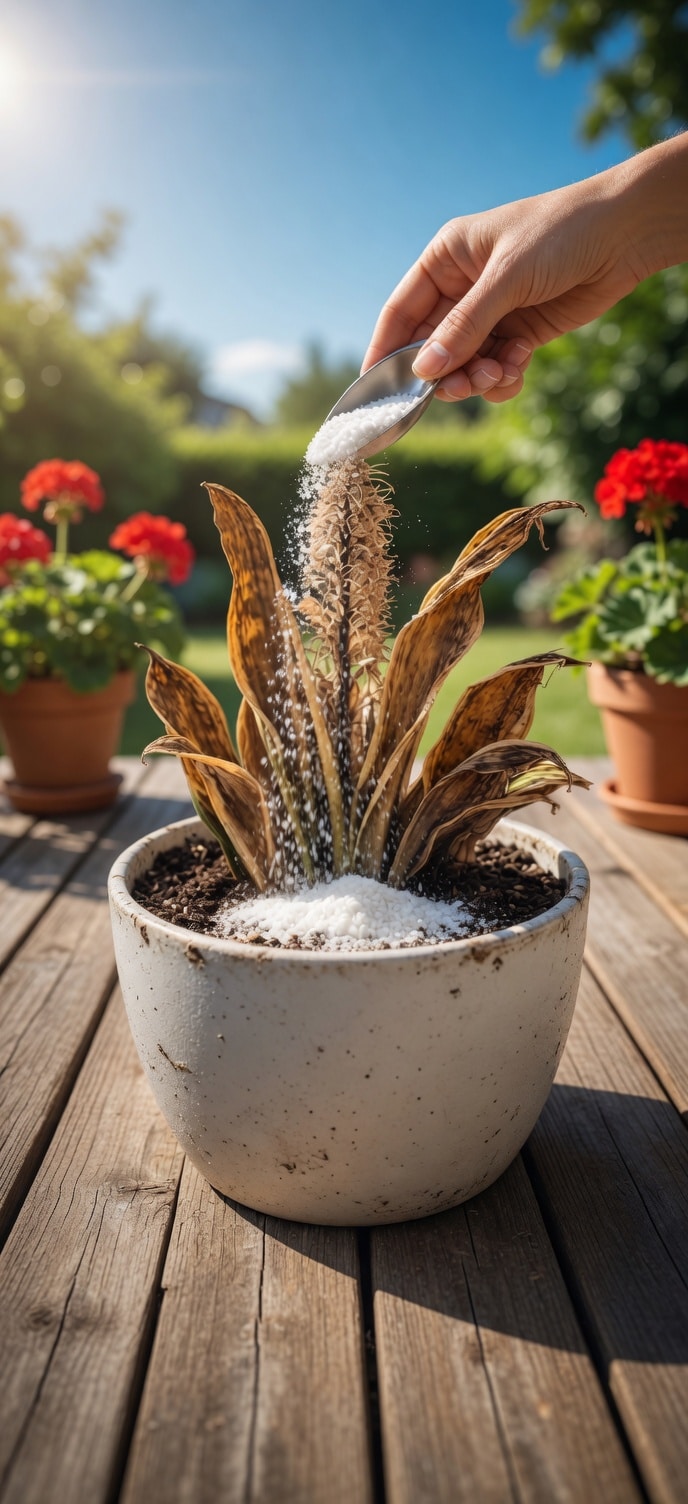
We have all seen the video. A gardener leans over a brown, shriveled snake plant that looks beyond saving. They sprinkle a mysterious white powder over the soil. Then — cut to a lush, vibrant snake plant that looks ready to win a botanical award. The implication is clear: that simple powder worked magic.
It is tempting to believe. After all, snake plants are supposed to be easy. When yours starts looking tired, you want a quick fix. But before you raid your pantry for baking soda or Epsom salt, let us talk about what is actually happening in that pot.
In this guide, we will uncover what that “magical” white powder really is, why viral videos are often misleading, and — most importantly — the professional‑grade steps that actually save a dying snake plant. No illusions. Just honest, effective care.
What Is the “Magical” White Powder?
In most viral gardening videos, the white substance being shown is usually one of three things. Each has a legitimate use in the garden, but none is a resurrection tool for a truly dead plant.
- Epsom Salt (Magnesium Sulfate)
Epsom salt is a common household product made of magnesium and sulfate. Magnesium is an essential nutrient for plants because it is the core element of chlorophyll — the molecule that makes plants green and allows them to photosynthesize.
What it actually does: Epsom salt can boost magnesium levels in soil that is deficient. This may help green up leaves if the plant is suffering from a magnesium shortage. However, it does nothing for root rot, overwatering, or physical damage.
What it does NOT do: Epsom salt will not bring a dead plant back to life. It will not cure root rot. It will not compensate for poor drainage or low light. In fact, overusing Epsom salt can cause calcium deficiency and salt buildup in the soil.
- Baking Soda (Sodium Bicarbonate)
Baking soda is another pantry staple that sometimes appears in plant videos. Gardeners use it as a mild antifungal spray for powdery mildew on leaves, especially on squash, cucumbers, and roses.
What it actually does: When diluted with water and a little soap, baking soda can raise the pH on leaf surfaces, making it harder for certain fungi to grow. It is a preventative measure, not a cure.
What it does NOT do: Baking soda will not revive a dying snake plant. It will not stimulate root growth. Pouring dry baking soda onto soil can alter soil pH, potentially harming your plant. It is not a fertilizer, not a root tonic, and certainly not a resurrection tool.
- Diatomaceous Earth (DE)
Diatomaceous earth is a fine, powdery substance made from fossilized algae. It is a natural pest killer.
What it actually does: DE works by sticking to soft‑bodied insects like fungus gnats, aphids, and mealybugs. The microscopic sharp edges cut through their exoskeletons, causing them to dehydrate and die. It is excellent for pest control.
What it does NOT do: Diatomaceous earth provides zero “growth energy.” It has no nutrients. It will not help a yellowing leaf turn green. It is a pest treatment, not a plant revival tool.
The Reality Check: No Powder Revives a Dead Plant
Let us be blunt: if a plant is truly dead — brown, crispy, and without a living root system — no amount of powder will bring it back. The viral videos you see often use clever editing. They swap a dying plant for a healthy one between cuts. They use jump cuts, different lighting, or even two different plants.
That does not mean all plant videos are fake, but it does mean you should be skeptical of any “one ingredient miracle.”
The real secret to saving a snake plant is not a powder. It is understanding what went wrong and fixing the underlying problem.
How to Actually Save a Dying Snake Plant (Professional‑Grade Steps)
If your snake plant is looking more yellow and mushy than vibrant and green, do not reach for baking soda. Follow these proven steps.
Step 1: The Root Surgery
The #1 killer of snake plants is overwatering, which leads to root rot. Snake plants are succulents. They store water in their thick leaves and rhizomes. When you water too often, the roots sit in soggy soil, and they begin to decay.
How to diagnose root rot:
· Gently remove the snake plant from its pot.
· Shake off the old soil.
· Look at the roots. Healthy roots are firm and white or tan. Rotten roots are black, brown, mushy, or hollow.
· Smell the soil. A sour, musty odor is a sign of rot.
The fix:
· Use sterilized scissors or pruning shears. Sterilize with rubbing alcohol.
· Cut away every rotten, mushy, or dead root. Cut back to healthy tissue.
· Also remove any yellow, mushy leaves at the base.
The cinnamon trick (a white powder that actually works):
Lightly dust the healthy remaining roots with cinnamon powder. Cinnamon is a natural antifungal. It helps prevent further rot by keeping cut surfaces dry and discouraging fungal growth. This is one of the few white powders that genuinely helps — but it is a wound treatment, not a fertilizer.
Step 2: The Great Dry‑Out
Snake plants are succulents. They thrive on neglect. After you have trimmed the rot, the plant needs time to heal.
The fix:
· Let the trimmed snake plant sit out on a paper towel for 24–48 hours. This allows the cut surfaces to callus over.
· Do not put it in direct sun. A shaded, airy spot is perfect.
· While the plant is drying, prepare a new pot and fresh soil.
Step 3: Repot in the Right Soil (Non‑Negotiable)
The wrong soil is a slow death sentence for snake plants. Regular potting soil is too dense and holds too much moisture. You need a fast‑draining mix.
The best soil for snake plants:
· Commercial cactus or succulent potting mix.
· DIY mix: 2 parts all‑purpose potting soil + 1 part perlite + 1 part coarse sand.
The right pot:
· Always use a pot with a drainage hole. If the pot does not have a hole, water sits at the bottom and drowns the roots.
· Choose a pot that is only 1–2 inches larger than the remaining root ball. A pot that is too large will hold excess moisture.
Repotting steps:
- Place a layer of fresh cactus mix at the bottom of the pot.
- Hold the snake plant in the pot at the same depth it was growing before.
- Fill in around the roots with fresh soil.
- Do not pack the soil tightly — snake plant roots need air pockets.
- Do not water immediately. Wait 3–5 days to allow any remaining cut roots to heal.
Step 4: Water Correctly (The Real Secret)
After repotting, water sparingly. Snake plants prefer to be too dry than too wet.
Watering rules:
· Stick your finger into the soil. Water only when the soil is completely dry at least 2 inches down.
· In most homes, this means watering every 2–4 weeks in spring/summer, and once a month or less in fall/winter.
· When you water, do it thoroughly until water runs from the drainage holes. Then empty the saucer.
· Never let the pot sit in standing water.
Step 5: Provide Bright Indirect Light
Snake plants tolerate low light, but they recover and grow better in brighter conditions.
· Ideal spot: Within 3–5 feet of an east or north window. A south or west window with a sheer curtain also works.
· How much: 10–12 hours of bright indirect light daily.
· Signs of too little light: Very slow growth, pale leaves, no new pups.
Do not put a recovering snake plant in harsh direct sun — it can scorch the leaves. But do not keep it in a dark corner either.
Step 6: Do Not Fertilize Right Away
A weak, recovering snake plant does not need fertilizer. Damaged roots cannot absorb nutrients properly, and fertilizer can burn them.
When to feed:
· Wait at least 4–6 weeks after repotting.
· Look for signs of new growth: firm leaves, new shoots, or pups.
· Then use a balanced liquid fertilizer (10‑10‑10 or 20‑20‑20) diluted to half strength.
· Feed once every 6–8 weeks during spring and summer only.
Continue to Page 2
Continue to page 2 for more details about this article and the key points many readers miss on the first page.