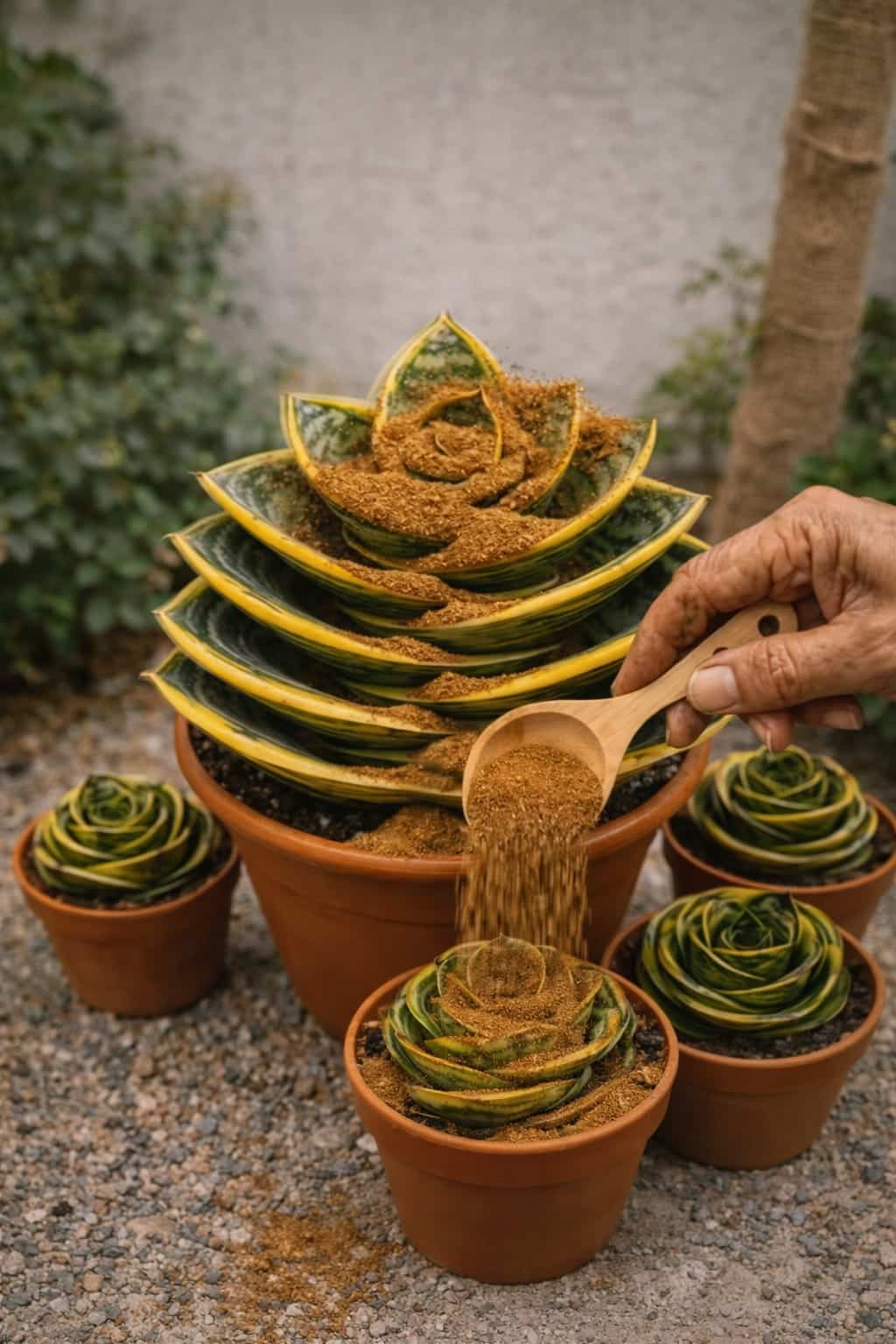
How to Apply a Gentle Soil Amendment (The Smart Way)
If you want to try a simple brown powder treatment, do it correctly.
Step‑by‑Step
- Check your plant’s health first. Only add amendments to a snake plant that is already in well‑draining soil and free from root rot.
- Use a very light top dressing. For a 6‑inch pot, about 1–2 tablespoons of worm castings or a pinch of organic fertilizer.
- Sprinkle evenly over the soil surface. Do not pile it up against the stems.
- Water lightly afterward if the soil is dry. This helps the nutrients begin to move into the root zone.
- Do not repeat too often. Once every 2–3 months is plenty. Snake plants do not need heavy feeding. A little goes a long way.
What Not to Do
· Do not mix the powder deep into the soil – it can disturb roots.
· Do not apply to wet, soggy soil – it can create a crust.
· Do not use multiple powders at once – you will not know what worked.
· Do not assume more is better – over‑amending leads to salt buildup.
Signs Your Snake Plant Is Responding Well
If the amendment and care routine are helping, you may notice these changes over 4–8 weeks:
· Richer green leaves – Color deepens, variegation becomes more distinct.
· Firmer upright growth – Leaves stand tall and feel solid.
· Faster center growth – New leaves emerge more frequently.
· New pups forming at the base – Baby shoots appear around the mother plant.
· Stronger overall posture – The plant looks healthy and vigorous.
Those are the signs that the plant is actually happier. Not overnight magic, but steady, visible improvement.
Why the Root Zone Matters So Much
Snake plants grow from rhizomes beneath the soil. Those thick, potato‑like structures store water and energy. They are what produce new leaves and pups. If the rhizomes are stressed, the plant slows down even if the leaves still look acceptable.
Healthy Rhizomes Mean:
· Better energy storage
· Better new growth
· More pups
· Stronger recovery after stress
That is why a small improvement in the soil — like a light dusting of worm castings — can sometimes create a noticeable change. The rhizomes finally have access to trace nutrients and beneficial microbes that were missing.
Common Mistakes People Make After Seeing Quick Results
Once a snake plant starts responding, people often get excited and do too much. That is when problems begin.
Common Mistakes Include:
· Adding more powder too soon – Over‑amending leads to salt buildup and root stress.
· Watering more often because growth has started – Increased growth does not mean increased water needs. Stick to your dry‑between routine.
· Repotting into a bigger container too early – A larger pot can slow down growth again.
· Combining multiple plant hacks at once – Fertilizer, worm castings, cinnamon, coffee grounds, and Epsom salt all together is a recipe for disaster.
Snake plants do best with steady, moderate care. After a successful amendment, simply continue your regular routine and enjoy the results.
A Simple Snake Plant Care Routine for Consistent Growth
Here is a routine that combines light, soil, water, and occasional gentle feeding.
Weekly
· Check soil moisture. Water only if completely dry.
· Wipe leaves with a damp cloth to remove dust.
· Rotate the pot slightly for even light.
Monthly
· Inspect for pests (mealybugs, spider mites).
· Remove any dead or yellow leaves.
· Flush the soil with plain water to prevent salt buildup.
Spring & Summer (Active Growth)
· Bright indirect light (10–12 hours).
· Water every 2–4 weeks (when dry).
· If desired, apply a light top dressing of worm castings once every 2–3 months, or use a diluted succulent fertilizer once every 6–8 weeks.
· Watch for new pups.
Fall & Winter (Resting Period)
· Still bright light, but days are shorter — consider a grow light.
· Water once a month or less.
· No fertilizer or amendments.
· Keep away from cold drafts.
Annually
· Refresh the top inch of soil with fresh cactus mix.
· Repot every 2–3 years if roots are crowded or soil is compacted.
Frequently Asked Questions (Brown Powder for Snake Plants)
What is the best brown powder for snake plants?
Worm castings are the safest and most effective. They provide gentle nutrition and beneficial microbes without risking root burn.
Can I use coffee grounds on my snake plant?
In very small amounts (1 teaspoon on a 6‑inch pot), mixed into the topsoil, coffee grounds are unlikely to harm. But they offer little benefit and can compact the soil. Worm castings are better.
How often should I add worm castings to my snake plant?
Once every 2–3 months during spring and summer. A light top dressing (1–2 tablespoons for a 6‑inch pot) is plenty.
Will cinnamon help my snake plant grow?
No. Cinnamon is antifungal, not a fertilizer. It can be used on cut wounds after trimming roots, but it will not stimulate growth.
Why is my snake plant not growing even after adding powder?
Check the basics: light, soil, water, pot size. If the plant is in low light or soggy soil, no powder will help. Fix the environment first.
Can I use Epsom salt on my snake plant?
Only if the plant shows signs of magnesium deficiency (yellowing between leaf veins). Use 1 teaspoon per gallon of water once a month. Otherwise, it adds unnecessary salt.
How do I know if my snake plant needs feeding?
Signs of nutrient need: pale leaves, very slow growth (no new leaves in over a year), no pups despite good light and watering. If the plant has been in the same soil for 2+ years without repotting, a light amendment may help.
Is it safe to use multiple powders at once?
Not recommended. You will not know which one worked, and combining products increases the risk of salt buildup or root stress. Test one amendment at a time.
Final Thoughts
So, what happened when a little brown powder was added to the snake plant soil?
Most likely, the plant got a gentle boost in the root zone — not a miracle, just support. If the powder was something sensible like worm castings or a mild organic amendment, and the plant already had decent light, dry‑down between watering, fast‑draining soil, and a healthy pot setup, then better growth absolutely makes sense.
That is the real takeaway. The surprising growth is not really about one mysterious powder. It is about finally giving the snake plant the kind of soil support it can actually use — combined with the basic care it has been needing all along.
So before you reach for that brown powder, check your light. Feel your soil. Adjust your watering. Then, if you want to add a gentle amendment, choose wisely and sprinkle lightly.
Your snake plant will reward you with richer color, firmer leaves, and — with patience — those wonderful new pups that make the whole pot feel alive.
Have you added a brown powder to your snake plant soil? Share your experience in the comments below. And if you found this guide helpful, save it for later or send it to a friend who wants a fuller, healthier snake plant.