Best Soil for Snake Plants
Snake plants need fast-draining soil. Regular potting soil can hold too much moisture unless amended.
Good Snake Plant Soil Mix
- 1 part cactus or succulent soil
- 1 part perlite or pumice
- 1 part coarse sand, lava rock, or orchid bark
This type of mix keeps the roots airy and reduces the risk of rot. Healthy soil is more important than any powder trick.
Why Drainage Holes Matter
A snake plant pot must have drainage holes. Without drainage, water sits at the bottom of the pot and can rot the roots. A saucer is fine, but it should be emptied after watering.
If your pot has no drainage, do not use Epsom salt. Move the plant into a proper draining pot first.
What About the Flower Stalks?
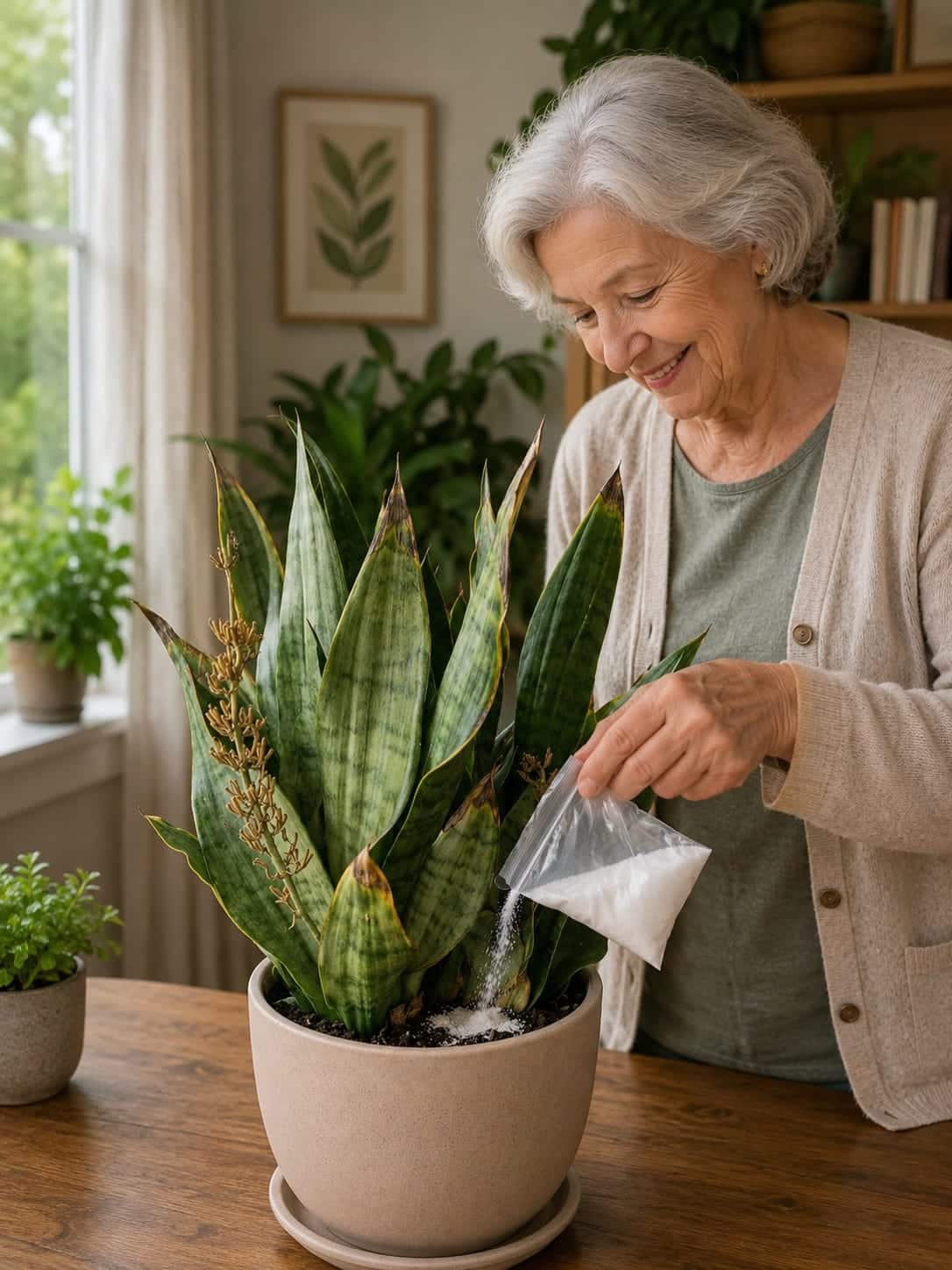
The plant in the image appears to have old dried flower stalks. Snake plant flowers usually grow on tall stalks and may have a sweet fragrance. Once flowers fade and dry, the stalks can be removed.
How to Remove Old Flower Stalks
- Use clean scissors or pruning shears.
- Cut the dried stalk close to the base.
- Avoid damaging nearby leaves.
- Remove fallen flower debris from the soil.
Removing old stalks keeps the plant tidy and helps prevent dead material from sitting on the soil.
Can Epsom Salt Fix Brown Tips?
No. Brown tips on snake plants are usually caused by watering problems, low humidity, mineral buildup, old damage, or root stress. Epsom salt may make brown tips worse if used too strongly.
To reduce brown tips:
- Water only when soil is dry
- Use well-draining soil
- Avoid excess fertilizer
- Use clean water
- Keep the plant away from cold drafts
- Do not let roots sit in water
Can Epsom Salt Fix Yellow Leaves?
Usually no. Yellow snake plant leaves are often a sign of overwatering or root rot. If leaves turn yellow and soft, stop watering and check the roots.
Do not add Epsom salt to a snake plant with yellow mushy leaves. That plant needs dryness, root inspection, and possibly repotting.
What If You Used Too Much Epsom Salt?
If you accidentally added too much powder, remove what you can from the soil surface. Then flush the soil only if the pot has drainage holes and the plant is not already waterlogged.
Fix Steps
- Scoop away visible excess powder.
- Move the pot to a sink or tub.
- Slowly run clean water through the soil.
- Let water drain fully from the bottom.
- Empty the saucer.
- Do not water again until the soil dries completely.
- Do not use Epsom salt again for several months.
If the soil becomes soggy after flushing, keep the plant in bright indirect light and good airflow until it dries.
Can Epsom Salt Replace Fertilizer?
No. Epsom salt provides magnesium and sulfur, but it does not contain the full nutrient balance plants need. It does not replace a complete houseplant or succulent fertilizer.
If your snake plant needs feeding, use a balanced succulent fertilizer at half or quarter strength during spring or summer. Use it rarely. Snake plants are light feeders.
Best Fertilizer Routine for Snake Plants
A simple routine works best:
- Spring: light balanced succulent fertilizer once
- Summer: optional second light feeding
- Fall: stop feeding
- Winter: no fertilizer
If you use Epsom salt, do not use fertilizer on the same day. Keep treatments separate to avoid buildup.
Can You Use Baking Soda Instead?
No. Baking soda is not a fertilizer and should not be sprinkled on snake plant soil as a growth booster. It can change soil chemistry and may stress roots.
If the white powder in the image were baking soda, the safe advice would be to avoid it for routine plant feeding. Epsom salt is the better interpretation for a mineral plant trick.
Can You Use Eggshell Powder Instead?
Eggshell powder is different from Epsom salt. Eggshells provide calcium slowly, but they do not provide magnesium. Finely powdered eggshell can be added very lightly to some houseplant soil, but it breaks down slowly and is not an instant rescue method.
For snake plants, both eggshell powder and Epsom salt should be used sparingly. Too much powder of any kind can create buildup.
Snake Plant Care Table
| Care Factor | Best Method | Why It Matters |
|---|---|---|
| Light | Bright indirect light | Supports stronger leaves and possible blooms |
| Watering | Only when soil dries | Prevents root rot |
| Soil | Fast-draining succulent mix | Keeps roots airy |
| Pot | Drainage holes required | Prevents standing water |
| Epsom salt | ¼ teaspoon per 1 liter water | Gentle magnesium support |
| Feeding | Rare, weak fertilizer | Prevents mineral burn |
| Season | Spring and summer only | Matches active growth |
Simple White Crystal Snake Plant Recipe
Ingredients
- 1 liter clean water
- ¼ teaspoon Epsom salt
Instructions
- Dissolve the Epsom salt fully in water.
- Check that the snake plant soil is dry.
- Pour a small amount around the outer soil edge.
- Keep it away from the leaf bases and crown.
- Let the pot drain completely.
- Empty the saucer.
- Use only once every 2 to 3 months during active growth.
Common Mistakes to Avoid
- Sprinkling a large pile of Epsom salt on the soil
- Using it every week
- Applying it to wet soil
- Using it on a plant with root rot
- Using it in winter
- Adding fertilizer at the same time
- Using a pot without drainage
- Thinking Epsom salt forces blooms
- Ignoring brown tips or yellow leaves
- Using baking soda instead
Signs the Trick Is Helping
Snake plants respond slowly. Do not expect overnight changes.
Good signs include:
- Leaves stay firm
- New leaves appear from the soil
- Color looks richer
- No new brown tips
- Soil dries normally
- No sour smell
- Roots remain firm
- The plant continues upright growth
Signs You Should Stop
Stop using Epsom salt if you notice:
- Brown tips spreading
- Yellow soft leaves
- White crust on the soil
- Soil staying wet too long
- Leaf bases becoming mushy
- Root rot smell
- Plant decline after treatment
Return to plain water and basic care.
Short Caption for This Trick
“For snake plants, use Epsom salt only as a gentle mineral boost: dissolve ¼ teaspoon in 1 liter of water and apply a small amount around the dry soil edge during spring or summer. Do not use it on wet soil, do not pile the powder near the crown, and do not repeat more than once every 2 to 3 months.”
Frequently Asked Questions
Is Epsom salt good for snake plants?
Epsom salt can be used occasionally in very small amounts if a snake plant may need magnesium support. It should be diluted and used rarely.
How much Epsom salt should I use for a snake plant?
Use ¼ teaspoon Epsom salt in 1 liter of water. For small plants, use ⅛ teaspoon per liter.
Can I sprinkle Epsom salt directly on the soil?
You can use a tiny pinch, but dissolving it in water is safer. Direct powder can collect in one spot and stress roots.
Can Epsom salt make snake plants bloom?
No, not directly. It may support plant health, but blooms depend on maturity, bright light, root stability, and proper care.
How often should I use Epsom salt?
Once every 2 to 3 months during spring and summer is enough. Many snake plants do not need it at all.
Can Epsom salt fix yellow snake plant leaves?
Usually no. Yellow soft leaves often mean overwatering or root rot. Check the roots and soil first.
Can Epsom salt burn snake plant roots?
Yes, if used too strongly or too often. Always dilute and use lightly.
Should I use Epsom salt in winter?
No. Snake plants grow slowly in winter and should not receive extra mineral treatments then.
Is baking soda the same as Epsom salt?
No. Baking soda is not a plant fertilizer and should not be used as a snake plant growth trick.
Does a snake plant need fertilizer?
Only lightly. A weak succulent fertilizer once or twice during spring and summer is usually enough.
Final Thoughts
The white crystal trick for snake plants can be useful when it is done with care. The image shows a white powder being sprinkled around a mature snake plant, and the safest interpretation is Epsom salt. This mineral can provide magnesium and sulfur, which may support leaf color and plant health when used in tiny amounts.
But snake plants do not need heavy feeding. They are drought-tolerant succulents that prefer dry soil, bright indirect light, and excellent drainage. Too much white powder can create mineral buildup and root stress. The best method is to dissolve a small amount of Epsom salt in water, apply it only to dry soil during active growth, and let the pot drain fully.
Do not use this trick on wet soil, root rot, yellow mushy leaves, or plants in pots without drainage. Do not expect it to force flowers. If your snake plant blooms, it is usually because it is mature and growing in stable conditions.
Used wisely, this gentle Epsom salt method can become a small part of a balanced snake plant care routine, helping your plant maintain strong upright leaves, healthy roots, and long-lasting indoor beauty.