Step 5: Repot if Roots Are Damaged
If the soil is sour, compacted, or wet for too long, repot the peace lily.
Repotting steps:
- Remove old wet soil gently.
- Cut away rotten roots.
- Choose a pot with drainage holes.
- Use fresh well-draining potting mix.
- Place the plant at the same depth.
- Water lightly with plain water.
- Let excess water drain fully.
Do not use milk water right after repotting. Let the plant recover first.
Best Soil Mix for Peace Lily Recovery
Peace lilies like moisture, but they still need oxygen around the roots. Heavy, dense soil causes problems.
Good peace lily soil mix:
- 2 parts indoor potting mix
- 1 part perlite
- 1 part orchid bark or coco chips
This mix holds enough moisture while allowing drainage and airflow. A peace lily in fresh airy soil has a much better chance of recovery.
Step 6: Place in Bright Indirect Light
Peace lilies do not like harsh direct sun, especially when weak. But they also should not sit in a dark corner during recovery.
Best recovery light:
- Bright indirect window light
- Morning light through a curtain
- A few feet from a bright window
- Grow light support in dark rooms
Avoid hot afternoon sun. Damaged leaves can burn quickly.
Step 7: Water Correctly After Rescue
Peace lilies prefer evenly moist soil, but not soggy soil. The best rule is to water when the top inch feels dry.
Water slowly until liquid drains from the bottom, then empty the saucer. Never let the pot sit in standing water.
If your peace lily droops slightly and the soil is dry, water it. If it droops while the soil is wet, check the roots.
Can Milk Water Fix Root Rot?
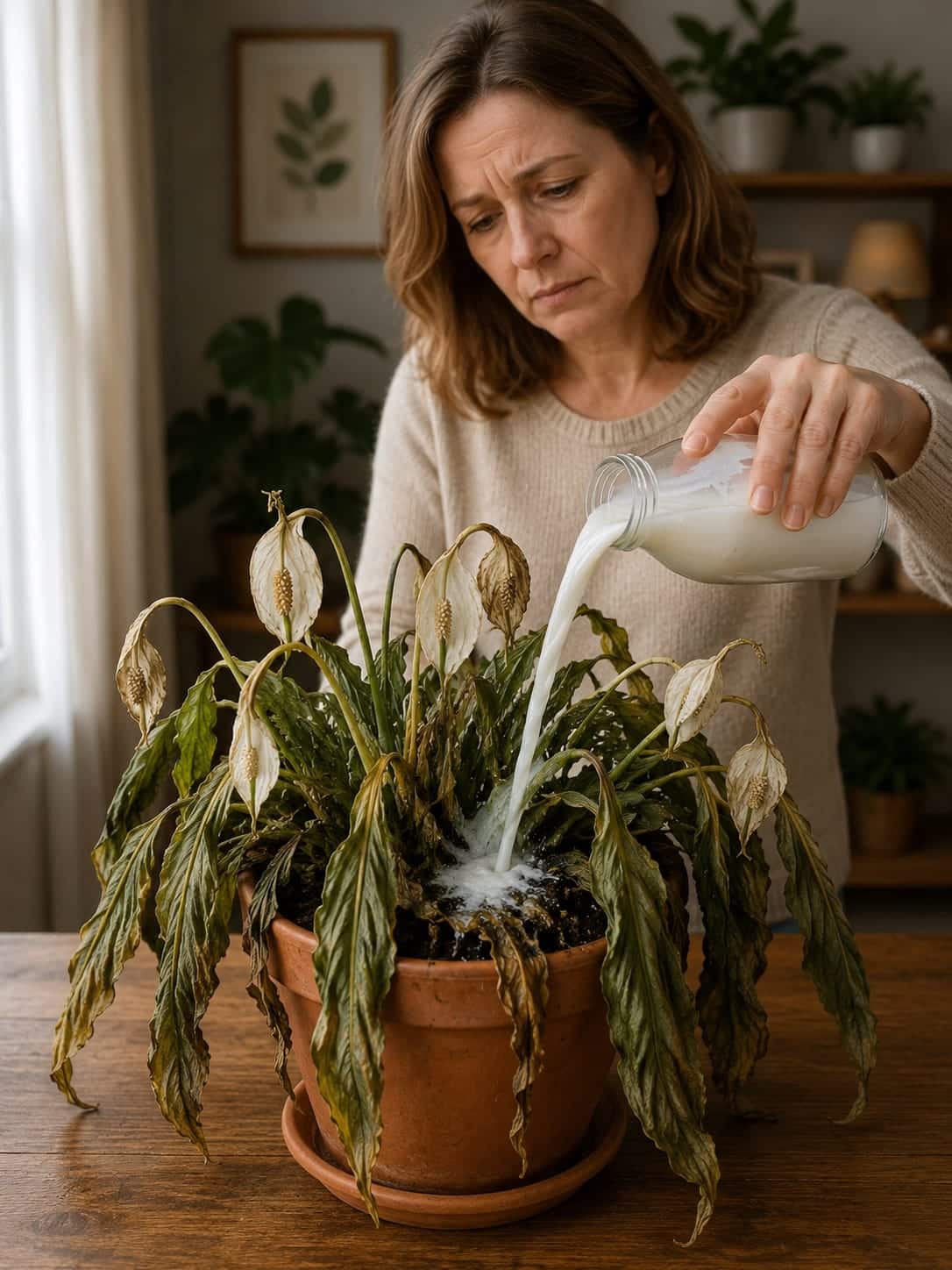
No. Milk water cannot fix root rot. Root rot happens when roots die from too much moisture, poor drainage, or lack of oxygen. Adding milk to rotting roots can make the pot smell worse and encourage more decay.
Root rot needs:
- Trimming rotten roots
- Fresh soil
- Better drainage
- Less watering
- Bright indirect light
- Time to regrow roots
Can Milk Water Fix Brown Leaves?
No. Brown leaves will not turn green again. Once a peace lily leaf is brown or crispy, that tissue is dead. The goal is to stop new damage and encourage healthy new growth.
Trim brown leaves gradually and focus on root health.
Can Milk Water Make Peace Lilies Bloom?
Milk water does not directly make peace lilies bloom. Peace lilies bloom when they receive enough bright indirect light, stable moisture, healthy roots, and light balanced nutrition.
For more blooms, focus on:
- Bright indirect light
- Healthy roots
- Proper watering
- Balanced fertilizer at low strength
- Removing old flowers
- Avoiding stress
A weak milk-water tonic may support general plant health, but it is not a bloom booster.
What If You Already Poured Milk Into the Pot?
If you already poured thick milk into the peace lily pot, act before it spoils.
Fix steps:
- Scoop away any visible milk residue.
- Remove the top layer of contaminated soil.
- Check if the soil smells sour.
- If the pot drains well, flush with clean water.
- Let the pot drain completely.
- Empty the saucer.
- If smell remains, repot in fresh soil.
If the plant was already weak, repotting may be safer than leaving milk in the soil.
Better White Liquid Alternative: Rice Water
If you want a gentle white liquid plant trick, diluted rice water is often safer than milk, as long as it is fresh and unsalted. Rice water contains small amounts of starch and minerals, but it should still be diluted and used carefully.
Safe rice water method:
- Rinse plain rice in water.
- Use the cloudy rinse water.
- Dilute it with equal parts clean water.
- Use immediately.
- Apply only to soil.
- Do not store it until sour.
Do not use salted rice water, oily cooking water, or fermented liquid on a weak peace lily.
Better Recovery Tonic: Weak Seaweed Water
For a recovering peace lily with healthy roots, a weak seaweed tonic is usually safer than milk.
Recipe:
- 1 liter water
- ⅛ to ¼ teaspoon liquid seaweed fertilizer
Apply only when the plant is stable and actively growing. Do not use it on rotten roots.
Peace Lily Rescue Table
| Symptom | Likely Cause | Best Fix |
|---|---|---|
| Wilted leaves with wet soil | Root rot or poor drainage | Inspect roots and repot |
| Wilted leaves with dry soil | Underwatering | Water deeply with plain water |
| Brown crispy edges | Dryness, sun, minerals, or stress | Adjust water and light |
| Yellow leaves | Overwatering or old leaves | Check soil moisture |
| Faded flowers | Natural aging | Cut flower stalks |
| Sour smell | Rotting soil or roots | Repot immediately |
Safe White Liquid Peace Lily Recipe
Ingredients
- 1 teaspoon plain milk
- 1 cup clean water
Instructions
- Mix milk and water until very diluted.
- Use only if the peace lily has healthy roots.
- Apply a small amount around the soil edge.
- Keep away from the crown and flowers.
- Let the pot drain fully.
- Use only once every 2 to 3 months during active growth.
For a dying peace lily, do not use this before checking the roots.
Common Mistakes to Avoid
- Pouring thick milk into the pot
- Using milk on wet soil
- Pouring liquid into the crown
- Using sweetened or expired milk
- Feeding before checking roots
- Leaving water in the saucer
- Ignoring sour soil smell
- Keeping the plant in low light
- Using fertilizer on root rot
- Expecting brown leaves to turn green again
Signs Your Peace Lily Is Recovering
Old damaged leaves may not recover. Look for new growth and firmness instead.
Good signs include:
- New green leaves emerging
- Leaves standing more upright
- No sour smell
- Soil drying at a normal pace
- Roots looking white and firm
- No new yellow leaves
- Plant stops collapsing
Recovery can take several weeks. Peace lilies often look worse before they look better after root stress.
Short Caption for This Trick
“Do not pour thick milk into a wilted peace lily. First check the soil and roots. If the plant is stable, use only a very diluted white tonic: mix 1 teaspoon plain milk with 1 cup water and apply a small amount around the outer soil edge. Keep it away from the crown, let the pot drain fully, and use rarely.”
Frequently Asked Questions
Is milk good for peace lilies?
Only when heavily diluted and used rarely. Thick milk can spoil in the soil, attract pests, and stress the roots.
Can milk save a dying peace lily?
No. A dying peace lily needs diagnosis first. Check for dry soil, wet soil, root rot, poor drainage, and old flowers before using any tonic.
How much milk should I use for a peace lily?
Use only 1 teaspoon plain milk mixed into 1 cup water. Apply a small amount to the soil edge, not the crown.
Why is my peace lily wilting even though the soil is wet?
This often means root rot or root stress. The roots may be too damaged to absorb water.
Should I cut off dead peace lily flowers?
Yes. Remove faded flowers by cutting the stalk near the base with clean scissors.
Can brown peace lily leaves turn green again?
No. Brown tissue is dead. Trim damaged leaves and focus on new growth.
What is better than milk for peace lily recovery?
Fresh soil, correct watering, drainage, bright indirect light, and healthy roots are better than milk. A weak seaweed tonic can be used later if the plant is stable.
Can rice water help peace lilies?
Fresh diluted rice water can be used occasionally, but it should not be sour, salted, or fermented for a weak plant.
Should I fertilize a dying peace lily?
No. Do not fertilize until the roots are healthy and new growth appears.
How often should I water a peace lily?
Water when the top inch of soil feels dry. Do not keep the soil constantly soggy.
Final Thoughts
The white liquid trick may look like a quick rescue, but a wilted peace lily needs careful attention before any homemade treatment. The plant in the image is already severely stressed, and pouring thick milk into the center of the pot could make root problems worse. Milk can spoil, smell, attract fungus gnats, and create unhealthy soil conditions if used too strongly.
The safer approach is to diagnose the plant first. Check the soil moisture, inspect the roots, trim dead flowers and leaves, repot if the soil is sour or compacted, and place the plant in bright indirect light. Once the peace lily is stable, a very diluted milk-water tonic can be used rarely, but it should never be the first rescue step.
Peace lilies recover best from clean care: healthy roots, airy soil, correct watering, drainage holes, and patience. Used carefully, a weak white tonic can be a small support method. Used carelessly, thick milk can turn a struggling peace lily into a rotting, smelly, pest-filled pot. Choose the gentle method, protect the roots, and give the plant time to rebuild fresh green growth.