Should You Separate Snake Plant Pups?
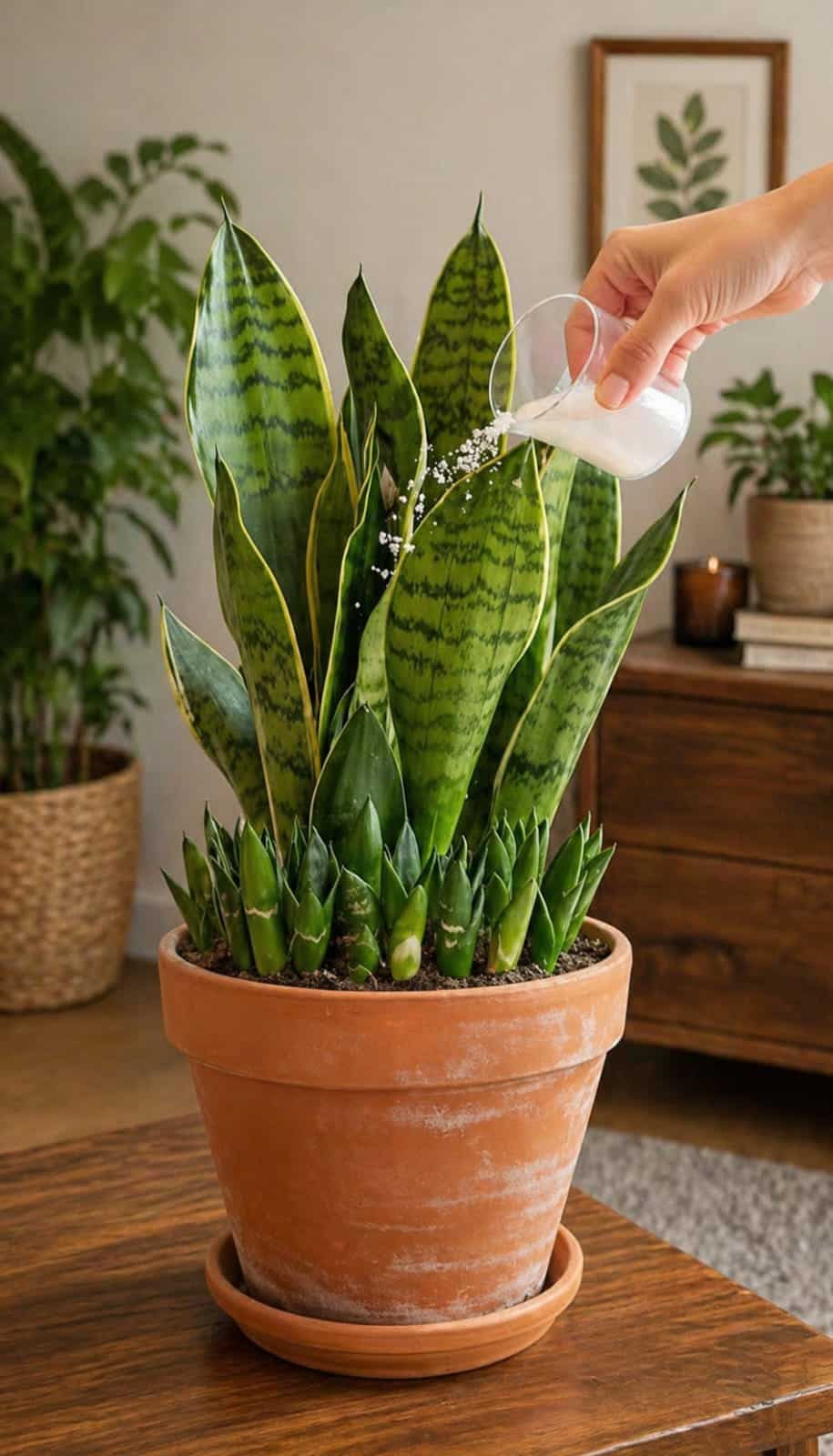
You can separate pups once they are large enough and have their own roots or rhizome connection. However, you do not have to separate them. Leaving pups in the pot creates a fuller, more dramatic plant, like the one in the image.
If the pot becomes overcrowded or the pups are pushing against the edges, division may be useful. Remove the plant from the pot, gently separate the pup with roots attached, and plant it in its own small pot.
Do not separate very tiny pups too early. They may not have enough roots to survive alone. Let them grow several inches tall first.
After dividing, wait a little before watering if any cuts were made. This helps reduce rot risk.
Can the White Liquid Cause Mold?
Yes, especially if it is too strong or used too often. Milk water and rice water contain organic material. If the soil stays damp, that material can encourage mold, sour smells, or fungus gnats.
To prevent mold, dilute the liquid heavily. Use it only when the soil is dry. Let the pot drain completely. Do not use it in cold, dark, damp conditions. Do not leave leftover rice water sitting for days before use.
If mold appears on the soil, stop using the trick. Remove the moldy top layer, let the soil dry more, improve airflow, and return to plain water.
If the soil smells sour, repot into fresh gritty mix.
Can the White Liquid Attract Bugs?
Yes, if misused. Strong milk water, fermented rice water, or sugary mixtures can attract fungus gnats, ants, flies, or other pests. This is why the mixture must be weak and fresh.
Never use sweetened milk, flavored drinks, juice, sugar water, or cooked water with food residue. These can create pest problems quickly indoors.
If bugs appear after using the trick, stop immediately. Let the soil dry, remove any residue from the surface, and use sticky traps if needed. If pests continue, repot the plant.
For indoor snake plants, clean and simple care is usually safest.
What If the Pot Smells Sour After the Trick?
A sour smell means organic material is breaking down in the soil. This often happens when the mixture was too strong or the soil stayed wet too long. Stop using the white liquid immediately.
If the smell is mild, remove the top layer of soil and replace it with fresh dry mix. Let the plant dry out. Improve airflow and light.
If the smell is strong or the plant is yellowing, remove it from the pot and inspect the roots. Trim any rotten roots or rhizomes with clean tools. Repot into fresh gritty soil and a pot with drainage.
Do not try to cover the smell with baking soda, perfume, or more homemade liquids. Fix the root environment.
Can You Use Baking Soda Water Instead?
Baking soda water is sometimes shown in plant tricks, but it is not the best choice for snake plants. Baking soda contains sodium, and too much sodium can stress roots. It can also change the soil environment.
A tiny amount may be used by some gardeners for specific surface issues, but it should not be treated as fertilizer or a growth booster. Snake plants do not need baking soda to thrive.
If you want a white liquid trick, diluted rice water is gentler. If you want proper feeding, use a cactus or succulent fertilizer at a weak dose.
Can You Use Powdered Milk?
No. Powdered milk can clump, sour, smell, and attract pests when added to soil. It is much riskier than a tiny amount of fresh milk diluted in lots of water.
Do not sprinkle powdered milk on snake plant soil. Do not mix a thick powdered milk solution for plants. If you choose the milk-water method, use plain liquid milk very weakly diluted and rarely.
For most snake plant owners, skipping milk entirely is the safest choice.
Can You Use Coconut Water?
Coconut water is sometimes promoted as a plant tonic, but it can contain sugars that may encourage microbial growth or pests in soil. It is not necessary for snake plants.
If used at all, it should be diluted heavily and used very rarely. However, for snake plants, plain water and occasional succulent fertilizer are more reliable.
Do not use sweetened coconut drinks or flavored beverages.
Can You Use Rice Water on All Snake Plant Varieties?
Yes, fresh diluted rice water can be used occasionally on most snake plant varieties, including tall variegated snake plants, dwarf bird’s nest types, and cylindrical types. But all varieties share the same basic rule: do not overwater.
Compact varieties in small pots may need even less liquid. Tall plants in terracotta pots may dry faster. Always adjust based on pot size, light, and soil moisture.
If a variety is rare or expensive, be extra cautious. Test with plain water care and proper soil before adding homemade tricks.
What If the Snake Plant Has Brown Tips?
Brown tips can come from underwatering, inconsistent watering, low humidity, physical damage, too much fertilizer, hard water, or old age. The white liquid trick will not turn brown tips green again.
You can trim brown tips with clean scissors if you want a neater appearance. Cut along the natural point of the leaf so it still looks attractive.
To prevent more brown tips, water properly, avoid overfertilizing, and use filtered water if your tap water is very harsh. Keep the plant away from heat vents and cold drafts.
If brown tips appear after using the white liquid, the mixture may have been too strong or used too often.
What If Leaves Turn Yellow After Using the Trick?
Yellow leaves after using the trick may mean the soil stayed too wet, the mixture was too strong, or the plant already had root stress. Stop using the liquid. Check the soil moisture.
If the soil is wet, let it dry completely. If the base of the leaf is soft or mushy, remove the plant and inspect the roots. Rotten roots or rhizomes must be trimmed.
If the soil is dry and only one old leaf is yellowing, it may be natural aging. But several yellow leaves at once usually mean a care problem.
Return to plain water and simple care until the plant stabilizes.
What If Leaves Are Soft and Mushy?
Soft mushy leaves are usually a sign of rot. This is serious. Do not add any more liquid. Remove the plant from the pot and inspect the rhizomes.
Healthy rhizomes should be firm. Rotten rhizomes may be brown, black, soft, or smelly. Cut away all rotten parts with clean scissors or a knife. Let healthy cut sections dry for a day if needed, then repot into fresh dry gritty soil.
Water very lightly after repotting, or wait several days before watering if the plant lost many roots. Keep it in bright indirect light.
The white liquid trick should never be used on mushy snake plants.
How to Clean the Terracotta Pot
The white marks on terracotta are usually mineral deposits from water and fertilizer. They are not usually harmful. Many people like the aged look. If you want to clean them, remove the plant first if possible.
Scrub the empty pot with warm water and a brush. For stubborn mineral stains, use a diluted vinegar solution on the pot only, then rinse very well and let it dry completely before reusing. Do not pour vinegar into the plant soil.
If the plant is still in the pot, wipe the outside gently with a damp cloth. Avoid soaking the pot with cleaning products.
Terracotta naturally develops marks over time. It is part of its charm.
A Safe White Liquid Snake Plant Routine
If you want to try the white liquid trick, follow this simple routine:
- Use fresh diluted rice water, weak eggshell water, or very diluted milk water.
- Apply only during spring or summer active growth.
- Make sure the soil is dry before using it.
- Use the liquid as a normal watering, not an extra watering.
- Pour around the outer soil, not directly into the leaf crown.
- Let the pot drain completely.
- Empty the saucer.
- Use rarely, not weekly.
- Stop if the soil smells sour, mold appears, or leaves yellow.
- Return to plain water most of the time.
This routine keeps the trick gentle and reduces the risk of root problems.
The Real Secret to a Strong Snake Plant
The real secret is not one white liquid. It is the full care routine. Snake plants thrive when they receive bright indirect light, a fast-draining soil mix, a pot with drainage, and infrequent deep watering.
They also like being left alone. Constant repotting, constant watering, and constant tricks can stress them. A snake plant often grows best when you give it the right setup and then let it do its work quietly.
If you want more pups, give more light. If you want stronger roots, use gritty soil. If you want upright leaves, avoid overwatering. If you want long-term health, keep the rhizomes firm and dry between waterings.
The white liquid can be a small occasional boost, but the plant’s real strength comes from the basics.
Common Mistakes With the White Liquid Trick
Using It Too Often
Snake plants do not need frequent special watering. Too much can cause sour soil and rot.
Using Strong Milk
Straight milk or thick milk water can smell, mold, and attract pests.
Using It on Wet Soil
This is the biggest mistake. Always wait until the soil is dry.
Pouring Into the Leaf Crown
Moisture trapped between leaves can cause rot. Pour around the soil instead.
Using a No-Drainage Pot
Drainage is essential. Homemade liquids are risky when they cannot drain away.
Expecting Instant Pups
Pups come from healthy rhizomes over time. The trick is not instant magic.
Ignoring Light
Snake plants tolerate low light, but they grow and pup better in brighter light.
Signs the Trick Is Helping
If the trick is helping, the plant should remain firm and healthy. The soil should dry normally. There should be no sour smell, mold, gnats, or yellowing. Over time, during the growing season, you may notice steady new growth or more pups emerging from the soil.
The leaves should stay upright and firm. New shoots should look healthy and pointed. The pot should not stay wet for too long.
Remember that snake plants grow slowly compared with many houseplants. Even when care is perfect, changes may take weeks or months.
Signs You Should Stop Using It
Stop using the white liquid if the soil smells sour, mold appears, fungus gnats show up, leaves turn yellow, leaf bases soften, or the pot stays wet too long. These are signs that the trick is creating too much moisture or organic buildup.
Remove any affected top soil if needed. Let the plant dry. If rot is present, repot into fresh gritty mix.
Do not keep trying different homemade liquids on a stressed plant. Return to simple care.
Frequently Asked Questions
What is the white liquid used on snake plants?
It is usually diluted rice water, very weak milk water, eggshell calcium water, or a pale diluted plant feed. The safest options are fresh diluted rice water or weak succulent fertilizer.
Can I pour milk on my snake plant?
Do not pour straight milk. If using milk at all, use only 1 teaspoon plain milk in 4 cups of water and apply rarely.
Can rice water help snake plants grow?
Fresh diluted rice water may act as a mild occasional rinse, but it will not replace proper light, soil, drainage, and watering.
How often should I use the white liquid?
Use it rarely. Rice water can be used once every six to eight weeks during active growth. Milk water should be used even less often.
Can the white liquid make snake plants produce pups?
It may support growth slightly, but pups mainly come from healthy rhizomes, bright light, proper watering, and a snug root system.
Can I use the trick in winter?
It is better to skip it in winter unless the plant is actively growing in bright warm conditions.
Can I use it on wet soil?
No. Only use it when the soil is dry and the plant is ready for watering.
What if the soil smells bad afterward?
Stop using the liquid, remove the top layer if needed, let the soil dry, and repot if the smell continues.
Can this fix root rot?
No. Root rot requires removing rotten roots or rhizomes and repotting into fresh dry gritty soil.
What is better than the white liquid trick?
Bright indirect light, terracotta pots, drainage holes, gritty soil, and careful watering are more important for long-term snake plant health.
Final Thoughts
The white liquid snake plant trick is eye-catching because it looks simple and powerful. A pale liquid poured into the soil around a tall snake plant with many pups makes it seem like a secret growth booster. But the safest way to understand this trick is as a mild occasional root-zone refresh, not a miracle cure.
The best versions are fresh diluted rice water, gentle eggshell calcium water, or a very weak succulent fertilizer. Milk water can be used only if extremely diluted and applied rarely. Thick milk, sweet liquids, fermented mixtures, or anything salty should never be used.
Snake plants are succulents. They need dry-down time, airy soil, and drainage. The white liquid should only be used when the soil is dry and the plant is ready for watering. It should be poured around the soil, not into the crown. The pot should drain fully, and the saucer should be emptied.
If your goal is more pups, focus on bright indirect light, a snug pot, gritty soil, and healthy rhizomes. If your goal is stronger leaves, avoid overwatering and keep the plant in a bright location. If your plant is weak or mushy, do not add any homemade liquid. Check the roots and repot if needed.
Used carefully, the white liquid trick can be a fun and gentle addition to snake plant care. Used too often or too strongly, it can create the very problems snake plants hate: wet soil, sour smells, pests, and rot. Keep it light, occasional, and simple.
The true beauty of a snake plant comes from its quiet strength. Give it the right pot, the right soil, the right light, and the right watering rhythm, and it can reward you with tall upright leaves and fresh new pups for years. The white liquid may get attention, but steady care is what makes the plant thrive.