Some houseplants look beautiful because of their leaves. Others become special because of the container they live in. When you combine a graceful plant with a sculptural planter, the result can feel like living art. That is exactly why head planters, face pots, bust planters, and decorative statue pots have become so popular. They turn a simple plant into a conversation piece.
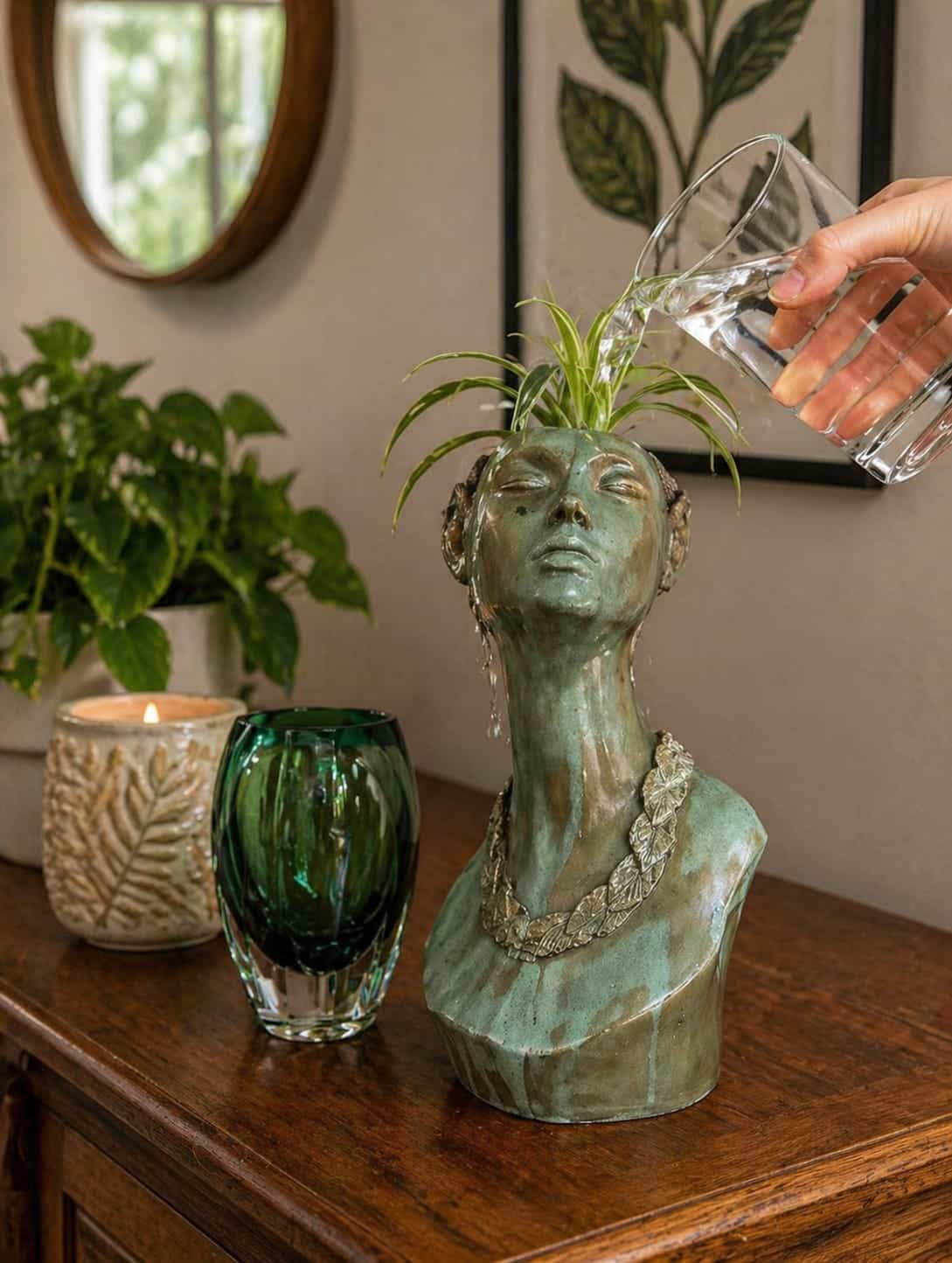
In the image, a small spider plant is growing from the top of a decorative head planter while water is being poured over it. The thin green leaves look like hair sprouting from the sculpture, giving the planter a playful and artistic look. It is the kind of plant display that immediately catches attention on a sideboard, shelf, entry table, desk, or windowsill.
But there is one important thing every plant lover should know: decorative head planters can be tricky. Many of them are made for style first and plant health second. Some do not have drainage holes. Some have a narrow planting pocket. Some hold water in hidden spaces. Some are ceramic or resin pieces that look beautiful but can quickly become a root problem if watered carelessly.
That is why this “head planter watering trick” is all about balance. The goal is to enjoy the sculptural look while protecting the plant from soggy roots. Spider plants are tough, forgiving, and perfect for this kind of creative container, but even they can suffer if water collects inside the planter.
The easiest way to make this trick work is to treat the head planter like a decorative cover pot, not just a normal plant pot. Use a small nursery pot with drainage inside the head planter whenever possible. Water carefully, let the plant drain fully, and never let the roots sit in trapped water. If the head planter has no drainage hole, controlled watering becomes even more important.
In this complete guide, you will learn how the head planter trick works, why spider plants are one of the best choices for face pots, how to water them safely, how to avoid root rot, what soil to use, how much light the plant needs, and how to keep the display looking like a living hairstyle all year long.
What Is the Head Planter Watering Trick?
The head planter watering trick is a decorative houseplant method where a small plant is grown inside a sculptural face, head, or bust-shaped container. The leaves become part of the design, almost like hair, a crown, or a living hairstyle. Spider plants are especially good for this because their thin arching leaves create a natural fountain shape.
The watering trick is not just about pouring water into the top. It is about watering in a way that keeps the plant alive inside a decorative container that may not drain like a regular pot. Many people make the mistake of treating a statue planter like any ordinary plant pot. They pour water directly into it, enjoy the look, and then later wonder why the plant turns yellow, wilts, or smells bad.
The safe version is simple: water the plant gently, avoid flooding the decorative planter, and make sure extra water can escape or be removed. If the plant is sitting in a small plastic nursery pot inside the head planter, take it out to water, let it drain, and then place it back. If the plant is planted directly inside the head planter, use smaller amounts of water and check the soil carefully before watering again.
This trick works beautifully when the display is treated as both decoration and plant care. The planter provides personality, while the correct watering routine protects the roots.
Why Spider Plants Are Perfect for Head Planters
Spider plants are one of the best plants for decorative head planters because their leaves naturally look like hair. They grow in long, narrow, arching blades that spill outward from the center. In a face planter, this creates a fun hairstyle effect. A small spider plant can look like short spiky hair, while a mature one can look like wild flowing hair.
Spider plants are also forgiving. They tolerate normal indoor conditions better than many tropical plants. They can handle a little drying between waterings, they bounce back from minor neglect, and they grow quickly when happy. This makes them a good choice for unusual containers.
Another reason spider plants are ideal is their root system. They form thick, fleshy roots that store water. This helps them tolerate short dry periods. However, those same roots can rot if they stay wet for too long, which is why drainage still matters.
Spider plants also produce baby plants on long runners when mature. In a head planter, those baby plants can create a whimsical look, almost like decorative strands or plant jewelry hanging from the sculpture.
If you want a plant that looks playful, grows easily, and suits a face pot perfectly, a spider plant is one of the best choices.
The Biggest Problem With Decorative Head Planters
The biggest problem is drainage. Many decorative head planters are not designed with plant health in mind. They may have no drainage hole at the bottom. They may have a deep hidden cavity. They may be shaped in a way that traps water around the roots. They may be too narrow for a healthy root ball.
When water cannot escape, the soil stays wet. Wet soil pushes oxygen away from the roots. Roots need oxygen to stay healthy. Without it, they begin to rot. Once roots rot, the plant may look thirsty even though the soil is wet because damaged roots cannot absorb water properly.
This is where many people get confused. They see a drooping plant and water it again. But if the plant is drooping from root rot, more water makes the problem worse.
Decorative planters can also hide what is happening. A regular nursery pot lets water drain into a saucer. You can see the excess and empty it. A sculptural head planter may hold water inside without you noticing. By the time the plant shows symptoms, the roots may already be struggling.
The solution is not to avoid head planters. The solution is to use them wisely.
The Safest Setup: Use the Head Planter as a Cover Pot
The safest way to use a head planter is to place a small plastic nursery pot inside it. This gives you the best of both worlds. The decorative planter provides the artistic look, while the inner nursery pot provides drainage.
Here is how it works:
- Choose a spider plant in a small pot with drainage holes.
- Place the nursery pot inside the decorative head planter.
- When it is time to water, remove the nursery pot.
- Water the plant over a sink or tray.
- Let all excess water drain out.
- Place the nursery pot back inside the head planter.
This method prevents trapped water from collecting in the bottom of the sculpture. It also makes repotting easier. If the spider plant grows larger, you can move it to a slightly bigger inner pot without losing the decorative look.
If the nursery pot sits too low inside the head planter, place a few clean stones, an upside-down small pot, or a plastic riser underneath it. This lifts the plant so the leaves emerge nicely from the top. Just make sure the plant is stable and not sitting in water.
What If the Plant Is Directly Planted in the Head Planter?
If the spider plant is planted directly inside the head planter, you need to be more careful. First, check whether the planter has a drainage hole. If it does, treat it like a normal pot but still water carefully because decorative shapes can drain unevenly.
If it has no drainage hole, water lightly and slowly. Do not pour large amounts of water into the planter. Use small amounts and let the soil absorb moisture gradually. Check the soil before watering again.
A no-drainage head planter should never be soaked. The bottom can stay wet for days or weeks, causing root rot. For small spider plants, a few tablespoons of water may be enough at a time depending on pot size, soil type, and room conditions.
If the plant begins to yellow, smell sour, or stay wet too long, remove it and repot it into a draining nursery pot. You can still place the nursery pot inside the decorative head planter afterward.
Direct planting can work, but it requires careful watering and a light, airy soil mix.
How to Water a Spider Plant in a Head Planter
The best watering method depends on whether the planter has drainage.
If the Inner Pot Has Drainage
Remove the inner pot from the head planter. Water thoroughly until water runs out of the bottom. Let it drain completely. Then return it to the decorative planter. This is the easiest and safest method.
If the Head Planter Has Drainage
Water slowly until a small amount drains out. Empty any saucer or surface underneath. Do not let the planter sit in water.
If the Head Planter Has No Drainage
Water lightly. Use a small cup, spoon, or narrow-spout watering can. Add water only when the top inch of soil is dry. Avoid flooding the soil. If you accidentally add too much water, gently tip the planter over a sink to pour out excess if possible.
Spider plants like moisture, but they do not like soggy roots. The watering trick is not about giving more water. It is about giving the right amount and letting the roots breathe.
How Often Should You Water?
There is no perfect calendar schedule. The right timing depends on light, temperature, humidity, pot size, soil mix, and drainage. A spider plant in bright indirect light may dry faster than one in a dim corner. A plant in a nursery pot may dry faster than one sealed inside a ceramic head planter.
As a general rule, water when the top inch of soil feels dry. Push your finger gently into the soil. If it still feels damp, wait. If it feels dry, water.
For a spider plant in a small head planter with no drainage, you may need to water less often than expected. The soil can stay moist inside the container even when the surface looks dry. A wooden skewer can help you check deeper moisture. Insert it into the soil, wait a moment, and pull it out. If it comes out damp or with soil stuck to it, wait before watering.
In winter, water less. In warm bright months, water more often. Always check the soil first.
Signs You Are Overwatering
Overwatering is the most common problem with decorative planters. Watch for these signs:
- Yellowing leaves
- Soft or mushy base
- Brown tips spreading into larger brown areas
- Sour or rotten smell from the planter
- Soil staying wet for many days
- Fungus gnats around the soil
- Leaves drooping even though the soil is damp
If you notice these signs, stop watering immediately. Remove the plant from the head planter if possible. Check the roots. Healthy spider plant roots are usually pale, firm, and fleshy. Rotten roots may look brown, black, mushy, or slimy.
Trim away rotten roots with clean scissors and repot the plant in fresh, well-draining soil. Use a pot with drainage holes. After repotting, wait until the soil begins to dry before watering again.
Signs You Are Underwatering
Underwatering can also happen, especially if the plant is in a tiny pot or bright window. Signs include:
- Leaves folding inward
- Dry crispy tips
- Soil pulling away from the pot edge
- Plant looking pale or limp
- Leaves losing their arching shape
If the soil is dry and the plant looks thirsty, water thoroughly if the pot drains. If there is no drainage, water slowly in small amounts until the soil is evenly moist but not soaked.
A thirsty spider plant usually recovers well after watering. The leaves may perk up within a day. Brown tips will not turn green again, but new growth can look healthy.
Best Soil for Spider Plants in Decorative Planters
Spider plants do best in light, well-draining soil. This is especially important in head planters because decorative containers can hold moisture longer.
A simple spider plant mix can include:
- 2 parts indoor potting mix
- 1 part perlite
- 1 part coco coir, fine bark, or extra aeration material
Perlite helps keep the mix airy. It prevents soil from compacting and allows water to move through more easily. If the planter has no drainage, airy soil is even more important because dense soil stays wet too long.
Avoid heavy garden soil. It can compact in containers and may carry pests. Avoid soil that feels muddy or sticky. Spider plant roots need a balance of moisture and air.
If the current soil smells bad, stays wet, or looks compacted, repotting into fresh mix can make the plant much healthier.
Best Light for a Spider Plant Head Planter
Spider plants like bright indirect light. This means they enjoy a bright room, but not harsh direct afternoon sun. Too much direct sun can scorch the leaves, especially the pale variegated parts. Too little light can make the plant grow slowly and lose its bold stripe pattern.
An east-facing window is often perfect because it gives gentle morning light. A north-facing window can work if the room is bright. A south- or west-facing window may need a sheer curtain or some distance from the glass.
Because head planters are decorative, people often place them on shelves, sideboards, or tables away from windows. That can look beautiful, but make sure the plant receives enough light. If the spider plant becomes pale, floppy, or stops growing, move it closer to a brighter spot.
Rotate the planter every week or two so the plant grows evenly. This is especially helpful with face planters because you may want the “hair” to look balanced from all sides.
How to Keep the Head Planter Display Looking Good
A spider plant in a head planter looks best when the leaves are full, clean, and shaped nicely. Because the plant acts like the sculpture’s hair, grooming matters.
Remove yellow or dead leaves by cutting them near the base. Trim brown tips with clean scissors, following the natural shape of the leaf. Wipe dust from leaves gently with a damp cloth, or rinse the plant lightly in a sink if the inner pot can be removed.
If the spider plant grows unevenly, rotate the pot. If one side becomes too long, you can trim a few leaves to balance the look. Avoid cutting too many leaves at once, because the plant needs foliage to make energy.
If baby plants appear on runners, you can leave them for a wild decorative style or remove them to propagate. In a head planter, spider plant babies can look charming, almost like little ornaments hanging from the plant.
Can You Use Other Plants in a Head Planter?
Yes, but some plants work better than others. The best plants for head planters are compact, attractive, and able to handle the container size. Plants that create a hair-like effect are especially popular.
Good options include:
- Spider plant
- String of pearls
- String of hearts
- Pothos cuttings
- Fittonia
- Small ferns
- Baby tears
- Peperomia
- Small hoya plants
- Succulents, if the planter has excellent drainage
Spider plants are one of the easiest choices because they are adaptable and grow quickly. Ferns look beautiful but need more moisture. Succulents need much more drainage and brighter light. Pothos can work well if you want trailing “hair.”
Choose the plant based on the planter’s drainage, light conditions, and your watering habits.
Why Water Should Not Run Over the Face Every Time
In the image, water runs down the face of the planter, creating a dramatic fountain-like look. It looks artistic, but in real plant care, you do not want water constantly running over decorative surfaces, furniture, or the planter’s finish.
Repeated water flow can stain some materials, damage painted finishes, leave mineral marks, or wet the table underneath. If the planter is porous ceramic, water may seep into the surface. If it is resin or painted, water may collect in cracks.
For daily care, water the soil carefully rather than pouring so much that it spills over the sculpture. If you like the visual effect for a photo, do it over a sink or waterproof tray and dry the planter afterward.
Protect wooden furniture with a saucer, tray, or waterproof mat. Decorative planters should look good without damaging the surface beneath them.
Continue to Page 2
Continue to page 2 for more details about this article and the key points many readers miss on the first page.