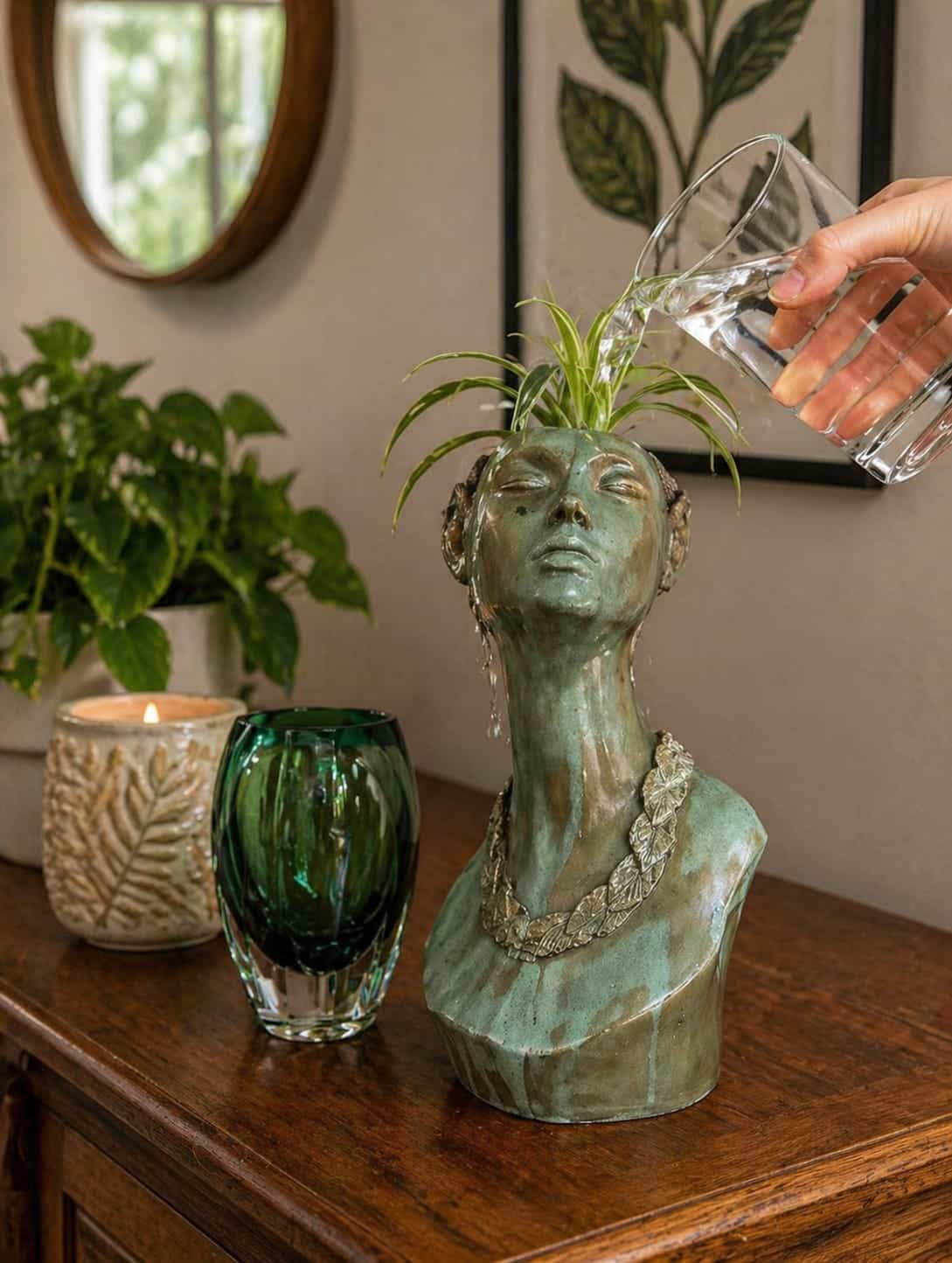
How to Protect Furniture Under a Head Planter
Head planters are often placed on wood dressers, entry tables, shelves, or desks. Water damage can happen if the planter leaks, sweats, or overflows.
Use a waterproof saucer, cork mat with waterproof backing, ceramic tray, or plant coaster. Check underneath regularly for trapped moisture. Do not assume the bottom is dry just because the top looks fine.
If using a nursery pot inside the head planter, remove it for watering and let it drain completely before returning it. This prevents hidden water from collecting at the bottom.
If the planter itself has no drainage and is planted directly, be extra careful. Use small amounts of water and never flood it while it is sitting on furniture.
How to Repot a Spider Plant From a Head Planter
Spider plants grow quickly and may eventually outgrow a small head planter. If the plant becomes rootbound, dries out too fast, or pushes itself upward, it may need repotting.
To repot, gently remove the plant from the container. If it is in a nursery pot, this is easy. If it is planted directly inside a narrow head planter, work carefully. Loosen the soil around the edges with a spoon or small tool. Avoid pulling hard on the leaves.
Choose a pot only slightly larger than the root ball. Use fresh, airy potting mix. If you still want the decorative look, place the new nursery pot inside the head planter if it fits. If the plant is too large, move it to a regular pot and start a smaller spider plant baby in the head planter.
This is another advantage of spider plants: you can always propagate a new baby for the decorative container.
How to Start a New Spider Plant for a Head Planter
If your current spider plant becomes too large, you can grow a new small plant for the head planter from a baby plantlet.
- Choose a healthy spider plant baby from a runner.
- Cut it from the mother plant with clean scissors.
- Place the base in water until roots are 1 to 2 inches long.
- Plant it in a small nursery pot with drainage.
- Let it establish for a few weeks.
- Place the nursery pot inside the head planter.
This keeps the display fresh and perfectly sized. A young spider plant often looks better in a head planter than an overgrown one. You can repeat this process whenever needed.
How to Make the Spider Plant Look Like Hair
To create the best hair-like effect, choose a spider plant with leaves that arch outward. Place the plant so the fullest side faces forward. If the plant is too flat, rotate it regularly to encourage even growth.
You can also plant several small spider plant babies together in one nursery pot. This creates a fuller “hairstyle” faster. Arrange the babies around the pot so leaves grow in all directions.
For a spiky look, use younger plantlets. For a flowing look, use a mature spider plant with longer leaves. For a wild look, let runners and babies hang down.
Trim damaged tips to keep the display tidy. The better the leaves look, the more striking the planter becomes.
Should You Mist a Spider Plant in a Head Planter?
Spider plants can tolerate normal household humidity, but they appreciate moderate humidity. Misting can make leaves look fresh briefly, but it does not replace watering. It also does not raise humidity for long.
If you mist, do it lightly and avoid soaking the decorative planter or nearby furniture. Too much moisture sitting in the crown of the plant is not ideal. In rooms with poor airflow, repeated misting can encourage fungal issues.
A better way to support humidity is to group plants together or use a humidifier nearby. Spider plants do not usually need high humidity to survive, so do not overcomplicate it.
Can You Use Fertilizer in a Head Planter?
Yes, but use fertilizer gently. Spider plants are not heavy feeders. Too much fertilizer can cause brown tips, especially if salts build up in a container with poor drainage.
During spring and summer, feed once a month with a balanced houseplant fertilizer diluted to half strength. If the plant is in a no-drainage head planter, be even more cautious. Fertilizer buildup is harder to flush out when water cannot drain freely.
Do not fertilize a stressed plant with wet soil or root rot. Fix the root environment first.
In fall and winter, reduce feeding or stop completely if growth slows.
How to Fix Brown Tips on Spider Plants
Brown tips are common on spider plants. They can happen from dry air, inconsistent watering, fertilizer buildup, hard water, fluoride sensitivity, or too much direct sun.
To reduce brown tips, water consistently, avoid overfertilizing, use filtered water if your tap water is harsh, and keep the plant in bright indirect light. Trim brown tips with clean scissors if you want a neater look.
Brown tips do not usually mean the plant is dying. They are often cosmetic. However, if the browning spreads or leaves turn yellow and mushy, check the roots and watering routine.
In decorative planters, brown tips may also appear if the roots are stressed from trapped water. Make sure drainage is handled correctly.
How to Fix Yellow Leaves
Yellow leaves can mean overwatering, underwatering, low light, root stress, or normal aging. Start by checking the soil.
If the soil is wet and the leaf bases are soft, overwatering may be the issue. Remove the plant and inspect the roots. If the soil is bone dry, water properly. If the plant sits in a dark corner, move it to brighter indirect light.
Remove yellow leaves once they decline. They will not turn green again. New healthy growth is the sign that the plant is recovering.
If many leaves yellow after watering in a no-drainage head planter, trapped water is likely the problem.
How to Prevent Fungus Gnats
Fungus gnats appear when soil stays too wet. Decorative planters can encourage gnats if water collects inside or the soil surface stays damp.
To prevent gnats, let the top inch of soil dry before watering. Remove dead leaves from the soil surface. Use a light, well-draining mix. Avoid overwatering. If gnats appear, use yellow sticky traps and allow the soil to dry more between waterings.
If the infestation is bad, remove the plant, replace the top layer of soil, or repot into fresh mix.
Do not add kitchen scraps, sugar water, milk, or other organic liquids to a head planter. These can attract pests and create odors.
Best Places to Display a Spider Plant Head Planter
A spider plant head planter looks great in many spots, as long as there is enough light. Try placing it on an entry table, bookshelf, bedroom dresser, bathroom shelf with bright light, office desk, plant stand, or kitchen windowsill.
Make sure the spot is stable. Head planters can be top-heavy, especially when the plant grows larger. Avoid narrow ledges where the planter could fall.
Keep it away from heating vents, cold drafts, and dark corners. A spider plant can tolerate some lower light, but the display looks better with enough brightness for full growth.
If the planter is heavy ceramic, place felt pads underneath to protect furniture.
How to Clean the Decorative Head Planter
Water, dust, and mineral deposits can collect on decorative planters. Clean the outside gently with a soft damp cloth. Avoid harsh chemicals, especially near the plant.
If water leaves white mineral marks, wipe them with a damp cloth. For stubborn marks, use a very mild vinegar solution on the planter surface only, then wipe clean. Keep vinegar away from the plant and soil.
If the planter is painted, test any cleaner on a hidden area first. Some finishes can be damaged by acidic cleaners or scrubbing.
Dry the planter after cleaning to protect furniture and keep the display looking polished.
Common Mistakes With Head Planter Plants
Using a Planter With No Drainage and Watering Heavily
This is the biggest mistake. Without drainage, heavy watering can rot the roots.
Leaving Water Sitting Inside the Decorative Pot
If using an inner nursery pot, always drain it fully before placing it back.
Using Heavy Soil
Dense soil stays wet too long. Use a light, airy potting mix.
Placing the Planter in a Dark Corner
Spider plants need bright indirect light for full, healthy growth.
Fertilizing Too Much
Excess fertilizer can cause brown tips and root stress.
Letting Water Run Over Furniture
Use a tray or remove the plant for watering to protect wood surfaces.
Choosing a Plant That Grows Too Large
Start with a small spider plant or plantlets. Repot when it outgrows the planter.
Signs the Head Planter Trick Is Working
If the setup is working, your spider plant should produce fresh green leaves, hold its arching shape, and stay firm. The soil should dry at a reasonable pace. The planter should not smell sour. There should be no standing water hidden inside.
The plant should look like it belongs in the sculpture, creating a natural hair-like effect. New leaves should emerge from the center, and the display should stay tidy with occasional trimming.
Over time, a healthy spider plant may even produce runners and babies, making the head planter look even more playful.
Signs You Need to Change the Setup
If the plant keeps yellowing, drooping, smelling bad, or developing fungus gnats, the setup needs adjustment. The most likely problem is trapped water or poor drainage.
Remove the plant and check the roots. Repot into fresh soil and a draining nursery pot. Then use the head planter as a decorative cover rather than planting directly inside it.
If the plant is stretching, pale, or not growing, it may need more light. Move it closer to a bright window.
If the plant outgrows the head planter, propagate a smaller baby and restart the display.
A Simple Care Routine for a Spider Plant Head Planter
Follow this easy routine to keep the display healthy:
- Place the spider plant in bright indirect light.
- Use an inner nursery pot with drainage whenever possible.
- Remove the inner pot for watering.
- Water when the top inch of soil is dry.
- Let the plant drain fully before returning it to the head planter.
- Trim brown tips and yellow leaves as needed.
- Rotate the planter weekly for even growth.
- Feed lightly during spring and summer.
- Check for hidden water inside the decorative pot.
- Repot or replace with a younger plant when it outgrows the container.
Frequently Asked Questions
Can I plant directly into a head planter?
Yes, but only if you water carefully. It is much safer if the head planter has drainage holes. If it has no drainage, use it as a cover pot instead.
Is a spider plant good for a face planter?
Yes. Spider plants are one of the best choices because their leaves look like hair and they are easy to grow indoors.
How often should I water a spider plant in a head planter?
Water when the top inch of soil feels dry. If the planter has no drainage, water less often and use smaller amounts.
Why is my spider plant turning yellow in the head planter?
Yellowing often means overwatering, trapped water, poor drainage, or low light. Check the soil and roots.
Does the head planter need drainage?
Drainage is strongly recommended. If there is no drainage hole, keep the plant in a separate nursery pot with holes inside the head planter.
Can water running over the face damage the planter?
It can leave mineral marks, stain surfaces, or damage some finishes over time. Water carefully and dry the planter if it gets wet.
What soil should I use?
Use a light indoor potting mix with extra perlite for drainage and airflow.
Can I keep the planter on a wooden table?
Yes, but use a waterproof tray, saucer, or mat underneath to prevent water damage.
Can I use spider plant babies in a head planter?
Yes. Spider plant babies are perfect for small head planters. Root them in water or soil first, then plant them in a small draining pot.
What should I do if the plant outgrows the head planter?
Move the large plant to a bigger pot and start a new small spider plant baby in the head planter.
Final Thoughts
The head planter watering trick is one of the most creative ways to display a spider plant. It turns a simple houseplant into living sculpture. The thin arching leaves look like hair, the planter adds personality, and the whole display becomes a piece of natural decor.
But the trick works only when the plant’s roots are protected. Many head planters are decorative first and practical second, so drainage must be handled carefully. The safest method is to keep the spider plant in a small nursery pot with drainage holes and place that pot inside the head planter. Remove it for watering, let it drain completely, and then return it to the decorative container.
If the spider plant is planted directly inside the head planter, water lightly and check the soil before watering again. Avoid flooding the container, especially if there is no drainage. Use a light, airy soil mix, bright indirect light, and gentle feeding during the growing season.
A spider plant can thrive in a face planter when you give it the right balance of style and care. Keep the roots from sitting in water, protect your furniture, trim damaged leaves, and rotate the planter for even growth. Over time, the plant will fill out and create the perfect living hairstyle for your decorative pot.
This is the real secret: the planter makes the display beautiful, but smart watering keeps it alive. With the right routine, your head planter can stay artistic, healthy, and full of fresh green growth for a long time.