Can You Use Cooked Rice Water?
Cooked rice water is usually thicker and starchier than rinsed rice water. It can become sticky, sour, and moldy in houseplant soil. If you use it at all, it must be extremely diluted.
The safer method is to use water from rinsing or briefly soaking uncooked rice. This creates a lighter tonic that is easier for indoor plants to tolerate.
For delicate yellowing plants, lighter is better.
Can You Use Milk Instead?
The white liquid may look like milk, but milk is not the best option for this plant-care trick. Milk can spoil in soil, smell bad, attract pests, and create mold. Some gardeners use very diluted milk sprays for specific outdoor problems, but it is not ideal for routine indoor plant feeding.
For a yellowing indoor plant, diluted rice water is safer than milk.
Never pour thick dairy products into houseplant soil.
Can You Use Yogurt Water?
No. Yogurt water can sour quickly and attract pests. It may also create unpleasant smells in indoor pots. Delicate houseplants need clean moisture and breathable soil, not dairy-based treatments.
Use fresh diluted rice water if you want a white homemade tonic.
Can You Use Coconut Water?
Coconut water is sometimes used by plant owners, but it can be sugary and may attract pests if overused. It is also not necessary for most indoor plants.
If a plant is yellowing, start with the basics: light, watering, drainage, humidity, and root health. A gentle rice water tonic is enough if you want a simple homemade boost.
Can You Use Sugar Water?
No. Sugar water should not be used on houseplants. Plants make their own sugar through photosynthesis. Pouring sugar into the soil can attract ants, fungus gnats, mold, and bacteria.
A weak plant needs healthy roots, not sweet soil.
How to Tell If the Trick Is Working
Do not expect the plant to turn green overnight. Recovery takes time. Watch the plant over two to four weeks.
Good signs include:
- New leaves emerging greener
- Less drooping
- Stems becoming firmer
- Soil smelling clean
- No mold appearing
- No fungus gnats
- Plant holding moisture better
- Improved leaf pattern on new growth
Old yellow leaves may still decline. Judge the treatment by the new growth.
Signs You Should Stop Immediately
Stop using rice water if you notice:
- White fuzzy mold
- Sour smell from the pot
- Fungus gnats
- Leaves becoming mushy
- Soil staying wet too long
- Yellowing getting worse quickly
- Stems collapsing at the base
These signs usually mean the root zone is too wet or the tonic is too strong. Stop feeding, improve airflow, and check the roots if needed.
How to Rescue the Plant If It Keeps Yellowing
If the plant continues to decline, remove it from the pot and check the roots. Healthy roots are usually firm and light-colored. Rotten roots are dark, mushy, slimy, or bad-smelling.
Trim rotten roots with clean scissors. Repot the plant into fresh, airy soil with perlite. Use a pot with drainage holes. Keep it in bright indirect light and water carefully.
Do not fertilize immediately after root trimming. Give the plant time to recover first.
Humidity Matters for Delicate Plants
Nerve plants and many soft-leaved houseplants prefer higher humidity than the average indoor room provides. Low humidity can make leaves crisp, curled, or weak. If your plant keeps struggling despite correct watering, humidity may be part of the problem.
To improve humidity:
- Group plants together
- Use a pebble tray with water below the pot
- Place the plant away from heaters
- Use a small humidifier
- Avoid cold drafts
Do not mist constantly if the room has poor airflow. Wet leaves can invite fungal issues.
Best Pot for a Yellowing Indoor Plant
A pot with drainage holes is essential. Decorative pots without drainage can trap water at the bottom, causing root rot even if the top looks dry.
If your green ceramic pot has no drainage, use it as a cover pot. Keep the plant in a plastic nursery pot inside it. Remove the inner pot when watering, let it drain, then place it back.
Good drainage is more important than any homemade plant fertilizer.
Simple Rice Water Recovery Routine
- Check the plant’s soil moisture.
- Do not apply anything if the soil is wet.
- Make fresh rice water from rinsed uncooked rice.
- Dilute 1 part rice water with 3 parts clean water.
- Apply one to three tablespoons around the outer soil.
- Keep it off the leaves and crown.
- Use only once every three to four weeks.
- Keep the plant in bright indirect light.
- Maintain light, even moisture.
- Watch new growth for improvement.
Common Mistakes to Avoid
- Using thick cooked rice water
- Applying rice water every week
- Pouring it onto wet soil
- Using milk instead of rice water
- Using sugar water
- Ignoring root rot
- Keeping the plant in low light
- Using a pot without drainage
- Letting the soil stay soggy
- Expecting yellow leaves to turn green again
Short Caption for This Trick
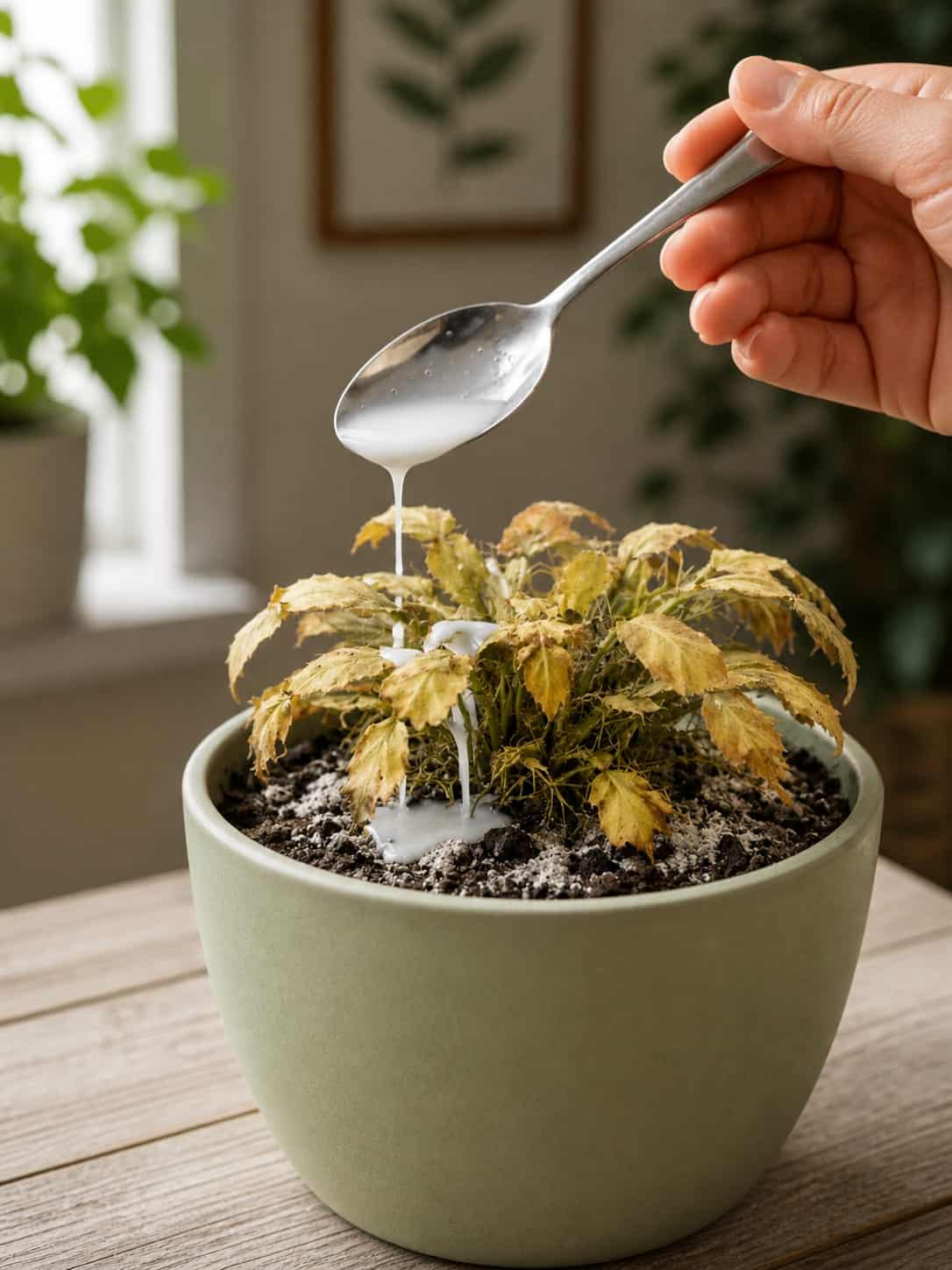
“For a yellowing nerve plant or delicate indoor plant, use a very weak rice water tonic. Rinse one tablespoon of uncooked rice in one cup of water, strain it, then dilute the cloudy liquid with three parts clean water. Apply only a few spoonfuls to slightly dry soil, keep it off the leaves, and use no more than once every three to four weeks.”
Frequently Asked Questions
What is the white liquid for yellowing houseplants?
The safest version is diluted rice water made from rinsing or soaking uncooked rice. It should be weak, fresh, and applied sparingly.
Can rice water save a dying plant?
It may support mild recovery, but it cannot fix root rot, severe overwatering, pests, or poor light. Always check the real cause of decline first.
How often should I use rice water on indoor plants?
Use it once every three to four weeks during active growth. Do not use it weekly.
Can rice water turn yellow leaves green again?
No. Yellow leaves usually do not turn green again. The goal is to support healthier new growth.
Can I use cooked rice water?
It is better to avoid thick cooked rice water. Use light water from rinsing uncooked rice and dilute it well.
Can rice water cause mold?
Yes, if used too strong or too often. Use small amounts, apply only to slightly dry soil, and avoid leaving the pot soggy.
Can I use milk instead?
No. Milk can spoil, smell bad, and attract pests in indoor plant soil. Diluted rice water is safer.
Should I spray rice water on leaves?
No. Apply it to the soil only. Spraying leaves can leave residue and encourage spotting.
Why is my nerve plant yellowing?
Common causes include overwatering, underwatering, low light, poor drainage, compacted soil, low humidity, or root stress.
What is the best soil for nerve plants?
Use a light indoor potting mix with perlite and coco coir or fine bark. The soil should hold gentle moisture but still drain well.
Final Thoughts
The white rice water trick is a gentle way to support a yellowing nerve plant or delicate indoor houseplant, but it must be used carefully. A weak, fresh, diluted rice water tonic can lightly refresh the soil and support root activity without the harshness of strong fertilizer.
But this trick is not a cure for every yellow leaf. If the soil is wet, wait. If the roots are rotting, repot. If the plant is in low light, move it closer to bright indirect light. If humidity is too low, improve the growing environment. Homemade plant food works only when the basics are right.
Use the rice water sparingly, just a few spoonfuls at a time, and watch the new growth. Keep the soil airy with perlite, use a pot with drainage, and avoid thick starchy liquids. With patience, gentle care, and the right conditions, a tired yellowing plant can begin producing healthier, greener leaves again.