How to Water a Snake Plant Correctly
Watering is the most important part of snake plant care. Water only when the soil has dried out. Do not water just because the top looks dry. Check deeper into the pot.
You can test the soil with your finger, a wooden skewer, or by lifting the pot to feel its weight. If the soil is still damp, wait. If it is dry, water thoroughly until excess drains out. Then empty the saucer.
In bright warm conditions, a snake plant may need water every two to three weeks. In low light or winter, it may need water only once a month or less.
It is better to underwater slightly than to overwater. A thirsty snake plant can recover. A rotten snake plant is harder to save.
Best Light for Strong Snake Plant Leaves
Snake plants tolerate low light, but they grow stronger in bright indirect light. If your plant is weak, pale, or not producing new growth, light may be the missing factor.
Place the plant near an east-facing window, a bright north-facing window, or a filtered south or west window. Avoid sudden harsh direct sun if the plant has been in low light, because leaves can scorch.
Better light helps the plant produce stronger leaves and healthier rhizomes. Turmeric cannot replace light. A plant in a dark corner will not become vigorous just because yellow powder is added.
How to Remove a Yellow Snake Plant Leaf
If the leaf is mostly yellow, dry, or damaged, remove it. This improves the plant’s appearance and prevents the plant from wasting energy on a declining leaf.
- Use clean sharp scissors or pruning shears.
- Cut the leaf as close to the soil line as possible.
- Avoid damaging nearby healthy leaves.
- Let the cut area dry.
- Apply a tiny dusting of turmeric if desired.
- Do not water immediately after cutting unless the plant is very dry.
Once removed, the leaf will not grow back from the same spot. But if the rhizome is healthy, the plant may eventually produce new shoots.
Can You Use the Yellow Leaf for Propagation?
If the yellow leaf still has some firm green sections, you may be able to propagate from the healthy part. However, damaged or diseased leaves are not ideal for propagation. It is better to use a strong healthy leaf.
To propagate from a snake plant leaf, cut a healthy section, let it callus, and place it in water or soil. Make sure the bottom end stays oriented correctly. Snake plant cuttings can take a long time to root.
If the leaf is mushy, rotten, or fully yellow, discard it. Do not try to root unhealthy tissue.
Can Turmeric Help With Propagation?
Turmeric can be used lightly on the cut end of a snake plant leaf before soil propagation. The idea is to keep the cut dry and clean while it calluses. But it should not be thickly applied.
For water propagation, turmeric is not necessary because it will wash off and cloud the water. For soil propagation, a tiny dry dusting after callusing may be used if desired.
The most important propagation step is still allowing the cutting to callus before planting or placing in water. A fresh wet cut is more likely to rot.
Can Turmeric Attract Pests?
Turmeric itself is not usually the main pest attractor, but too much powder on damp soil can create an unpleasant surface. If it clumps with moisture, it may encourage moldy conditions or make the pot harder to manage.
Pests like fungus gnats are usually attracted to damp organic soil. If turmeric is used heavily and the pot stays moist, the situation can become worse.
To avoid pests, use only a tiny amount, keep the soil dry between waterings, remove dead leaves, and avoid wet organic buildup on the soil surface.
Can Turmeric Stain the Plant or Pot?
Yes. Turmeric stains easily. It can stain white pots, wooden tables, fabric, countertops, and even the leaves. If powder gets on the leaves, wipe it off with a damp cloth.
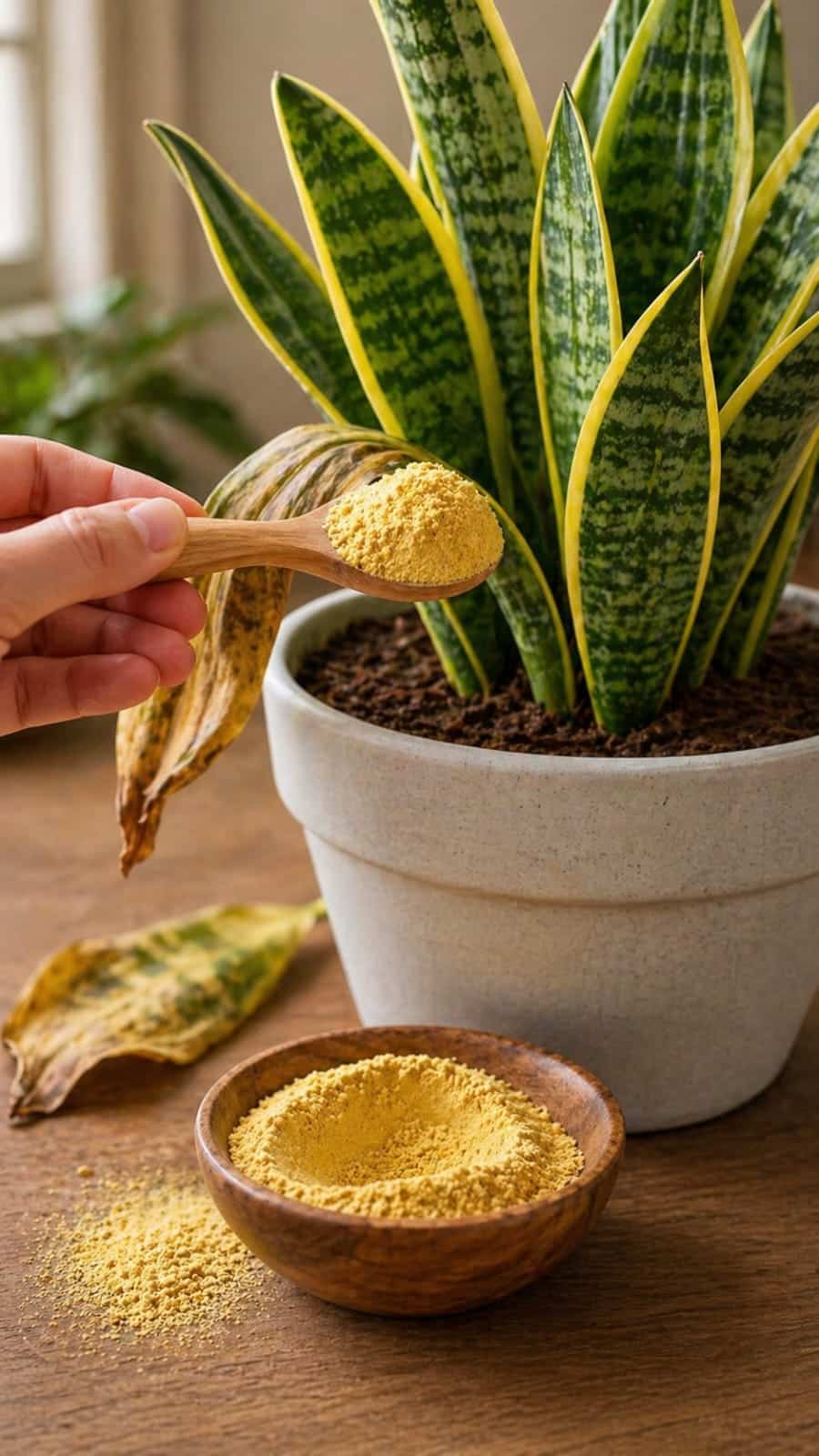
Use turmeric carefully, especially around light-colored pots like the one in the image. Apply it with a cotton swab or a tiny spoon rather than shaking it freely over the pot.
If you spill turmeric, clean it quickly. Once it gets wet, the stain can become stronger.
Can You Use Too Much Turmeric?
Yes. Too much turmeric can create a thick layer that clumps, stains, and blocks airflow. It can make the soil surface messy and may hold moisture if it gets wet.
A snake plant does not need a heavy dusting. A tiny pinch is enough for a cut area. If you accidentally apply too much, scrape off the extra powder from the soil surface.
When in doubt, use less. Turmeric should be a small touch, not a top dressing.
Can You Mix Turmeric With Cinnamon?
It is better not to mix multiple powders. Cinnamon is also used by some gardeners for cut areas, but combining turmeric, cinnamon, baking soda, coffee, eggshell powder, and other homemade ingredients can create a confusing soil surface.
Choose one simple method and use it lightly. If you use turmeric, use only turmeric. If you prefer cinnamon, use only cinnamon. Do not turn the pot into a spice blend.
Snake plants grow best with simple care.
Can You Use Turmeric With Fertilizer?
You can still fertilize your snake plant during the growing season, but do not mix fertilizer directly with turmeric powder. They have different purposes. Fertilizer provides nutrients. Turmeric is used as a dry dusting for cuts or small surface care.
Snake plants do not need heavy fertilizer. A diluted cactus or succulent fertilizer once or twice during spring and summer is usually enough. Overfeeding can damage roots or cause weak growth.
If your plant is stressed, fix the watering, light, and soil first before fertilizing.
Can Turmeric Make Snake Plants Produce New Pups?
Turmeric does not directly make snake plants produce pups. New pups come from healthy rhizomes under the soil. The plant produces them when it has enough energy, good light, proper watering, warmth, and a stable root system.
A turmeric dusting may protect a divided rhizome after cutting, but it does not force new growth.
To encourage pups, focus on these conditions:
- Bright indirect light
- Fast-draining soil
- A pot with drainage
- Warm indoor temperatures
- Water only when dry
- A slightly snug pot
- Light feeding during spring or summer
Healthy rhizomes produce pups. Turmeric only supports care in small, specific moments.
What to Do If Your Snake Plant Looks Weak
If your snake plant looks weak, do not start with powder. Start with a care check.
- Check the soil moisture.
- Check whether the pot drains.
- Look for yellow or mushy leaf bases.
- Smell the soil for sour odor.
- Check the light level.
- Inspect for pests.
- Consider when it was last repotted.
If the soil is wet and the plant is yellowing, stop watering and inspect the roots. If the soil is bone dry and leaves are wrinkled, water thoroughly. If the plant is in low light, move it brighter. If the soil is compacted, repot.
Turmeric is useful only after you know what problem you are dealing with.
How to Repot a Stressed Snake Plant
If the plant has yellow leaves, old soil, or possible root problems, repotting may help.
- Remove the plant from the pot.
- Shake away old soil.
- Inspect the roots and rhizomes.
- Cut away soft or rotten parts.
- Dust cut areas lightly with turmeric if desired.
- Let the plant dry for several hours.
- Repot into fresh gritty soil.
- Use a pot with drainage holes.
- Wait before watering if the roots were recently cut.
Repotting gives the plant a clean start. If the soil was the problem, fresh mix will help more than sprinkling turmeric on old compacted soil.
How to Keep Snake Plant Leaves Clean and Glossy
Snake plant leaves naturally look beautiful when they are clean. Dust can dull their shine and reduce light absorption. Wipe the leaves occasionally with a soft damp cloth.
Do not use turmeric on the leaves. Do not use oil, milk, mayonnaise, or leaf shine sprays. These can attract dust and pests.
If turmeric powder gets on the leaves, wipe it away immediately. The yellow color can stain or leave residue.
Clean leaves help the plant look healthier instantly.
A Safe Yellow Powder Snake Plant Routine
Here is a simple routine for using the trick safely:
- Use turmeric only when needed.
- Remove yellow or damaged leaves with clean tools.
- Dust the cut area with a tiny pinch of turmeric.
- Do not use a full spoonful.
- Do not mix turmeric with water.
- Keep it away from healthy leaf surfaces.
- Use well-draining soil.
- Water only when the soil is dry.
- Give the plant bright indirect light.
- Stop using turmeric if it clumps, stains, or creates mess.
This routine keeps turmeric as a small helper instead of a risky over-treatment.
Common Mistakes With the Yellow Powder Trick
Using a Full Spoonful
The spoonful in the image looks dramatic, but it is too much for most pots. Use only a pinch.
Thinking Turmeric Is Fertilizer
Turmeric is not a complete plant food. It does not replace fertilizer, light, or good soil.
Adding It to Wet Soil
Wet turmeric can clump and stain. Apply only lightly and dry.
Using It to Hide Root Rot
Turmeric cannot cure rotten roots. Inspect and remove rot.
Applying It Every Week
Snake plants do not need constant powder treatments. Use it rarely.
Letting It Touch Leaves
Turmeric can stain leaves. Keep it on cut areas or tiny soil spots only.
Ignoring the Real Problem
Yellow leaves usually point to watering, drainage, light, or root issues. Fix the cause.
Signs the Trick Is Being Used Correctly
You are using the trick correctly if the powder is barely visible, the soil remains airy, the plant does not smell sour, and the leaves stay firm. A cut area should dry cleanly without becoming mushy.
The plant may not show dramatic change overnight. Snake plants grow slowly. Success looks like stability: no more yellowing, firm leaves, dry healthy soil, and eventually new growth.
If the plant keeps declining, turmeric is not the answer. Check the roots and care conditions.
Signs You Should Stop Using Turmeric
Stop using turmeric if the soil surface becomes yellow, crusty, clumpy, moldy, or stained. Stop if the plant develops pests or the soil smells strange. Stop if you are tempted to keep adding more because the plant is not improving.
Remove excess powder from the soil surface. If the soil is messy or damp, replace the top layer or repot the plant.
A good trick should make care easier, not messier.
Frequently Asked Questions
What is the yellow powder used on snake plants?
The yellow powder is most likely turmeric powder. It is sometimes used as a light dusting on cut areas or divided rhizomes.
Is turmeric good for snake plants?
Turmeric can be useful in tiny amounts for drying and protecting cut areas, but it is not necessary for every plant and should not be overused.
Can turmeric save yellow snake plant leaves?
No. Yellow leaves will not turn green again. Remove damaged leaves and fix the cause of stress.
Can I sprinkle turmeric directly on soil?
Yes, but only a tiny pinch on dry soil if needed. Do not use a thick layer.
Can I mix turmeric with water?
No. For snake plants, dry dusting is safer. Wet turmeric can form a paste and trap moisture.
Can turmeric cure root rot?
No. Root rot requires removing rotten tissue and repotting into fresh well-draining soil.
How often should I use turmeric?
Rarely. Use it only after pruning, dividing, or treating a small cut area.
Will turmeric stain my pot?
Yes. Turmeric can stain light pots, tables, fabric, and leaves. Apply carefully.
Can turmeric make my snake plant grow pups?
No. Pups come from healthy rhizomes, good light, proper watering, and time.
What matters more than turmeric?
Drainage, gritty soil, bright indirect light, careful watering, and healthy rhizomes matter much more.
Final Thoughts
The yellow powder snake plant trick looks simple and powerful. A spoonful of golden turmeric beside a strong green snake plant creates the feeling of an easy homemade rescue method. It is understandable why this image catches attention, especially when a yellowing leaf is visible nearby.
But the safe version of this trick is small and specific. Turmeric should not be poured into the pot by the spoonful. It should not be mixed into a wet paste. It should not be used as fertilizer. It should not be used weekly. Instead, it can be used as a tiny dry dusting after pruning a damaged leaf, dividing a rhizome, or treating a small cut area.
If your snake plant has yellow leaves, the real solution is to find the cause. Most problems come from overwatering, poor drainage, heavy soil, low light, cold damage, or natural aging. A yellow leaf will not become green again, but the rest of the plant can stay healthy if the care routine is corrected.
The strongest snake plants grow in bright indirect light, gritty soil, and pots with drainage holes. They are watered only when dry, kept warm, and left alone more than they are fussed over. Their roots and rhizomes need air, not constant moisture or heavy toppings.
Use turmeric as a gentle helper, not a miracle cure. A tiny pinch can support a clean, dry cut area. Fresh soil, proper watering, and good light will do the real work.
With the right balance, your snake plant can recover from minor stress, hold its firm upright leaves, and eventually send up new growth. Keep the yellow powder light, keep the soil dry and airy, and let this tough indoor plant do what it does best: grow slowly, strongly, and beautifully.